 Ferndale Siding
 Fiber Cement Siding Built for Lynden's Weather
Lynden sits inland from Ferndale in the Nooksack River valley, but "inland" in Whatcom County doesn't mean sheltered. The same weather systems that soak the coastline push rain, wind, and moisture-laden air across the whole lowland region, and Lynden's tree cover, farmland humidity, and long wet season put real stress on exterior siding. Homeowners here are choosing between products that will spend a decade or more absorbing that punishment, and the choice matters more than most people realize until they're re-siding a house for the second time in fifteen years.
This page is about one thing specifically: fiber cement siding, installed correctly, on homes in and around Lynden. Not a general overview of every siding option — a straight explanation of what this climate demands, what a correct fiber cement job looks like, and why the installation matters as much as the material itself.
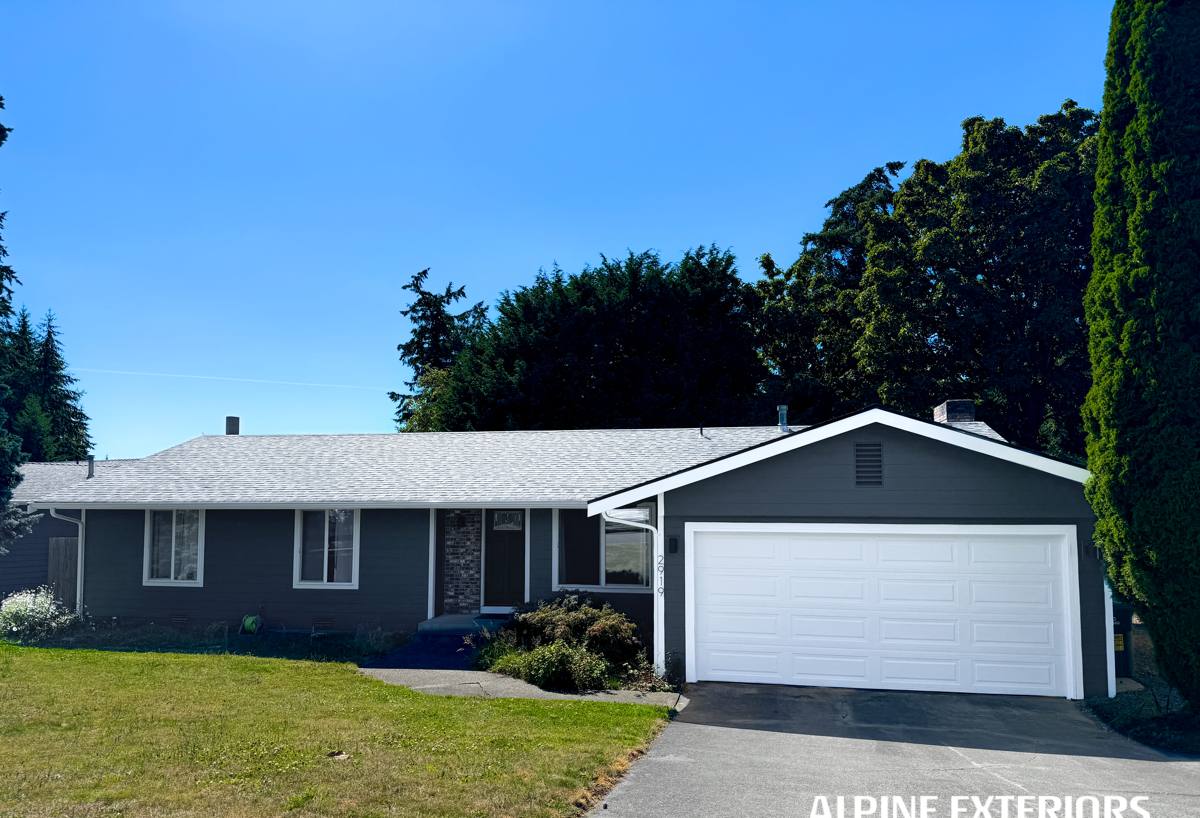
Why We Only Install James Hardie Fiber Cement
Fiber cement siding is a blend of cement, sand, and cellulose fibers, cured into rigid boards or panels that don't rot, don't attract wood-boring insects, and don't burn the way wood-based products do. That's true across brands. What isn't true across brands is consistency of manufacturing, moisture engineering, and factory finish quality — and that's why this company installs James Hardie products exclusively rather than mixing in other fiber cement lines.
James Hardie engineers its siding by climate zone through its HardieZone system. Homes in Whatcom County fall into the HZ5 category, built specifically for high-moisture, high-humidity Pacific Northwest conditions, as opposed to the HZ10 formulation used in freeze-heavy inland climates. That distinction sounds minor, but it affects how the board handles sustained dampness over years of use. Combined with Hardie's ColorPlus factory-baked finish — which cures the color onto the board under controlled conditions rather than relying on job-site paint alone — it's a more predictable, better-documented product than the alternatives, backed by a transferable warranty that holds up when a house changes hands.
How Whatcom County Weather Works Against the Wrong Siding
Moss and Shade
Between fall and spring, much of Whatcom County stays damp enough, long enough, for moss and algae to take hold on any surface that doesn't dry out quickly — especially on the north and shaded sides of a house under tree cover, which describes a lot of Lynden properties. Siding that holds moisture against its surface, or that has seams and laps where organic material can collect, becomes a long-term maintenance problem. Fiber cement's rigid, moisture-resistant composition and factory finish give it much less to hold onto than porous or fibrous materials.
Driving Rain and Wind-Driven Water
Pacific storms don't just drop rain straight down — they push it sideways into walls, lap joints, and trim. Siding that isn't installed with a proper drainage plane behind it, or that swells and warps when saturated, ends up pushing water toward the sheathing instead of away from it. This is where installation quality matters as much as the product: a Hardie board installed without correct flashing and clearances can still let water in behind it.
Salt-Tinged Marine Air
Air moving inland off Bellingham Bay and the Strait of Georgia carries a mineral, salt-tinged quality with it, particularly during storm systems, and it travels further into the lowlands than people expect. That air accelerates corrosion on fasteners, flashing, and any metal trim components, which is part of why fastener choice and flashing material are specified carefully on every job, not treated as an afterthought.
What a Correct Fiber Cement Installation Involves
Fiber cement siding fails prematurely almost exclusively because of installation mistakes, not because the material itself wore out. The board is only as good as the water management system behind it. Here's what separates a correct install from a shortcut one:
| Installation Detail | Why It Matters in This Climate |
|---|---|
| Drainage gap / rainscreen behind the siding | Lets any water that gets past the surface drain and dry instead of sitting against the sheathing |
| Flashing at windows, doors, and penetrations | Wind-driven rain finds every gap; flashing directs water back out instead of into the wall assembly |
| Correct fastener type and spacing | Wrong fasteners corrode in marine air and can void the manufacturer warranty |
| Proper caulking at butt joints and trim | Uncaulked or poorly caulked seams are where moss and moisture get a foothold first |
| Clearance from grade, roofline, and decks | Siding installed too close to the ground or a roof surface stays wet longer and traps debris |
| ColorPlus factory finish vs. field-applied paint | Factory-cured finish resists fading and moisture intrusion far better than paint applied on site |
Every one of these is a place where a rushed crew can save an hour and cost a homeowner years of siding life. It's also why we don't treat installation as a generic skill that transfers from vinyl or wood — fiber cement has its own cutting, fastening, and sealing requirements, and a crew that cuts corners on those details is setting the house up to fail early regardless of how good the board itself is.
Our Process for a Lynden Fiber Cement Siding Project
- On-site assessment. We look at existing siding condition, sheathing, moisture history, and shaded/exposed areas of the house before recommending anything.
- Removal and substrate check. Old siding comes off and we inspect the sheathing underneath for rot or hidden moisture damage before it's covered up again.
- Weather barrier and flashing. A proper drainage plane and flashing details go in at every window, door, and penetration — the part of the job that determines whether the siding actually keeps water out.
- Fiber cement installation. Boards or panels go up to manufacturer spec: fastener pattern, clearances, and joint treatment matched to Hardie's HZ5 installation requirements.
- Trim, caulking, and finish detailing. Seams, corners, and trim are sealed correctly, and any touch-up work uses matched ColorPlus product.
- Final walkthrough. We go over the finished job with the homeowner and confirm everything meets both our standards and Hardie's warranty requirements.
What Affects the Cost of Fiber Cement Siding in Lynden
Every home is different, and we don't publish blanket per-square-foot numbers because they mislead more than they help. But the real cost drivers are consistent:
| Cost Factor | Why It Moves the Price |
|---|---|
| Home size and number of stories | More surface area and taller walls mean more material and labor, plus added equipment for access |
| Siding profile chosen | Lap siding, panel siding, and shingle-style profiles differ in material and installation time |
| Condition of existing sheathing | Hidden rot or moisture damage found during removal adds repair work before new siding goes on |
| Trim, soffit, and accessory work | Full exterior packages cost more than siding alone but protect the whole envelope consistently |
| Site accessibility | Tree cover, fencing, and tight lot lines around Lynden properties can affect setup and staging time |
The only way to get a real number is a walk-through of the actual house, which is what the estimate at the bottom of this page is for.
Maintenance Checklist for Fiber Cement Siding in a Wet, Mossy Climate
Fiber cement is low-maintenance compared to wood, but "low-maintenance" isn't "no-maintenance," especially under Whatcom County tree cover. A simple annual routine keeps a correctly installed job performing for decades:
- Rinse siding annually with a garden hose to clear pollen, dust, and early moss growth before it establishes
- Check shaded, north-facing sections more closely — they stay damp longest and are where moss shows up first
- Keep gutters clear so overflow doesn't run down the siding face repeatedly
- Trim back tree branches and shrubs that keep sections of the wall shaded and damp
- Inspect caulking at trim and joints every couple of years and re-caulk any cracked or separated sections
- Look at fastener heads and metal flashing periodically for early signs of corrosion
- Avoid pressure washing directly at seams and joints, which can force water behind the siding
Why Hiring a Crew That Already Works in Lynden Matters
A lot of siding problems in this region trace back to a crew that installed the product correctly for a drier climate but didn't account for how Whatcom County's rain, shade, and moss season actually behave. Knowing which sides of a house need extra attention to drainage detailing, how far this area's driving rain really pushes water sideways, and what a properly detailed installation looks like after a few wet winters isn't something that transfers automatically from working somewhere else. A crew that already works Lynden and Ferndale has seen how these homes hold up under this specific weather, and builds every detail — flashing, clearances, fastener choice — around that reality rather than a generic install checklist.
If you're weighing siding options for a Lynden home, we're happy to walk the property, look at what's there now, and give you a straight, no-pressure estimate for James Hardie fiber cement siding done to spec for this climate. Use the form below to get started.