 Ferndale Siding
 Metal Roofing in Lynden: Built for This Climate, Not Just Any Climate
Lynden sits in a part of Whatcom County where the weather doesn't do dramatic swings so much as it does relentless consistency — long stretches of low, wet clouds, driving rain that comes in sideways more often than straight down, and a damp shoulder season in spring and fall that keeps roofs wet for days at a time. Add in salt-tinged air moving inland off the Sound and a moss season that can run from October well into April, and you've got a set of conditions that will find every weak point in a roofing system, usually within the first two or three winters. A metal roof handles this kind of climate better than almost anything else on the market, but only if it's specified and installed correctly for local conditions. That's the distinction this page is about.
We're a siding and exteriors crew based in Ferndale, and we work Lynden regularly — not as a once-a-year drive-out job, but as part of our normal service area. That matters more than most homeowners realize, and we'll explain why later in this page. First, let's talk about what your roof is actually up against.
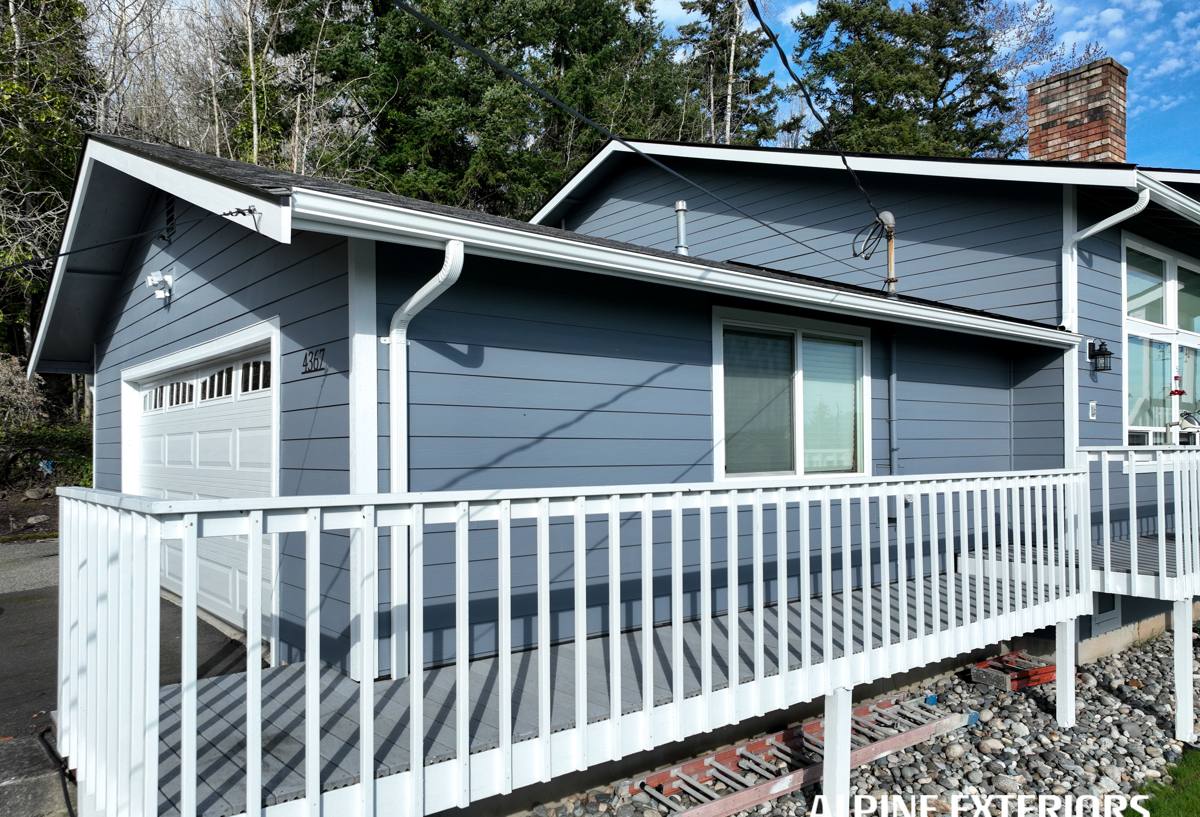
What Whatcom County Weather Does to a Roof
Every roofing material fails in its own particular way. Understanding the failure pattern is how you avoid it.
Moisture that doesn't leave
Driving rain in this area isn't just about volume — it's about direction. Wind-driven rain gets pushed up and under laps, seams, and flashing details that would shed water fine in a calmer climate. A roof here needs underlayment and flashing that assume water will get past the first line of defense, because eventually it will.
Moss and organic growth
A long moss season means anything that holds moisture — granules, rough surfaces, shaded valleys — becomes a growth medium. Moss doesn't just look bad; it holds water against the roofing material and, on asphalt shingles, works its way under tabs over time. Metal doesn't give moss the same foothold, but it's not immune, especially in shaded, north-facing sections or under tree cover.
Salt air and corrosion
Air carrying salt off the Sound accelerates corrosion on any exposed metal — fasteners, flashing edges, cut panel ends. This is a fastener and finish-quality issue more than a "can you use metal here" issue, but it does mean cutting corners on hardware grade is a mistake in this specific region in a way it might not be forty miles inland.
Wind
Open agricultural land around Lynden means fewer windbreaks than in denser, tree-covered parts of the county. Sustained wind plus gusts puts real load on panel fastening patterns and ridge details.
Why Metal Makes Sense for This Kind of Home
Metal roofing isn't the right call for every house or every budget, but for the climate profile above, it solves several problems at once:
- Sheds wind-driven rain efficiently when panels and flashing are lapped correctly for prevailing wind direction
- Gives moss far less to hold onto compared to shingle granules
- Handles freeze-thaw cycling without the granule loss and cracking that ages asphalt roofs early
- Typically outlasts asphalt by two to three times when installed correctly, which matters on a property you plan to keep long-term
- Performs well under sustained wind when the fastening pattern is matched to panel type and roof exposure
None of that is automatic, though. A metal roof installed like an afterthought will underperform a well-installed asphalt roof. The material isn't the whole story — the install is.
Panel Types: What Actually Fits a Lynden Home
Not all metal roofing is the same product wearing different colors. The two broad categories homeowners run into are standing seam and exposed-fastener (sometimes called corrugated or ag-panel) systems, and the right choice depends on the home, the roof pitch, and the budget.
| Factor | Standing Seam | Exposed-Fastener Panel |
|---|---|---|
| Fasteners | Hidden, clipped beneath the seam | Visible, driven through the panel face |
| Long-term weather performance | Excellent — no exposed penetrations for water or corrosion to work at | Good, but exposed fasteners are the first thing to fail and need periodic checking |
| Upfront cost | Higher | Lower |
| Best fit | Primary residences, longer ownership horizon | Outbuildings, shops, budget-driven projects, agricultural-style properties |
| Maintenance | Minimal | Periodic fastener inspection and occasional re-torquing |
Around Lynden, where a lot of properties include a house plus a shop, barn, or outbuilding, we often see both systems on the same lot — standing seam on the house, exposed-fastener on secondary structures. That's a reasonable way to manage budget without compromising the roof that matters most for long-term value and weathertightness.
What a Correct Metal Roof Installation Actually Involves
This is the part that gets skipped when a roof is priced too low or installed too fast. A metal roof is only as good as what's underneath it.
Deck inspection and prep
Before any panel goes down, the decking gets checked for rot, soft spots, and proper fastening. In this climate, we regularly find soft decking under old roofing near valleys and eaves where water has been sitting for years without anyone knowing. That gets replaced, not covered over.
Underlayment matched to the climate
Given how much wind-driven rain this area sees, we don't treat underlayment as a formality. A high-quality synthetic or self-adhered underlayment at eaves, valleys, and penetrations is what actually keeps water out when it gets past the panel seams — which, in a hard winter storm, it eventually will try to do.
Fastening pattern and clip spacing
Panel spacing and clip or fastener spacing need to account for local wind exposure, not just a generic manufacturer minimum. Open, exposed lots need tighter spacing than a home tucked behind mature trees.
Flashing detail work
Ridges, valleys, sidewalls, chimneys, and any roof-to-wall transition are where roofs actually fail — not in the open field of the panels. Correct flashing lap direction, sealant use, and fastener placement at these details is the single biggest differentiator between a roof that lasts twenty years and one that leaks in five.
Ventilation
Metal roofs need proper attic or roof-deck ventilation to avoid trapping moisture underneath the panels, which can lead to condensation issues that have nothing to do with the roofing material itself and everything to do with how the assembly breathes.
How We Approach a Lynden Metal Roof Project
- On-site assessment — we walk the roof, check the decking condition where accessible, look at existing flashing details, and talk through what's driving the project (age, damage, a remodel, or simply wanting something that lasts).
- Honest scope and panel recommendation — we'll tell you plainly whether standing seam or an exposed-fastener system fits your structure and budget, and why.
- Written estimate — clear line items, no vague allowances, so you know what you're paying for before work starts.
- Tear-off or overlay decision — made based on deck condition, not on what's fastest for us. Rotten decking gets replaced; sound decking doesn't get torn out for no reason.
- Installation — deck repair, underlayment, panels, and flashing detail work, in that order, with attention paid specifically to valleys, ridges, and penetrations.
- Final walkthrough — we go over the finished roof with you, including what maintenance (if any) it'll need going forward.
Why a Crew That Already Works Lynden Matters
A roofing crew that treats Lynden as a stop on the way somewhere else has no particular reason to know how prevailing wind hits a given lot, which neighborhoods sit in low-lying areas that hold moisture longer, or how local permitting and inspection actually works in practice versus on paper. We work this area regularly, which means:
- We're not guessing at wind exposure or moss patterns — we've seen how roofs in this specific area actually age
- Scheduling isn't built around a long drive, so timelines are more realistic and callbacks aren't a hassle
- We know what soft decking and corroded fasteners typically look like on homes of a given age here, which speeds up honest assessment
- We're accountable locally — if something needs a follow-up visit, we're not disappearing to the next region
That local familiarity doesn't replace good workmanship, but it removes a lot of the guesswork that leads to under-specified roofs in a climate that doesn't forgive shortcuts.
What Drives the Cost of a Metal Roof
| Cost Factor | Why It Matters |
|---|---|
| Panel type | Standing seam runs higher than exposed-fastener panel due to material and labor for hidden fastening |
| Roof pitch and complexity | More valleys, hips, and penetrations mean more flashing labor, regardless of panel type |
| Deck condition | Rotten or undersized decking adds repair or replacement cost that only shows up once tear-off starts |
| Tear-off vs. overlay | Removing old roofing adds labor and disposal cost but is often the right call given local moisture exposure |
| Underlayment grade | Higher-grade synthetic or self-adhered underlayment costs more upfront and pays off in leak resistance |
| Accessibility | Steep pitch, tall walls, or difficult site access add labor time |
We won't quote a number without seeing the roof, but broadly, a correctly installed metal roof on an average single-family home in this area tends to land in the mid-to-upper range of roofing options — more than a basic asphalt re-roof, less than many premium building materials, and offset over time by the fact that you're not repeating the project in fifteen years.
Maintenance: What a Metal Roof Actually Needs
One of the appeals of metal is how little it asks for afterward, but "little" isn't "none." A short annual checklist covers most of it:
- Clear debris from valleys and around penetrations, especially after fall leaf drop
- Check for moss or organic buildup in shaded areas, particularly on north-facing slopes
- Inspect exposed fasteners (if applicable) for backing out or surface corrosion
- Look at flashing around chimneys, vents, and wall transitions for sealant wear
- Confirm gutters are flowing freely, since a clogged gutter backs water up under the drip edge
None of this requires a specialist visit every year, but a five-minute look after a hard storm season is worth doing, and we're happy to point out what to watch for on your specific roof during the final walkthrough.
Getting Started
If your roof is aging out, showing moss buildup, or you're simply tired of dealing with repairs every wet season, we're glad to come take a look. We'll give you a straightforward, no-pressure estimate and an honest read on what your home actually needs — not an upsell. Use the form below to request a free estimate for your Lynden-area home.