 Ferndale Siding
 Birch Bay's Coastal Climate Is Hard on Roofs
Birch Bay sits right on the water in Whatcom County, and that location is a mixed blessing for the roof over your head. The same salt air and marine exposure that make the area desirable also accelerate wear on roofing materials in ways that homes farther inland don't experience. Add in driving rain that comes sideways off the water during winter storms, plus a moss season that can stretch most of the year under the Pacific Northwest's damp, mild conditions, and you have a roof that's working harder than the manufacturer's warranty documentation probably assumes.
We repair roofs throughout Ferndale and the surrounding Whatcom County communities, and Birch Bay roofs consistently show a different wear pattern than roofs a few miles inland. Understanding that pattern is the first step to fixing it correctly instead of just patching the symptom.
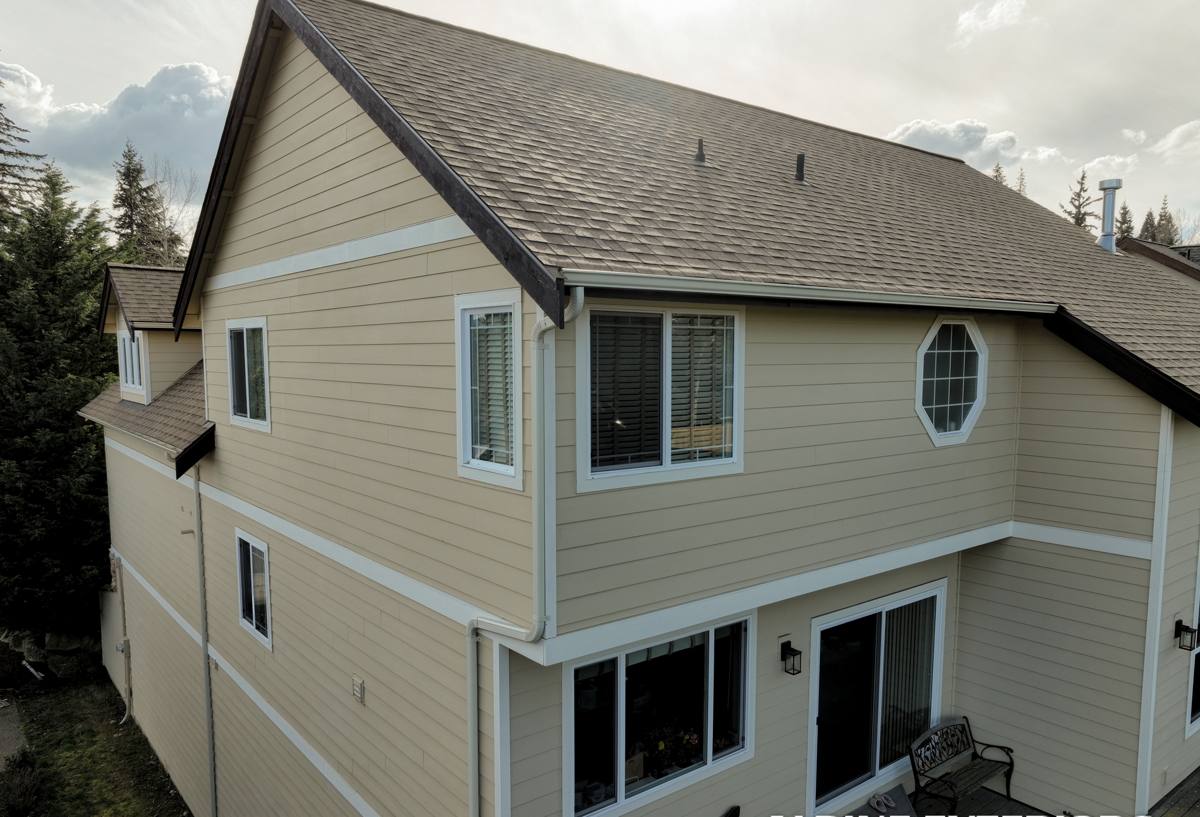
What Salt Air, Rain, and Moss Actually Do to a Roof
Salt Air and Metal Components
Salt-laden air speeds up corrosion on any exposed metal — nail heads, flashing, vent boots, gutter fasteners, and the metal components inside ridge vents. Once a fastener starts to corrode, it loses its grip, and a shingle or panel that was properly secured can start working loose. This isn't a defect in the roof; it's a normal consequence of coastal exposure, and it means metal components near Birch Bay need closer attention and, in some cases, more corrosion-resistant hardware than a standard inland install would use.
Wind-Driven Rain and Flashing
Rain that falls straight down is fairly easy for a roof to shed. Rain that's being pushed sideways by wind off the water is a different problem — it finds its way under shingle edges, around chimney flashing, and into any gap that wouldn't normally see water. Most of the leaks we trace back to storm damage in this area start at a flashing detail, not in the open field of the roof. Valleys, chimneys, skylights, and wall-to-roof transitions are the areas that take the brunt of it.
Moss on Shaded, Damp Slopes
Birch Bay's tree cover and the region's long wet season give moss everything it needs to establish itself, especially on north-facing slopes that don't get enough sun to dry out between rains. Moss isn't just cosmetic. As it grows, it lifts shingle edges, holds moisture against the roofing material, and slowly breaks down the granule surface that protects asphalt shingles from UV and weather. Left unaddressed for a few seasons, a mossy roof section ages significantly faster than a clean one right next to it.
Common Roof Repair Calls We Get in Birch Bay
The repair calls we see in this area tend to cluster around a handful of recurring issues rather than random, one-off problems:
- Wind-lifted or missing shingles after a winter storm, usually along ridges and exposed eaves facing the water
- Flashing leaks at chimneys, skylights, and roof-to-wall intersections
- Moss-damaged shingles on shaded, north-facing slopes
- Corroded or loosened fasteners and vent boot seals
- Gutter and downspout backups that push water under the roof edge instead of away from the house
- Soft or discolored decking discovered once a slow leak is traced to its source
None of these are unusual roofing problems in the abstract — they show up everywhere. What's different here is the frequency and the speed at which they progress if they're left alone.
Signs Your Roof Needs Repair Now
Some damage is obvious after a storm; other damage builds quietly for months before it shows up as a stain on a ceiling. Worth checking for, or having us check for, on a regular basis:
- Granules collecting in gutters or at the base of downspouts
- Visible moss growth, especially green or dark streaking on shaded slopes
- Shingles that look curled, cracked, or lifted at the edges
- Rust staining or gaps around flashing at chimneys and vents
- Water stains or discoloration on interior ceilings, especially near exterior walls
- Daylight visible through the roof deck from inside the attic
- Gutters overflowing during rain instead of draining cleanly
If you're seeing more than one of these at the same time, that's usually a sign the damage has been developing for a while rather than starting with the most recent storm.
What a Correct Repair Actually Involves
A roof repair done right starts with figuring out why the damage happened, not just covering the spot where water got in. A leak at a chimney, for example, might actually originate several feet upslope, with water traveling under the shingles before finding a gap to drip through. Patching the visible drip point without addressing the real entry point means the leak comes back, often in a new spot that's harder to trace the second time.
A correct repair also means matching materials appropriately — using shingles and flashing that are compatible with what's already on the roof, fastening with hardware suited to a coastal environment, and re-establishing proper water-shedding laps and seals at every disturbed edge. It means checking the decking underneath any area with sustained moisture exposure, since a repair over rotted or delaminated decking won't hold regardless of how well the surface work is done. And it means treating and removing moss properly rather than just scraping the visible growth, since roots and spores left behind will simply regrow.
Our Repair Process
- Inspection. We walk the roof (or use a lift/camera where pitch or access makes that unsafe) and check the attic from inside where possible, tracing suspected leaks back to their actual source rather than assuming the obvious spot.
- Written estimate. You get a clear explanation of what's actually wrong, what it will take to fix it correctly, and an honest range for the cost before any work starts.
- Repair. We replace damaged materials, correct flashing and sealing details, address any moss or moisture issues at the source, and match materials to what's already on the roof wherever possible.
- Cleanup and walkthrough. We clear debris, check gutters and downspouts are clear and functioning, and walk you through what was done and what to watch for going forward.
Repair or Replace? Key Factors to Weigh
Not every roof problem calls for a full replacement, and not every repair is a good long-term investment. These are the factors that typically tip the decision one way or the other:
| Factor | Leans Toward Repair | Leans Toward Replacement |
|---|---|---|
| Roof age | Well within expected lifespan | Near or past manufacturer's expected life |
| Extent of damage | Localized to one or two areas | Spread across multiple slopes |
| Repair history | First or second repair | Repeated repairs to the same areas |
| Decking condition | Solid, no rot found | Soft, delaminated, or water-damaged |
| Moss/moisture pattern | Surface growth, recently developed | Long-term moisture damage under the surface |
We'll tell you honestly which side of this table your roof falls on. If a repair will genuinely hold up, we'll recommend the repair — a full tear-off isn't the right call just because it's available.
Why a Crew That Already Works Birch Bay Matters
Roofing crews that mostly work inland don't always account for the extra corrosion protection, flashing detail, and moss management that coastal Whatcom County properties need. A repair that would hold up fine on a sheltered inland roof can fail early on a Birch Bay home facing open water and wind. Working this area regularly means we already know which slopes take the worst of the wind-driven rain, which fastener and sealant choices actually hold up under salt exposure, and how aggressive the moss situation tends to get on shaded roofs near the tree line — so the repair is built for the conditions it actually has to survive, not generic conditions.
Keeping Your Roof Between Repairs
A repair holds up longest when it's supported by basic maintenance in between. A few habits go a long way on a Birch Bay roof:
- Clean gutters and downspouts at least twice a year, more often if there's heavy tree cover
- Have moss treated before it spreads, rather than waiting until it's visibly thick
- Trim back branches that keep a section of roof shaded and damp
- Do a visual check after any major windstorm, especially looking for lifted or missing shingles
- Address small leaks quickly — a slow drip left for a season can turn into a decking repair
None of this replaces a professional inspection, but it does reduce how often you need one done on an emergency basis.
If you're noticing moss, a stain on a ceiling, or shingles that don't look right after the last storm, we're happy to take a look and give you a straight answer — no pressure, no upsell, just an honest assessment and a free estimate for whatever the roof actually needs.