 Ferndale Siding
 Birch Bay Decks Face a Different Kind of Wear
A deck in Birch Bay does not age the same way a deck fifteen miles inland does. Homes here sit close enough to the water that salt-laden air moves through the neighborhood almost constantly, and that air does things to fasteners, wood grain, and finishes that a typical Ferndale-area deck never has to deal with. Add in Whatcom County's long stretch of driving rain each fall and winter, plus a moss season that can run from October well into spring, and you have a structure that's under near-continuous attack from three directions at once.
Most deck problems we find in Birch Bay aren't dramatic. They're slow: a ledger board that's been quietly absorbing water for two winters, joist hangers with surface corrosion nobody's looked at since installation, or a boards' worth of moss holding moisture against the decking day after day. By the time a homeowner notices a soft spot underfoot or a rail that flexes more than it should, the damage has usually been building for a while.
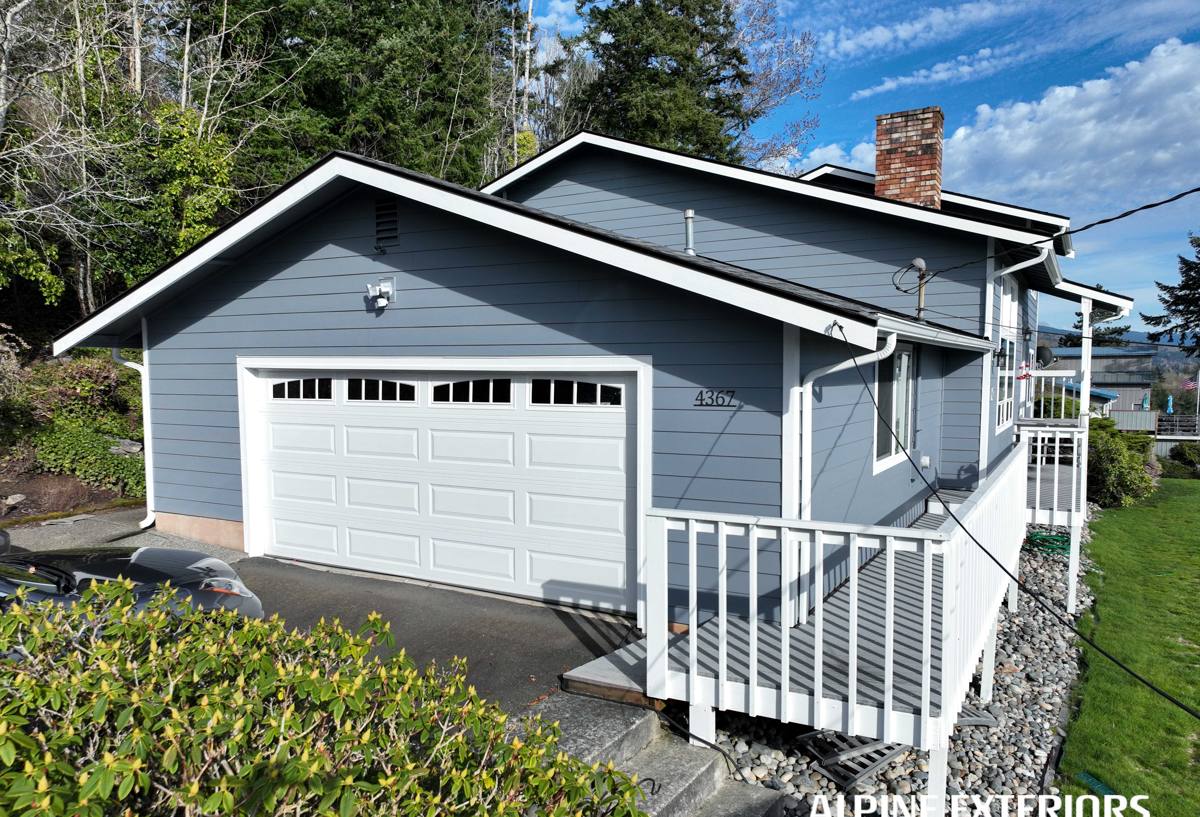
How Salt Air, Rain, and Moss Actually Damage a Deck
Salt Air and Metal Hardware
Salt in the air accelerates corrosion on anything metal — nails, screws, joist hangers, post bases, bolts. Standard galvanized coatings that hold up fine inland can start breaking down faster in a coastal air pattern like Birch Bay's, especially on the underside of a deck where hardware stays damp longer and dries slower. Corroded fasteners lose holding strength gradually, which is exactly why they tend to fail without much warning.
Driving Rain and Water Intrusion
Wind-driven rain doesn't just fall on a deck, it gets pushed sideways into gaps — around ledger boards, under flashing, into end-grain cuts that were never sealed. Water that gets into end grain or behind a ledger board where the deck attaches to the house is the single most common source of structural rot we find, because it's hidden and it doesn't dry out between storms the way an open, sun-exposed board does.
Moss and Trapped Moisture
Moss doesn't just look bad. It holds moisture directly against the decking surface for weeks at a time, which softens wood fibers, keeps composite boards constantly damp, and turns any board with cupping or narrow gaps into a moss farm. On stairs and shaded sections of decking, moss buildup also becomes a slip hazard on top of a maintenance headache.
Signs Your Deck Needs Repair, Not Just a Cleaning
A pressure wash and a coat of sealer solves a surface problem. It does not solve a structural one. Here's how to tell which one you're dealing with:
- Boards that feel spongy, spring back slowly, or flex noticeably underfoot
- Visible gaps, cracking, or splitting concentrated around fastener heads
- Rust streaking below joist hangers, post bases, or screw heads
- A ledger board area that stays damp long after the rest of the deck has dried
- Railings or posts that wiggle when pushed, rather than staying rigid
- Persistent moss or algae that returns within weeks of cleaning
- Stair stringers that show cracking or noticeable sag at the treads
If you're seeing any of the structural items on that list — spongy boards, hardware rust, ledger dampness, loose railings, or stringer damage — that's a repair issue, not a cleaning one, and it's worth having someone look at the framing underneath, not just the visible boards.
What a Correct Deck Repair Actually Involves
A repair that only replaces what's visible from above often misses the point. The decking boards are the easiest part of a deck to inspect and the cheapest to replace — the framing underneath is where the real structural questions live. A repair done right in a coastal, wet climate like Birch Bay's generally covers:
Structural Inspection First
Before replacing a single board, we check the ledger connection to the house, the condition of joists and beams, post bases, and every hanger and fastener we can access. Cosmetic damage on top can hide structural damage underneath, and it's the underneath part that determines whether a deck is actually safe.
Matching Repair to Cause
Swapping a rotted board for a new one without addressing why it rotted just buys a few more years before the same spot fails again. If the cause is a flashing gap letting driving rain behind the ledger, that gap gets fixed. If it's a fastener corroding from salt exposure, it gets replaced with hardware rated for that exposure, not just the same part that failed.
Fastener and Hardware Upgrades
In a salt-air environment, this is often the difference between a repair that lasts five years and one that lasts fifteen. Stainless steel or coastal-rated fasteners cost more upfront than standard galvanized hardware, but for the areas most exposed to salt air and standing moisture, that upfront cost is small compared to redoing the same repair twice.
Repair vs. Replacement: How We Help You Decide
Not every deck with problems needs to come out. But a deck with widespread framing damage usually isn't worth patching piecemeal. Here's how we walk through that decision with homeowners:
| Factor | Favors Repair | Favors Replacement |
|---|---|---|
| Framing condition | Joists and ledger are sound, damage is localized | Rot or corrosion is widespread across the frame |
| Age of structure | Deck is under 12-15 years old | Deck is at or past typical service life |
| Extent of damage | Isolated boards, rails, or stair sections | Damage recurring across multiple areas each year |
| Original build quality | Proper flashing and fastener spacing in place | Missing flashing, undersized framing, or code gaps |
| Cost over time | Targeted fix addresses the actual cause | Repairs would need repeating within a few years |
We'll always tell you honestly which side of that table your deck falls on. A repair we know will need redoing in three years isn't a good use of your money, and we'll say so.
Our Deck Repair Process
- On-site assessment — we inspect the decking, framing, ledger connection, hardware, and railings, checking both what's visible and what's underneath
- Honest scope and estimate — you get a clear breakdown of what needs repair, what's optional, and what we'd recommend against doing (like a targeted patch on a deck with deeper problems)
- Removal of damaged material — rotted boards, corroded hardware, and any compromised framing are removed down to sound wood
- Structural repair — joists, beams, ledger flashing, and post connections are repaired or reinforced as needed
- Rebuild with appropriate materials — new boards, coastal-rated fasteners, and hardware sized for the exposure this deck actually gets
- Final check — railings tested for rigidity, stairs checked for level and secure fastening, drainage confirmed around the ledger
Materials That Hold Up in a Coastal, Wet Climate
What we use for a repair in Birch Bay isn't always the same as what we'd use fifteen miles inland. A few of the decisions that matter most here:
Wood vs. Composite
Both have a place. Wood decking is more affordable upfront and can be repaired board-by-board without matching an exact discontinued product line. Composite decking resists moss and moisture absorption better over time but comes with a higher upfront cost and, on some products, a more involved repair if a board is damaged, since certain hidden-fastener systems are more time-consuming to disassemble than a standard wood deck. We'll walk you through which makes more sense for your specific deck and budget rather than defaulting to one or the other.
Fasteners and Hardware
For repairs in salt-air exposure, we lean toward stainless steel or hardware specifically rated for coastal or high-corrosion environments in the areas most exposed — ledger connections, post bases, and anything on the underside of the deck that stays damp longest.
Flashing and Water Management
Ledger flashing is one of those details that's invisible once the deck is finished but does more to prevent rot than almost anything else. On a repair, we make sure it's actually diverting water away from the house rather than just present.
After the Repair: Keeping It That Way
A good repair still needs some upkeep in this climate, especially with moss season being what it is here. A simple seasonal routine goes a long way:
- Clear moss and debris from decking and stairs before it has a chance to build up, particularly in shaded areas
- Check the ledger board area for dampness after heavy rain events
- Look at railings and stair connections for looseness once or twice a year
- Reapply sealer or finish on wood decking on the manufacturer's recommended schedule, not just when it looks faded
- Keep gutters and downspouts near the deck clear so runoff isn't draining directly onto or under it
Why Working With a Crew That Knows Birch Bay Matters
A contractor who mostly works inland can still do competent carpentry, but they may not think to spec coastal-rated fasteners, or know that a particular ledger detail is a recurring failure point on homes exposed to this section of Whatcom County's coastline. We work on decks in Birch Bay and along the rest of the county's coastal areas regularly, so we're not guessing at what the salt air and rain pattern here do to a structure over time — we've seen it, repaired it, and know which fixes actually last.
If your deck is showing any of the signs above, or you just want an honest read on its condition before another wet season sets in, we're glad to take a look. Estimates are free, there's no pressure, and you'll get a straight answer about whether you're looking at a repair or something bigger.