 Ferndale Siding
 Birch Bay Siding Takes a Different Kind of Beating
Birch Bay sits right up against the Strait of Georgia, and that proximity to open water changes what siding has to survive. Homes a few miles inland in Ferndale deal with plenty of rain, but Birch Bay adds salt-laden air riding in on the wind, near-constant exposure on the water-facing sides of a house, and a moss season that runs longer than most homeowners expect in a normal Whatcom County winter. None of that is dramatic on its own. It's cumulative. A house that looks fine in July can be hiding damage that's been building since the previous fall, and by the time it shows up as a soft spot or a stain, the repair is usually bigger than it needed to be.
We work on siding throughout Ferndale and the surrounding county, but Birch Bay calls come with their own pattern. Salt air accelerates corrosion on fasteners and metal trim. Driving rain off the water finds gaps that would stay dry on a more sheltered lot. And moss doesn't just sit on the roof — it colonizes shaded siding, retains moisture against the surface, and works into seams that were never meant to stay wet as long as they do here.
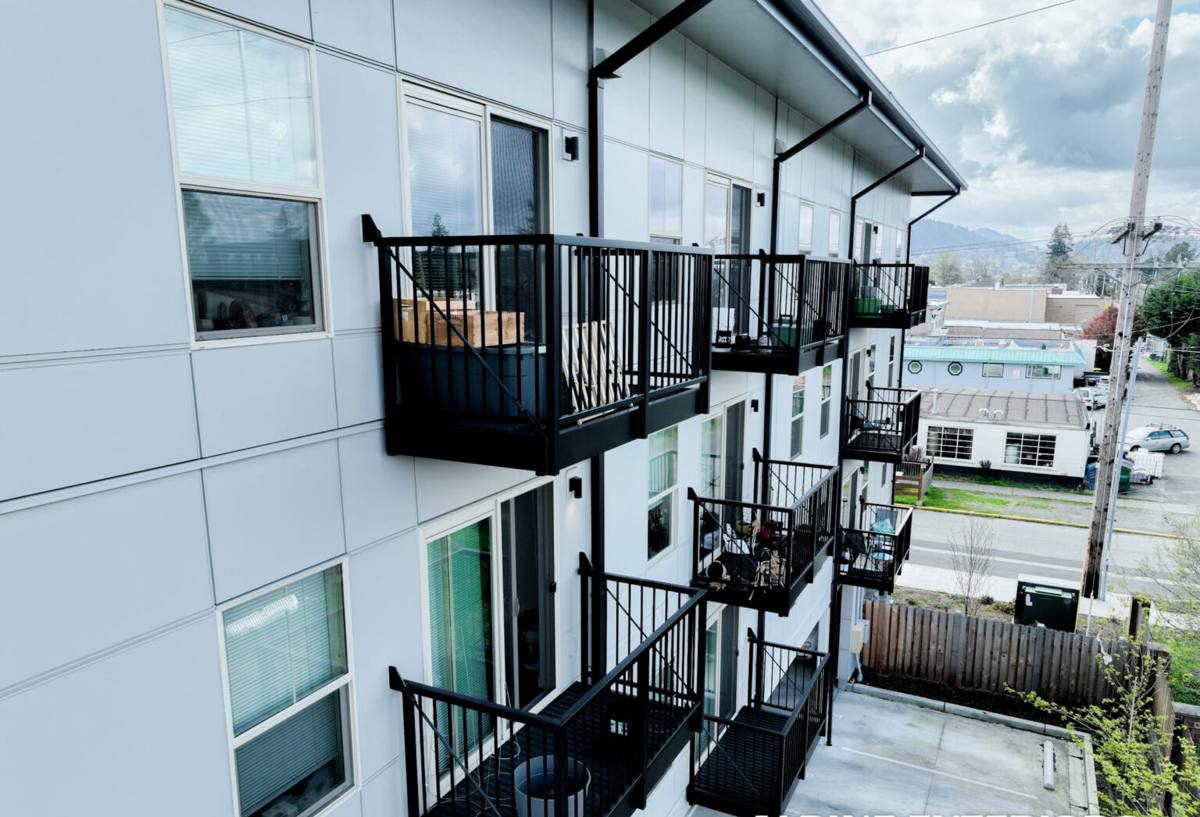
Signs a Birch Bay Home Needs Siding Repair
Most siding failures don't announce themselves. They start small and get ignored because they don't look urgent. Here's what we tell Birch Bay homeowners to watch for, especially on walls facing the water or sitting under tree cover:
- Soft or spongy spots when you press on the siding, especially near the bottom courses and around window trim
- Paint that's bubbling, peeling, or chalking faster on one side of the house than the others
- Visible moss or dark green-black streaking that keeps returning after cleaning
- Gaps opening up at seams, corners, or where siding meets trim, window frames, or the foundation
- Rust bleeding from nail heads or metal flashing — a common early sign of salt exposure
- Musty smell or visible staining on interior walls that back up to exterior siding
- Warping, cupping, or separation of siding boards, particularly on older wood or engineered wood products
Any one of these can be minor. Several together, especially on the side of the house that takes the weather, usually means water has been getting behind the siding for a while.
What a Correct Repair Actually Involves
A lot of "siding repair" in this climate is done wrong — not out of laziness, but because it's tempting to treat the symptom instead of the cause. Caulking over a crack or nailing a loose board back down might look fine for a season, but if there's already moisture trapped behind the siding, sealing it in makes the problem worse, not better.
Diagnosis before anything gets touched
A proper repair starts by figuring out how water is getting in and how far it's traveled. That means pulling the damaged section and checking the house wrap or building paper behind it, inspecting the sheathing for soft spots or delamination, and tracing the path back to its source — often a failed flashing detail, a gap at a penetration, or a seam that was never sealed correctly to begin with.
Fixing the water path, not just the cosmetic damage
If the underlying moisture barrier or flashing is compromised, that gets repaired or replaced first. Patching new siding over damaged flashing just relocates the failure a year or two down the road.
Matching materials correctly
Replacement pieces need to match the existing siding's profile, reveal, and finish closely enough that the repair doesn't stick out — and they need to be installed with the same attention to fastener placement, caulking at the right joints only, and clearance from grade and rooflines that the rest of the house should have had from day one.
The Usual Culprits in Birch Bay
Salt Corrosion
Fasteners, metal flashing, and trim take the brunt of salt exposure. Once corrosion starts on a fastener, it can stain the siding around it and eventually lose its grip, which is how a single rusted nail turns into a loose board.
Wind-Driven Rain
Rain that comes in sideways off the water finds weaknesses that vertical rain never would — gaps at trim boards, undersized overlaps, or caulk joints that were fine for years until the bead finally gave out. Water-facing walls almost always show more wear than the rest of the house.
Moss and Prolonged Moisture
Shaded, north-facing, or tree-covered sections of siding stay damp longer after every rain, which is exactly what moss and algae need to take hold. Left alone, that growth holds moisture directly against the siding surface, which is hard on any material and can be especially damaging to wood-based products that swell, soften, or delaminate when they can't dry out between storms.
Repair vs. Replacement: How We Make the Call
Not every damaged section needs a full re-side, and we don't push replacement when a targeted repair will hold up. But there are situations where patching isn't the honest answer, and we'll tell you that plainly instead of billing you for a repair that won't last.
| Factor | Repair usually makes sense | Replacement is the honest call |
|---|---|---|
| Extent of damage | Isolated to one or two sections | Spread across multiple walls or the whole water-facing side |
| Sheathing condition | Dry and solid behind the damaged siding | Soft, delaminated, or showing rot when opened up |
| Siding material | Still structurally sound, just locally damaged | Original material is failing systemically (warping, chronic moisture absorption) |
| Age of siding | Mid-life, otherwise performing well | Near or past its expected service life |
| Match availability | Replacement pieces can match closely | Discontinued profile or finish, patch would be visibly mismatched |
When the damage is contained and the sheathing underneath is sound, repair is the right call and we'll do it that way. When we open a wall and find rot has spread, or the same failure is showing up in three or four places, telling you to keep patching wouldn't be honest work.
Our Repair Process
- On-site inspection. We look at the damaged area and the sections around it, including trim, flashing, and any spots where water tends to collect on that specific lot.
- Opening it up. If there's any sign moisture has gotten behind the siding, we remove enough material to see the sheathing and moisture barrier directly rather than guessing.
- Straight answer on scope. You get a clear explanation of what we found, what a proper repair involves, and — if it's warranted — why replacement would serve you better than patching.
- Correct the water path first. Flashing, house wrap, and any sheathing damage get addressed before new siding goes back on.
- Match and finish. Replacement siding is fitted, fastened, and sealed to match the surrounding wall, with fasteners and flashing details chosen with the local salt exposure in mind.
Why Working with a Crew That Already Knows Birch Bay Matters
Siding repair isn't the same job on every lot. A wall that's fully exposed to weather coming off the water needs different flashing attention than a wall tucked under trees dealing with constant shade and moss. A crew that regularly works Whatcom County's coastal edge already knows which walls on a Birch Bay house are likely to be the problem spots before they even climb a ladder, and they're not guessing at what "normal wear for this climate" looks like versus damage that needs fixing now. That familiarity shows up in fewer surprises, fewer callbacks, and repairs that are built for the exposure the house actually has — not a generic inland assumption.
When Repair Isn't Enough: What We Install Instead
We install James Hardie fiber cement siding exclusively — we don't install vinyl, LP SmartSide, Cemplank, Allura, primed spruce, or cedar. That matters most on repair calls that turn into a replacement conversation. Fiber cement doesn't rot, doesn't feed moss the way some wood-based products can, and holds up to salt air and driving rain without the swelling or delamination risk that comes with materials that absorb moisture. Hardie's factory-applied ColorPlus finish is also built to resist the fading and chalking that coastal UV and salt exposure accelerate on field-painted surfaces, and it's backed by a strong transferable warranty when installed to spec.
If your existing siding is a material we don't install and it's failing broadly rather than in one isolated spot, we'll say so directly, explain why we'd recommend replacing that section — or eventually the wall — with Hardie rather than continuing to patch a product that's fighting this climate on its own terms, and let you decide from there with real information instead of a sales pitch.
Maintenance That Extends the Life of a Repair
A good repair should last. A few habits help it last longer in a salt-air, high-moisture environment:
- Rinse salt residue off exterior walls a couple of times a year, especially on water-facing sides
- Keep gutters clear so water isn't overflowing directly onto siding below
- Trim back vegetation and tree cover that's keeping a wall shaded and damp longer than it should be
- Address moss with a gentle wash rather than pressure that can drive water into seams
- Have caulking at trim and penetrations checked every year or two — it's cheap to redo and expensive to ignore
If you're seeing soft spots, staining, persistent moss, or trim that's pulling away on a Birch Bay home, we're glad to take a look and give you a straight read on whether it's a repair or something bigger. The estimate is free, there's no pressure either direction, and you'll get an honest answer either way — use the form below to get started.