 Ferndale Siding
 Why Birch Bay Decks Wear Out Faster Than You'd Expect
Birch Bay sits right on the water, and that changes what a deck goes through year to year compared to a deck a few miles inland. Salt-laden air corrodes fasteners, hardware, and any exposed metal connectors faster than it would in a typical Whatcom County yard. Add in driving rain that comes sideways off the water during winter storms, plus a moss season that can stretch from late fall well into spring, and you've got a structure that's under near-constant moisture and corrosion pressure for a big chunk of the year.
Most decks in this area don't fail because the wood or composite material was bad. They fail because moisture found a way into a joint, a ledger board, or a fastener that wasn't rated for a marine-adjacent environment, and that small entry point slowly turned into rot, soft spots, or a structural issue underneath a deck that still looks fine from the top. By the time you notice sagging boards, spongy spots, or rust streaks bleeding through the finish, the damage has usually been building for a while.
What "Coastal Exposure" Actually Does to a Deck
- Accelerates corrosion on nails, screws, joist hangers, and post bases — even galvanized hardware has a shorter useful life near salt water
- Keeps deck surfaces damp longer after rain, which feeds moss and algae growth on horizontal surfaces
- Drives moisture into end grain and fastener holes, where it's slowest to dry out and most likely to start rot
- Wears finishes and sealers down faster, meaning a maintenance schedule that works inland often isn't frequent enough right on the bay
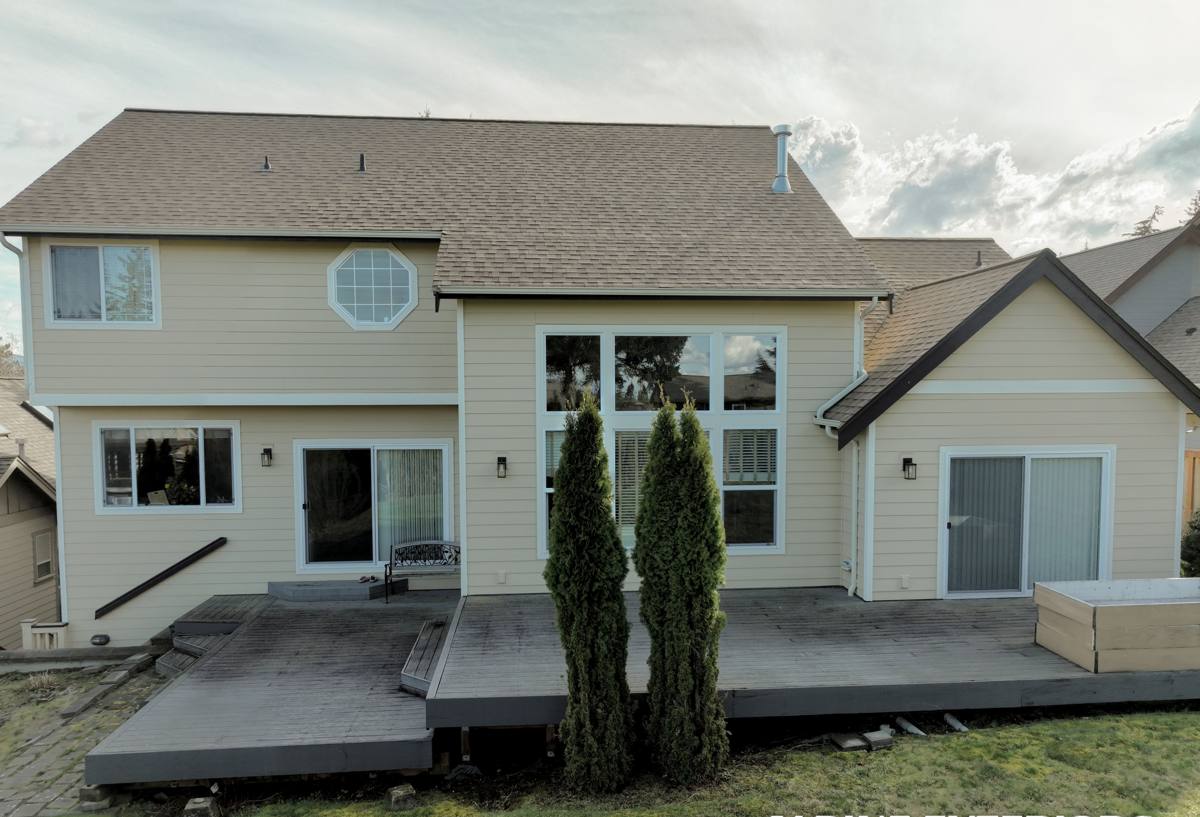
Signs a Birch Bay Deck Needs Replacing, Not Patching
Not every worn deck needs a full replacement. But there's a point where spot repairs stop making sense and a full rebuild is the more honest recommendation. We look at a handful of things when we're deciding which side of that line a deck falls on.
| Condition | Repair Usually Works | Replacement Usually Needed |
|---|---|---|
| Soft or spongy decking boards | If isolated to a few boards | If spread across multiple areas or near the ledger |
| Rust staining on hardware | Surface staining only, structure sound | Hardware crumbling or fasteners pulling loose |
| Ledger board attachment to house | Rarely repairable in place | Almost always requires rebuild if compromised |
| Post and beam condition | Individual post replacement possible | Widespread rot means full structural rebuild |
| Railings loose or wobbly | Often reattachable | If posts below are rotted, railing alone won't fix it |
| Deck age | Under 10-12 years, well-maintained | Original construction from an era of lighter-duty hardware |
The ledger board — where the deck attaches to your house — deserves special attention here. It's the single most common failure point on older decks, and it's also the hardest to inspect without pulling boards, because it's usually hidden under decking and flashing that may or may not have been installed correctly the first time.
What a Correct Deck Replacement Involves
A deck replacement done right isn't just swapping old boards for new ones. It's an opportunity to fix the structural and moisture-management issues that caused the old deck to fail in the first place, especially in a location with the kind of exposure Birch Bay gets.
Structural Work
- New or reinforced footings and posts sized correctly for the deck's height, span, and local load requirements
- Proper ledger board flashing and attachment to the house, so water is directed away from the connection instead of into it
- Joist spacing and hardware selected for the actual decking material going down, not just whatever was on hand
- Corrosion-resistant fasteners and connectors rated for coastal or high-moisture exposure — this matters more here than almost anywhere else in the county
Surface and Drainage
- Decking material chosen with moss resistance and moisture behavior in mind, not just looks
- Proper board spacing so water and debris don't pool and hold moisture against the surface
- Railings and stairs rebuilt to current standards, not just reattached to whatever was there before
We build permits into the process when the scope requires one — deck replacements involving structural changes, height above a certain threshold, or attachment to the house typically need a permit through Whatcom County or the applicable local jurisdiction, and skipping that step can create real problems at resale or insurance time.
Material Choices for a Salt-Air Environment
There's no single "best" decking material for every home — it depends on budget, maintenance tolerance, and how close to the water the deck sits. What we can tell you honestly is how each option tends to hold up under the driving rain and salt exposure Birch Bay sees.
Wood Decking
Pressure-treated wood is the most budget-friendly option and can perform well if it's properly sealed and re-sealed on a regular schedule — which in a coastal location means more often than the manufacturer's general guidance suggests. Cedar has natural rot resistance and a look a lot of homeowners prefer, but it still needs consistent maintenance in this climate. The tradeoff with any wood decking here is simple: it costs less upfront but asks for more of your time and attention every year to keep moisture and moss from getting ahead of it.
Composite Decking
Composite materials cost more initially but cut down significantly on the sanding, staining, and sealing that wood requires. They also tend to resist moss and algae growth better than wood, which matters given how long Birch Bay's moss season runs. The tradeoff moves the other direction — composite is a bigger upfront investment, and the substructure underneath still needs to be built correctly, since composite decking doesn't forgive a poorly built frame any more than wood does.
Hardware and Fasteners
Whatever decking material you choose, the hardware holding it together matters just as much in this environment. We use corrosion-resistant fasteners and connectors suited to coastal exposure as our standard practice on Birch Bay projects — not because standard hardware is defective, but because the salt air here shortens its working life enough that it's not the right tradeoff for a structure you want to last.
Our Deck Replacement Process
- On-site assessment. We inspect the existing deck's structure, ledger attachment, posts, and footings to determine what's actually driving the failure — not just what's visible on the surface.
- Honest scope and estimate. You get a clear breakdown of what needs to be replaced versus what can stay, along with material options and their real tradeoffs for your specific exposure and budget.
- Permitting. If the scope requires a permit, we handle that process so the finished deck is compliant and documented.
- Demolition and disposal. Old decking, hardware, and any rotted structural components are removed and hauled off.
- Structural rebuild. Footings, posts, beams, joists, and ledger attachment are built or reinforced to current standards with coastal-appropriate hardware.
- Decking, railing, and stairs installed. Final surfaces go down with attention to spacing and drainage, not just appearance.
- Final walkthrough. We go over the finished deck with you, including what maintenance schedule makes sense for its specific material and exposure.
Why Hiring a Crew That Already Works Birch Bay Matters
A deck built to a generic inland spec doesn't hold up the same way here. Contractors who don't regularly work this close to the water can underestimate how fast salt air degrades standard hardware, or how long moss season actually runs compared to the rest of Whatcom County. That shows up later as premature rust, soft ledger boards, or a deck that needs re-sealing far more often than the homeowner was told to expect.
We work throughout the Ferndale area, including Birch Bay, and we build our material and hardware recommendations around what this specific stretch of coastline actually does to a structure over time — not a one-size-fits-all spec sheet. That means straight answers about which materials are worth the extra cost here, which corners genuinely can't be cut, and a realistic maintenance plan once the deck is done.
What to Ask Any Contractor Before Hiring Them for a Coastal Deck
- Do you use corrosion-resistant hardware as standard practice, or only on request?
- How do you handle ledger board flashing and attachment to the house?
- Will you pull a permit if the scope requires one?
- What's your experience with decks specifically in Birch Bay or similarly exposed coastal areas?
- What maintenance schedule do you recommend for the material you're proposing, given this location?
If your Birch Bay deck is showing rust, soft spots, or just isn't holding up the way it used to, we're happy to take a look and give you a straight assessment. Fill out the form below for a free, no-pressure estimate.