 Ferndale Siding
 Why Birch Bay's Climate Is Hard on Windows
Birch Bay sits right on the water in Whatcom County, which means homes here take a different kind of weathering than houses a few miles inland in Ferndale or Bellingham. Salt-laden air moves off the bay year-round, driving rain comes in sideways during fall and winter storms, and the long stretch of wet, low-sun months from October through April keeps wood, caulk, and hardware damp for weeks at a time. None of that is dramatic on its own, but added together over years it's exactly the kind of slow exposure that finds every weak point in a window's installation.
Salt Air and Hardware
Airborne salt is corrosive to unprotected metal. Locks, hinges, balance mechanisms, and screws that aren't rated for coastal exposure can start pitting or seizing years before they would inland. This is less about the glass and more about the small moving parts that make a window open, close, and lock properly.
Wind-Driven Rain
Rain that's being pushed horizontally by wind off the bay behaves differently than a straight-down shower. It finds gaps at the top and sides of a window opening that would never leak in calmer weather. That's why flashing details at the head and jambs matter more here than they would on a more sheltered inland lot.
Moss and the Long Wet Season
Shaded sills, north-facing walls, and anywhere air doesn't move much tend to grow moss and algae on window trim and sills. Beyond the cosmetic issue, that growth holds moisture against wood and paint, which shortens the life of both if it's never cleaned off.
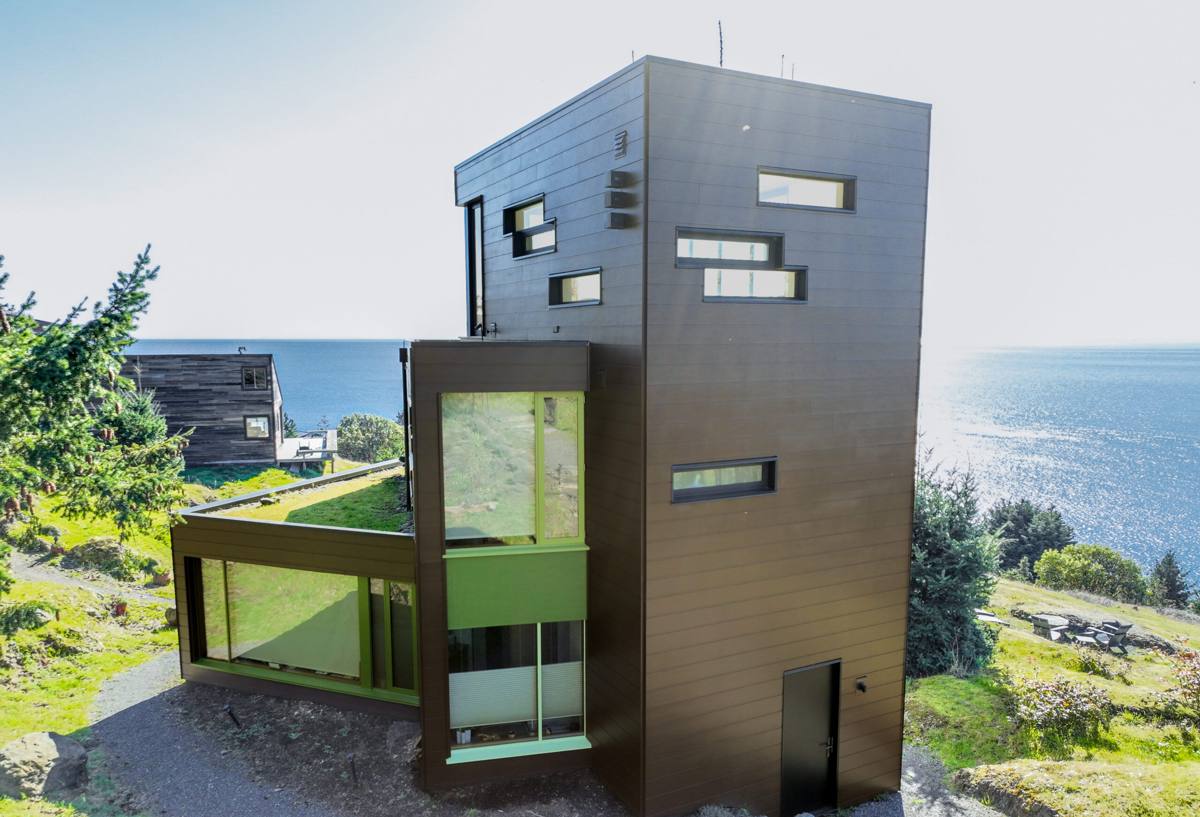
Signs a Birch Bay Home May Need New Windows
Coastal exposure tends to show up as a handful of specific symptoms rather than one obvious failure. Worth checking for:
- Fogging or a milky haze between the panes of glass — the seal between the layers has failed
- Wood around the frame or sill that feels soft, spongy, or crumbles under light pressure
- Locks, cranks, or hardware that are stiff, corroded, or won't fully engage
- Noticeable drafts or cold spots near the frame even with the window closed
- Cracked or missing caulk, or gaps where trim has pulled away from the wall
- Persistent moss, algae, or black staining on the sill or bottom rail
- Windows that have swelled and are difficult to open, especially after a wet stretch
Any one of these on its own might just need a repair or a re-caulk. Several together, especially on the same window, usually points to a bigger problem behind the trim.
Choosing Window Materials for a Coastal Property
Material choice matters more in Birch Bay than it does a few miles inland, mostly because of how each option handles salt air and sustained moisture. Here's how the common options compare for this specific setting:
| Material | Salt-Air Durability | Moisture Tolerance | Maintenance |
|---|---|---|---|
| Vinyl | Strong — won't corrode or rust | Good, provided drainage is installed correctly | Low; occasional rinsing |
| Fiberglass | Strong — very stable in salt air | Excellent; resists swelling and warping | Low; higher upfront cost |
| Wood / wood-clad | Weak unsealed, better with a durable exterior cladding | Requires diligence; end grain is the risk point | Highest; regular inspection and refinishing |
| Aluminum | Prone to pitting and corrosion in marine air over time | Conducts cold and can condense heavily in our wet winters | Moderate to high |
We're not against aluminum or wood windows as products — both have their place — but for a property this close to the bay, we steer homeowners toward vinyl or fiberglass unless there's a specific architectural reason to do otherwise. It's a maintenance and moisture-behavior call, not a knock on any manufacturer.
What a Correct Installation Actually Involves
Most window failures we see in coastal homes aren't a bad window — they're a window that was set into the wall incorrectly. A correct installation is mostly about water management, not the window itself.
Sill Pan Flashing
A sloped sill pan at the bottom of the rough opening gives any water that gets past the window a way out instead of a place to sit. On a property exposed to driving rain off the bay, this step isn't optional — it's the single biggest factor in whether a window stays dry over the next twenty years.
Shingled Flashing at the Head and Jambs
Flashing tape and building paper need to be layered like shingles — each piece overlapping the one below it — so water is always directed outward and down, never trapped behind the siding. Done out of order, flashing can actually funnel water into the wall instead of away from it.
Shimming, Sealing, and Insulating
The window needs to be shimmed level and square so it operates smoothly for years, not just on install day. The gap around the frame should be insulated without overfilling with expanding foam, which can bow the frame. Sealant goes at specific points, not slathered everywhere as a substitute for proper flashing.
Insert Replacement vs. Full-Frame Replacement
One of the first decisions on any project is whether we replace just the window unit inside the existing frame (an insert or "pocket" replacement) or remove everything down to the rough opening (full-frame). The right call depends on the condition of what's already there.
| Factor | Insert Replacement | Full-Frame Replacement |
|---|---|---|
| Best for | Sound, dry existing frames | Frames with rot, water damage, or that are out of square |
| Relative cost | Lower | Higher — more labor and materials |
| What it addresses | The window unit only | The window, flashing, and framing together |
| Coastal durability | Good, if the frame was already healthy | Best long-term option when moisture damage is present |
In Birch Bay specifically, we don't recommend an insert replacement until we've actually opened up the opening or trim enough to confirm there's no hidden rot. Given the exposure here, it's common to find damage that wasn't visible from inside the house, and installing a new window over a compromised frame just locks the problem in behind fresh trim.
Our Installation Process
- On-site inspection of existing windows, trim, and the surrounding wall for signs of water intrusion or rot
- Review of material and product options based on the home's exposure and your budget
- Precise measurement and ordering to the actual opening, not a catalog standard size
- Careful removal of the old window with an inspection of the rough opening before anything new goes in
- Repair of any damaged framing found, followed by sill pan and flashing installation
- Setting, leveling, and shimming the new window, then fastening per manufacturer specs
- Insulating the gap and sealing at the correct points — not everywhere
- Interior and exterior trim work and final finishing
- Walkthrough with you to confirm operation and answer questions before we leave
Why a Crew That Already Works Birch Bay Matters
Window installation isn't a one-size-fits-all trade, and coastal work in particular rewards experience with the specific conditions of a place. A crew that has already worked on homes around Birch Bay has a working sense of which walls take the worst of the wind, what rot at a sill typically looks like after a decade of salt exposure here, and which flashing details actually hold up through a Whatcom County winter versus which ones look fine on install day and fail three years later. That familiarity shortens the guesswork on your project and reduces the odds of a callback.
There's also a practical side to hiring local: if a question comes up after the job, or you want someone back out to check something before the next storm season, a Ferndale-based crew can get to Birch Bay without it being a special trip.
Caring for New Windows in a Salt-Air Environment
A correctly installed window in quality material needs very little upkeep, but a small amount of regular attention goes a long way this close to the water.
- Rinse exterior frames and glass periodically to clear salt residue, especially after windy weather off the bay
- Keep hardware — locks, hinges, cranks — lightly lubricated so it doesn't seize
- Clear weep holes at the bottom of the frame so water has somewhere to drain
- Check caulking once a year and touch up any spots that have cracked or pulled away
- Trim back vegetation or anything shading a window that's collecting moss or staying damp longer than it should
If you're noticing drafts, fogged glass, sticking sashes, or soft wood around your windows, we're happy to take a look and give you a straight answer about whether it's a repair, an insert replacement, or a full-frame job — no pressure either way. Reach out for a free estimate using the form below.