 Ferndale Siding
 Why Birch Bay's Coastal Climate Is Tough on Windows
Birch Bay sits right on the water, and that location cuts both ways. The views are part of why people love living there, but the same exposure that makes the bay beautiful also makes it one of the harder places in Whatcom County to keep a window system healthy. Homes closer to the shoreline take on salt-laden air, wind-driven rain, and near-constant humidity in a way that inland Ferndale properties simply don't experience to the same degree. Window replacement in Birch Bay isn't just a cosmetic upgrade — it's a defense against a specific set of conditions that will eventually find any weakness in a window's frame, seal, or flashing.
Salt Air and Driving Rain
Salt in the air accelerates corrosion on metal hardware, hinges, and fasteners, and it can dull or pit certain finishes over time. Combine that with rain that regularly comes in sideways off the water instead of falling straight down, and you have a recipe for water intrusion at any point where a window wasn't sealed or flashed correctly. Driving rain doesn't just test the glass — it tests every seam, every joint, and every place where the window meets the wall.
The Long Moss Season
Western Whatcom County's damp season runs long, and moss doesn't need much encouragement to take hold on north-facing trim, sills, and anywhere moisture sits without drying out. Moss holds water against wood and painted surfaces, which speeds up rot in older window frames and trim that were never built to handle sustained dampness. On a lot of Birch Bay homes, moss growth around the windows is one of the first visible signs that moisture is winning the battle.
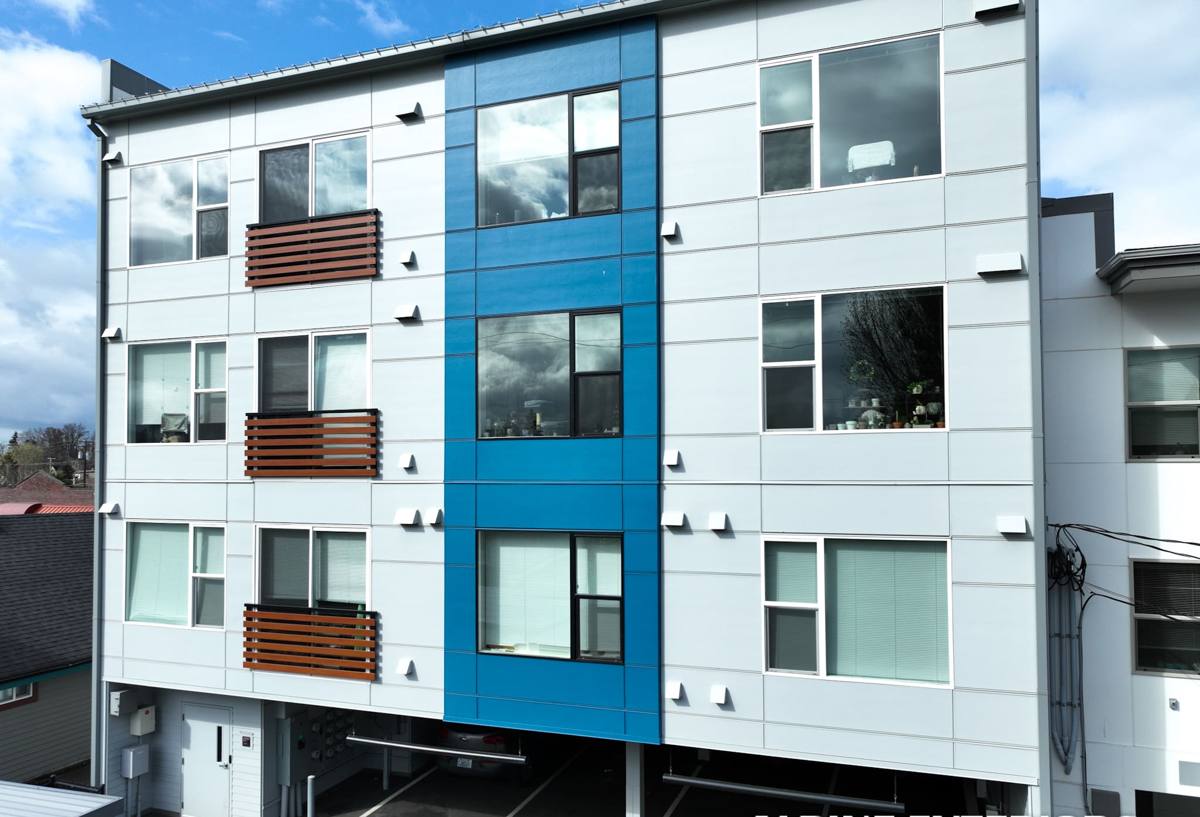
Signs Your Birch Bay Home Needs Window Replacement
Some warning signs are obvious, and some show up slowly enough that homeowners get used to them before realizing they're a problem. Here's what we look for during an inspection, and what you can check yourself:
- Fogging or a permanent haze between panes of double-pane glass, which means the seal has failed
- Soft, spongy, or visibly rotted wood at the sill, jamb, or exterior trim
- Drafts you can feel around the frame even when the window is fully latched
- Windows that are difficult to open, close, or lock, or that no longer sit flush
- Peeling paint or bubbling finish concentrated around the window opening
- Visible moss or persistent green staining on the sill or surrounding trim
- A noticeable jump in heating costs without any other explanation
- Condensation forming on the inside of the glass during cold, damp weather
Any one of these on its own might not mean full replacement is necessary. Several of them together, especially on a home's north or west side where wind and rain hit hardest, usually mean the window system has reached the end of its useful life.
What a Correct Window Replacement Job Actually Involves
Window replacement looks simple from the outside — old window out, new window in — but the parts that determine whether the job holds up for twenty years happen where you can't see them. In a place like Birch Bay, cutting corners on these details is how homeowners end up with the same water problems a few years later, just hidden behind new glass.
Full-Frame vs. Insert Replacement
There are two basic approaches. An insert (or "pocket") replacement keeps the existing exterior frame in place and fits a new window unit inside it. It's faster and less invasive, and it works fine when the existing frame is still structurally sound and dry. A full-frame replacement removes the window down to the rough opening, including the old frame, so the crew can inspect and repair the sheathing, framing, and flashing underneath before the new window goes in. On coastal homes where moisture has had years to work on the framing, we lean toward recommending a full-frame approach more often than we would inland, simply because it's the only way to actually see and fix hidden rot rather than sealing it back up.
Flashing and Water Management
Flashing is the layered system of water-resistant barriers and tape that directs any water that gets behind the siding back out, away from the framing. It's not optional, and it's not something you can verify just by looking at the finished window — it has to be done correctly during installation, in the right order, integrated properly with the house wrap or building paper. This is the single most common point of failure we see in older or poorly done installations, and it's exactly the kind of detail that driving rain off the bay will expose eventually if it's wrong.
Sealing and Insulation
Once the window is set, the gap between the window frame and the rough opening needs to be insulated and sealed correctly — not overpacked with expanding foam, which can bow the frame, and not left with gaps that create drafts and cold spots. Exterior caulking at the trim and siding joints is the last line of defense against wind-driven rain and needs to be a product rated for exterior, marine-adjacent use.
Choosing Window Materials for a Coastal Whatcom County Home
Material choice matters more here than it does twenty miles inland. Here's how the common options generally hold up against salt air, moisture, and the maintenance demands of a bay-front or near-shore property:
| Material | Salt Air / Moisture Resistance | Maintenance | Our Take |
|---|---|---|---|
| Vinyl | Good — won't corrode or rot | Low; occasional cleaning | A solid, cost-effective choice for most Birch Bay homes; look for reinforced frames on larger units |
| Fiberglass | Very good — dimensionally stable, resists warping | Low | Holds up well to temperature and moisture swings; often a good fit for exposed, water-facing elevations |
| Wood-clad | Depends heavily on cladding integrity and installation quality | Higher — cladding seams and interior wood need monitoring | Can look great, but we're upfront that it demands more long-term attention in a salt-air environment |
| Aluminum | Fair — prone to corrosion and conducts cold without a thermal break | Moderate | Generally not our first recommendation for bay-front exposure unless it's a modern thermally-broken product |
None of these materials are "bad" — the right choice depends on the home's exposure, your budget, and how much upkeep you want to take on. We'll walk through the trade-offs honestly during your estimate rather than pushing whatever's easiest to sell.
Our Window Replacement Process
Every home is different, but our process follows the same basic sequence to make sure nothing gets rushed or skipped:
- On-site assessment. We inspect existing windows, framing, and any visible moisture or rot, and talk through what you're trying to solve — energy loss, drafts, appearance, or all three.
- Measurement and product selection. Exact measurements are taken for each opening, and we help you choose materials and glass options suited to that specific elevation of the house.
- Careful removal. Old windows come out without unnecessary damage to surrounding siding or trim, and we check the opening for hidden rot or water damage before proceeding.
- Repair as needed. Any compromised framing or sheathing is repaired before a new window goes in — installing a new window over a wet or rotted opening just delays the problem.
- Flashing, setting, and sealing. The new window is flashed, set level and square, insulated, and sealed to the standards this climate demands.
- Exterior finish work. Trim, caulking, and paint or finish work are completed to match the home and protect every seam from the weather.
- Final walkthrough. We check operation, sealing, and appearance with you before considering the job done.
What Affects the Cost of Window Replacement in Birch Bay
We don't like quoting numbers without seeing the actual job, but these are the factors that typically move the price up or down:
| Factor | Why It Matters |
|---|---|
| Insert vs. full-frame replacement | Full-frame costs more but is often necessary where hidden rot or old flashing is a risk |
| Window material | Vinyl, fiberglass, and wood-clad carry different material and installation costs |
| Glass package | Double-pane vs. triple-pane, and any low-E or impact-resistant upgrades, change both cost and performance |
| Number and size of openings | Larger units and bay or picture windows require more material and labor than standard sizes |
| Condition of the existing opening | Rot repair, resizing, or structural work adds time and material |
| Exposure and elevation | West- and north-facing, water-exposed elevations often warrant upgraded flashing and sealing details |
| Access and site conditions | Second-story work, tight lot access, or landscaping to work around all affect labor time |
The most reliable way to get an accurate number is a walkthrough of your specific windows — we'll give you a straightforward estimate with the reasoning behind it, not just a total.
Energy Efficiency and Moisture Control
Old, failing windows don't just let heat escape — they let moist outside air work its way into wall cavities, which is a bigger long-term problem than a higher heating bill. A correctly installed, properly sealed window does two jobs at once in Birch Bay: it keeps conditioned air inside, and it keeps wind-driven moisture from ever reaching the framing in the first place. Low-E glass coatings help manage heat transfer year-round, and in a home that gets direct exposure off the water, a tighter, better-sealed window envelope also cuts down on the drafts and cold spots that are common in older bay-front construction.
Why Hire a Crew That Already Works in Birch Bay
Window replacement done by a crew unfamiliar with coastal exposure tends to follow generic, inland assumptions — standard flashing details, standard sealant choices, standard material recommendations — that don't always hold up against salt air and driving rain over time. A crew that regularly works Birch Bay and the surrounding Whatcom County coastline knows which elevations of a house take the worst weather, which materials actually hold up under that exposure, and where the common failure points are on homes of a similar age and construction in the area. That familiarity shows up in fewer callbacks and windows that are still performing well a decade or more after installation, not just on move-in day.
Keeping New Windows Performing Through Whatcom County Winters
A correctly installed window still benefits from some basic upkeep, especially in a climate like this one:
- Rinse salt residue off frames and glass periodically, especially after storms
- Keep gutters and downspouts clear so water isn't pooling near window openings
- Check and refresh exterior caulking every few years, since it's a wear item
- Remove moss or algae buildup from sills and surrounding trim before it holds moisture
- Operate and lubricate hardware periodically so locks and hinges don't seize or corrode
- Watch for soft spots or paint failure at the trim as an early warning sign
None of this is complicated, but staying on top of it is what separates a window system that lasts thirty years from one that starts failing in ten.
If your Birch Bay home is showing any of the signs above, or you'd just like an honest look at what your windows need, we're happy to walk the property with you and put together a no-pressure estimate — use the form below to get started.