 Ferndale Siding
 Fairhaven's Coastal Exposure Asks More of Your Siding
Fairhaven sits close to the water in Whatcom County, and that proximity changes what siding has to survive. Homes here don't just deal with ordinary Pacific Northwest rain — they deal with salt-laden air off the bay, wind-driven rain that gets pushed sideways into wall assemblies, and a moss season that can run most of the year in shaded, north-facing spots. None of that is unique to any one house. It's a pattern we see across the neighborhood, and it's why siding repair in this part of Whatcom County needs to be handled differently than a routine patch job somewhere drier and more sheltered.
Salt air is corrosive to exposed metal fasteners and trim over time. Driving rain finds every gap in flashing, caulk, and butt joints, and pushes moisture behind the siding rather than letting it run off the surface. Moss and algae hold moisture against the wall long after a storm has passed, which keeps wood-based trim and compromised siding damp for days instead of hours. Individually, each of these is manageable. Together, over years, they're what turns a small crack or a loose panel into a rot pocket behind the wall.
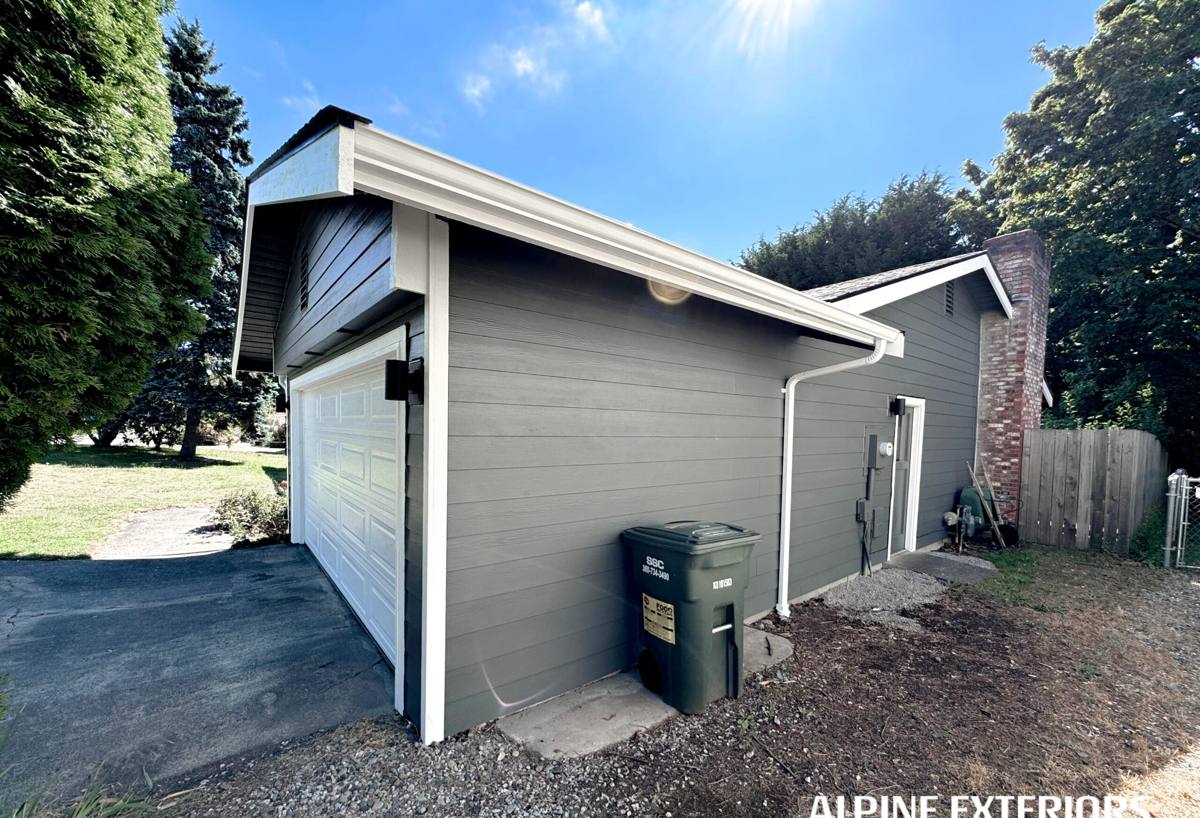
Signs a Fairhaven Home Needs Siding Repair
Most siding failures don't announce themselves. They show up as small cosmetic issues long before they become structural ones, which is exactly why catching them early is worth the effort.
- Cracked, split, or visibly warped siding panels or boards, especially near corners and window trim
- Soft or spongy spots when you press on the siding or the trim beneath a window
- Persistent dark streaking, green-black staining, or moss buildup that keeps returning after cleaning
- Paint or ColorPlus finish that's bubbling, peeling, or chalking unevenly in one area
- Gaps opening up at seams, corner boards, or where siding meets window and door trim
- Visible rust bleeding from fastener heads or metal flashing
- Interior clues — a musty smell, a damp patch on an interior wall, or peeling interior paint on an exterior-facing wall
Any one of these on its own might be minor. Two or three together, especially in the same area of the house, usually means moisture has been getting behind the siding for a while.
Why Small Damage Doesn't Stay Small Here
In a drier climate, a hairline crack in siding might sit for years without causing real damage. In Fairhaven's marine environment, that same crack is an entry point for wind-driven rain almost every time it storms, and the moss and shade that are common in this area slow down drying between storms. That combination is why we treat even small repairs as a chance to check what's happening behind the siding, not just patch the visible symptom.
What a Correct Siding Repair Actually Involves
A siding repair that just covers the visible damage without addressing the cause is a repair that fails again within a year or two. Doing it right means treating the repair as a small-scale version of a proper installation, not a cosmetic fix.
Diagnosing the Real Cause
Before any siding comes off, we look at why that section failed. Was it a flashing gap above a window? A caulk joint that dried out and cracked? A fastener that backed out and let water track behind the panel? Repairing the surface without fixing the underlying cause just delays the next failure — often in the exact same spot.
Checking for Hidden Moisture Damage
Once damaged siding is removed, we check the water-resistive barrier, sheathing, and framing behind it. If moisture has gotten past the siding, that layer needs to be sound before new material goes back on. Covering rotted sheathing with a fresh piece of siding hides a problem instead of solving it.
Matching Material and Finish
For homes with existing James Hardie fiber cement siding, we match plank profile, exposure, and ColorPlus finish so the repair blends in rather than standing out as an obvious patch. Because ColorPlus is a factory-applied finish, a proper color and sheen match is achievable in a way that field-painted repairs often aren't.
Correct Flashing and Sealing
New flashing, properly lapped and integrated with the water-resistive barrier, goes in before the new siding — not caulk alone. Caulk is a supplement to good flashing detail, never a substitute for it. This is the step that's easiest to skip and most responsible for repeat failures when it is.
Common Siding Problems We See in Fairhaven Homes
Moss and Algae Holding Moisture Against the Wall
Shaded exposures near mature trees or on the north and west sides of a home stay damp longer, giving moss and algae a foothold. Left alone, that growth keeps the siding surface wet well past when it would otherwise have dried, accelerating wear on caulk joints, trim, and any exposed fasteners.
Corroded or Failing Fasteners
Salt air speeds up corrosion on fasteners and metal flashing that aren't rated for coastal exposure. A rusted fastener head isn't just cosmetic — as it deteriorates, it loses holding power and can let water track down the shank into the wall assembly.
Wind-Driven Rain at Joints and Penetrations
Corners, window and door trim, and anywhere siding meets a penetration (a vent, a light fixture, a hose bib) are the highest-risk points for water intrusion during a driving rainstorm. These are the spots we check first on any repair call, whether or not that's where the visible damage is.
Repair or Replace? How We Help You Decide
Not every siding problem in Fairhaven calls for a full re-side, and not every problem is safely solved with a patch. The right call depends on how widespread the damage is and what's driving it.
| Factor | Repair Is Usually Right | Replacement Is Usually Right |
|---|---|---|
| Extent of damage | Isolated to one wall or a few panels | Recurring or widespread across multiple walls |
| Underlying material | Existing siding is sound elsewhere | Siding is aging out or was a failure-prone product |
| Cause of failure | A single identifiable flashing or seal failure | Systemic moisture intrusion behind large sections |
| Age of siding | Well within expected service life | Near or past the end of its practical lifespan |
| Sheathing condition | Structure behind the siding is dry and solid | Rot or moisture damage found in multiple spots |
We'll always tell you honestly which category your home falls into. A repair that's likely to fail again within a couple of seasons isn't a good use of your money, and we won't sell it to you as one.
Why We Repair and Replace with James Hardie Fiber Cement
When a repair calls for new material — or when damage is extensive enough that replacement makes more sense than patching — we use James Hardie fiber cement exclusively. We don't install vinyl, LP SmartSide, or other fiber cement brands, and in a marine environment like Fairhaven's, that standard matters more than it might inland.
Fiber cement doesn't rot, and it isn't food for the moss and algae that thrive in this climate the way wood-based products can be. Hardie's HZ5 product line is engineered specifically for wetter, harsher climates, and the factory-applied ColorPlus finish resists the fading and moisture damage that field-applied paint is more prone to in an area with this much sustained humidity and salt exposure. When we're already removing damaged siding to make a repair, using a material built for exactly this climate is the difference between a fix that lasts and one you'll be calling about again.
Our Siding Repair Process
- On-site inspection of the damaged area and a check of adjacent walls, corners, and penetrations for related issues
- Honest assessment of whether repair or replacement is the right call, explained in plain terms
- Removal of damaged siding and inspection of the water-resistive barrier and sheathing underneath
- Repair or replacement of any compromised sheathing or framing before new siding goes on
- Installation of correctly lapped flashing and a properly sealed water-resistive barrier
- Installation of matched James Hardie siding, fastened and finished to manufacturer spec
- Final walk-through so you can see exactly what was done and why
Why Hiring a Crew That Already Works in Fairhaven Matters
Siding repair isn't one-size-fits-all, and a crew that mostly works drier, inland areas may not think to check for the specific failure points that show up in a marine environment like this one. A crew that regularly works Fairhaven and the surrounding Ferndale area already knows which exposures tend to hold moss, where wind-driven rain typically gets in, and how salt air affects fastener and flashing choices over time. That familiarity shows up in fewer repeat callbacks, not just faster estimates.
It also means knowing the practical side of working in this area — permitting expectations in Whatcom County, realistic scheduling around the region's wetter months, and access considerations for homes close to the water. None of that is glamorous, but it's the difference between a repair crew that's guessing and one that's done this exact kind of work up and down this coastline before.
Protecting Your Siding After the Repair
A correct repair buys you years, but a little upkeep protects that investment. Rinse moss and algae growth off siding surfaces before it gets a chance to establish, especially on shaded walls. Keep gutters clear so water isn't sheeting down siding it wasn't designed to handle as continuous runoff. Trim back vegetation that's shading a wall and keeping it damp longer than it needs to be. And if you notice a new crack, gap, or soft spot, get it looked at before the next storm season rather than after — in this climate, the gap between "small issue" and "expensive issue" tends to be shorter than homeowners expect.
If you're seeing any of the warning signs above, or you just want an honest opinion on whether a section of siding needs a repair or something more, we're happy to take a look. Reach out for a free, no-pressure estimate — use the form below to get started.