 Ferndale Siding
 Deck Replacement for Kendall Homes
A deck is the one part of a house with almost nothing standing between it and the weather. No roof overhead, no siding wrapping around it, just framing and decking sitting outside through every storm, every wet winter, and every stretch of shade that never quite dries out. In this part of Whatcom County, that adds up to a specific set of stresses: salt-tinged air that works on exposed metal, driving rain that gets pushed sideways and up instead of falling straight down, and a moss season that runs longer here than in drier parts of the state. A deck built or repaired without those conditions in mind tends to look fine for a few years and then start failing all at once.
This page is about deck replacement specifically — what it means for a Kendall property, how it's different from a repair or a routine refinish, and what we actually do differently on a rebuild here compared to a deck project further inland or in a more sheltered part of the county.
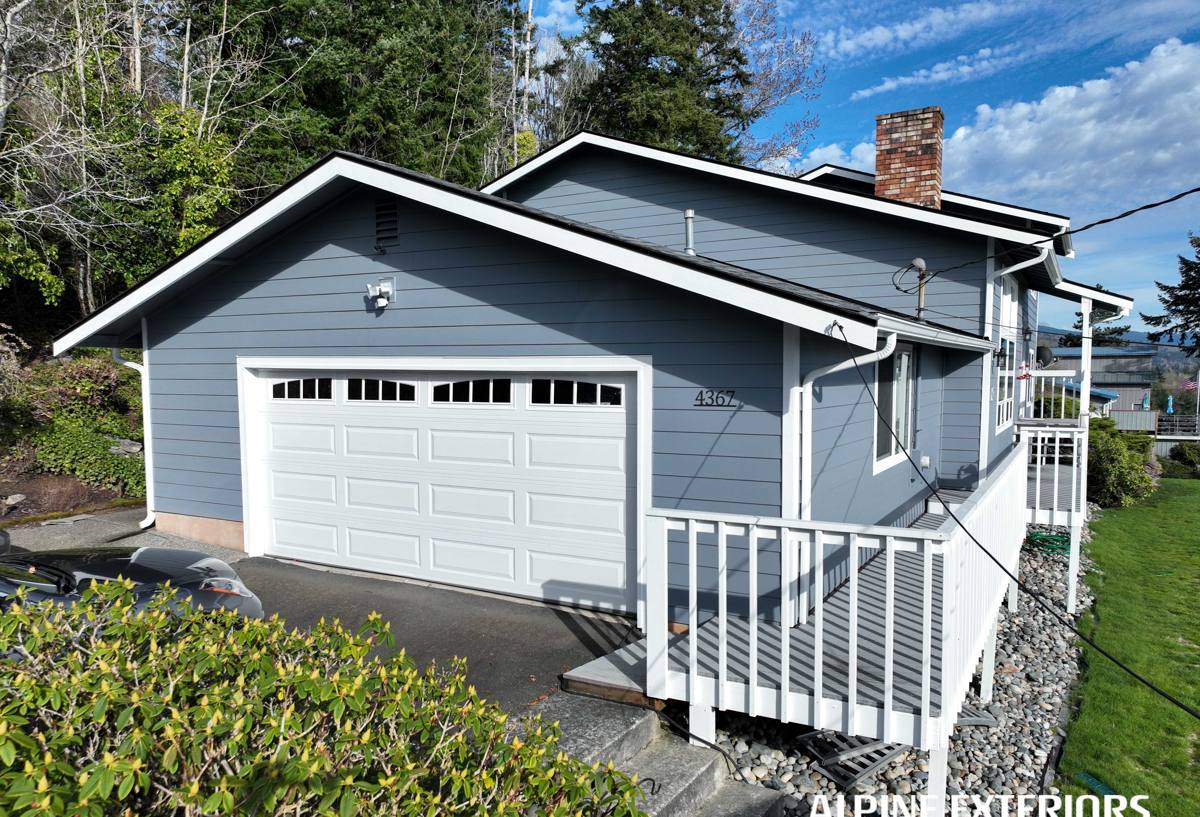
How Kendall's Climate Wears Down a Deck
Salt Air and Fastener Corrosion
A deck has more exposed metal than almost any other part of a house — joist hangers, structural screws, railing hardware, post bases. Salt-laden air accelerates corrosion on standard, non-rated fasteners, and a corroding fastener loses holding strength well before it looks obviously bad from the surface. On a structure people stand and walk on, that's a safety issue as much as a durability one, not just a cosmetic one.
Driving Rain and Ledger Moisture
Storms here don't just fall straight down. Wind pushes rain sideways, up under railings, and into the ledger connection where a deck attaches to the house. That ledger joint is one of the most common points of hidden failure on an older deck, because a poorly flashed connection can be quietly funneling water into the rim joist and wall framing for years before anything shows on the surface.
A Moss Season That Runs Most of the Year
Mild temperatures and persistent regional dampness give moss a long growing season in this area, and a horizontal deck surface holds water differently than a vertical wall — it stays wet longer between rain events and gives moss and mildew an easy place to take hold. Shaded decks and north-facing surfaces are usually the first to show it, and any decking material with surface porosity gives it something to grip onto.
Freeze-Thaw Cycling on Older Wood Decks
Whatcom County sees enough hard frosts in a typical winter that moisture trapped in an aging wood deck — in checked boards, open grain, or fastener holes — can freeze and expand, which accelerates cracking and splitting in material that's already past its prime. It's part of why an older wood deck's decline often looks slow for years and then rapid in its final season or two.
Signs a Kendall Deck Needs Replacing, Not Just Repairing
Not every tired-looking deck needs a full teardown. But there's a real difference between cosmetic wear and structural failure, and it's worth knowing which signs point to which.
- Soft, spongy, or spring-loaded spots underfoot when you walk across the deck surface
- Visible rot, splitting, or crumbling wood at the ledger board, posts, or joists
- Rust staining or visible corrosion streaking down from fasteners or hardware
- Railings that wobble, flex, or feel loose when leaned on
- Gaps or separation where the deck meets the house at the ledger board
- Persistent moss or dark staining that comes back within weeks of cleaning
- Boards that have cupped, crowned, or pulled away from their fasteners
- The deck is old enough that it predates any documented ledger flashing or structural upgrade
Any one of these on its own might point to a repair. Several at once, especially anything involving the ledger connection or main structural framing, usually means the deck has reached the point where patching it is a short-term fix on a structure that's already failing underneath.
Repair vs. Replacement: Making the Right Call
We'd rather tell a homeowner honestly that a repair will hold for a few more years than sell a full replacement that isn't needed yet. The call usually comes down to where the damage is and how far it's spread.
| Situation | Usually Points To | Why |
|---|---|---|
| A few damaged or splintered surface boards, structure otherwise sound | Repair | Isolated board damage doesn't affect the framing that actually carries the load |
| Loose railing or a single failing post | Repair | Hardware and localized framing repairs are straightforward if caught early |
| Rot at the ledger board or rim joist | Replacement | This is the structural connection to the house — patching around active rot here is a safety risk, not a fix |
| Widespread soft spots across multiple joists | Replacement | Once moisture damage has spread through the main framing, individual repairs won't restore structural integrity |
| Deck was never properly flashed at the ledger to begin with | Replacement | No amount of surface repair fixes a structural detail that was wrong from the start |
We'll get underneath the deck and check the framing directly rather than guessing from the surface, and we'll tell you plainly which category your deck falls into before we talk about scope or price.
What a Correct Deck Replacement Involves
A full replacement is the point where every detail that a repair can't fix gets addressed properly, from the ground up.
- Complete removal of the old decking, railings, and any framing that's compromised, so nothing hidden gets buried under new work
- Ledger board reattached and flashed correctly against the house, since that connection is the single most important detail on the entire structure
- Framing sized and spaced to current code and to the specific decking product's span rating, not just matched to whatever was there before
- Corrosion-resistant structural hardware and fasteners throughout — joist hangers, post bases, and connectors rated for exterior and coastal-air exposure
- Correct board gapping so wind-driven rain and standing moisture can actually drain and dry between boards instead of sitting
- Post and railing attachment sized for the site's real wind exposure, especially on elevated or more open lots
- Grading and ventilation underneath the deck so moisture doesn't sit trapped against the framing between storms
Skip the framing and fastener details and a new deck can still look good on day one. The difference shows up two or three winters later, in the details nobody sees until something starts to fail.
Choosing a Decking Material for a Kendall Rebuild
Material choice matters more here than in a drier, more sheltered location, because the gap between a well-suited product and a poorly-suited one shows up faster under sustained regional moisture.
| Material | Handling Rain & Moisture | Moss Resistance | Upkeep |
|---|---|---|---|
| Cellular PVC | Excellent — no wood fiber to absorb moisture | Strong, smooth non-porous surface | Occasional washing |
| Capped composite | Strong — cap layer resists moisture and staining | Good on most product lines | Occasional washing |
| Uncapped composite | Moderate — some moisture absorption at exposed fiber | Fair; more prone to buildup over time | Periodic cleaning |
| Cedar | Moderate — natural resistance, but needs sealing | Fair when sealed and maintained | Regular oiling or sealing |
| Pressure-treated wood | Weak against sustained moisture exposure over time | Poor without regular treatment | Regular sealing or staining |
Composite and PVC decking cost more upfront than wood, but for a homeowner who's already been through one wood deck's moss, staining, and re-sealing cycle, the lower-maintenance materials are usually the more honest long-term value in this climate. Wood still has a place for homeowners who want that specific look and are willing to keep up with sealing on a regular schedule — we'll build with whatever material fits the budget, but we won't skip the framing and fastener details underneath regardless of what's on top.
Cost Factors for a Kendall Deck Replacement
| Factor | What It Affects |
|---|---|
| Decking material | Wood costs less upfront; composite and PVC cost more but need far less ongoing maintenance |
| Framing condition | Whether existing posts and footings can be reused or need full replacement |
| Ledger and structural repair | Hidden rot at the ledger or rim joist adds scope once the old decking comes off |
| Size and layout | Multi-level decks, stairs, and built-in features add labor and material |
| Railing style | Cable, glass, and composite railing systems cost more than standard wood or metal baluster designs |
| Site access | Elevated decks or lots with limited equipment access take more labor time to stage and complete |
Exact numbers depend on what we find once the old decking comes off, which is exactly why we give a written estimate after walking the site and inspecting the framing, not a number quoted sight unseen.
How Our Process Works
- On-site inspection: We walk the deck and get underneath it to check framing, ledger condition, and post footings directly, not just the visible surface.
- Honest assessment: We tell you plainly whether you're looking at a repair or a full replacement, and why.
- Written estimate: A clear, itemized bid covering demolition, framing, hardware, decking material, and railing — no vague single-line pricing.
- Demolition and structural rebuild: Old decking and any compromised framing come out, and the ledger, posts, and joists go back correctly, flashed and fastened for this climate.
- Decking, railing, and finish work: Installed to the material manufacturer's spec, with attention to board gapping and drainage.
- Final walkthrough: We cover what your specific material needs going forward, which for most modern decking is minimal but not nothing.
Deck Replacement Readiness Checklist
- Framing and ledger inspected from underneath, not just judged from the surface
- Railings and posts checked for looseness or hidden hardware corrosion
- Grade and drainage underneath the deck reviewed for standing moisture
- Decking material chosen based on maintenance expectations, not just upfront price
- Ledger flashing plan confirmed before any new decking goes on
- Permit requirements checked, since most full deck rebuilds in Whatcom County require one
Why It Matters That We Already Work in Kendall
A crew that mostly builds decks elsewhere in the county can still frame a deck competently, but a Kendall rebuild has specific variables that come up here more than in a sheltered inland spot: corrosion-grade fastener requirements from sustained salt-air exposure, ledger flashing details that hold up against wind-driven rain, and moss pressure that runs longer than it does in drier parts of the state. Working in this area regularly means we're not guessing at those requirements on your project — we've seen which framing details and fastener grades actually hold up here and which ones become a callback within a few winters.
That familiarity shows up in smaller judgment calls too — how to orient board gapping for the wind a particular lot actually sees, or being straightforward about what a deck here realistically needs to last versus what's just an upsell.
Get a Straight Answer About Your Deck
If your Kendall deck is showing soft spots, loose railings, or rot at the ledger, or you just want an honest read on whether it needs repair or full replacement, we're glad to take a look. Reach out using the form below to schedule a free, no-pressure estimate.