 Ferndale Siding
 Why Roofs Near Blaine Wear Differently Than Roofs Inland
Homes in and around Blaine sit close to Semiahmoo Bay and the Strait of Georgia, and that proximity to salt water changes what a roof has to deal with year after year. Salt-laden air corrodes exposed metal faster than it does even a few miles inland, driving rain off the water gets pushed sideways into eaves, valleys, and fascia by wind that has nothing to slow it down before it reaches shore, and the long, damp Whatcom County shoulder seasons keep roof surfaces wet enough, long enough, for moss and algae to take hold. None of this makes a roof in Blaine impossible to protect — it just means the installation has to account for these conditions from the start rather than treating them as an afterthought.
A roof that was built for a drier, calmer climate and simply installed here tends to show its age early: rusted fasteners, moss creeping under shingle tabs, and soft decking where water found a way in around a poorly sealed penetration. A roof installed with this specific coastal environment in mind holds up very differently.
What a Correct New Roof Installation Actually Involves
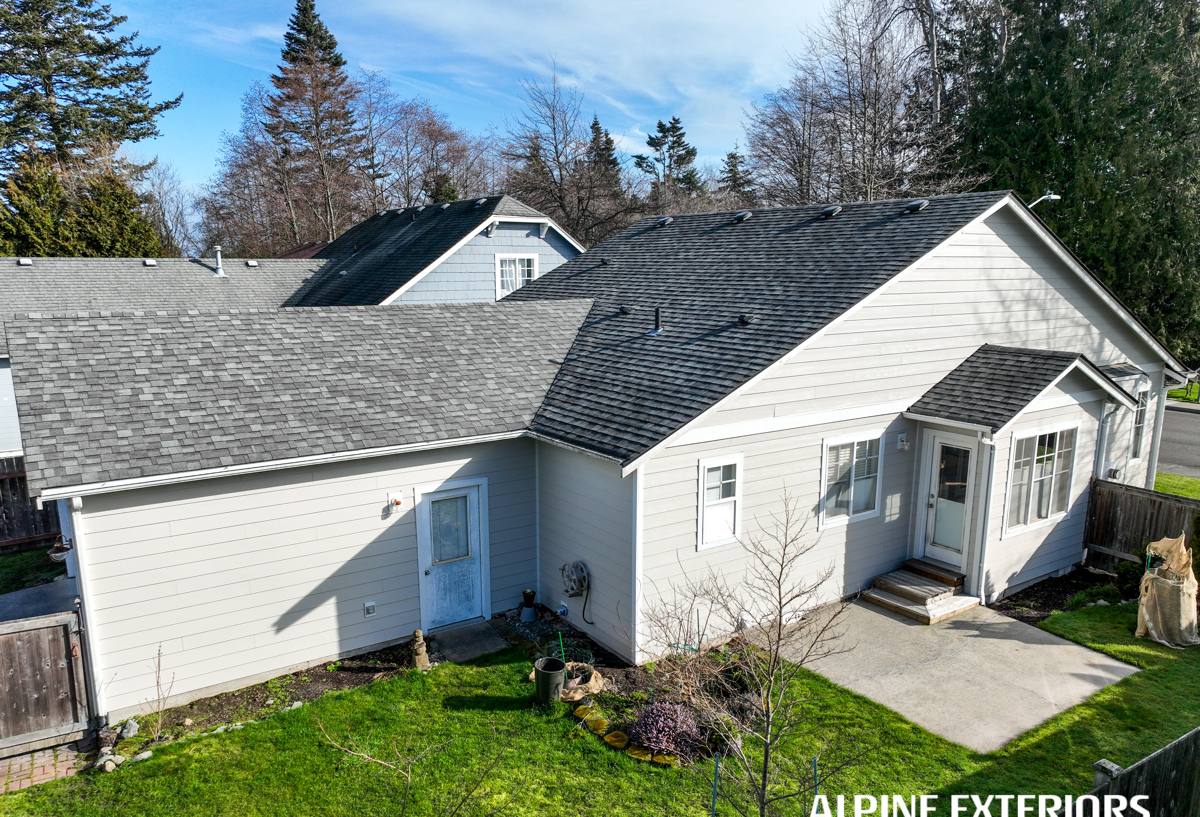
A new roof is more than laying shingles over old ones or nailing down whatever material is on the truck. Done right, it’s a sequence of decisions that all matter for how the roof performs against wind-driven rain and salt air specifically.
Full Tear-Off and Deck Inspection
We remove the old roofing down to the deck rather than layering over it. That’s the only way to actually see the plywood or plank decking underneath, check for soft or delaminated spots from long-term moisture intrusion, and replace anything compromised before it’s covered up again for another 20-plus years.
Underlayment and Water-Shedding Layers
In a climate with this much sustained rain, the underlayment matters as much as the visible shingle. We use synthetic underlayment across the full deck and self-adhering ice-and-water membrane at the vulnerable points — eaves, valleys, around chimneys and skylights, and anywhere wind-driven rain is most likely to get pushed uphill under a shingle edge.
Ventilation and Moisture Control
A roof that can’t breathe traps moisture in the attic, which shortens the life of the decking from underneath even if the surface looks fine. Balanced intake and exhaust ventilation is part of a correct installation, not an upgrade you add later.
Flashing and Detail Work
Most roof leaks don’t come from the field of the roof — they come from flashing that was reused, cut short, or sealed with caulk instead of properly lapped and integrated with the underlayment. New step flashing, counter-flashing, and valley metal are standard on every full replacement we do, not an optional add-on.
Choosing a Roofing Material for a Coastal Whatcom County Home
There isn’t one right answer for every house — roof pitch, home style, budget, and how much maintenance you want to take on all factor in. What matters is understanding the honest trade-offs of each option in this specific climate before you decide.
| Material | Salt Air & Moisture Behavior | Moss Resistance | Typical Lifespan Here |
|---|---|---|---|
| Architectural Asphalt Shingle | Performs well with proper flashing and ventilation; algae-resistant granule versions help with staining | Good with algae-resistant shingles; still needs periodic cleaning | 25–30 years |
| Standing-Seam Metal | Excellent water-shedding on steep pitches; requires a coastal-rated finish and fastener spec to resist salt corrosion | Very good — smooth surface sheds moss more easily | 40–50+ years |
| Synthetic/Composite Shake | Good moisture resistance, doesn’t absorb water the way natural wood shake does | Good | 30–50 years |
We steer most Blaine homeowners away from untreated cedar shake as a first choice in this specific environment — not because it can’t look great, but because sustained moisture and salt air push its maintenance burden up considerably compared with the alternatives above, and we’d rather set that expectation honestly upfront than have it surprise you five years in.
Zinc and Copper Strips: A Small Detail That Matters for Moss
On roofs with a long moss history, we’ll often recommend a zinc or copper strip installed near the ridge. Rain washing over the metal carries trace amounts down the roof face and creates conditions moss and algae don’t like. It’s not a substitute for proper ventilation or material choice, but it’s a low-cost addition that measurably slows regrowth on a roof that’s otherwise prone to it — and most homes near Blaine, with the tree cover and dampness typical of the area, are prone to it.
Our Installation Process
- On-site assessment — we walk the roof and attic, note the pitch, ventilation, flashing points, and any moss or moisture already present, and take real measurements rather than estimating from the ground.
- Written estimate — material options, scope, and a clear price, with the reasoning behind any recommendation explained rather than assumed.
- Scheduling around the weather — we plan installs for dry windows and know how to stage a tear-off so your home isn’t left exposed if conditions shift, which happens often enough here that it can’t be an afterthought.
- Tear-off and deck repair — old material removed, deck inspected, any damaged sections replaced.
- Underlayment, flashing, and material installation — installed to manufacturer specification so your warranty is valid, not just installed to look finished.
- Final walkthrough — we go over the completed roof with you, including ventilation and any maintenance specific to the material chosen.
Why Hiring a Crew That Already Works in Blaine Matters
A roofing crew that mostly works drier, inland jobs can still do competent work, but they’re guessing at things a Whatcom County coastal crew already knows: how far wind-driven rain travels up a roof valley in a winter storm off the Strait, which fastener and flashing specs actually hold up against salt air instead of just meeting a minimum code requirement, and how much of the year is realistically workable for a tear-off without gambling on the forecast. That local experience shows up in the details — where ice-and-water membrane gets extended, how ventilation is balanced for a house that’s damp for months at a stretch, and which materials are worth the extra upfront cost here versus somewhere with a milder, drier roof climate.
It also matters for permitting and code familiarity specific to Whatcom County jurisdictions, so inspections go smoothly instead of turning into a back-and-forth that delays your project.
Signs Your Blaine Home May Need a New Roof, Not a Repair
- Shingles are curling, cupping, or losing significant granules, especially on south- and west-facing slopes
- Moss or dark algae staining keeps coming back within a year of cleaning
- The roof is 20–25+ years old and hasn’t had a full inspection recently
- You can see daylight through the roof boards from inside the attic
- Ceiling stains or musty smells appear after wind-driven rain from the west or northwest
- Flashing around chimneys, vents, or skylights is visibly rusted, lifted, or gapped
- Multiple shingles went missing or cracked after the last significant windstorm
- Decking feels soft or springy when walked on during an inspection
One or two of these on their own might mean a repair is enough. Several together usually mean the roofing system as a whole is past the point where patching makes financial sense.
What a New Roof Typically Costs
Every roof is priced on its own size, pitch, layout complexity, and material choice, so we won’t quote a number without seeing the roof — but as a general reference, most full asphalt shingle replacements on homes in this area run in the broad range of several thousand to the low tens of thousands of dollars, with metal and premium synthetic materials landing higher. Steeper pitches, multiple valleys, chimneys, and skylights all add labor and material, and a deck that needs partial replacement adds cost that’s difficult to know for certain until the old roofing is off. We’ll walk you through exactly what’s driving your number rather than handing you a total with no explanation behind it.
Maintaining a New Roof in This Climate
A well-installed roof still benefits from a little seasonal attention here. Keeping gutters and downspouts clear prevents water from backing up under eave edges during heavy rain. A periodic soft wash to control moss and algae buildup, done gently enough not to strip granules, extends the life of the roof surface. And an occasional look at flashing points — chimneys, vent boots, valleys — catches small issues while they’re still small. None of this is demanding, but skipping it in a climate this consistently damp tends to shorten a roof’s life more than homeowners expect.
If your roof near Blaine is showing its age, or you just want an honest read on whether repair or replacement makes more sense, we’re happy to take a look and put together a free, no-pressure estimate using the form below.