 Ferndale Siding
 Custer Roofs Work Harder Than Most
Custer sits close enough to the water and open farmland that roofs here take on a specific combination of punishment: salt-laden air drifting in off the Strait and bay waters, long stretches of driving rain through fall and winter, and a moss season that can run nine months out of the year in shaded, north-facing roof sections. None of these things alone is unusual for Whatcom County. Together, on the same roof, year after year, they add up faster than most homeowners expect.
A roof replacement in Custer isn't the same job as a roof replacement in a dry inland climate. The materials, the fastener choices, the underlayment, and the ventilation details all need to account for what this specific location throws at a house. This page is about that one job — full roof replacement — for homes in and around Custer, and what actually needs to happen for it to hold up.
What Salt Air, Rain, and Moss Actually Do to a Roof
Salt Air and Metal Fatigue
Salt-laden air corrodes exposed metal faster than plain moisture does. That shows up first in the small stuff — nail heads, flashing edges, gutter fasteners, drip edge seams — long before it shows up in the shingles themselves. Once corrosion starts eating at fasteners and flashing, water finds a path underneath the roof covering even though the shingles up top still look fine. This is why a roof near Custer can fail from the inside out before it looks worn from the street.
Driving Rain and Wind-Driven Water
Rain that comes in sideways during a windstorm doesn't behave like rain falling straight down. It gets pushed up under shingle laps, around chimney flashing, and into any gap that a calmer climate could get away with ignoring. Roofs here need every seam, lap, and penetration detailed as if wind-driven rain is a certainty, because most years it is.
Moss and Prolonged Moisture Contact
Shaded roof sections — north slopes, areas under trees, roofs with poor airflow — stay damp longer here than almost anywhere else in the state. Moss doesn't just look bad; it holds moisture directly against the roofing material, works its way under shingle tabs as it grows, and can lift and separate roofing layers over several seasons. A roof that looks moss-covered but otherwise intact is often further along in hidden damage than the moss alone suggests.
Repair, Patch, or Full Replacement?
Not every roofing problem in Custer means a full tear-off. But there are a few signs that patch work is just delaying an inevitable full replacement:
- Granule loss heavy enough that you're finding shingle grit in gutters every season, not just after a storm
- Soft or spongy spots on the decking when walked, especially near valleys or chimneys
- Moss coverage on more than a third of the roof, particularly if it's been there multiple seasons
- Daylight visible through the attic sheathing, or damp insulation below the roof deck
- Repeated leaks in different spots rather than one recurring leak location
- Shingles curling, cracking, or losing their seal along multiple courses, not just one row
- A roof already past 20-25 years old for asphalt composition, regardless of how it looks from the ground
If a roof is showing one or two of these signs isolated to a small area, a repair can genuinely be the right call. When several show up together, or the roof is old enough that a repair would just be buying a year or two, replacement is usually the more honest recommendation — and the more cost-effective one over time.
What a Correct Roof Replacement Involves Here
A roof replacement done right for this climate isn't just stripping off old shingles and nailing on new ones. Given what Custer roofs deal with, several steps matter more here than they would somewhere drier and calmer:
Full Tear-Off and Deck Inspection
We remove the old roofing down to the deck rather than layering over it. That's the only way to actually see what the moisture and moss have done underneath — soft plywood, rusted fasteners, or rot around valleys and penetrations don't show up until the old layer is off. Any damaged decking gets replaced before anything new goes down; roofing over a compromised deck just hides the problem for another few years.
Upgraded Underlayment
Given the amount of wind-driven rain this area sees, we use synthetic or self-adhered underlayment with real weather resistance, and we pay particular attention to ice-and-water shield style membrane at eaves, valleys, and around every roof penetration — chimneys, vents, skylights. These are the spots where wind-driven rain finds its way in first, and they're worth the extra material and labor.
Corrosion-Resistant Fasteners and Flashing
Because salt air accelerates corrosion in ordinary fasteners, we use fastener and flashing materials chosen to hold up in coastal-influenced air rather than the cheapest option that would be fine further inland. It costs a little more up front and saves the flashing failures that cause slow, hidden leaks five or ten years down the road.
Ventilation Built for Moss Prevention
Moss thrives where a roof stays damp and airflow is poor. Proper intake and exhaust ventilation lets a roof dry out between rain events instead of staying wet for days. On homes with heavy shade or north-facing slopes, we look hard at whether the existing ventilation is doing its job, because that's often the real reason one section of a roof grows moss while the rest stays clean.
Material Selection for Long-Term Moss and Salt Resistance
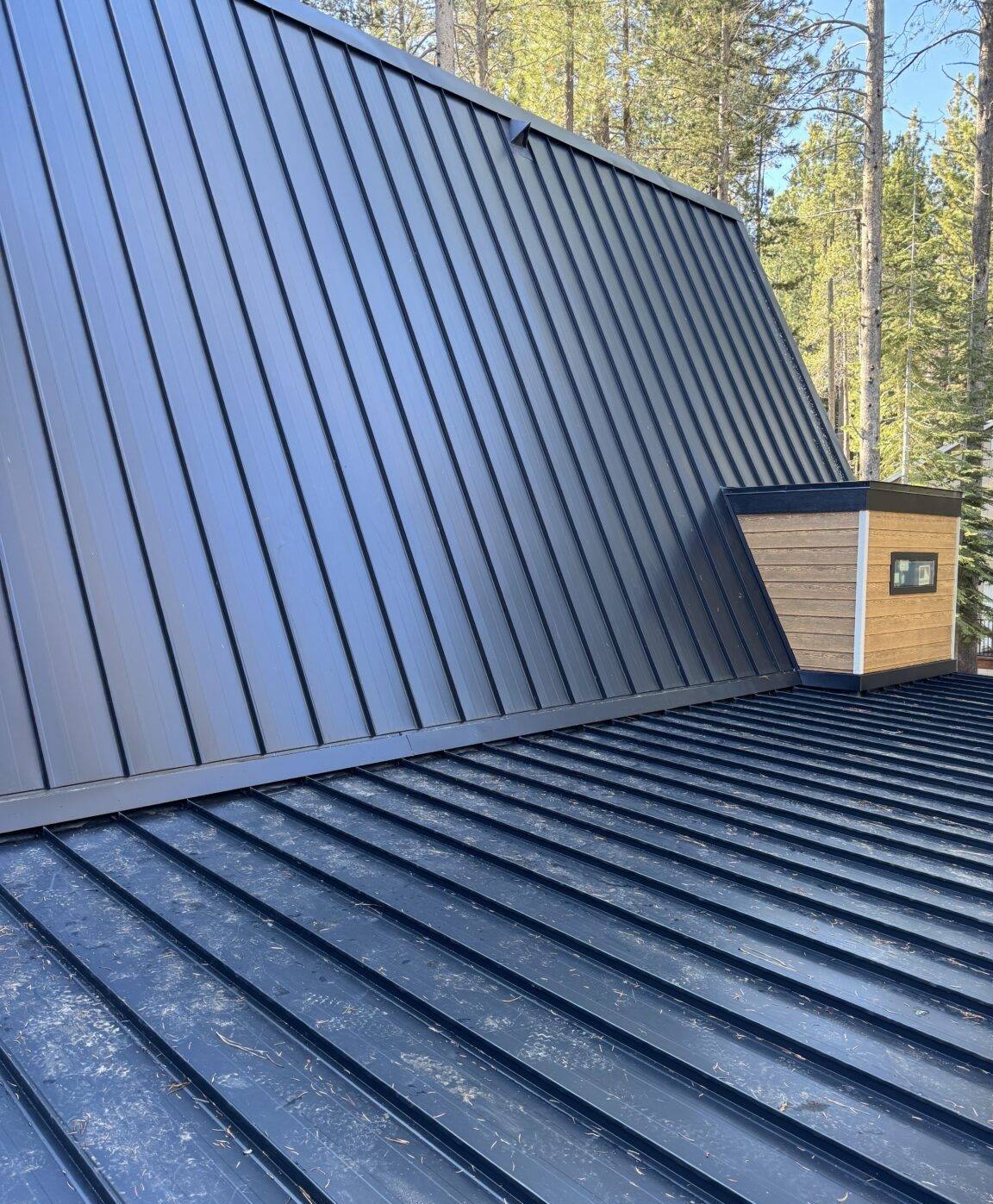
Not every shingle product handles this climate the same way. Some composition shingles include algae-resistant granules that measurably slow moss and algae growth on shaded sections. Metal roofing sheds moisture almost immediately and gives moss very little to hold onto, though it comes with its own cost and installation considerations. We walk homeowners through these trade-offs honestly rather than pushing whichever product happens to be in stock.
Comparing Roofing Materials for Custer Conditions
| Material | Moss/Algae Resistance | Salt Air Durability | Typical Lifespan | Relative Cost |
|---|---|---|---|---|
| Standard asphalt composition | Fair — moss risk on shaded slopes without maintenance | Good with corrosion-resistant fasteners | 20-25 years | Lowest |
| Algae-resistant composition shingle | Good — treated granules slow growth | Good with corrosion-resistant fasteners | 25-30 years | Moderate |
| Standing seam metal | Very good — smooth surface sheds moisture fast | Very good with proper coating/fastener spec | 40-50+ years | Highest upfront |
| Synthetic/composite shingle | Good — depends on product line | Good | 30-40 years | Moderate to high |
There's no single "correct" answer here — a shaded, moss-prone north slope on a budget-conscious re-roof might do best with algae-resistant composition shingle, while a home with a long ownership horizon and heavy sun/salt exposure might get more value out of metal despite the higher upfront cost. We size this decision to the actual roof and the actual homeowner, not a one-size answer.
How Our Process Works
The process for a Custer roof replacement follows the same honest sequence every time:
- On-site inspection: we walk the roof (weather permitting) and check the attic from inside, looking specifically for moss patterns, soft decking, ventilation issues, and flashing condition.
- Written estimate: a clear breakdown of scope, material options, and price — no vague allowances or surprise add-ons discovered mid-project.
- Material selection: we go through the trade-offs in the table above based on your roof's shading, slope, and how long you plan to stay in the home.
- Scheduling around weather: given how much rain this area gets, we plan tear-off in windows where the deck won't sit exposed longer than necessary, and we have dry-in materials ready if weather turns mid-job.
- Tear-off and deck repair: full removal, deck inspection, and replacement of any compromised sheathing before anything new goes on.
- Underlayment, flashing, and ventilation installation: the parts of the job that don't show once it's done, but determine whether it lasts.
- Final roofing material installation: installed to manufacturer spec, with attention to the fastener and flashing choices discussed above.
- Cleanup and walk-through: full site cleanup including magnetic nail sweep, and a walk-through so you understand what was done and why.
Keeping a New Roof Performing Long-Term
A correctly installed roof still benefits from a little seasonal attention in this climate, especially around moss:
- Keep gutters clear so water doesn't back up under the roof edge during heavy rain
- Trim back overhanging branches that keep shaded roof sections damp and feed moss growth
- Have moss growth addressed early rather than letting it establish for multiple seasons
- Check attic ventilation isn't blocked by insulation, especially after any attic work
- Have flashing around chimneys and vents visually checked every year or two, since that's where wind-driven rain problems start
- Avoid pressure-washing shingles directly — it can strip granules and shorten the roof's life
Why a Crew That Already Works Custer Makes a Difference
Roofing crews that mostly work drier, calmer climates tend to under-spec the details that matter most here — lighter underlayment, standard fasteners, minimal flashing at penetrations. None of that shows up as a problem on day one. It shows up as a leak two or three winters later, after the crew that installed it is long gone or was never local to begin with.
Working Ferndale, Custer, and the surrounding Whatcom County area regularly means seeing the same failure patterns repeat on other homes — which fastener choices held up, which shingle lines actually resisted moss on shaded slopes, which flashing details leaked after their first hard windstorm. That pattern recognition is hard to fake and hard to shortcut. It's also the difference between a roof that needs attention again in five years and one that goes the full length of its expected life.
Get a Straight Answer About Your Roof
If your Custer home's roof is showing granule loss, moss buildup, or you're just not sure whether it's a repair or a replacement situation, we're happy to take a look and give you a straight, no-pressure assessment. There's a free estimate form below — no obligation, just an honest read on where your roof actually stands.