 Ferndale Siding
 Energy-Efficient Windows for Everson Homes
Everson sits inland along the Nooksack River in the agricultural heart of Whatcom County, a different setting from the coastal towns closer to Bellingham Bay but still inside the same marine-influenced weather system that shapes exterior work across this whole corner of Washington. Moist air moves up the valley off the Sound, rain arrives wind-driven more often than it falls straight down, and mild, damp conditions give moss and mildew a long season to work on anything shaded or poorly ventilated. Windows sit at the seam between the inside of a house and all of that weather, and in a valley climate with this much sustained moisture, an inefficient or poorly installed window doesn't just waste energy — it's usually also the first place water and air find their way into the wall.
We install, repair, and replace windows for homes in Everson and across the surrounding Whatcom County service area, alongside siding, roofing, and deck work, because a window is never really a standalone product. It has to perform as part of a wall assembly, sealed and flashed correctly, or it becomes both an energy leak and a moisture risk. This page focuses specifically on what "energy-efficient" actually means for a window in this climate, and what it takes to get a real, lasting improvement in an Everson home rather than just a new-looking window that performs the same as the old one.
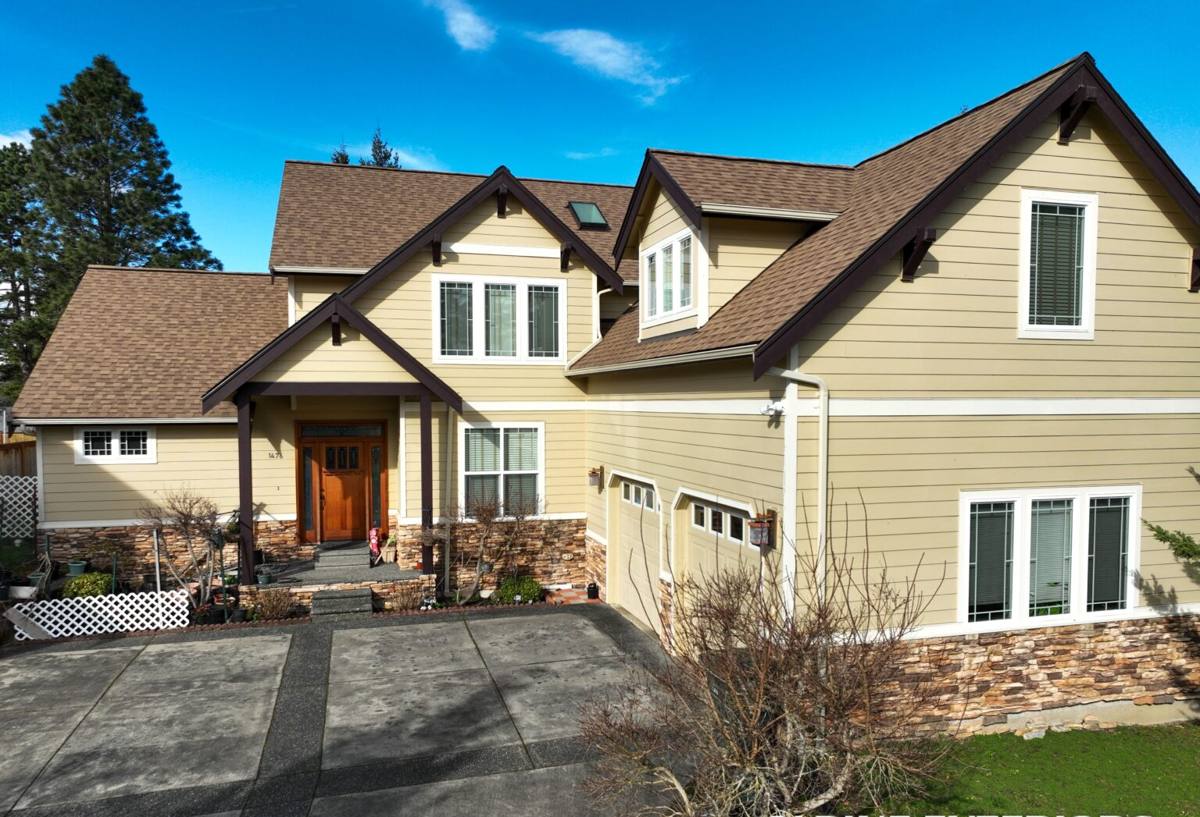
What This Valley's Climate Does to Window Performance
Salt-Tinged Air and Wind-Driven Rain
Even well inland, Whatcom County gets a steady dose of salt-carrying marine air moving up the river valleys, and it settles into window hardware, weatherstripping, and lower-grade fasteners over time. Combined with rain that regularly comes in sideways rather than straight down, any gap in a window's seal or flashing becomes a path for both air infiltration and water intrusion. A window that's leaking conditioned air around its frame is almost always the same window that will eventually show water staining at the sill.
A Long Moss and Mildew Season
Sustained regional dampness and mild temperatures give moss and mildew a long season here, especially on shaded elevations and window sills that don't drain well. Beyond the cosmetic issue, that persistent moisture sits directly against glazing seals, weatherstripping, and sill material, which accelerates the kind of wear that turns an efficient window into a drafty one years before it should.
Valley Temperature Swings
Sitting in low-lying farmland between the Nooksack River and the foothills, Everson sees sharper overnight temperature swings than milder waterfront lots closer to the Sound, particularly during clear, cold stretches in winter. That swing puts more stress on glazing seals and frame materials than a more temperature-stable coastal site does, and it's part of why the specific glass package and frame material matter more here than a generic, one-size-fits-all product choice.
What "Energy-Efficient" Actually Means in a Window
"Energy-efficient" gets used loosely in window marketing, but it comes down to a small set of measurable properties. Understanding them helps you evaluate a quote on its actual merits instead of on a sales pitch.
U-Factor
U-factor measures how much heat a window lets through — lower is better. In a mild, wet Pacific Northwest climate like Everson's, where the bigger energy cost over a year is heat loss rather than cooling load, U-factor is usually the single most important number on a window's performance label. A low U-factor keeps conditioned indoor air from bleeding out through the glass and frame during our long, damp winters.
Solar Heat Gain Coefficient (SHGC)
SHGC measures how much solar heat passes through the glass. In hotter, sunnier climates, a low SHGC is a priority to keep interiors cool. Here, where overcast days outnumber sunny ones for much of the year, a moderate SHGC that lets in some free solar warmth on clear days without sacrificing U-factor performance is usually the better trade-off — another reason we don't default to whatever package a manufacturer bundles as standard.
Air Infiltration and the NFRC Label
Air infiltration measures how much outside air leaks through a closed window, independent of the glass performance. A window can carry excellent U-factor and SHGC numbers on paper and still underperform badly if it's not installed with proper air sealing, or if the frame itself has poor weatherstripping. The National Fenestration Rating Council (NFRC) label on a quality window shows all three of these numbers together, and we'll walk you through what they mean for your specific home rather than pointing at a sticker and moving on.
Frame and Glass Packages That Perform Here
Budget, sun exposure on a given wall, and how long you plan to stay in the home all factor into the right choice. What matters is understanding the real trade-offs for a valley climate with this much sustained moisture and temperature swing before deciding.
| Frame Material | Thermal Performance | Moisture Behavior | Typical Maintenance |
|---|---|---|---|
| Vinyl | Good; multi-chamber designs improve U-factor further | Won't rot; seam and weld quality depends on the manufacturer | Low |
| Fiberglass | Very good; dimensionally stable across temperature swings | Excellent; resists moisture and corrosion well | Low |
| Wood, painted or clad | Good with quality glazing; frame itself insulates well | Vulnerable at joints and sills without diligent upkeep | Higher |
| Aluminum | Poor unless thermally broken; conducts cold readily | Can corrode over time in salt-influenced air unless well-finished | Moderate |
For glass, double-pane with a low-E coating and argon fill is a solid, cost-effective baseline for most Everson homes. Triple-pane adds another layer of insulation and can meaningfully reduce condensation risk on north-facing or heavily shaded walls, but it adds cost and weight, and it doesn't pay for itself on every wall of every house. We'll help you decide where triple-pane earns its keep and where double-pane with a good low-E package is the smarter spend.
Full-Frame Replacement vs. Insert Replacement
One of the first decisions on any window project is whether to do a full-frame replacement, which removes the old window down to the rough opening and rebuilds the flashing from scratch, or an insert replacement, which fits a new window into the existing frame. Insert replacement is faster, less invasive to surrounding siding and trim, and it can still deliver a real efficiency gain when the existing frame is structurally sound and was flashed correctly the first time. Full-frame replacement costs more and takes longer, but it's the honest answer whenever there's already moisture damage at the sill or jambs, or when the existing flashing was never done right — because sealing an efficient new window into a compromised opening just hides the problem behind a better-looking frame. We'll tell you which situation your home is actually in.
Installation Details That Determine Real-World Efficiency
A window's lab-tested performance numbers only tell part of the story. The rest comes down to installation, and in this climate, cutting corners on any of the following is what turns a high-efficiency window into one that performs like a budget product:
- A properly pitched sill pan that sheds water outward instead of letting it pool under the frame
- Head flashing integrated with the housewrap above the window, lapped correctly so water sheds down and out rather than behind the wall
- Continuous, gap-free insulation around the full perimeter of the frame, not just caulk bridging visible gaps
- Jamb flashing tied into the surrounding wall assembly rather than relying on sealant alone
- Weep holes and drainage paths left clear and functional, not sealed shut during installation
- Corrosion-resistant fasteners and hardware suited to a consistently damp, salt-influenced climate
None of these add meaningfully to the cost of a job relative to the window itself, but skipping any one of them is exactly what lets conditioned air and outside moisture bypass a window's rated performance entirely.
Signs an Everson Home Is Losing Energy Through Its Windows
- Noticeable drafts or a cold spot near a closed window, especially during winter wind events
- Visible fogging or condensation trapped between panes, which usually means a failed seal on a double- or triple-pane unit
- Higher-than-expected heating bills without a clear explanation elsewhere in the home
- Frost or heavy condensation forming on the interior glass during cold snaps
- Difficulty opening, closing, or latching a window that used to operate smoothly
- Visible gaps, cracked caulk, or daylight around the frame from inside
- Soft, discolored, or spongy sill and trim material, especially on shaded or weather-facing walls
Any one of these is worth a professional look. Caught early, most point to a targeted repair or resealing job rather than a full replacement.
What Energy-Efficient Windows Cost in Everson
| Factor | What It Affects | Why It Matters Here |
|---|---|---|
| Full-frame vs. insert replacement | Labor scope and access to hidden flashing | Full-frame reveals and corrects hidden moisture damage common under older, poorly flashed windows in this valley |
| Glass package (double vs. triple pane, coatings) | Upfront cost vs. long-term energy savings | Not every wall orientation needs the same glass package; shaded, north-facing walls benefit most from upgraded coatings |
| Frame material | Upfront cost, maintenance, and lifespan | Fiberglass and quality vinyl hold up better than aluminum under sustained valley moisture and temperature swings |
| Existing rot or moisture damage | Repair cost before new windows go in | Long-standing leaks around old windows can rot sheathing and framing that has to be addressed first |
| Number and size of openings | Overall project cost and timeline | Larger farmhouse-style homes and additions common in this area often mean more openings than a standard in-town lot |
Exact costs depend on the specific home and its exposure, which is why we walk the property in person before giving a real number instead of quoting off a generic price sheet.
Why a Local Crew That Works Everson Regularly Matters
A crew that installs windows across this part of Whatcom County through every season understands how salt-tinged valley air, wind-driven rain, and sharp temperature swings actually affect real homes over years, not just how a product performs on a spec sheet. That experience shows up in practical decisions on install day: which wall orientation on an Everson property needs extra flashing attention because of tree shade or prevailing wind, how a sill pan should be pitched for the amount of water a given elevation actually sees, and which glass package is worth the added cost versus which one wouldn't pay for itself. Everson's mix of open agricultural land and river-valley moisture is a different exposure profile than a sheltered in-town lot or a waterfront property closer to the Sound, and a crew with hands-on local experience treats that difference seriously instead of applying the same package to every home regardless of setting.
Beyond Windows: Siding, Roofing, and Decks
Windows are the focus of this page, but the same climate that wears on window seals and frames wears on the rest of an exterior too. We also handle siding, roofing, and deck construction, and on siding specifically we install James Hardie fiber cement as our standard, chosen for how it holds up against sustained moisture and moss compared to lower-cost alternatives. If a window project turns up moisture damage in the surrounding siding or trim, or a roofline detail that's letting water in above a window, we can address it as part of the same conversation instead of sending you to find a second contractor.
If your Everson home has windows that are drafty, fogging, running up your heating bills, or just past their useful life, we're glad to take a look and give you a straightforward, honest read on what it actually needs. Reach out using the form below to schedule a free, no-pressure estimate.