 Ferndale Siding
 Siding That Has to Earn Its Keep on Lummi Island
Lummi Island sits out in the water off the Whatcom County mainland, reached by a short ferry crossing rather than a bridge, and that setting changes what a siding job actually has to hold up to. Every property on the island gets some version of open-water exposure, whether it's a waterfront lot facing the wind directly or a wooded interior lot that still sits close enough to pick up salt-laden air and near-constant dampness. We work on Lummi Island regularly, and this page is about one specific thing: what James Hardie fiber cement siding is, why it's the only product we install, and what it takes to do the job right on an island where getting materials and a crew to the site is its own part of the project.
We're not going to cover roofing, windows, or general exterior work here, that's a broader conversation. This page is focused on siding, specifically James Hardie fiber cement, specifically for homes on Lummi Island.
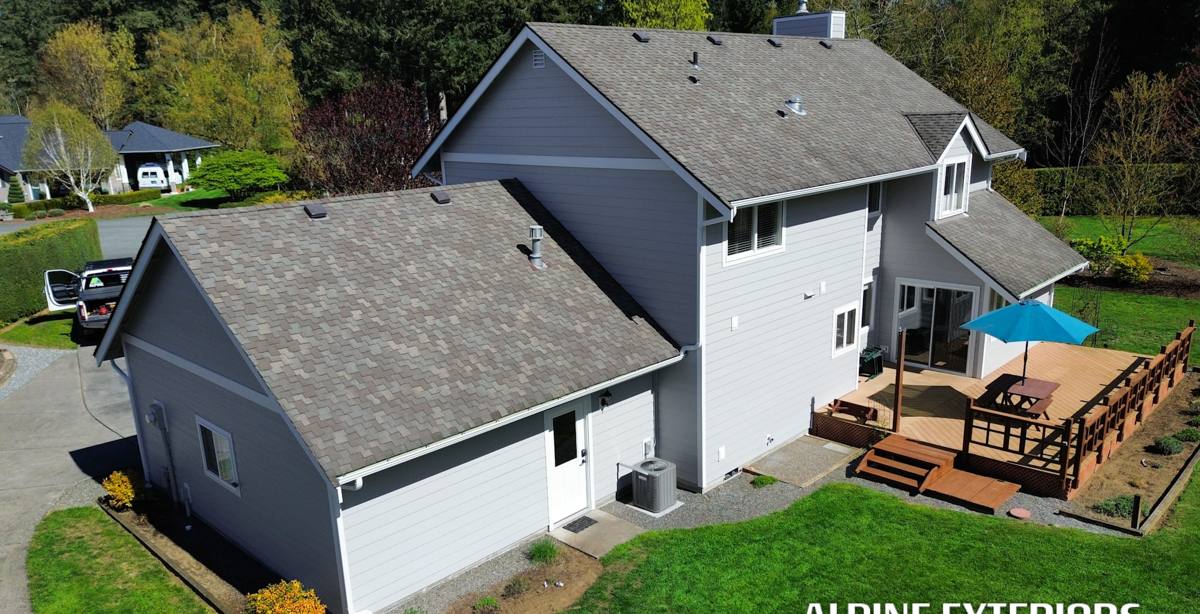
What Surrounding Water Does to a Siding System
Being an island doesn't just mean pretty views. It means the three climate factors that wear down siding across Whatcom County, salt air, driving rain, and a long moss season, show up here in a more concentrated, more constant form than they do a few miles inland in Ferndale proper.
Salt Air With No Break
On the mainland, salt exposure tends to fade the further a home sits from the water. On an island, there's no "further from the water": every property is within a short distance of open saltwater on at least one side, and often more than one. Salt-laden air accelerates the breakdown of lower-grade finishes and speeds up corrosion in fasteners, flashing, and other hardware. Over ten or fifteen years, that difference in exposure shows up as chalking paint, rust streaks at nail heads, and trim that fails well ahead of schedule.
Wind-Driven Rain Off Open Water
Open water exposure also means fewer windbreaks. Storms coming off the Strait and the Sound hit island properties with more direct wind than a comparable lot tucked into the mainland, and that wind is what turns straight-down rain into a sideways problem. Wind-driven rain gets pushed into lap joints, trim seams, and any spot where flashing or caulking isn't doing its job, which is a harder test on a siding system than a simple annual rainfall number would suggest.
A Moss Season That Runs Most of the Year
Wooded lots, shaded elevations, and steady moisture add up to a moss and mildew season that runs close to year-round on a lot of island properties, especially on north-facing walls and under tree cover. Moss and mildew growth on a siding surface isn't just a cosmetic issue, it holds moisture against the wall behind it, and that's where a lot of long-term rot problems actually start, whether the siding underneath is wood, engineered wood, or poorly detailed fiber cement.
Why We Only Put James Hardie Fiber Cement on These Homes
We install James Hardie fiber cement siding exclusively, not vinyl, not LP SmartSide or other engineered wood products, not cedar or primed spruce, and not other fiber cement brands like Allura or Cemplank. That's a deliberate standard, not a limitation we apologize for. Fiber cement as a category is the right direction for a climate like this one: it's an inorganic material, so it doesn't have a wood-based or petroleum-based core that can absorb water, swell, or feed rot and insects the way organic materials can. It's also non-combustible.
Within fiber cement, we standardized on James Hardie specifically because of its climate-engineered product lines, its factory-applied ColorPlus finish, and the depth of its installer network and warranty support in this region. Vinyl softens and can distort under direct heat and relies on lapped, unsealed seams that aren't built to shed the wind-driven rain this area regularly delivers. Engineered wood products perform well as long as every factory coating, field-cut edge, and fastener penetration stays sealed indefinitely, a lot of ongoing maintenance to keep current on a property that isn't a five-minute drive away. Cedar and primed spruce are genuine, attractive materials, but they're organic, combustible, and dependent on a repainting or restaining schedule that has to be kept up consistently, which is a harder commitment to follow through on for an island home, especially one used part-time.
The HZ5 Line and ColorPlus Finish, Explained
James Hardie engineers different siding lines for different climate zones rather than selling one generic product everywhere. The HZ5 line is built for regions with sustained moisture exposure and freeze-thaw cycling, which fits Whatcom County's marine winters better than a product engineered primarily for hot, dry inland climates. That's not a marketing distinction, it affects how the board's moisture resistance and dimensional stability actually perform over time in exactly the conditions an island property sees.
Why the Factory Finish Matters More Here
Instead of being painted on site, James Hardie's ColorPlus finish is baked on in a controlled factory environment in multiple coats before the boards ever leave the plant. That matters more on Lummi Island than in a lot of other places, because salt air and constant UV exposure are exactly the conditions that break down a field-applied paint job fastest. The ColorPlus finish carries its own warranty, separate from the substrate warranty, specifically covering fade and color retention.
What a Correct Install Involves Here
Fiber cement's long-term performance depends heavily on installation quality, the material doesn't do all the work by itself, and a rushed or off-spec install can undercut even the best product. On an island property with heavier moisture exposure, the margin for sloppy detailing is smaller than it would be on a drier, more sheltered site.
| Installation Detail | Why It Matters on an Island Property |
|---|---|
| Manufacturer-specified clearances from grade, roofline, and decks | Keeps splash-back and standing moisture off the board edge where salt spray and rain collect |
| Correct fastener type, spacing, and depth | Prevents cracking and keeps the water-resistive barrier intact under sustained wind loading |
| Flashing at every window, door, and penetration | Directs wind-driven rain away from seams instead of letting it collect there |
| Factory-cut edges used wherever possible, field cuts sealed to spec | Preserves the factory finish's protection at every cut edge |
| Rain screen or drainage plane behind the siding | Lets any moisture that gets past the surface drain and dry instead of sitting against the wall in a climate that rarely gives it a chance to dry on its own |
This is why we send trained, certified installers to every job rather than treating fiber cement as an interchangeable swap for whatever a crew is used to hanging. A material that resists moisture and combustion in its core can still underperform if the flashing, fastening, and drainage details around it are wrong.
The Added Layer: Getting Materials and a Crew to an Island Job
Everything above applies to any James Hardie install anywhere in Whatcom County. What's different on Lummi Island is logistics, and it's worth being upfront about how that factors into scheduling and planning a project.
| Logistics Factor | How It Affects the Job |
|---|---|
| Ferry-dependent material delivery | Board, trim, and flashing deliveries have to be staged and scheduled around ferry capacity and sailing times rather than a simple truck delivery |
| Limited on-island storage and staging space | Materials often need to be sequenced closer to when they'll actually be installed instead of stockpiled on site for weeks |
| Wooded and waterfront lot access | Tree cover, slope, and shoreline setbacks can affect how equipment and scaffolding get positioned around the home |
| Debris and old-siding removal | Tear-off material also has to make the return ferry trip, which we plan for as part of the schedule rather than treating as an afterthought |
| Weather windows | Wind and sea conditions that affect ferry service can occasionally shift a work day, so realistic scheduling matters more here than on a mainland job |
None of this makes a Lummi Island project impossible or dramatically more expensive on its own, it just means the planning has to account for it up front. A crew that hasn't worked the island before is learning these logistics on your project. A crew that already works here has already worked them out.
How Our Process Works for a Lummi Island Project
We start every project with an on-site walk of the property, looking at the existing siding, the sheathing underneath where it's exposed, and the specific exposure the home gets from its position on the island, waterfront lots facing open water get a different level of attention to flashing and fastening than a sheltered, wooded interior lot. From there we put together a written estimate and a realistic timeline that accounts for ferry scheduling and material staging rather than assuming mainland logistics. Once work starts, we coordinate delivery and crew scheduling around ferry sailings so the job keeps moving instead of losing days to logistics we should have planned for in advance. We also handle removal and disposal of the old siding as part of that same coordinated schedule.
Before You Hire Anyone for a Lummi Island Siding Job
Whether you end up hiring us or someone else, these are worth confirming before you sign a contract for any island property:
- Ask whether the contractor has actually completed projects on Lummi Island before, or whether this would be their first time working out logistics on your job.
- Ask how they plan to handle material delivery and staging around ferry schedules, and get a real answer rather than "we'll figure it out."
- Ask whether the installer is manufacturer-certified for the specific product they're proposing, not just generally experienced with siding.
- Ask what climate-specific product line they're recommending, and whether it's actually engineered for marine, freeze-thaw conditions.
- Ask what the warranty covers, whether it's prorated, and whether it transfers if you sell the home.
- Ask how they'll handle old siding and debris removal, since that material has to leave the island the same way it arrived.
Get a Free, No-Pressure Estimate
If you're planning a re-side on Lummi Island, we're glad to take the ferry out, walk the property, and give you a straight answer about what we'd recommend and why, including a realistic timeline that accounts for how a project actually runs out here. Reach out using the form below to schedule a free estimate, no pressure and no upsell script.