 Ferndale Siding
 Why Roofs Near Lummi Nation Wear Out Faster Than You'd Think
Homes in and around Lummi Nation sit close to the water, and that changes what a roof has to deal with year after year. Whatcom County gets plenty of rain no matter where you live, but out here it comes with a coastal edge: wind off the water pushes rain sideways instead of straight down, salt-laden air drifts inland and settles on every exposed surface, and the tree cover that keeps yards shady also keeps roof decks damp long after a storm has passed. None of that is dramatic on its own. It's the accumulation, storm after storm and season after season, that turns small weak points into real problems.
A roof repair out here isn't just about matching a shingle or patching a leak. It's about understanding why that spot failed in the first place, because if you don't address the cause, the same repair fails again in a year or two. That's the difference between a quick patch job and a repair that actually holds.
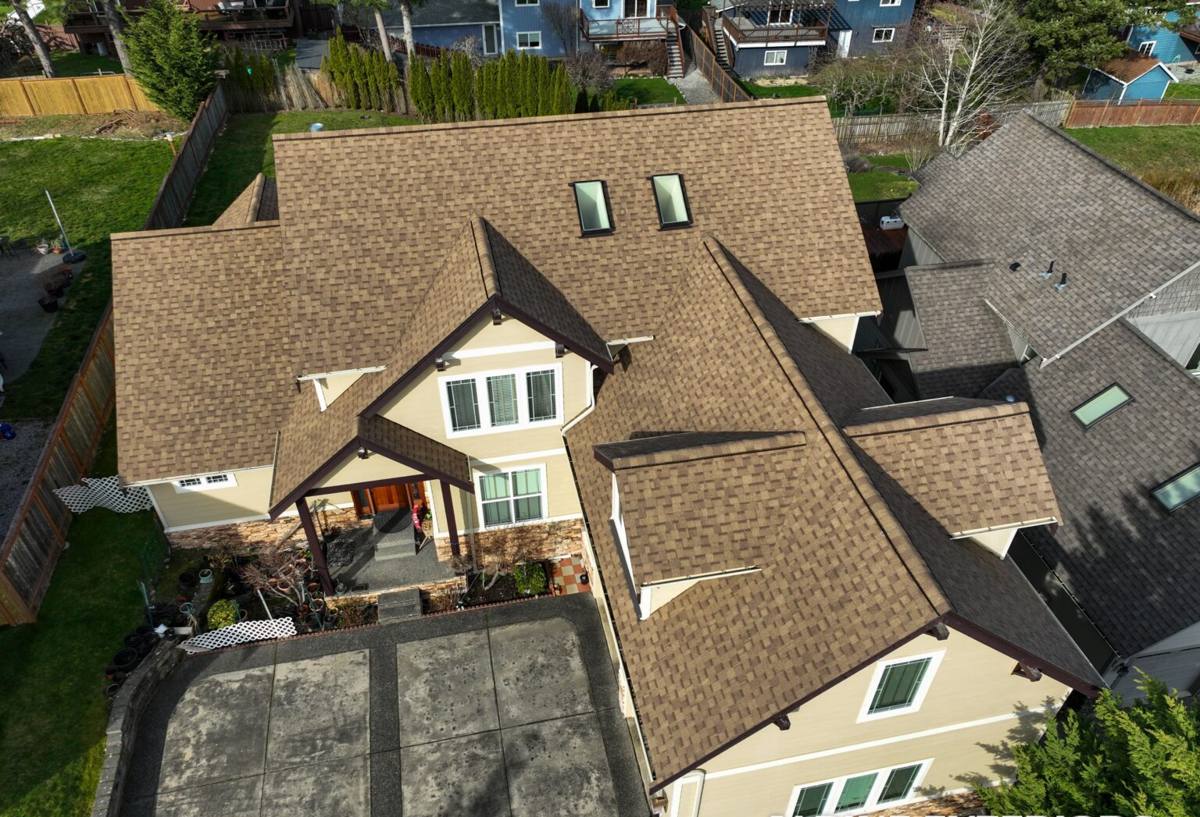
The Three Things Most Roof Repair Calls Have in Common
Wind-Driven Rain
Most roofing systems are designed to shed water moving straight down. When wind pushes rain sideways or even slightly upward under an eave, it finds its way past materials that would otherwise be fine. This is especially common around chimneys, skylights, roof-to-wall transitions, and anywhere two roof planes meet. A leak that only shows up during a windy storm, and never during a calm rain, is almost always a wind-driven rain issue rather than a simple worn-out shingle.
Moss and Trapped Moisture
Shaded, north-facing, or tree-covered sections of roof stay damp for days after everyone else's roof has dried out. That moisture is exactly what moss needs to establish itself, and once it does, it holds even more water against the roofing material, lifts shingle edges, and works its way under the surface. Left alone long enough, moss doesn't just look bad — it shortens the life of the roofing underneath it and creates the conditions for rot in the decking below.
Salt Air and Metal Fatigue
Flashing, fasteners, vent caps, and gutter hardware all take a beating from salt-laden coastal air. Corrosion doesn't happen overnight, but over years it weakens fasteners, pits metal flashing, and eats away at protective coatings faster than you'd see on a roof further inland. A repair that reuses corroded flashing or fasteners is a repair that's already on borrowed time.
Signs Your Roof Needs a Repair, Not Just a Look
Some roof problems are obvious. Others show up as small clues long before there's an active leak inside the house. Watch for:
- Water stains on interior ceilings or upper walls, especially ones that appear only after windy storms
- Shingles that are curling, cracked, or missing granules, particularly on the side of the roof that faces prevailing weather
- Visible moss or dark streaking concentrated in shaded areas or valleys
- Soft or spongy spots when walking the roof, which can indicate decking has absorbed moisture
- Rusty streaks below flashing, vent pipes, or gutter fasteners
- Daylight visible through the roof deck from inside an attic or crawlspace
- Granules collecting in gutters or at the base of downspouts
- Gaps or lifted edges where flashing meets a chimney, wall, or skylight
Any one of these on its own might not mean much. Two or three together, especially in the same area of the roof, usually mean there's an active problem worth having looked at before the next big storm.
What a Correct Repair Actually Involves
Diagnose Before You Patch
The biggest mistake in roof repair is treating the visible symptom instead of the source. A stain on a ceiling doesn't always sit directly below the leak — water travels along rafters and decking before it shows itself. A proper repair starts by tracing the path of the water, checking the attic or roof cavity where possible, and confirming the actual entry point before any material comes off the roof.
Matching Materials, Not Guessing
Roofing materials fade and weather over time, so a repair patch using brand-new material next to five-year-old shingles will never look identical. A good repair gets as close a match as the market allows in color and profile, and pulls replacement shingles from a less visible part of the roof when an exact match isn't available, rather than leaving an obvious patch on the street-facing slope.
Flashing and Penetration Detail Work
Most leaks trace back to a penetration point — a chimney, vent pipe, skylight, or wall transition — rather than to the field of the roof itself. Correct repair work means removing and properly reinstalling flashing with new fasteners and appropriate sealant, not just running a bead of caulk over a gap and calling it fixed. Caulk-only repairs are a short-term patch, not a real fix, and they tend to fail again within a season or two.
A Ventilation Check While We're Up There
Poor attic ventilation traps heat and moisture against the underside of the roof deck, which accelerates shingle aging from below and can contribute to the exact moss and moisture problems described earlier. Since we're already on the roof to make a repair, it costs nothing extra to check that intake and exhaust vents are clear and functioning, and it can prevent a return trip down the road.
Common Roof Repairs We See in This Area
| Repair Type | Typical Cause | General Cost Range |
|---|---|---|
| Flashing repair or replacement | Wind-driven rain, corrosion, poor original install | Lower end of the range for most jobs |
| Localized shingle replacement | Storm damage, wind lift, aging in one section | Low to mid range depending on access and matching |
| Moss and moisture damage repair | Shaded roof sections, long-term neglect | Mid range, more if decking needs replacement |
| Vent pipe or skylight boot repair | Cracked rubber boots, aged sealant | Lower end, usually a same-day fix |
| Decking repair or replacement | Long-term leak left unaddressed | Higher end, scope depends on how far rot has spread |
These ranges are meant as a general guide, not a quote. Every roof is different, and the only way to give you an honest number is to actually look at the damage in person.
Repair or Replace? How We Help You Decide
Not every roof problem needs a full replacement, and not every leak can be permanently solved with another patch. We look at a handful of factors before recommending either direction:
| Factor | Leans Toward Repair | Leans Toward Replacement |
|---|---|---|
| Age of roofing material | Well within expected service life | Nearing or past typical lifespan |
| Extent of the damage | Isolated to one area or penetration | Spread across multiple sections |
| Decking condition | Solid, no soft spots found | Soft, rotted, or delaminating in multiple spots |
| Repair history | First or second repair in this area | Same spot repaired repeatedly already |
| Underlying material availability | Matching material still available | Discontinued or badly mismatched |
We'll always tell you honestly which side of this table your roof falls on. If a repair will genuinely hold, that's what we recommend — a roof doesn't need to be replaced just because it's convenient for us to sell a bigger job.
Our Process, From Call to Finished Repair
- Initial contact and scheduling. Tell us what you're seeing — a stain, a draft, missing shingles after a storm — and we'll set a time to come look.
- On-roof inspection. We walk the roof, check the attic or roof cavity where accessible, and trace the actual source of the problem rather than just the symptom.
- Honest assessment. We explain what we found, what caused it, and whether a repair or a larger scope of work makes sense, in plain terms.
- Written estimate. You get a clear scope of work and price before anything happens, with no pressure to decide on the spot.
- The repair itself. We remove damaged material, address the actual cause, and reinstall with materials matched as closely as possible to what's already on your roof.
- Final check. Before we leave, we confirm the repair area is sealed, flashing is properly seated, and the surrounding roofing is undisturbed.
Why Local Experience in Lummi Nation and Ferndale Matters
A roofer who mostly works drier, inland areas doesn't run into wind-driven rain intrusion or aggressive moss growth nearly as often, and that shows in how repairs are diagnosed and detailed. A crew that regularly works roofs along this stretch of Whatcom County already knows which penetration points tend to fail first in coastal wind, which shaded roof sections need extra attention for moss, and which flashing and fastener choices actually hold up against salt air instead of corroding out in a few seasons.
That local familiarity also means a more accurate first visit. We're not guessing at how the regional climate affects your specific roof — we're applying what we've already seen work, and what we've seen fail, on roofs facing the same weather yours does.
Keeping a Repair Lasting as Long as It Should
A correct repair should hold for years, not months, but a little maintenance on your end extends that further:
- Keep gutters and downspouts clear so water isn't backing up under roof edges during heavy rain
- Trim back tree limbs that shade roof sections and keep them damp longer than necessary
- Have moss treated before it spreads, rather than waiting until it's visibly thick
- Walk your attic or crawlspace after major windstorms and check for new stains or daylight
- Have flashing and sealant around chimneys and skylights checked every couple of years, since these are the first points to fail
None of this replaces a proper inspection when something looks or feels wrong, but it does reduce how often you need one.
Get a Straight Answer About Your Roof
If you're seeing signs of a leak, moss buildup, or storm damage on a home in Lummi Nation or elsewhere around Ferndale, we're happy to come take a look and give you an honest read on what's actually going on. There's no pressure and no obligation — just a clear assessment and, if repair is the right call, a straightforward price to fix it right. Use the form below to request a free estimate.