 Ferndale Siding
 Building New in Marietta? The Windows Deserve as Much Attention as the Foundation
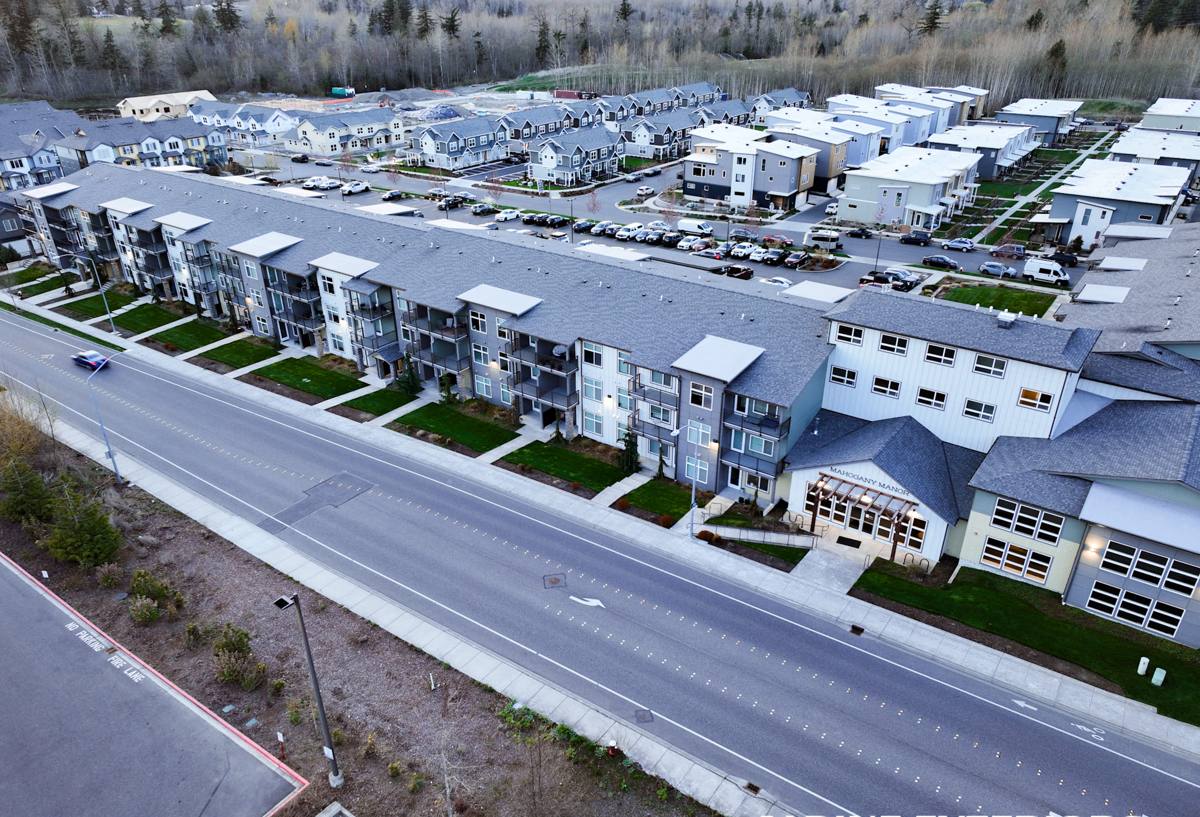
Marietta sits low and close to the water on the edge of Ferndale, which means new construction here answers to a different set of conditions than a build ten miles inland. Salt-laden air off the bay, wind-driven rain that comes in sideways during winter storms, and a long stretch of the year where moss and algae get a foothold on anything that stays damp too long — all of it works against a window installation that isn't done right the first time. On new construction, you get exactly one chance to integrate the window into the wall assembly correctly before siding, trim, and paint cover up the evidence. There's no "we'll catch it during the remodel" moment. That's why we treat new-construction window installs in Marietta as their own discipline, not a smaller version of a replacement job.
What This Climate Actually Does to a Window Opening
It helps to be specific about what you're building against, because it changes real decisions on the jobsite.
Salt Air
Proximity to Bellingham Bay and the Nooksack delta means the air around Marietta carries more salt than it does even a few miles inland. Salt accelerates corrosion on exposed fasteners, hinges, and lower-grade cladding or hardware finishes. It's not dramatic — you won't see rust overnight — but over years it's the difference between hardware that still operates smoothly and windows that start sticking or staining at the corners.
Driving Rain
Ferndale's winter storms don't just fall straight down; wind pushes rain horizontally against west- and southwest-facing walls, which is exactly where water finds any weakness in flashing, sealant, or the housewrap-to-window transition. A window that's technically "installed" but not properly flashed and lapped will pass a dry-weather inspection and still leak the first real atmospheric river event.
Moss and Prolonged Dampness
Whatcom County's mild, wet winters mean surfaces that don't drain or dry out stay damp for months at a stretch. On windows, that shows up as moss and algae growth on horizontal sills, at the base of trim, and in any spot where water is allowed to pool instead of shed. Left alone, sustained moisture at those points is also what eventually rots trim and compromises caulk lines.
None of this means Marietta is a hard place to build — it means the installation details that get skipped elsewhere can't get skipped here.
Getting the Rough Opening and Flashing Right
This is the part of a new-construction window install that homeowners rarely see and general contractors sometimes rush. It's also the part that determines whether the window performs for thirty years or starts leaking in five.
Weather-Resistive Barrier Integration
The housewrap or building paper has to be sequenced with the window flange in the correct shingle-lap order — every layer above laps over the layer below, so water is directed outward and down, never trapped behind the cladding. On a new build we're working directly with the framer's WRB, so getting this order right at the window openings is one of the highest-value five minutes per window on the whole job.
Sill Pan Flashing
Every window opening should get a sloped or back-dammed sill pan before the window ever goes in — essentially a small waterproof tray that catches any water that gets past the window and directs it back outside instead of into the wall cavity. Given how much wind-driven rain this area sees, we treat sill pans as non-negotiable, not an upgrade.
Nailing Fin vs. Block Frame Windows
Most new-construction windows in this region use a nailing-fin frame that fastens directly to the sheathing before siding goes on, which is different hardware and a different flashing sequence than a block-frame or replacement-style window. Using the wrong install method for the window type is a common source of early failures — we match the flashing detail to the specific window frame style, not a one-size-fits-all approach.
Choosing Windows for a Marietta New Build
Material choice matters more here than in a drier, inland climate because of the combined salt-air and moisture exposure. There's no single "best" answer for every home — it depends on your budget, your home's style, and how much long-term maintenance you want to take on.
| Frame Material | Coastal/Moisture Performance | Maintenance | Typical Cost Position |
|---|---|---|---|
| Vinyl | Won't rust or corrode; performs well in salt air | Low — occasional cleaning | Entry to mid-range |
| Fiberglass | Very stable, resists warping and expansion in wet/dry cycling | Low | Mid to upper range |
| Aluminum | Durable but more prone to corrosion near salt air unless well-finished | Moderate — watch hardware and finish over time | Varies widely |
| Wood / Wood-Clad | Handsome, but the wood core is the most vulnerable to sustained moisture if any seal fails | Highest — periodic refinishing and inspection | Upper range |
Beyond frame material, the glass package matters just as much in this climate. For Whatcom County's marine climate zone, we generally recommend a low-E coated, argon-filled double-pane unit at minimum, with a U-factor and solar heat gain coefficient suited to a heating-dominated climate that still gets warm, bright summer afternoons. Triple-pane makes sense on some builds — mainly where noise control or a colder microsite is a bigger factor than budget — but it isn't automatically the right call for every Marietta home.
Our Process for New-Construction Window Installs
- Plan review and take-off — we confirm rough opening sizes against the window schedule before anything is ordered, so there are no surprise gaps or shims needed on install day.
- Opening prep — squaring, leveling, and installing sill pan flashing at every opening before a window ever touches the wall.
- WRB sequencing — housewrap and flashing tape integrated in proper shingle-lap order around each opening.
- Window set and fastening — shimmed plumb, level, and square, fastened per the manufacturer's schedule to preserve the warranty.
- Exterior flashing and sealant — head flashing and sill/jamb sealant detailed to shed wind-driven rain, not just block it under calm conditions.
- Interior air-seal — low-expansion foam or backer rod and sealant around the frame interior, which also matters for energy performance and condensation control.
- Final check — operation, hardware function, and a visual flashing check before siding closes the opening up for good.
Coordinating With Your Builder's Timeline
New-construction window installs don't happen in isolation — they sit in the middle of the framing-to-siding sequence, and timing matters. Windows need to go in after the WRB is up but before siding starts, and ideally during a stretch of manageable weather, which takes some planning given how much rain Ferndale sees outside the summer months. We work directly with builders and general contractors to slot into the schedule at the right point, order windows with enough lead time to avoid holding up the framing crew, and flag any rough-opening discrepancies before they become a change order. If you're owner-building or managing your own subs, we can also just handle the window package as a standalone scope and hand off cleanly to your siding crew.
Common Mistakes We Catch on New Builds
Some of these are easy to miss if window installation isn't a crew's primary focus — worth knowing what to look for whether you hire us or someone else.
- WRB or flashing tape lapped in the wrong order, letting water track behind the barrier instead of over it
- No sill pan flashing, relying on caulk alone to keep water out of the wall cavity
- Fasteners driven through the nailing fin in the wrong pattern, voiding the manufacturer's warranty
- Gaps around the frame left unsealed on the interior, causing drafts and condensation risk
- Windows installed out of plumb or square, which shows up later as hardware that won't latch smoothly
- Standard hardware and fasteners used where corrosion-resistant components would hold up better this close to the water
- No sloped drainage path at the sill, leaving standing water that invites moss and algae growth
Why a Crew That Already Works Marietta Makes a Difference
A lot of window installation knowledge is generic — plumb, level, square, seal. But knowing how hard Ferndale's winter storms actually push rain against a west wall, how quickly bare fasteners can start showing wear this close to the bay, and how long a shaded sill stays damp during a Whatcom County November isn't something you get from a spec sheet. It comes from having installed windows on homes in this exact area and having gone back to look at how those details held up. That's the standard we hold new-construction window work to in Marietta — not just meeting code, but meeting the conditions this specific stretch of coastline actually produces.
If you're building new in Marietta or elsewhere around Ferndale, we're happy to walk your plans and talk through window selection and installation details before you're locked into an order. Reach out for a free, no-pressure estimate using the form below.