 Ferndale Siding
 Deck Replacement Near the Nooksack Area of Ferndale
Homes in and around the Nooksack area of Ferndale sit in one of the more punishing climates in Washington for outdoor wood structures. It's not one single problem — it's the combination. Damp air off Bellingham Bay carries salt that speeds up corrosion on fasteners and hardware. Driving rain off the water finds every gap in a deck's flashing and framing. And because this part of Whatcom County stays cool and shaded for long stretches of the year, moss and algae get a real foothold on decking boards, railings, and stair treads. Put those three together over a decade or two, and even a deck that looked solid from the porch can be quietly failing underneath.
This page covers deck replacement specifically — not staining, not spot repairs, but full tear-out-and-rebuild work — for homes in this part of Ferndale. If you're trying to figure out whether your deck needs replacing, what a correct rebuild actually involves, and why local experience matters here, this is written for you.
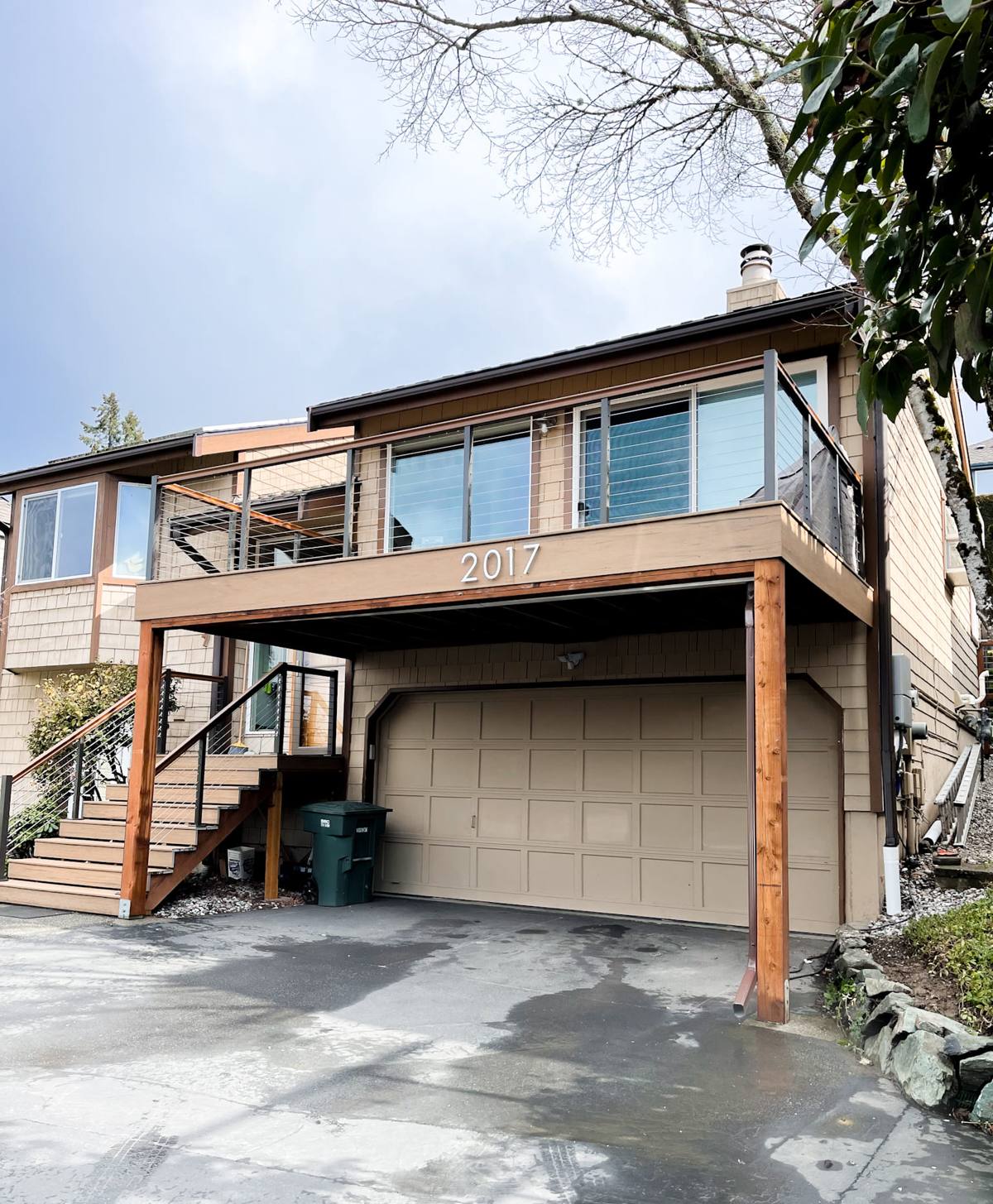
Signs a Deck Needs Replacement, Not Repair
A lot of decks get patched for years past the point where patching makes sense. Replacement, not repair, is usually the right call when you're seeing more than one of the following:
- Soft, spongy, or discolored spots in the decking boards, especially near the house or in shaded corners
- Rust streaks running down from fasteners, joist hangers, or railing posts
- A ledger board (where the deck attaches to the house) that shows staining, gaps, or separation from the siding
- Wobble in the railing system or stair stringers when you put weight on them
- Persistent moss or black algae that comes back within weeks of cleaning, no matter how often you scrub
- Visible sagging between joists, or a deck surface that no longer drains and instead holds standing water after rain
Any one of these on its own might be repairable. Several at once usually means the structure underneath — joists, beams, posts, footings — has been absorbing moisture for years and is past the point where swapping a few boards fixes the real problem.
What a Correct Deck Replacement Actually Involves
A deck replacement done right in this climate is a structural project, not a cosmetic one. The visible decking boards are the easiest part. What determines whether a new deck lasts 10 years or 30 is almost entirely in the parts you don't see once it's finished:
Framing and Ledger Attachment
The ledger board — where the deck ties into the house — is the single most common failure point on Pacific Northwest decks, because it's the spot where rainwater has the most opportunities to get trapped against the wall assembly. A correct rebuild flashes this connection properly and uses fasteners rated for outdoor and, where relevant, coastal-influenced exposure.
Footings and Posts
Footings need to be sized and set to current code depth for frost and load, with post bases that keep wood off standing water and concrete. In soils that stay wet for long stretches of the year, this detail matters more than it does in drier parts of the state.
Joist Protection and Drainage
Joist tape or an equivalent moisture barrier on top of the framing keeps rain from wicking straight into the wood grain through fastener holes — a detail that's easy to skip and expensive to regret. Proper spacing and a slight slope away from the house keep water moving off the structure instead of pooling.
Fasteners and Hardware
Everything from joist hangers to structural screws needs a corrosion-resistant rating suited to damp, salt-influenced air. Using standard interior-grade hardware on an exterior deck in this area is one of the more common shortcuts that shows up as rust stains within a few seasons.
Decking Material Options for This Climate
There's no single "best" decking material — there's a best fit for how the deck gets used, how much upkeep the homeowner wants to do, and how it holds up against moss and moisture specifically. Here's how the common options compare for a home in a damp, shaded, moss-prone setting:
| Material | Moisture & Moss Behavior | Maintenance | Typical Lifespan |
|---|---|---|---|
| Pressure-treated wood | Absorbs moisture readily; moss and algae take hold in shaded areas without regular cleaning | Annual cleaning, periodic staining/sealing | 10–20 years, shorter without upkeep |
| Cedar | Naturally rot-resistant but still needs sealing to shed water and resist surface mildew | Sealing every 1–2 years | 15–20 years |
| Capped composite | Resists moisture absorption; still needs cleaning where moss spores land in shade | Occasional washing, no staining/sealing | 25–30+ years |
| PVC decking | Does not absorb water at all; best resistance to moss taking root in the board itself | Occasional washing | 25–30+ years |
We install all of these depending on the homeowner's budget and priorities, and we'll walk through the honest trade-offs for your specific deck rather than pushing one product. Wood costs less up front but asks for more of your time every year. Capped composite and PVC cost more initially but hand you back your weekends — a trade-off that matters more here than in drier climates, since moss and mildew maintenance in this region is a recurring chore, not a one-time job.
Our Deck Replacement Process
- On-site assessment. We inspect the existing deck's framing, ledger connection, footings, and posts to confirm whether replacement is warranted and to scope the work accurately.
- Design and material selection. We go over decking material, railing style, and layout options based on how you actually use the space and how much maintenance you want going forward.
- Permitting. We handle the permit application and coordinate required inspections so the finished deck is fully code-compliant.
- Demolition and disposal. The old deck comes out, including any compromised framing, footings, or ledger material, with the site cleared and protected.
- Structural rebuild. New footings, posts, beams, and joists go in to current code, with proper ledger flashing and corrosion-resistant hardware throughout.
- Decking, railing, and stairs. Surface materials and railings are installed with attention to drainage, fastener spacing, and a clean, level finish.
- Final walkthrough. We go over the finished deck with you, including basic care specific to whatever material you chose.
Permits and Code Requirements in This Area
Deck replacement in Whatcom County almost always requires a building permit, whether the property falls inside Ferndale city limits or in unincorporated county jurisdiction near the Nooksack area — the specific requirements depend on which jurisdiction your property sits in, along with the deck's height, size, and attachment to the house. Skipping this step is a common way homeowners end up with a deck that's difficult to insure or sell later. We pull permits and schedule inspections as part of every replacement project, so you don't have to track down the right department or paperwork yourself.
What Affects the Cost of a Deck Replacement
We don't publish a flat price because decks vary too much project to project — but these are the main factors that move the number up or down:
| Factor | Why It Matters |
|---|---|
| Square footage and shape | Larger decks and multi-level layouts require more material and framing time |
| Decking material chosen | Pressure-treated wood costs less upfront than composite or PVC, which cost more but reduce long-term upkeep |
| Height and access | Elevated decks need more substantial framing, railings, and often stairs |
| Condition of footings and posts | Reusing sound footings versus replacing all of them changes both cost and timeline |
| Railing style | Standard wood or composite balusters cost less than cable, glass, or metal railing systems |
| Permit and inspection scope | More complex structures may require additional engineering or inspection steps |
The only reliable way to know what your project will cost is a walkthrough of the actual deck — sight-unseen estimates over the phone tend to be wrong in one direction or the other.
Why Local Experience in the Nooksack Area Matters
A crew that already works this part of Ferndale has seen how the local climate actually behaves on real decks over time — which ledger connections fail first, where moss builds up fastest given the shade patterns common to this area, and which hardware holds up against the damp, salt-influenced air rather than just looking good on day one. That's the difference between a deck built to a generic spec sheet and one built for what this specific climate does to wood, fasteners, and finishes year after year. It also means fewer surprises on permitting and inspection timing, since we're not learning the local process for the first time on your project.
Keeping a New Deck in Good Shape
Whatever material you choose, a few habits go a long way toward protecting your investment in this climate:
- Sweep leaves and debris off the deck regularly, especially in fall and under trees where moisture collects
- Clean moss and algae off the surface at the first sign of it rather than waiting until it's established
- Check railings and stair connections once a year for any looseness
- Reseal wood decking on the manufacturer's recommended schedule — don't wait until it looks dry and gray
- Keep gutters and downspouts near the deck clear so runoff isn't dumping extra water onto or under the structure
If you're weighing whether your current deck needs a full replacement or if you're ready to plan a new one, we're happy to take a look and give you a straight answer — no pressure, no obligation. Use the form below to request a free estimate and we'll set up a time to walk the site with you.