 Ferndale Siding
 Siding Repair in Nooksack Isn't the Same Job Everywhere
Nooksack sits inland from the coast, but it doesn't escape the weather pattern that shapes exterior work all across Whatcom County. Marine air pushes in off the water, rain falls sideways more often than straight down during the wet months, and shaded, tree-lined lots hold moisture long after a storm has passed. Add a long moss season and you have a climate that is quietly hard on siding, even when the damage isn't obvious from the driveway.
Siding repair here is rarely just a cosmetic fix. A cracked board, a soft spot near a window, or a stubborn stain usually points to something happening behind the surface — water finding a path in, or moisture sitting somewhere it shouldn't. A repair that only addresses what's visible tends to come back within a season or two. A repair that treats the cause tends to last.
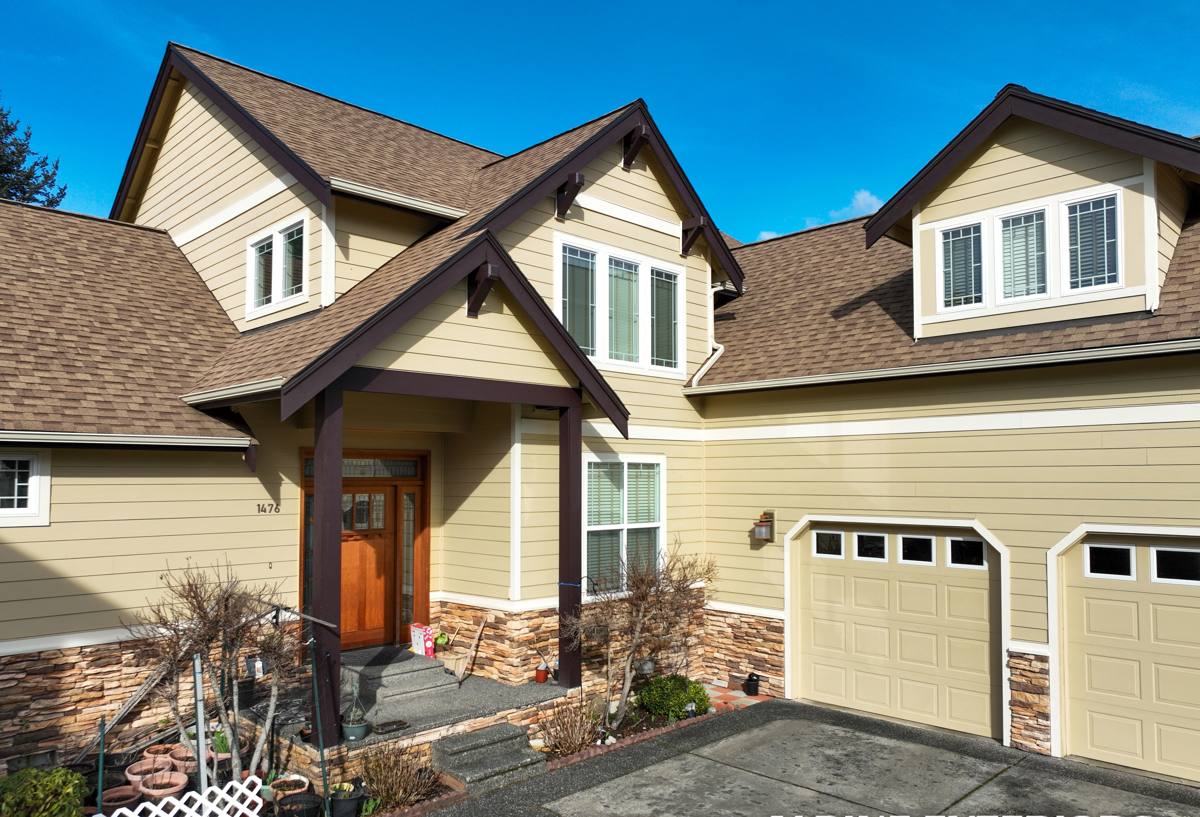
What Driving Rain and Moss Do to Siding Over Time
Wind-driven rain finds the weak points
Rain that hits siding at an angle works its way into gaps that vertical rain never would — around trim, at butt joints, along the bottom edge of panels near grade. Over years, that repeated wetting and drying cycle is what breaks down caulking, swells wood-based products, and eventually opens the door to rot.
Moss and mildew are a moisture indicator, not just an appearance problem
A long moss season means anything organic growing on siding has months to establish itself, not weeks. Moss holds moisture against the surface far longer than open air would, which accelerates whatever damage is already starting underneath. When we see heavy moss or dark streaking concentrated in one area of a wall, that's often the first clue pointing us toward a repair, not just a cleaning.
Shade and slow drying compound everything
Homes with mature trees, north-facing walls, or tight side yards dry out slower after every rain event. In those spots, siding stays damp longer, moss and mildew get a head start, and any existing gap or crack has more opportunity to let water in before the wall ever fully dries.
The Repair Issues We See Most Often in Nooksack Homes
- Cracked or split boards where water has frozen and expanded inside the material during cold snaps
- Soft, spongy siding near ground level, gutters, or window sills — a sign of trapped moisture
- Warped or bowed panels on wood-based or engineered wood siding that's absorbed water repeatedly
- Failed or missing caulking at trim, corners, and penetrations, letting wind-driven rain in
- Heavy moss or algae buildup concentrated on shaded or low-drainage walls
- Fading or chalking on older painted siding that no longer sheds water the way it once did
- Impact damage from storms, falling branches, or routine yard work
Some of these are quick fixes. Others are a sign that a section of wall — or in some cases a whole elevation — needs a closer look before we touch a single board.
What a Correct Repair Actually Involves
Diagnosing the cause before touching the siding
The first thing we do on any repair call is figure out why the damage happened, not just where it is. That means checking flashing above windows and doors, looking at how water sheds off the roofline onto the wall below, and checking whether the damage is isolated or spreading. Replacing a damaged board without fixing the reason it failed just resets the clock on the same problem.
Checking what's behind the siding, not just the surface
Once we remove damaged material, we check the house wrap, sheathing, and flashing underneath. If water has been getting in for a while, the siding is sometimes the least of the problem — the wall assembly behind it may need attention too. We tell you what we find before we move forward, not after.
Matching material, not just color
A patch that's the wrong thickness, profile, or reveal will show from the street even if the paint color is close. On James Hardie repairs we work from the same product lines and ColorPlus finishes used in Hardie's current lineup, so a properly matched repair section blends into the wall instead of standing out as an obvious patch.
Rebuilding the moisture management, not just the board
Correct repair work re-establishes proper flashing, drainage, and sealant details at every seam and penetration in the repaired area — the same details that should have been there originally. A repair that looks right but skips this step is a repair that fails again.
Repair or Replace? How We Help You Decide
Not every problem area needs a full re-side, and not every damaged section is worth patching. The right call depends on how localized the damage is, what's causing it, and the condition of the siding around it.
| Factor | Points Toward Repair | Points Toward Replacement |
|---|---|---|
| Extent of damage | Isolated to one section or elevation | Spread across multiple walls |
| Underlying cause | One-time event (impact, isolated flashing failure) | Systemic moisture issue affecting the whole assembly |
| Age and condition of existing siding | Siding is otherwise sound and well-maintained | Siding is near end of service life or failing broadly |
| Material match | Product still available or closely matchable | Discontinued profile or color, poor match likely |
| Cost over time | Lower upfront cost, addresses the immediate issue | Better long-term value if damage is widespread |
We'll walk the exterior with you, explain what we're seeing, and give you an honest recommendation — including telling you when a repair is genuinely the right call, not just pushing toward the bigger job.
Our Repair Process, Start to Finish
- On-site inspection. We look at the damaged area and the surrounding siding, and check for signs the problem extends further than what's visible.
- Diagnosis and explanation. We tell you what caused the damage and what we recommend, in plain language, before any work starts.
- Careful removal. Damaged siding and trim come off without unnecessary disturbance to sound material nearby.
- Inspecting the wall assembly. We check house wrap, flashing, and sheathing in the exposed area for hidden moisture damage.
- Repair and rebuild. We correct any flashing or drainage issues, then install matched material with proper fastening and clearances.
- Finish and seal. Trim, caulking, and touch-up finish work are completed so the repair blends with the surrounding siding.
- Final walkthrough. We review the completed work with you before we consider the job done.
Why We Repair With James Hardie Fiber Cement
We install and repair with James Hardie fiber cement exclusively — we don't work in vinyl, LP SmartSide, Cemplank, Allura, or unfinished wood siding. That standard applies to repair work too, and there's a practical reason: fiber cement doesn't rot, warp, or attract insects the way wood-based products can, and it holds up to the wet, moss-prone conditions common in Whatcom County far better over the long run.
Hardie's ColorPlus factory finish also matters specifically for repairs. Because the color is baked on at the factory rather than mixed and applied on site, a properly matched replacement board keeps its color consistency for years, instead of weathering at a different rate than the surrounding siding — something that becomes obvious fast on a mismatched patch.
Hardie's HZ5 product line is engineered for climates like ours, with moisture and freeze-thaw performance built into the product rather than added after the fact. When we repair a Hardie wall, we're restoring a system that was designed for this weather in the first place — not patching around a product that was never quite suited to it.
Why Hiring a Crew That Already Works in Nooksack Matters
Siding repair looks different depending on where a house sits and what the local weather throws at it. A crew that regularly works siding across Whatcom County recognizes the difference between cosmetic moss staining and the early signs of moisture getting behind the wall, because they've seen both often enough to tell them apart quickly. That means fewer surprises, a faster accurate diagnosis, and a repair that's built to handle the next few years of Nooksack weather — not just patched to look fine until the next storm.
Local, ongoing exterior work also means we're set up to handle repairs efficiently — matching materials, sourcing the right Hardie profiles and colors, and scheduling around the wetter months instead of working against them.
Before You Call: A Quick Homeowner Checklist
- Note where the damage is and whether it's isolated or shows up in more than one spot
- Check nearby gutters and downspouts for overflow or misdirected water near the damaged area
- Look for soft spots by gently pressing on the siding — do not pry or force damaged boards
- Take note of any interior signs, like staining or a musty smell, on walls near the exterior damage
- Avoid painting over or caulking the area yourself before an inspection — it can hide what we need to see
- Have any past repair or renovation history for that section of the house ready to mention
If you're seeing damaged, soft, or moss-covered siding on your Nooksack home, we're happy to take a look and give you a straight answer on what's needed. Reach out for a free, no-pressure estimate using the form below.