 Ferndale Siding
 Fiber Cement Siding for Point Roberts Homes
Point Roberts sits at the far northwest corner of Whatcom County, on a small peninsula that hangs south of the Canadian border into the Strait of Georgia. It's part of the same James Hardie service area we work across Ferndale and the rest of Whatcom County, but it's also one of the more exposed spots in that service area — surrounded by water on three sides, sitting well out into open marine air, and reachable by land only by driving through Canada and back across the border. That geography matters for a lot of reasons, but for a homeowner deciding what to put on the outside of a house, it comes down to one thing: siding here takes a harder, more sustained beating from salt air, wind-driven rain, and moss than a similar home a few miles inland in Ferndale.
We install James Hardie fiber cement siding exclusively, and for a Point Roberts property, that recommendation isn't a close call. The combination of marine exposure and a long wet season is exactly the kind of environment fiber cement was engineered to outperform in.
Why Point Roberts' Location Changes What Siding Needs to Do
Salt Air on Three Sides
Most Whatcom County homes deal with regional dampness. A Point Roberts home deals with that plus direct marine exposure, since the peninsula is bordered by the Strait of Georgia to the west and Boundary Bay to the east. Salt-laden air corrodes exposed metal fasteners, pits and dulls unprotected finishes, and works its way into seams and joints faster than it does on an inland lot with more tree cover and distance from open water. Siding, trim, and the hardware holding them on all need to be chosen and installed with that in mind, not treated the same as a sheltered in-town property.
Wind-Driven Rain Off the Water
Being surrounded by open water instead of tucked behind hills or urban development means Point Roberts sees more direct, sustained wind off the Strait of Georgia than most of the rest of the county. That wind pushes rain sideways into walls rather than letting it run straight down and off, which puts real stress on siding laps, corner details, and window and door flashing. A wall system that isn't detailed to shed wind-driven rain — not just vertical rain — is the first thing to show water staining and eventual rot on an exposed peninsula lot.
A Long Moss and Mildew Season
Persistent damp, mild temperatures, and shaded or north-facing walls add up to a moss and mildew season that runs long here, same as most of Whatcom County, but often worse on lots close to the water where humidity stays higher for more of the year. Left alone, that growth holds moisture directly against the wall assembly, which is the condition that eventually leads to hidden rot behind otherwise normal-looking siding.
Homes That Sit Vacant Part of the Year
Point Roberts has a higher share of seasonal and part-time homes than most of the towns we work in, since it's popular with owners who aren't in residence year-round. That matters for siding because a slow leak or a failing seal behind cladding on a house that's occupied every day tends to get noticed — a damp spot, a musty smell, a spike in a utility bill. On a home that sits empty for weeks or months at a stretch, the same problem can run much longer before anyone catches it, which is one more reason the siding itself needs to be doing its job correctly from day one rather than relying on someone noticing early warning signs.
Why Fiber Cement Is What We Install Here
We used to install a broader range of siding products. Watching how different materials actually performed on real homes across Whatcom County's wetter, windier stretches — Point Roberts among them — is part of why we narrowed down to one system we trust completely.
- Non-combustible core: fiber cement doesn't feed a fire the way wood-based products can, which matters for household safety and insurance underwriting alike.
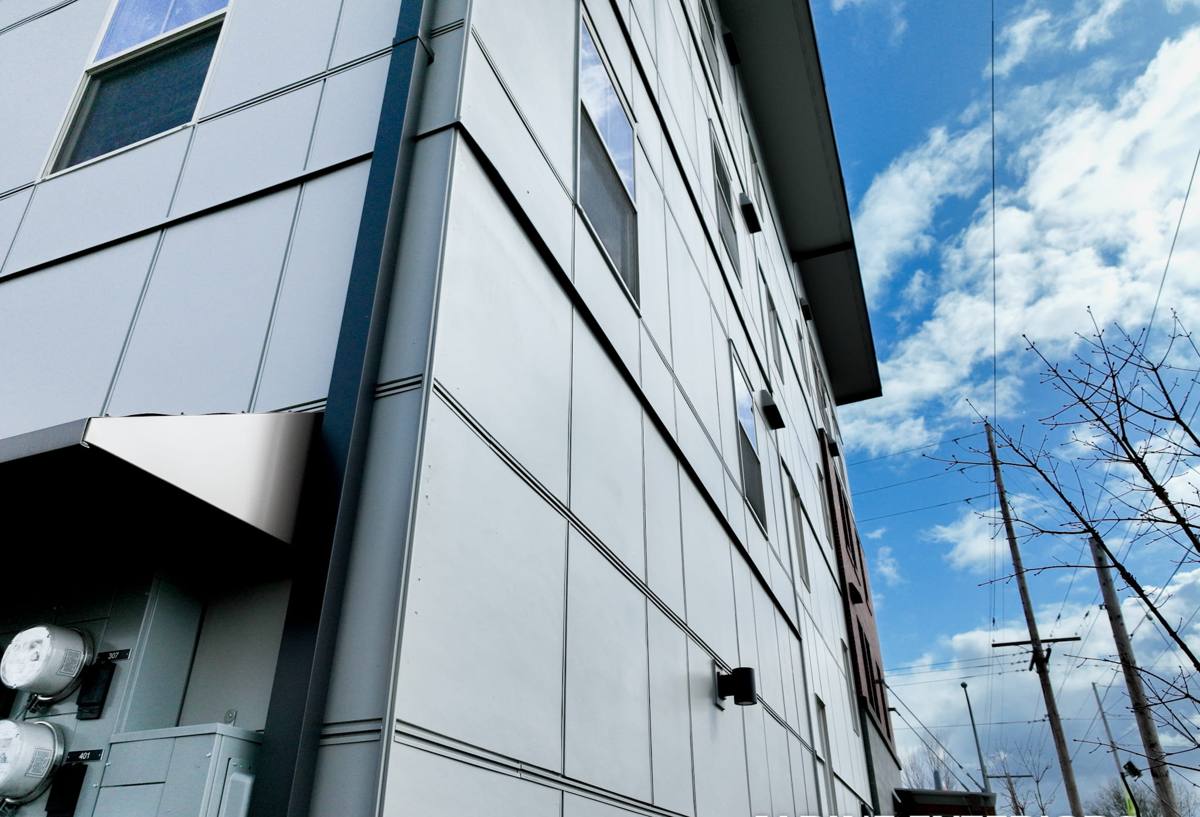
- Factory-applied ColorPlus finish: color is baked on under controlled factory conditions rather than brushed on in the field, so it resists fading, chalking, and moisture intrusion far longer than site-applied paint — a real advantage on a wall that's taking direct salt air.
- Climate-engineered HZ product lines: Hardie builds different formulations for different climate zones, including versions engineered for sustained moisture exposure — a real match for a peninsula property surrounded by open water.
- Dimensional stability: fiber cement doesn't swell, cup, or warp the way engineered wood siding can after repeated wet-season moisture cycles.
- Corrosion-resistant hardware compatibility: fiber cement pairs with stainless or coated fasteners and flashing that hold up under marine air, instead of the fastener corrosion issues that show up faster on some other siding systems in this kind of exposure.
- Strong transferable warranty: backed by Hardie provided the installation follows spec, giving a homeowner real protection instead of a marketing claim.
We don't install LP SmartSide, vinyl siding, Cemplank, Allura, primed spruce, or cedar. Each has a place in the broader market, and plenty of homeowners elsewhere are satisfied with them. But on a peninsula lot getting more direct salt air and wind than almost anywhere else we work, the trade-offs those products carry — moisture-sensitive cores, UV and temperature-driven warping, fading finishes, more frequent repainting — show up faster and cost more over time than most homeowners expect when they first compare price tags.
Choosing the Right Hardie Product for a Point Roberts Home
| Product Line | Best Use | Why It Fits This Location |
|---|---|---|
| HardiePlank lap siding | Most single-family homes | Traditional lap profile sheds wind-driven rain effectively when lapped and flashed correctly |
| HardiePanel vertical siding | Accent walls, gables, modern builds | Fewer horizontal laps for wind-driven rain to work into on an exposed wall |
| HardieShingle siding | Craftsman and cottage-style homes | Textured coastal look without the moisture absorption of real wood shingle |
| HardieTrim boards | Corners, window and door casing, fascia | Factory-finished trim resists the same salt air and moisture that field siding is exposed to |
The right combination comes down to the individual home's exposure, orientation to the water, and the owner's preference — but the underlying product family and installation approach stay consistent: we spec what actually fits a property's real exposure, not whatever is fastest to install.
What Correct Installation Looks Like in This Environment
Material choice only gets a Point Roberts home halfway there. The rest comes down to installation detail, and on an exposed peninsula lot, shortcuts here show up faster than almost anywhere else in the county.
- Stainless steel or coated corrosion-resistant fasteners throughout, not standard hardware that pits and streaks under salt exposure
- Correct clearance from grade and deck or patio surfaces so siding isn't wicking up moisture from wet ground
- Joints lapped and sealed rather than simply butted together, especially on walls facing open water
- A house wrap and flashing system doing the real waterproofing work, with caulk used as a backup rather than a primary seal
- Extra attention to window and door flashing, since that's where wind-driven rain finds its way in first
- Fastening patterns that account for direct wind exposure rather than a standard inland spec
Repair vs. Full Replacement
Not every siding issue on a Point Roberts home calls for a full tear-off. An isolated section damaged by impact, a trim failure around one window, or wind-lifted pieces can often be repaired and matched into existing Hardie siding. But if moisture has been tracking behind the wall for a while — which is more likely on a property that sits vacant part of the year — patching usually just delays a larger job while rot keeps spreading underneath where it can't be seen. We'll give you a straight answer about which situation you're actually dealing with before recommending either option.
Cost Factors for Point Roberts Exterior Work
| Factor | What It Affects | Why It Matters Here |
|---|---|---|
| Tear-off vs. overlay | Labor scope and substrate access | Tear-off reveals hidden moisture and rot damage more common on homes near open water |
| Substrate condition | Repair costs before new siding goes on | Long-term trapped moisture behind older siding can rot sheathing and framing |
| Hardware and fastener spec | Material cost and longevity | Corrosion-resistant hardware costs more upfront but avoids early failure in salt air |
| Wind exposure and orientation | Fastening pattern and flashing detail | Walls facing open water need tighter detailing than a sheltered side of the same house |
| Site logistics | Crew and material scheduling | Point Roberts' location affects how material deliveries and crew scheduling are planned |
Exact costs depend on the specific property, its exposure, and its current condition, which is why we walk the home in person before giving a real number rather than quoting off a generic price sheet.
Why a Crew That Already Works Point Roberts Matters
Point Roberts is geographically part of Whatcom County, but it isn't reachable by land without driving through Canada and crossing back into the U.S. — a detail that changes how a project actually gets planned and staged compared to a job a few miles away in Ferndale or Blaine. A contractor who doesn't regularly work the peninsula has to work that logistics question out for the first time on your job: how materials get delivered, how crew time and border crossings factor into a work schedule, and how weather windows on an exposed peninsula lot differ from a sheltered in-town property. A crew that already works this community routinely has already solved those problems, so they don't become delays or surprise costs on your project.
Beyond logistics, there's the climate knowledge itself. Understanding which wall orientations take the worst of the wind and salt air, where extra flashing attention actually pays off, and which fastening details are worth the added time comes from working houses on this specific peninsula repeatedly — not from a general siding background applied to an unfamiliar site.
What to Expect When You Call Us
- A walk-through of the home's exterior, checking siding, trim, flashing, and any visible signs of moisture or wind damage
- An honest assessment of whether you're looking at a repair, a partial replacement, or a full re-side
- A clear explanation of why we recommend James Hardie for a property with this level of exposure
- A written estimate that accounts for Point Roberts' specific logistics, with no pressure to sign on the spot
If your Point Roberts home needs new siding, a repair, or just an honest second opinion on what's happening behind an aging wall, we're glad to take a look. Reach out using the form below to schedule a free, no-pressure estimate.