 Ferndale Siding
 Roofing Built for the Semiahmoo Area's Marine Climate
Homes near Semiahmoo sit close enough to the water that the roof takes a different kind of beating than a house a few miles inland in Ferndale or elsewhere in Whatcom County. Salt-laden air off the water accelerates corrosion on fasteners, flashing, and vents. Driving rain, pushed sideways by wind off the bay, finds every weak seam and gap in a roof system that would stay dry in calmer weather. And the long, wet stretch from fall through spring gives moss and algae months to take hold on north-facing slopes and shaded valleys. None of this means a roof in this area is doomed to fail early — it means the replacement has to be built with those conditions in mind from the start, not treated like a generic tear-off-and-reroof job.
We work on homes throughout the Semiahmoo area regularly, and the roofs that hold up best share the same traits: correctly sized ventilation, corrosion-resistant metal components, careful flashing detail at every penetration, and underlayment chosen for a wet climate rather than a dry one. That's the standard we build every replacement to, whether the home is a few decades old or was just bought and hasn't had a new roof yet.
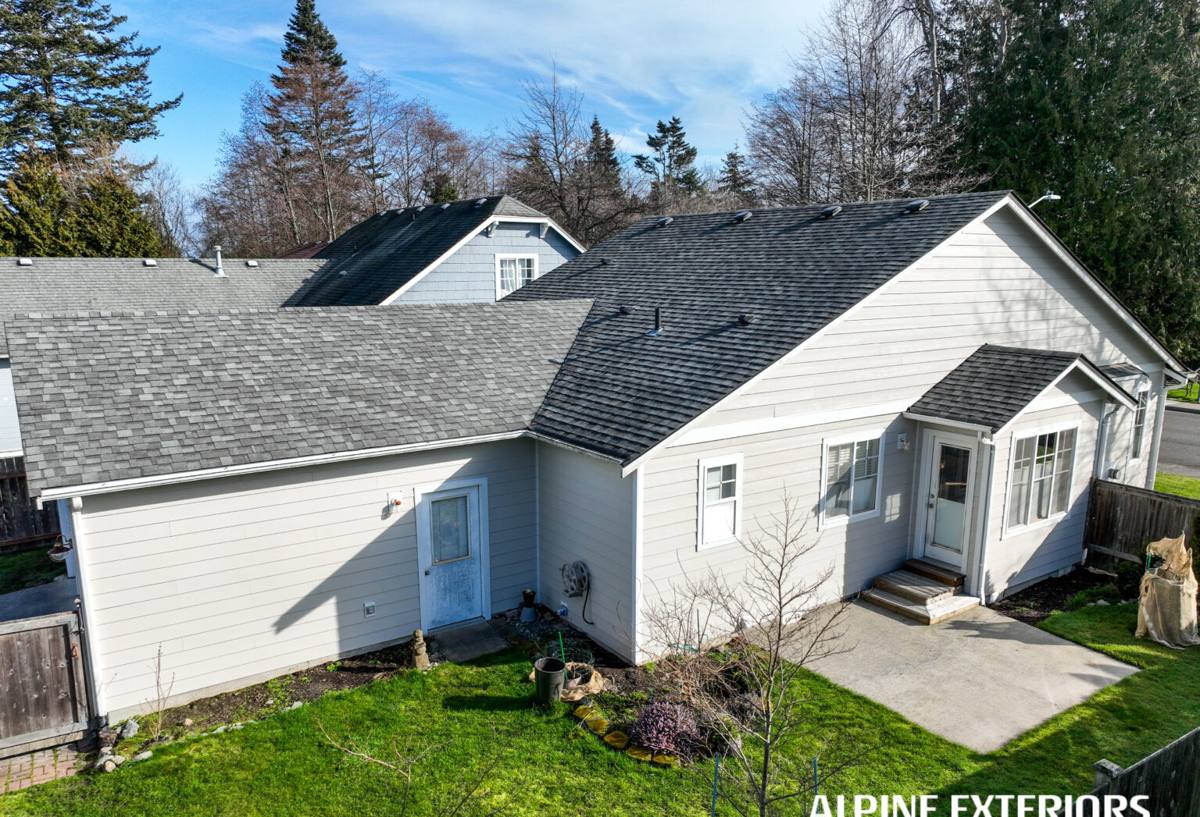
Signs a Semiahmoo Roof Needs Replacement, Not Just Repair
Not every roof problem calls for a full replacement, and we'll tell you honestly when a repair is the right call. But there's a point where patching individual leaks costs more over time than doing the job once, correctly. Common signs we look for on homes in this area include:
Age and wear
Most asphalt composition roofs in this climate are realistically good for 20-25 years, sometimes less if ventilation was ever undersized. If your roof is in that range and starting to show granule loss, curling edges, or cracked shingles, replacement usually makes more financial sense than continued patchwork.
Moss and algae that keep coming back
Occasional moss on a shaded slope is normal maintenance. Moss that returns aggressively within a season or two of cleaning, especially with visible shingle lifting underneath it, usually means the roofing material underneath is already degrading and holding moisture.
Soft decking or interior staining
Soft spots underfoot, sagging in the roofline, or ceiling stains that reappear after rain point to a decking or underlayment failure that a surface repair won't fix.
Rusted or failing flashing and fasteners
In salt-air exposure, flashing and fastener corrosion often shows up before the shingles themselves look bad. Once flashing starts failing at chimneys, valleys, or wall intersections, water finds a way in regardless of how good the field shingles look.
What a Correct Roof Replacement Actually Involves
A roof replacement done right is not just stripping old shingles and nailing down new ones. On a coastal-influenced property, several steps matter more than they would inland:
- Complete tear-off to bare decking so we can actually inspect the wood, not roof over hidden rot
- Decking repair or replacement of any soft, delaminated, or water-damaged sheathing before anything new goes down
- A synthetic or high-quality felt underlayment rated for extended wet exposure, not the minimum-grade option
- Ice-and-water shield membrane at eaves, valleys, and roof-to-wall transitions where wind-driven rain concentrates
- New flashing at every penetration — chimneys, plumbing vents, skylights — using corrosion-resistant materials suited to salt air
- Balanced intake and exhaust ventilation sized correctly for the attic volume, not just a couple of vents added for looks
- Proper nailing pattern and fastener spacing to hold up under sustained wind loads off the water
- Full cleanup, including magnetic sweep for stray nails and haul-away of all old material
Skipping any one of these doesn't always show up right away — but in this climate, it usually shows up within a few wet seasons, not decades.
Material Choices for Wet, Salt-Exposed Roofs
There's no single "best" roofing material for every home — it depends on budget, roof pitch, and how much maintenance you want to do. Here's how the common options actually compare for a Semiahmoo-area home:
| Material | Performance in Salt Air / Rain | Moss Resistance | Typical Lifespan | Maintenance |
|---|---|---|---|---|
| Asphalt composition shingle (standard) | Good with proper flashing and fasteners | Moderate — benefits from periodic cleaning | 20-25 years | Low to moderate |
| Asphalt composition shingle (algae-resistant) | Good | Better — copper-infused granules slow regrowth | 25-30 years | Low |
| Standing seam metal | Excellent when fasteners/flashing are corrosion-rated | High — hard surface sheds moisture fast | 40-50+ years | Very low |
| Cedar shake | Requires diligent maintenance in wet climates | Low without regular treatment | Varies widely with upkeep | High |
We steer most homeowners in this area toward algae-resistant asphalt shingle or standing seam metal, not because other materials can't work, but because both hold up with realistic, low-effort maintenance in a climate that doesn't give a roof many dry stretches to recover between storms. Cedar can look great, but it demands a maintenance commitment that most homeowners underestimate until moss and rot become a recurring fight.
Fasteners and Flashing Matter as Much as the Shingle
We use corrosion-resistant flashing and fasteners on every replacement in this area, regardless of which roofing material a homeowner chooses. Standard galvanized components can start showing rust streaks and early failure within a handful of years this close to salt water — the small upcharge for better-rated hardware is one of the cheapest ways to extend a roof's real service life.
Ventilation and Moisture Control
Attic ventilation is easy to overlook because you can't see it from the ground, but it's one of the biggest factors in how long a roof lasts in Whatcom County's wet climate. Poor ventilation traps humid air in the attic, which condenses on the underside of the decking and accelerates rot from the inside — often faster than weather damages the roof from outside. It also keeps roof surfaces warmer and damper for longer after rain, which is exactly what moss and algae need to establish.
On every replacement, we evaluate intake (typically soffit vents) and exhaust (ridge or box vents) together, since one without the other doesn't move air effectively. Getting this balance right is invisible day to day but shows up directly in how clean the roof stays and how long the decking lasts underneath it.
Our Process, Start to Finish
1. On-site inspection and honest assessment
We walk the roof, check the attic, and tell you plainly whether you need a full replacement or whether a repair will genuinely hold up.
2. Written estimate with material options
You get a clear scope of work and pricing broken out by material choice, so you're comparing real options, not guessing.
3. Scheduling around the weather
We work with the reality of a wet-season calendar and plan tear-off days to minimize how long your home is exposed to open sky.
4. Tear-off, decking repair, and installation
Full removal, decking inspection and repair as needed, then installation to the standard described above — underlayment, flashing, ventilation, and fastening done correctly the first time.
5. Final walkthrough and cleanup
We review the finished roof with you, answer questions, and make sure the property is left clean, including a magnetic nail sweep.
Why Hiring a Crew That Already Works the Semiahmoo Area Matters
Roofing crews that mostly work drier, inland areas sometimes underspec ventilation or use standard-grade fasteners because that's what works fine where they usually build. On a property exposed to salt air and driving rain off the water, those shortcuts show up early — corrosion, moss regrowth, and leaks within a few years instead of a couple of decades.
A crew that regularly works homes in and around Semiahmoo already knows to spec corrosion-resistant hardware by default, size ventilation for a genuinely wet climate, and detail flashing for wind-driven rain rather than straight-down rain. That's not a marketing point — it's the difference between a roof that needs attention again in five years and one that doesn't.
Cost Factors for a Semiahmoo Roof Replacement
Every roof is priced individually, but the same handful of factors drive most of the cost difference between projects in this area:
| Factor | Why It Affects Cost |
|---|---|
| Roof size and number of facets | More square footage and more valleys/hips mean more material and labor time |
| Pitch and accessibility | Steep or hard-to-access roofs require more safety setup and slow the work down |
| Decking condition | Rotted or soft sheathing found during tear-off adds material and labor to replace it |
| Layers of existing roofing | Multiple old layers take longer to remove and haul away |
| Material selected | Standard asphalt, algae-resistant asphalt, and metal carry different material costs |
| Flashing and penetration count | Chimneys, skylights, and multiple vent penetrations each add detail work |
We won't know your real numbers until we've actually seen the roof, which is why every estimate starts with an on-site look, not a phone-quote guess.
Getting Started
If your roof is showing its age, holding onto moss it never used to, or you just want an honest read on how much life it has left, we're glad to come take a look. We offer free, no-pressure estimates for homeowners in the Semiahmoo area and throughout Ferndale and Whatcom County — use the form below to get started.