 Ferndale Siding
 Storm Damage Roof Repair Built for Sudden Valley's Weather
If you live in or around Sudden Valley, you already know the roof over your head works harder than most. Homes in this part of Whatcom County sit under a mix of salt-laden coastal air, long stretches of driving rain off the Strait, and a moss season that can run nine months out of the year. None of that is dramatic on its own. What it does is quietly wear roofs down faster than the same materials would age in a drier, calmer climate — and when an actual windstorm or heavy rain event hits a roof that's already been softened up by moisture and moss, that's when real damage shows up.
This page is specifically about storm damage roof repair for homes in the Sudden Valley area. Not a general roofing overview — the actual work of finding what a storm did to your roof, fixing it correctly, and doing it in a way that holds up through the next one.
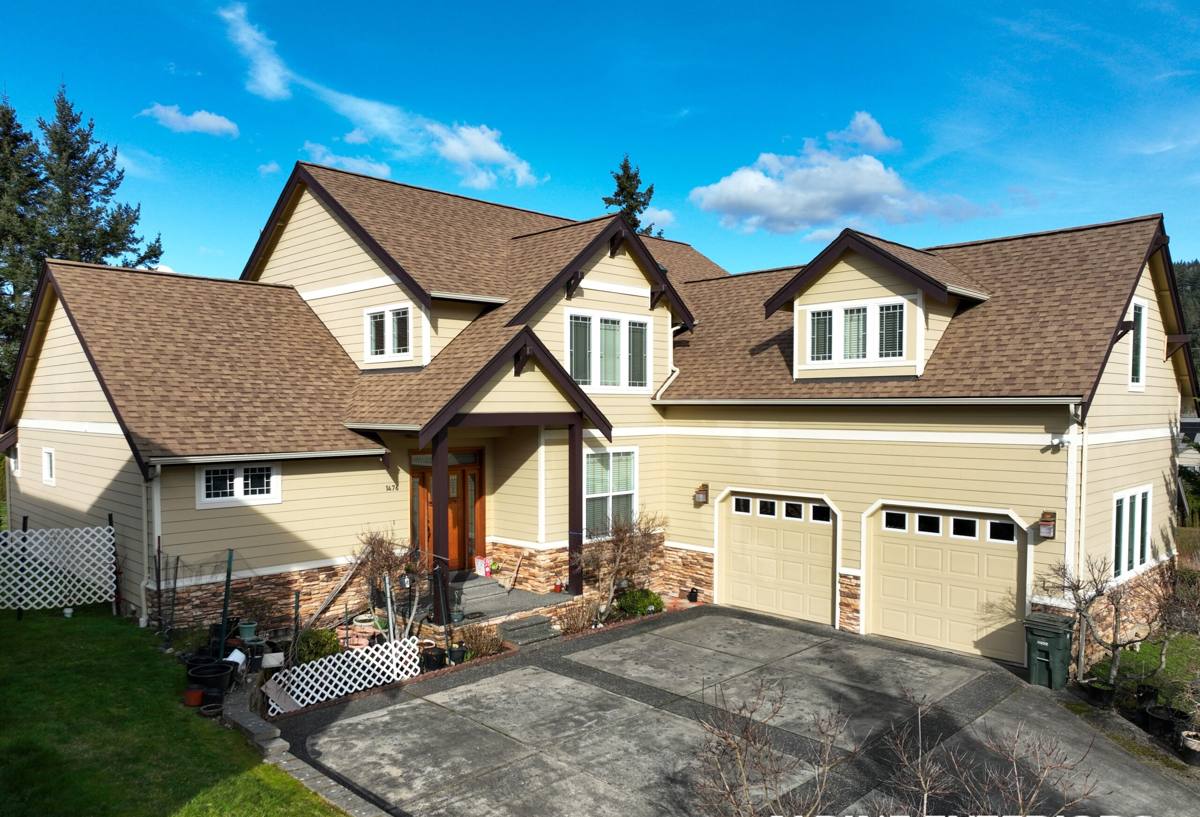
Why Local Climate Matters More Than Most Homeowners Realize
Roofing materials are rated for wind speed, water shedding, and general wear, but those ratings assume reasonably normal conditions. Whatcom County doesn't always offer normal conditions. A few things stack up against roofs here specifically:
- Salt air corrosion: Metal fasteners, flashing, and exposed hardware corrode faster this close to the water. Corroded fasteners lose their grip on shingles and panels long before the shingles themselves wear out.
- Driving rain, not just rainfall totals: Wind-driven rain finds its way sideways under lifted shingles, around flashing, and into any gap that a calm, straight-down rain would never reach. Storm damage often isn't a hole — it's water intrusion through a seam that a storm forced open.
- Extended moss season: Moss and lichen hold moisture against the roof surface and work their way under shingle edges over time. A roof with active moss growth going into a storm is more vulnerable to wind lift and water penetration than a clean one.
- Repeated freeze-thaw cycles at elevation: Depending on where in the Sudden Valley area a home sits, temperature swings can stress roofing materials and any existing minor damage, turning small issues into leaks.
None of this means your roof is doomed — it means storm damage repair here has to account for what was already happening to the roof before the storm, not just patch the obvious spot.
What Storm Damage Actually Looks Like
Homeowners often expect storm damage to be obvious — a missing shingle, a visible hole. Sometimes it is. Just as often, it's subtler and easier to miss until it's caused a leak.
Wind Damage
High wind can lift shingle edges, crease them, or tear them off completely. Lifted shingles that don't fully come off are actually the trickiest case — they may look fine from the ground but no longer seal properly, which lets wind-driven rain underneath during the next storm.
Water Intrusion
Heavy, sideways rain pushes water into places gravity-fed roofing was never designed to handle: under flashing at chimneys and walls, around vent boots, and through any seam that's lost its seal. This is the category most closely tied to our local driving-rain pattern.
Impact Damage
Falling branches and wind-thrown debris are common in wooded and semi-wooded settings like much of the Sudden Valley area. Impact damage can range from cracked shingles to punctures that need immediate attention to keep water out.
Flashing Failure
Flashing around chimneys, skylights, and roof-to-wall transitions is often the first thing a storm exposes, especially if salt air corrosion had already started weakening the seams or fasteners.
Our Storm Damage Repair Process
We treat storm damage repair as a sequence, not a single visit. Skipping steps is how homeowners end up paying for the same repair twice.
1. Fast Response and Temporary Protection
If a roof is actively leaking or has an open section after a storm, the first priority is stopping water from getting further into the structure — typically with tarping or temporary sealing. This buys time to do the permanent repair correctly instead of rushing it.
2. Full Roof Inspection, Not Just the Obvious Spot
We walk the whole roof, not just the area you noticed damage. Storms rarely damage just one spot, and a roof already dealing with moss buildup or aging flashing often has more than one weak point. We check shingles, flashing, vents, valleys, and the attic side for water staining or intrusion.
3. Honest Assessment
You get a clear breakdown of what the storm caused versus what was pre-existing wear — moss damage, aging materials, prior minor leaks. This distinction matters for both the repair plan and, if you're filing one, your insurance claim.
4. Documentation
We document damage with photos and a written summary that homeowners can use for insurance purposes. We're not adjusters and don't promise claim outcomes, but a clear, professional record makes the claims process smoother.
5. The Repair Itself
Repairs are matched to the actual cause — replacing damaged shingles and underlayment, resealing or replacing flashing, and correcting any moss-related wear that contributed to the failure. We don't patch over a symptom and leave the underlying cause in place.
6. Follow-Up Check
For larger repairs, we recommend a follow-up look after the next significant rain to confirm the fix is holding, especially for wind-driven rain events, which are the hardest to fully test on a dry day.
Repair or Replace? What Actually Drives That Decision
Not every storm-damaged roof needs full replacement, and not every roof is a good candidate for another patch. The honest answer depends on a few factors:
| Factor | Favors Repair | Favors Replacement |
|---|---|---|
| Extent of damage | Isolated to one section or a few spots | Widespread across multiple roof planes |
| Roof age | Well within expected lifespan | Already near or past expected service life |
| Pre-existing moss/wear | Minor, surface-level | Significant moss undergrowth or material breakdown |
| Flashing and fastener condition | Sound, minimal corrosion | Widespread corrosion from salt air exposure |
| Water intrusion history | First or isolated incident | Repeated leaks in different areas over time |
We'll always tell you honestly which side of this table your roof falls on. A roof that's structurally sound with isolated storm damage doesn't need replacing just because it's convenient to sell — and a roof that's been quietly failing for years shouldn't be patched again just to delay the inevitable.
Materials and Our Approach
For storm repairs in this climate, we favor materials and methods that hold up specifically against salt air, driving rain, and sustained moisture exposure — corrosion-resistant fasteners and flashing, proper underlayment at repair seams, and shingle products with a track record in coastal Pacific Northwest conditions. We're selective about products that require unusually precise installation conditions to perform as advertised, since that installation sensitivity becomes a real liability on a home that's already dealing with weather stress. Our standard is matching material choice to what actually survives here, not what's cheapest to source.
After a Storm: What to Check Before You Call
A quick, safe check from the ground or a window can help you describe the problem accurately when you reach out:
- Look for missing, curled, or visibly lifted shingles from the ground — don't get on the roof yourself after a storm
- Check ceilings and attic spaces for new water stains, discoloration, or damp spots
- Note any active dripping and where it's coming from relative to the roofline
- Check gutters and downspouts for granules, shingle pieces, or debris blockage
- Look at chimneys, skylights, and vent pipes for anything visibly displaced
- Photograph anything you can see safely, with a timestamp, for your own records
- If there's active interior leaking, place a container and move anything valuable out of the drip path until we arrive
Why It Matters to Hire a Crew That Already Works This Area
Storm damage repair isn't just a technical skill — it's knowing what to expect from a roof in this specific environment. A crew that regularly works Sudden Valley and the surrounding Ferndale and Whatcom County area already knows how salt air behaves on fasteners, how moss builds in the shaded and tree-covered lots common here, and which flashing details tend to fail first under sustained wind-driven rain. That local pattern recognition is what separates a repair that lasts from one that reopens with the next storm. We're not guessing at how your roof will behave — we've seen it play out on homes like yours before.
Get a Free, No-Pressure Estimate
If a recent storm left you with damage, or you're not sure whether what you're seeing needs attention, we're happy to take a look. The estimate is free, there's no pressure to move forward, and you'll get a straight answer about what's actually going on with your roof. Fill out the form below and we'll get back to you to schedule a time.