 Ferndale Siding
 Bellingham's Marine Climate Is Hard on Windows
Homes near Bellingham sit close enough to the water that salt air is a daily fact of life, not an occasional nuisance. Add Whatcom County's long wet season, driving rain that comes in sideways off Bellingham Bay, and the moss and algae that thrive in our shade and humidity, and you have a climate that quietly wears down window components most homeowners never think about: the seals, the flashing, the frame material itself.
Wood sashes swell and stick in the damp months, then shrink and let drafts through once things dry out. Vinyl frames near the water can chalk and become brittle years earlier than the same product would inland. Aluminum frames conduct cold straight through, which shows up as condensation and, eventually, soft trim underneath. None of this happens overnight. It happens window by window, over ten or fifteen years, until a homeowner notices drafts, fog between the panes, or a sill that's gone soft.
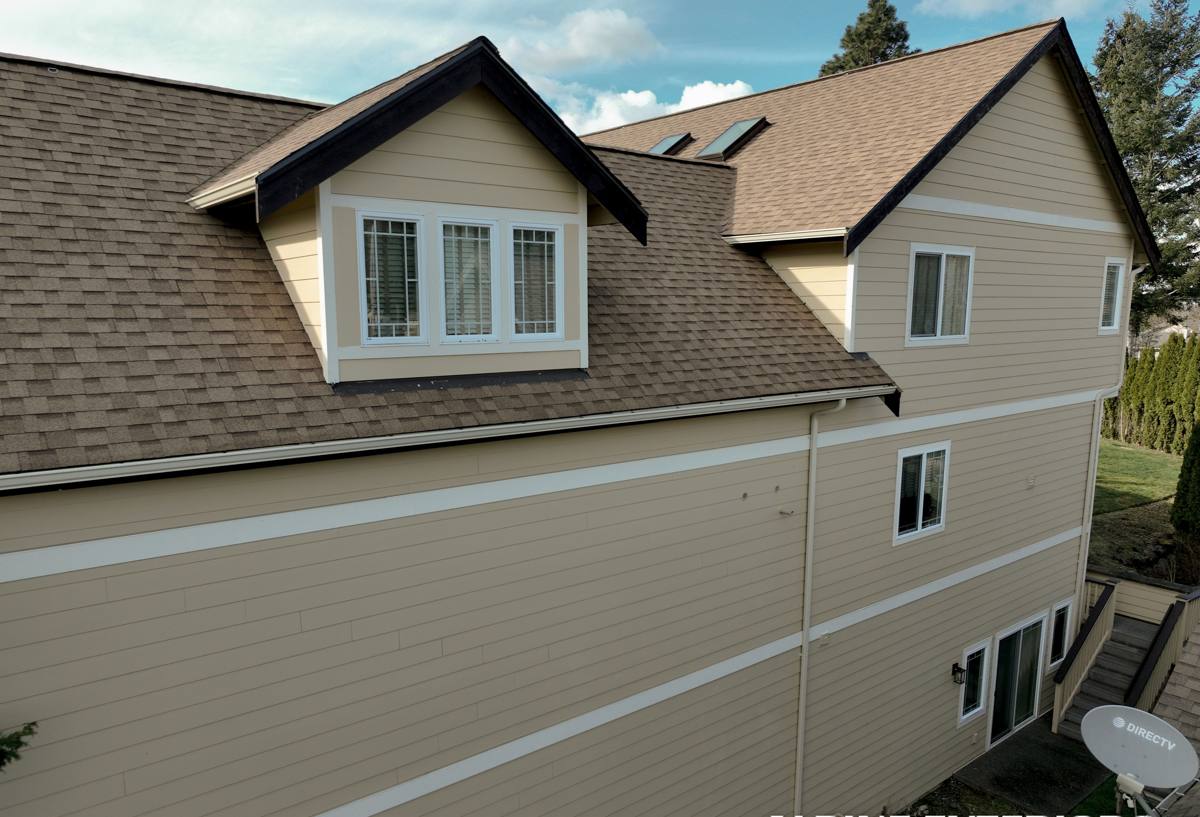
Signs a Bellingham Home's Windows Are Losing the Battle
Most homeowners don't replace windows on a schedule — they replace them when the windows start failing in ways that are hard to ignore. In this climate, watch for:
- Fog or haze trapped between panes, which means the seal has failed and the insulating gas is gone
- Condensation forming on the inside of the glass during cold, wet mornings
- Windows that are difficult to open, close, or lock, especially wood or older vinyl units
- Visible gaps or drafts you can feel with a hand near the frame on a windy day
- Soft, discolored, or crumbling wood at the sill or the trim below the window
- Paint that keeps peeling or bubbling on the interior or exterior trim no matter how often it's redone
- A noticeable jump in heating costs compared to homes of similar size nearby
Any one of these on its own might just mean a repair. Several of them together, especially on windows that face the prevailing weather, usually mean the window itself has reached the end of its useful life.
What a Correct Window Replacement Actually Involves
Removing the Old Window and Checking the Opening
A rushed job pulls the old sash and drops a new unit in the same hole. A correct job stops to look at what's actually there: is the rough opening square, is the sheathing underneath dry and sound, is there evidence of past water intrusion that needs to be addressed before anything new goes in? In a climate this wet, skipping that inspection is how a homeowner ends up paying twice.
Flashing and Water Management
This is the part of a window install nobody sees once the trim goes back on, and it's the part that matters most here. Proper flashing directs any water that gets behind the siding back out, rather than letting it pool against the framing. With Whatcom County's rainfall totals, a window installed without correct flashing and a water-resistive barrier lap isn't a matter of if it leaks — it's a matter of when.
Insulation, Air Sealing, and Setting the Unit
The new window has to be shimmed and set plumb, level, and square before it's fastened — an out-of-square window binds, doesn't seal well, and stresses the frame over time. The gap around the unit gets sealed with an appropriate low-expansion foam or backer rod and sealant, never packed solid with the wrong material, which can bow the frame.
Finish Trim and Sealant
Exterior sealant beads, trim, and any cladding tie-ins get finished with materials rated for exterior exposure, and joints get caulked in a way that sheds water rather than trapping it against the wood underneath.
Choosing a Frame Material for a Wet, Salty Climate
There's no single "best" window material for every home — it depends on the home's style, budget, and how exposed that particular wall is to wind and rain. Here's how the common options hold up in this specific climate:
| Frame Material | Moisture & Salt-Air Resilience | Maintenance | Best Fit |
|---|---|---|---|
| Vinyl | Good; won't rot, but lower-grade vinyl can become brittle near the water over many years | Low — occasional cleaning | Budget-conscious replacements, most home styles |
| Fiberglass | Very good; dimensionally stable through temperature and humidity swings, holds paint well | Low | Homeowners wanting a longer service life without much upkeep |
| Wood (unclad) | Poor without diligent upkeep; the material this climate is hardest on | High — regular painting and sealing | Historic homes where original wood detailing matters |
| Aluminum-clad wood | Good exterior protection with wood's interior look, but relies on the cladding staying intact | Moderate | Homeowners who want a wood interior with less exterior upkeep |
As a matter of professional standard, we steer homeowners away from bare, unclad wood exteriors on walls that take direct weather in this area — not because wood is a bad material, but because keeping it sealed against this much rain and salt air is a maintenance commitment most people don't want to sign up for. A clad or fiberglass option gives a similar look with far less upkeep.
Glazing and Glass Options That Matter Here
Whatcom County's winters are mild compared to much of the state, so the case for triple-pane glass here is less about extreme cold and more about condensation control and comfort near large window walls. A well-specified double-pane window with a Low-E coating and argon fill performs well for most Bellingham-area homes. Triple-pane is worth considering on north-facing walls, large picture windows, or homes where condensation has been a recurring problem, but it's rarely a requirement across the board here.
Low-E coatings matter more in this climate than in a dry one — they help keep interior glass surfaces warmer, which cuts down on the condensation that forms during our long stretch of cold, wet mornings. That condensation, left unaddressed over years, is what eventually damages sills and the wall below the window.
Our Window Replacement Process
- On-site assessment: we look at each window's exposure, the condition of the framing and sill, and how the home is currently performing before recommending anything.
- Product selection: we walk through frame material, glazing, and finish options based on that specific wall's exposure and the home's style, not a one-size-fits-all package.
- Precise measurement and ordering: replacement windows are built to the exact opening, not a standard size, so accurate measurement up front avoids delays later.
- Install day: old units come out, the opening is inspected and corrected if needed, flashing and air sealing are done properly, and the new window is set, shimmed, and finished.
- Cleanup and walkthrough: we clear debris, check that every window operates and locks correctly, and go over care and warranty coverage before we leave.
We also work around this area's weather rather than against it. Flashing and sealant work depends on dry conditions to cure properly, so install timing gets scheduled with an eye on the forecast, not just the calendar.
Why Hiring a Crew That Already Works in Bellingham Matters
A lot of window problems in this area trace back to installation, not the product itself. A crew that mostly works drier inland climates can install a fine window incorrectly for our conditions — using the wrong sealant for constant damp, skipping a flashing detail that only matters when wind-driven rain is a regular event, or not accounting for the moss and organic buildup that collects on sills and horizontal trim near the trees common to this area.
Working regularly in and around Bellingham and Whatcom County also means familiarity with the mix of older and newer housing stock here, from homes with original wood trim details to newer construction, and with how local building departments handle window replacement permitting — which matters most when a project changes the size of an opening or affects a required bedroom egress window.
Keeping New Windows Performing for the Long Haul
A correctly installed window is a long-term investment, and a few minutes of upkeep a couple of times a year keeps it performing the way it should in this climate:
- Clear moss, leaves, and debris from sills and tracks before they trap moisture
- Check exterior caulking each spring and fall for cracks or gaps and reseal as needed
- Vacuum or wipe out weep holes at the base of the frame so water can drain out as designed
- Clean tracks and hardware so sashes continue to operate and lock smoothly
- Watch for condensation between panes, which signals a failed seal rather than something to just wipe away
- Rinse salt residue off frames near the water a couple of times a year
None of this is complicated, but skipping it is how even a good window's lifespan gets cut short in a climate that doesn't let up for long.
If your windows are drafty, fogged, hard to operate, or original to a home you know needs an upgrade, we're happy to take a look and give you a straightforward, no-pressure estimate — use the form below to get started.