 Ferndale Siding
 Roofing for a Coastal, Wet, Mossy Corner of Whatcom County
Bellingham and Ferndale sit close enough to the water that homes here deal with a mix of weather most inland roofers never have to think about. There's salt-tinged air rolling off Bellingham Bay and the Strait, long stretches of driving rain off the water, and a moss season that can run most of the year in shaded, north-facing sections of a roof. An asphalt shingle roof that's installed correctly for this environment can last decades. One that's installed generically — the way a crew from a dry inland climate might do it — tends to show problems early: granule loss, curling edges, moss bridging the shingles, and leaks at the details nobody thought twice about.
This page is about asphalt shingle roofing specifically for homes in the Bellingham area, and what it actually takes to get it right here.
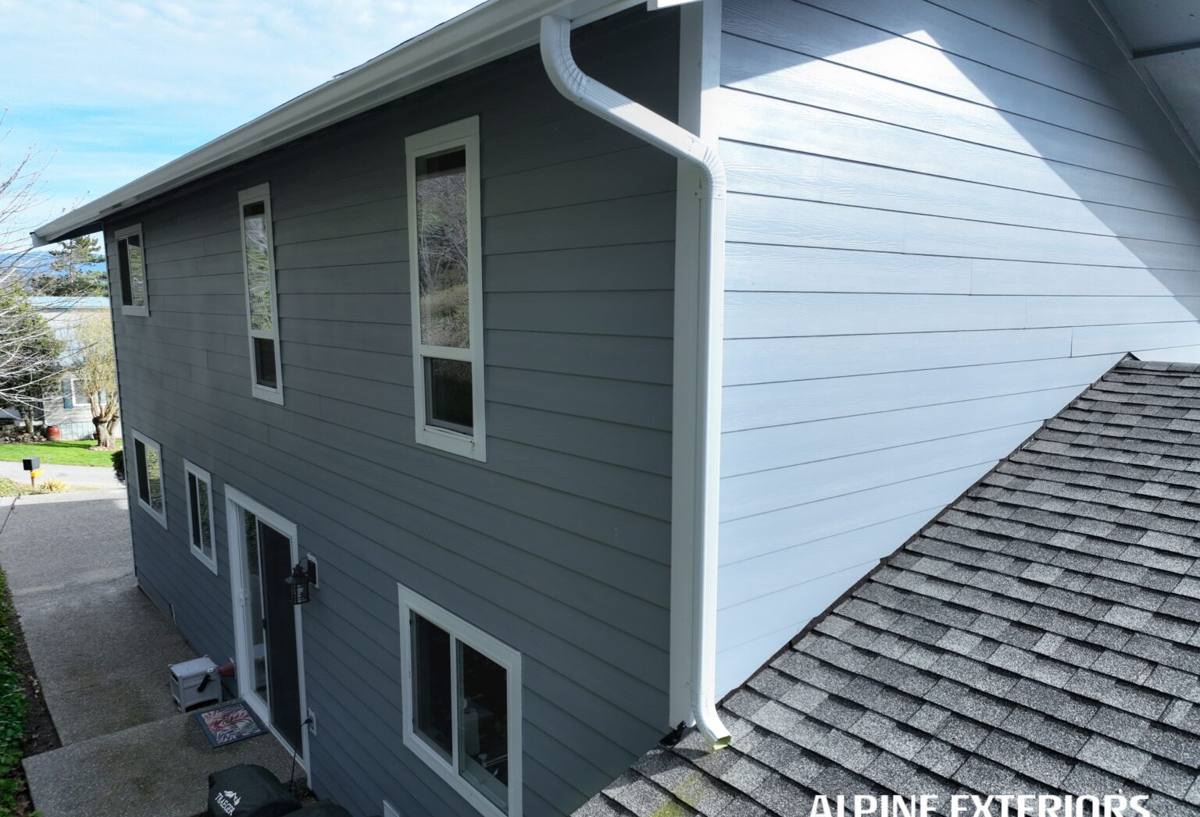
What Salt Air, Rain, and Moss Actually Do to a Roof
Salt Air
Homes closer to Bellingham Bay and the shoreline see fine salt particulate in the air, carried by wind off the water. It's not corrosive to asphalt shingles themselves the way it is to bare metal, but it accelerates corrosion on exposed fasteners, flashing, and any unpainted metal roof components — ridge vents, drip edge, valley flashing, pipe boots with metal collars. When those components corrode early, they fail before the shingles around them wear out, and that's when leaks start at penetrations and edges rather than in open shingle fields.
Driving Rain
Storms coming off the water in this region often bring rain sideways, not just straight down. That matters because a shingle roof isn't just shedding water downhill — it also has to resist wind-driven rain trying to work its way sideways and upward under shingle tabs, at valleys, and around anything that penetrates the roof deck (vents, chimneys, skylights). A roof that would perform fine in a calmer climate can leak here if the underlayment, valley work, and flashing details weren't built with wind-driven rain in mind.
Moss
Whatcom County's mild, damp climate is close to ideal for moss growth, especially on north-facing slopes, under tree cover, and anywhere shade keeps a roof from drying out between rains. Moss isn't just cosmetic. As it establishes, it lifts shingle edges, holds moisture against the shingle mat far longer than open air would, and works its way under tabs and around nail heads. Left long enough, moss growth shortens the usable life of a shingle roof by years, and it's one of the most common reasons we get called out to homes with roofs that are otherwise not that old.
Choosing the Right Asphalt Shingle for This Climate
Not every asphalt shingle product is built the same way, and in a climate with this much moisture exposure, the differences matter more than they would somewhere dry. Here's how the common tiers compare for a coastal Whatcom County home:
| Shingle Type | Typical Lifespan | Wind/Rain Performance | Algae & Moss Resistance |
|---|---|---|---|
| 3-Tab (economy) | 15–20 years | Lower wind rating, more prone to edge lift | Standard granules only, no built-in resistance |
| Architectural / Dimensional | 25–30 years | Higher wind rating, better sealant strip performance | Available with algae-resistant (AR) granules |
| Premium / Designer | 30+ years | Strongest wind ratings, heaviest mat construction | Algae-resistant standard, best long-term appearance |
For most homes in the Bellingham and Ferndale area, we lean toward architectural shingles with algae-resistant (AR) granules as the baseline, not the upgrade. The AR granules use a copper- or zinc-based treatment that slows algae and moss colonization on the shingle surface — it doesn't make a roof moss-proof, but it buys meaningful time, especially on shaded slopes where moss pressure is highest. Where a roof sits deep under tree cover or on a heavily shaded north face, we'll also talk through zinc or copper strip installation at the ridge, which lets rain carry trace metal ions down the roof slope and further slows regrowth.
What a Correct Asphalt Shingle Installation Involves Here
An asphalt shingle roof is a system, not just a layer of shingles nailed to plywood. In a climate with this much rain exposure, every layer underneath the shingles matters as much as the shingles themselves.
Deck Inspection and Prep
Before anything goes down, the roof deck gets inspected for soft spots, delamination, or rot — common on older Whatcom County homes where a prior roof allowed slow moisture intrusion for years without an obvious leak showing up inside. Any damaged sheathing gets replaced before underlayment goes on; installing over a compromised deck just hides the problem for the next crew.
Ice and Water Shield at Vulnerable Areas
Self-adhering ice-and-water membrane goes down at eaves, valleys, around chimneys and skylights, and anywhere water is most likely to back up or work sideways under wind pressure. This is the single most important detail for a driving-rain climate — it's the backup layer that keeps the home dry even if wind pushes water past the shingle surface itself.
Synthetic Underlayment Across the Field
Over the rest of the deck, synthetic underlayment provides a second water barrier beneath the shingles. It's more tear- and moisture-resistant than old-style felt paper, which matters on a job site that may see rain during construction — not uncommon here.
Metal Flashing and Drip Edge
Valleys, roof-to-wall transitions, chimneys, and edges all get properly formed metal flashing rather than relying on shingles or sealant alone. Given the salt air exposure closer to the water, we use flashing and fasteners rated for coastal corrosion resistance rather than the cheapest available stock.
Proper Nailing and Sealant Activation
Shingles are only as wind-resistant as their installation. That means correct nail placement (not too high, not too low), the right nail count per shingle for the wind exposure, and confirming the factory sealant strips will bond properly in the temperatures they're installed in — cold, damp installs can sometimes need extra attention to get that bond to activate.
Attic Ventilation
Balanced intake and exhaust ventilation keeps moist air from the living space out of the attic, which reduces condensation on the underside of the roof deck. In a humid coastal climate, poor ventilation shows up as premature shingle aging from underneath — a problem you won't see by looking at the roof from the ground.
Repair or Full Replacement — How We Decide
Not every roof problem in Bellingham means a full tear-off. We look at a few things before recommending either path:
- Age of the existing roof relative to its expected lifespan for that shingle type
- How widespread the damage or moss coverage is versus isolated to one slope or detail
- Condition of the deck underneath, where accessible
- Whether prior repairs or patches are compounding rather than solving the issue
- Granule loss and shingle brittleness, which indicate how much life is actually left
A roof with isolated flashing failure or storm damage on an otherwise sound, mid-life roof is usually a repair. A roof with widespread moss undermining shingles, multiple failed sealant strips, or a deck showing moisture damage is usually past the point where repair makes financial sense, and we'll say so plainly rather than stringing along a roof that needs replacing.
Our Process, Start to Finish
We walk every roof in person before quoting anything — photos and satellite measurements alone don't tell you enough about deck condition, moss extent, or ventilation problems. From there:
- On-site inspection and honest assessment of repair-versus-replace
- Written estimate outlining shingle options, scope of underlayment and flashing work, and timeline
- Material delivery and site protection for landscaping, gutters, and siding
- Tear-off (when applicable) and deck inspection with photos of any deck repairs needed
- Underlayment, flashing, ventilation, and shingle installation
- Full site cleanup, including magnetic sweep for stray fasteners
- Final walkthrough so you can see the finished work before we consider the job done
Living With an Asphalt Shingle Roof in This Climate
A well-installed shingle roof still needs some ongoing attention in Whatcom County to hit its full expected lifespan. A short annual checklist:
- Clear gutters and downspouts before the fall rains build up, so water isn't backing up under the eaves
- Look for moss starting at shaded valleys or north slopes and address it early rather than letting it establish
- Trim back overhanging branches that keep sections of the roof shaded and slow to dry
- Have flashing around chimneys, skylights, and vents checked periodically, since these are the first places salt-air corrosion or sealant failure shows up
- After any significant windstorm, do a visual check from the ground for lifted or missing shingles
None of this requires climbing on the roof yourself — most of it is visual or can be handled during a routine gutter cleaning. The point is catching small issues (a lifted shingle corner, early moss) before they turn into deck damage or interior leaks.
Why Hiring a Crew That Already Works in Bellingham Matters
Roofing crews who mostly work drier, calmer climates tend to build to a generic standard — code minimum, not climate-appropriate. A crew that regularly works Bellingham and Ferndale roofs already knows which slopes in this area tend to hold moss the longest, how much wind-driven rain protection a valley actually needs here versus what a textbook calls for, and which flashing and fastener choices hold up against the salt air closer to the water. That local pattern recognition is hard to fake, and it's usually the difference between a roof that needs attention again in five years and one that goes the full distance of its expected lifespan.
Get a Straight Answer on Your Roof
If you're dealing with moss buildup, a roof that's getting up in years, or you just want an honest read on what your current roof needs, we're happy to take a look. We'll give you a straightforward assessment — repair, replace, or leave it alone — with no pressure either way. Reach out for a free estimate using the form below.