 Ferndale Siding
 Roofing in a Marine Climate: Why Fairhaven Is Different
Homes in the Fairhaven area sit close enough to the water that the roof deals with conditions inland Whatcom County properties don't see nearly as often. Salt-laden air moves in off the bay, driving rain comes in sideways during winter storms, and the shade and moisture from mature trees keep roof surfaces damp for long stretches of the year. None of that is unusual for this part of Washington, but it changes what "correct" looks like when you're putting a new asphalt shingle roof on a house here versus a drier, more sheltered lot a few miles inland.
Asphalt shingles are still the right call for most homes in this area — they're cost-effective, hold up well when installed correctly, and give you options for color and style that fit older craftsman homes and newer builds alike. The issue is rarely the shingle itself. It's almost always the installation details underneath it: the underlayment, the flashing, the ventilation, and the nailing pattern. Get those wrong and even a good shingle will fail early in this climate. Get them right and the roof will do its job for decades.
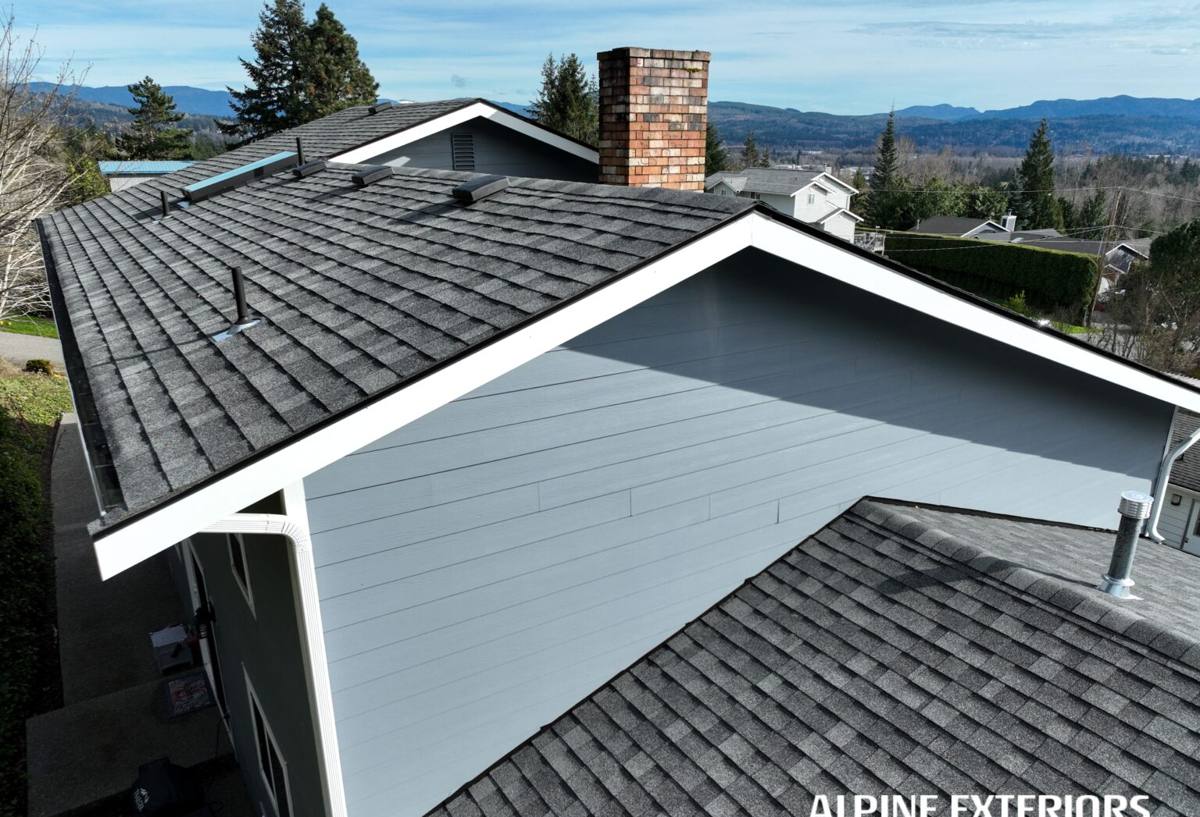
What Local Weather Actually Does to a Roof
Salt Air and Metal Components
Salt air accelerates corrosion on anything metal — flashing, fasteners, vent stacks, gutter hangers. Standard galvanized fasteners can start showing rust streaks and weakening well before their inland counterparts. This is one of the biggest, most preventable causes of early roof problems near the water, and it's almost entirely a materials and installation choice, not a shingle brand issue.
Driving Rain
Storms moving through Whatcom County don't always drop rain straight down. Wind-driven rain gets pushed sideways and upward under shingle edges, around chimneys, and into valleys — places a roof installed for "normal" rainfall wasn't necessarily sealed against. Roofs here need extra attention paid to laps, seals, and the direction water is actually moving during a storm, not just where it lands.
Moss and Sustained Moisture
Whatcom County's long, wet, mild winters and shaded lots give moss a full season to establish itself. Moss holds moisture against the shingle surface, lifts shingle edges as it grows, and works its way under tabs and around fasteners. A roof that dries out quickly after rain resists moss far better than one that stays damp — which is why airflow under the roof deck matters as much as anything on top of it.
What a Correctly Installed Roof Needs Here
A shingle roof is a system, not a single product. In this climate, every layer of that system earns its place.
Underlayment and Ice/Water Protection
A synthetic underlayment with good tear resistance and water shedding is the baseline. Along eaves, valleys, and around penetrations, a self-adhering ice and water shield membrane gives a second line of defense where wind-driven rain and moss are most likely to find a way in.
Flashing That's Built for Salt Exposure
Flashing at chimneys, sidewalls, valleys, and vent penetrations should be sized and lapped correctly — and in a marine-influenced area, it's worth using corrosion-resistant metals and fasteners rather than the cheapest galvanized option. This is a small cost difference at install time that prevents a much bigger repair bill later.
Ventilation
Balanced intake and exhaust ventilation keeps the underside of the roof deck dry and close to outside temperature. That reduces condensation, helps shingles dry out faster after rain, and directly reduces how hospitable the roof surface is to moss and algae. A poorly ventilated attic is one of the most common reasons a roof underperforms its rated lifespan on this part of the coast.
Nailing Pattern and Wind Exposure
Fairhaven's proximity to open water means gusts off the bay can be stronger than what a roof set back in the trees a few miles inland deals with. Correct nail placement — count, position, and depth — is what actually determines wind resistance, more than the shingle's printed wind rating alone. This is a step that's easy to rush and impossible to verify once the roof is finished, which is why it matters who's up there doing it.
Choosing the Right Shingle for This Environment
Most manufacturers now offer algae-resistant shingles with copper-containing granules built in, which is worth having on a roof that will spend a lot of its life damp and shaded. Beyond that, the decision usually comes down to architectural (laminated) versus traditional three-tab shingles.
| Factor | 3-Tab Shingles | Architectural Shingles |
|---|---|---|
| Typical lifespan | 15–20 years | 25–30+ years |
| Wind resistance | Lower, flatter profile | Higher, layered construction sheds wind-driven rain better |
| Moss/algae resistance options | Available on some lines | Standard on most current product lines |
| Upfront cost | Lower | Moderate |
| Best fit for this area | Budget re-roofs, secondary structures | Primary homes exposed to bay wind and rain |
For a primary residence in the Fairhaven area, architectural shingles are usually the better long-term value once you factor in the exposure this location gets. They're not the cheapest option upfront, but the added wind resistance and thicker profile buy real durability against the specific conditions this roof will face.
Moss and Algae: Managing It, Not Just Reacting to It
No shingle is permanently immune to moss in a climate this wet and shaded — but a correctly built roof slows it down dramatically and makes it much easier to manage. A few things help over the life of the roof:
- Algae-resistant shingles reduce dark streaking and slow biological growth on the surface
- Zinc or copper strips installed near the ridge release trace metal ions with rainfall that inhibit moss and algae growth down the roof plane
- Trimming back overhanging branches improves sun exposure and airflow, which is often the single biggest factor in how fast moss returns
- Gentle, low-pressure cleaning removes existing moss without stripping granules the way pressure washing does
- Keeping gutters clear prevents standing water from backing up under the shingle edge
Moss removal should never involve pressure washing a shingle roof — it strips the protective granules and shortens the roof's life faster than the moss itself would. Any maintenance plan for a roof in this area should be built around gentle methods and prevention, not aggressive after-the-fact scrubbing.
How We Approach a Fairhaven Re-Roof
- On-site inspection of the existing roof, decking condition, ventilation, and any moss or moisture damage
- A written estimate that spells out materials, underlayment, flashing approach, and ventilation plan — no vague line items
- Tear-off and deck inspection, with any soft or rotted decking replaced before anything goes back down
- Ice and water shield at eaves, valleys, and penetrations, followed by synthetic underlayment
- Corrosion-resistant flashing installed at all transitions, chimneys, and sidewalls
- Shingle installation with correct nailing pattern and exposure for the wind conditions here
- Ridge and intake ventilation balanced to the attic space
- Final walk-through so you know exactly what was done and what to expect going forward
Signs a Fairhaven Roof Needs Attention Now
- Granules collecting in gutters or at downspout outlets
- Moss visible along ridge lines, valleys, or the shaded side of the roof
- Curling, cupping, or lifted shingle edges
- Dark streaking across the roof surface (algae, not just dirt)
- Daylight visible through the attic decking or damp spots on attic insulation
- Rusting or discolored flashing around chimneys and vent stacks
- Shingles missing after a windstorm, even just a few
Any one of these is worth a look before it turns into a leak. Caught early, most of these are manageable repairs. Left alone through another wet Whatcom County winter, they tend to become full re-roof situations.
Why Local Experience Matters for This Job
A roof built to a generic spec sheet doesn't account for what this specific location does to it. A crew that regularly works the Fairhaven area knows how much wind exposure to expect off the water, how long moss season really runs here, which flashing and fastener choices hold up against salt air over years rather than months, and how Whatcom County's permitting and inspection process works for re-roofing projects. That familiarity shows up in fewer callbacks and a roof that's actually built for the conditions it will face, not just the conditions on a spec sheet written for the region in general.
Get a Straightforward Estimate
If your roof is showing moss, granule loss, or damage from a recent storm — or it's simply reaching the age where a proactive look makes sense — we're happy to come take a look. There's no pressure and no obligation, just a clear assessment of where things stand and what your options are. Use the form below to request a free estimate for your Fairhaven-area home.