 Ferndale Siding
 Roofing Built for the Nooksack Area's Weather, Not Just Any Weather
Asphalt shingle roofing is the most common roof covering in Whatcom County for good reason — it's affordable, proven, and when installed correctly it holds up well against the Pacific Northwest's wet, mild-but-relentless climate. But "installed correctly" is doing a lot of work in that sentence. Roofs in the Nooksack area deal with a specific combination of conditions: salt-laden air drifting in from the coast, long stretches of driving rain that finds every gap in flashing, and a moss season that can run eight months or more out of the year. A shingle roof that would perform fine in a drier climate can fail early here if it wasn't detailed for these conditions from the start.
This page covers what an asphalt shingle roof actually needs in this part of Whatcom County, what a correct installation looks like underneath the shingles themselves, and how we approach these projects for homes in and around Nooksack.
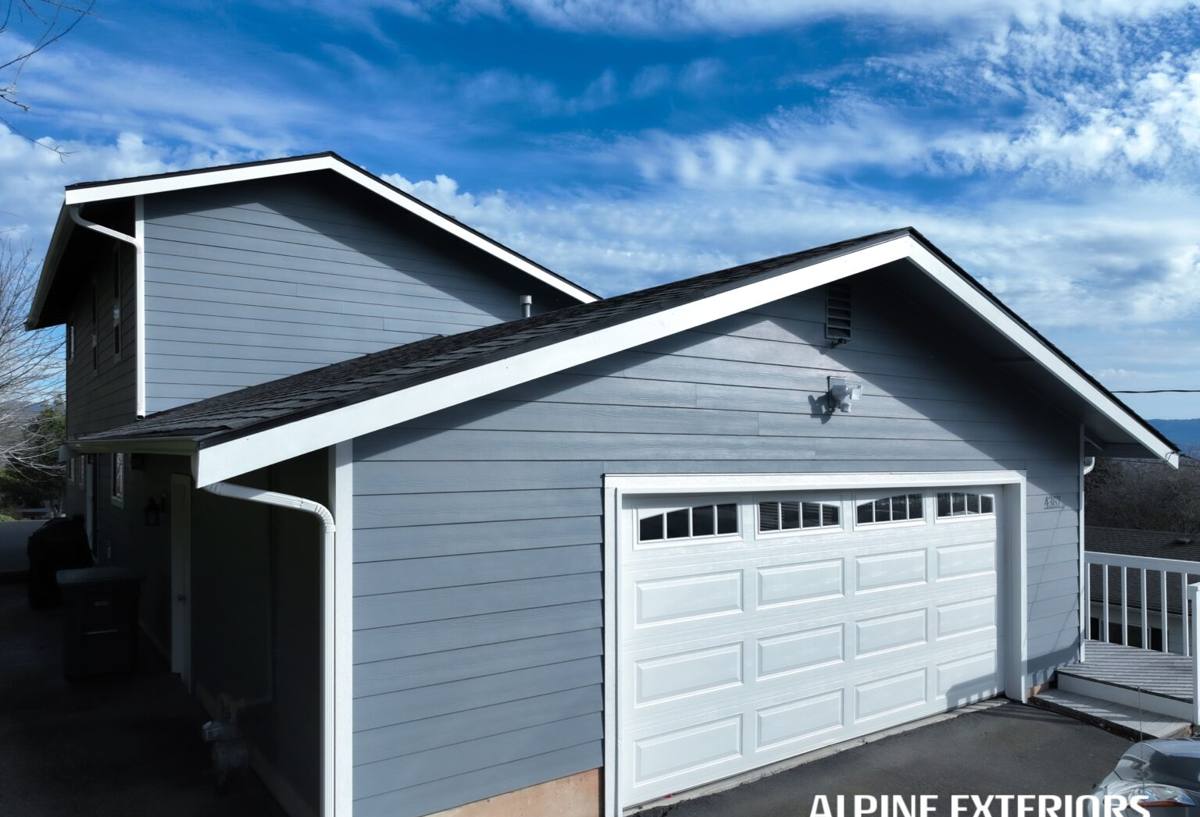
What Local Homes Need From a Shingle Roof
Three climate factors drive almost every roofing decision we make out here:
Salt Air and Coastal Moisture
Homes closer to the Puget Sound and Georgia Strait shoreline deal with airborne salt that accelerates corrosion on exposed metal — nails, flashing, vent stacks, and gutter hardware. Standard galvanized fasteners can start rusting years before they would inland. We spec corrosion-resistant fasteners and flashing on every roof, not just the ones closest to the water, because salt air travels further than people expect on windy days.
Driving Rain
Whatcom County doesn't just get rain — it gets wind-driven rain that hits roof planes at an angle instead of falling straight down. That matters because it pushes water sideways and upward under shingle tabs, into valleys, and around any flashing that's cut short or sealed with caulk instead of properly lapped. A roof that would shed vertical rain just fine can still leak under sideways rain if the underlayment and flashing details weren't built for it.
Moss Season
Shaded, north-facing roof planes in this area can stay damp for most of the year, which is exactly what moss needs to take hold. Moss isn't just a cosmetic problem — as it grows, it lifts shingle edges, holds moisture against the roof deck, and works its way into granule surfaces, shortening the shingle's usable life. A roof with the right ventilation, the right shingle choice, and a basic maintenance routine will handle moss far better than one without.
What a Correct Asphalt Shingle Installation Actually Includes
The shingles are the visible layer, but most of a roof's performance in this climate comes from what's underneath and around them.
Underlayment and Moisture Barriers
We use synthetic underlayment across the full roof deck as the primary water-resistive barrier, with self-adhered ice-and-water shield membrane at the eaves, valleys, and any roof-to-wall transitions — the spots where wind-driven rain is most likely to get pushed backward under the shingle line. This isn't an upgrade we reserve for premium jobs; it's standard practice for roofs in this climate.
Flashing Details That Actually Matter
Step flashing at walls, proper valley metal, and correctly sized flashing around every penetration (vent stacks, skylights, chimneys) are where most roof leaks actually originate — not from worn-out shingle field. We flash these areas with metal, lapped correctly with the underlayment and shingle courses, rather than relying on sealant to do a flashing detail's job. Sealant has its place as a finishing touch, not as the primary water seal.
Attic Ventilation
Balanced intake and exhaust ventilation keeps the underside of the roof deck at a consistent temperature and moisture level. Poor ventilation traps warm, moist air against the deck, which contributes to premature shingle aging from underneath and gives moss and algae more encouragement on the outside. We check existing ventilation on every roof we quote and correct it when it's inadequate, rather than just re-covering an underventilated roof with new shingles.
Choosing the Right Shingle for This Climate
Not every asphalt shingle product is built the same way, and the differences matter more here than in drier climates. The table below covers the main categories homeowners choose between.
| Shingle Type | Typical Lifespan | How It Handles This Climate | Relative Cost |
|---|---|---|---|
| 3-tab shingles | 15-20 years | Lower wind rating and less mass; can lift edges in driving rain and shows moss growth faster | Lowest |
| Architectural (laminated) shingles | 25-30+ years | Heavier, better wind resistance, more common choice for this region | Moderate |
| Algae-resistant shingles | Same as base product | Copper-infused granules resist the algae staining common on shaded, damp roof planes | Small upcharge over standard |
| Impact-rated shingles | 25-30+ years, often with insurance discounts | Reinforced mat holds up to debris and hail; not required here but some homeowners prefer the durability | Higher |
For most Nooksack-area homes, we recommend algae-resistant architectural shingles as the baseline — the wind rating and mat weight suit the driving rain, and the algae-resistant granules directly address the moss-and-algae staining that's so common on shaded roof slopes in this county. It's a modest cost difference over standard shingles that pays off in how the roof looks and performs ten years in.
Moss and Algae: Managing It Instead of Fighting It Every Year
No shingle roof in Whatcom County is completely immune to moss, but the goal is a roof that sheds it easily rather than one that needs constant intervention. That comes down to three things working together: adequate attic ventilation so the deck isn't feeding moisture into the shingles from below, a roof design and shingle choice suited to shaded planes, and a simple annual maintenance habit — a gentle moss removal pass and a check of gutters and valleys, done in a way that doesn't strip granules or damage the shingle surface. Pressure washing shingles is not something we recommend; it removes the granule layer that protects the shingle from UV and moisture, shortening the roof's life rather than extending it.
Our Process for a Nooksack Roofing Project
- On-site inspection. We walk the roof (or use a drone where a walk isn't practical), check the attic for ventilation and moisture signs, and look at flashing, valleys, and roof age.
- Written estimate. A clear scope of work and price — what's being replaced, what shingle and underlayment system we're using, and why, with no vague allowances.
- Material delivery and site prep. Protecting landscaping, siding, and gutters before tear-off begins.
- Tear-off and deck inspection. We don't roof over rotten decking — any damaged sheathing gets identified and replaced before new underlayment goes down.
- Underlayment, flashing, and shingle installation. Built in the order and with the details described above, not shortcuts specific to a fast turnaround.
- Cleanup and final walkthrough. Magnetic sweep for stray fasteners, full site cleanup, and a walkthrough so you know what was done and what to expect going forward.
Signs Your Roof Needs Attention
A quick self-check homeowners in the Nooksack area can do from the ground or attic:
- Granules collecting in gutters or at downspout outlets
- Shingles that are curling, cupping, or lifting at the edges
- Visible moss or dark algae streaking on north-facing slopes
- Daylight visible through the roof deck from inside the attic
- Soft or sagging spots when walked on gently
- Stains on interior ceilings, especially after a heavy rain event
- Flashing that looks rusted, lifted, or gapped around vents and chimneys
- A roof approaching or past 20-25 years old with no major work done
Any one of these on its own isn't necessarily an emergency, but a few of them together usually mean it's time for a real inspection rather than a wait-and-see approach.
Why It Matters That We Already Work This Area
A roofing crew that regularly works Whatcom County knows which roof planes tend to hold moss, which flashing details actually get tested by wind-driven rain off the coast, and how local permitting and inspection work for reroofing projects. That familiarity shows up in small decisions — where we add extra ice-and-water membrane, which ventilation upgrades are worth the cost, which shingle lines actually perform well here versus on paper — that a crew unfamiliar with the region might not think to make.
After Installation: Keeping the Roof Performing
A correctly installed shingle roof in this climate still benefits from basic upkeep: keeping gutters and valleys clear of debris so water has a clean path off the roof, an annual look for moss buildup before it spreads, and prompt attention to any flashing or shingle damage after a windstorm. None of this is intensive work, but skipping it is how a well-installed roof still ends up with an early, avoidable problem.
If you're in Nooksack or anywhere else in the Ferndale area and want an honest look at your roof's condition, we're glad to come out for a free, no-pressure estimate — no obligation, just a clear picture of what your roof needs and what it would cost to do right. Use the form below to get started.