 Ferndale Siding
 Why Bellingham Homes Need Windows Built for This Climate
Bellingham sits right on the bay, and that proximity to saltwater shapes everything about how a window performs here — or fails. The air carries salt, the rain doesn't just fall, it drives sideways off the water during a good winter blow, and the long stretch of gray, damp months between fall and spring means moss and algae get a real foothold on anything that stays wet. For a window, that's a tough combination: constant moisture exposure, salt-laden air working on hardware and finishes, and long dry spells that are actually pretty rare.
A lot of window problems in this area aren't really about cold weather at all. Whatcom County winters are mild by national standards. The real enemy is water — water finding its way behind trim, water sitting in a sill that never fully dries out, water working into a seal that was fine for the first few years and then started to fail. Custom windows built and installed with that reality in mind hold up. Off-the-shelf installs that ignore it usually don't, at least not for long.
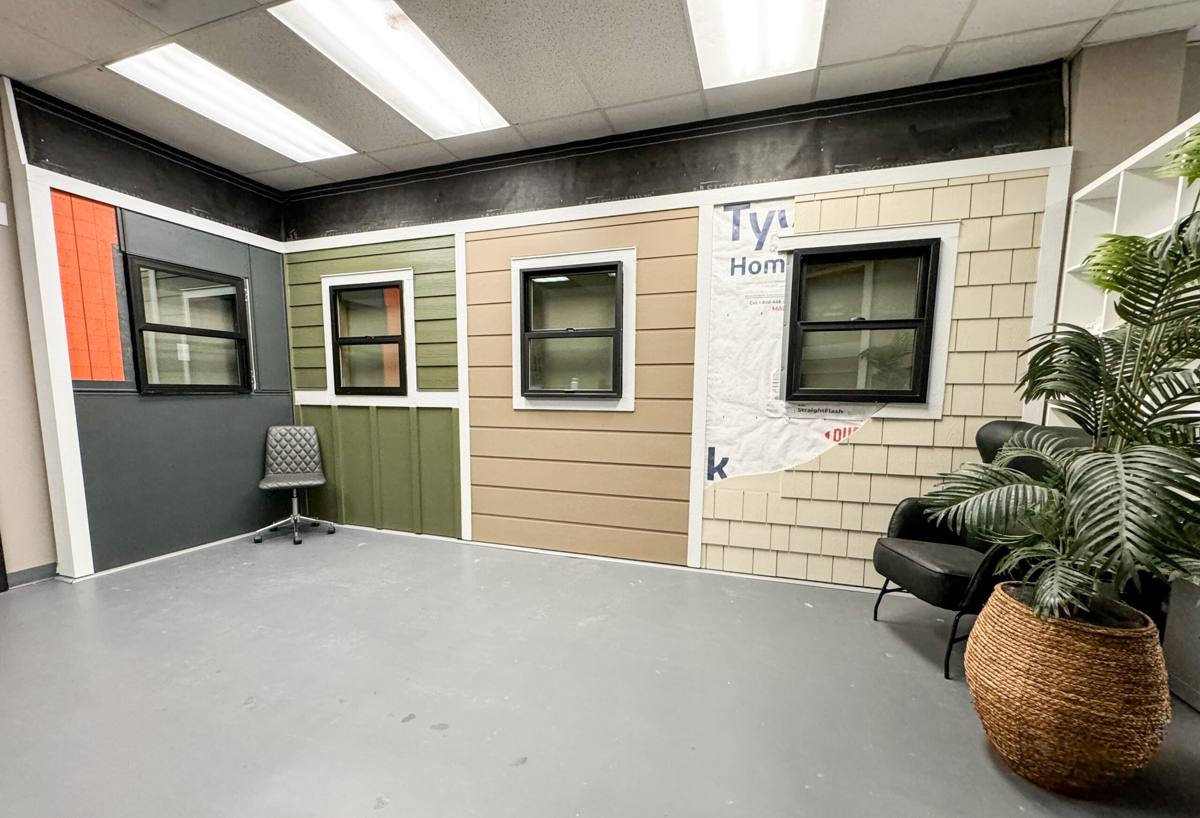
What "Custom" Actually Means for a Bellingham Window Replacement
A lot of homes in and around Bellingham were built well before modern window sizing standards existed, and many have settled, been remodeled, or had openings altered somewhere along the way. That means the rough opening in your wall often isn't a clean, standard size — it might be slightly out of square, a little larger or smaller than a stock window, or an odd shape entirely.
"Custom" simply means the window is built to fit that exact opening, rather than the opening being forced to accept a standard-size window with shims, foam, and hope. That distinction matters more here than in a drier climate, because every gap, every place where a window doesn't sit flush and square, is a potential path for wind-driven rain to get behind the frame. A properly custom-built window closes that gap from the start instead of relying on caulk to cover for it.
When Custom Sizing Really Pays Off
- Older farmhouses and craftsman-era homes with settled framing
- Additions or remodels where the opening was never standardized
- Bay windows, arched openings, or other non-rectangular shapes
- Homes where a previous owner already installed an ill-fitting replacement
Choosing Window Materials That Hold Up to Marine Air
Material choice matters more here than in an inland climate, because you're dealing with humidity and salt exposure on top of ordinary weathering. There isn't one "correct" material for every home — it depends on your budget, the look you want, and how exposed the window is to prevailing wind and rain off the bay. Here's how the common options generally compare for this kind of climate.
| Material | Moisture Resistance | Maintenance | Typical Trade-Off |
|---|---|---|---|
| Vinyl | Very good — won't rot or corrode | Low; occasional cleaning | Frames can expand/contract with temperature swings; color options more limited |
| Fiberglass | Excellent — very stable in wet, salty air | Low | Higher upfront cost than vinyl |
| Wood-clad | Good on the exterior clad side; interior wood needs protection from condensation | Higher — finish and seals need attention over time | Best looks, but more sensitive to installation quality and upkeep near the water |
| Aluminum | Poor without a thermal break; prone to corrosion in salt air over time | Moderate | We generally steer homeowners away from bare aluminum this close to the bay |
We tend to recommend vinyl or fiberglass for most Bellingham homes because both shrug off moisture without ongoing maintenance, and neither corrodes the way exposed metal components can this close to saltwater. Wood-clad is a legitimate choice for homeowners who want that traditional look, but it only performs well when the installation and finish work are done right — cutting corners there is where wood windows in this climate get into trouble.
Window Styles That Actually Resist Driving Rain
Style affects water resistance as much as material does, and it's worth thinking through if your home takes wind and rain head-on. Casement and awning windows seal by compressing against the frame when they close, similar to a car door, which tends to resist wind-driven rain better than styles that rely on a sliding meeting rail. Double-hung and sliding windows can still perform well, but the seal at the sash meeting point is more vulnerable to wear over time, especially on a wall that catches weather directly.
None of this means double-hung or sliding windows are a bad choice — plenty of homes here use them successfully, and they're often the right fit for matching a home's existing look. It just means the exposed side of a house facing the water or prevailing wind is worth a second look before defaulting to whatever style is already there.
The Installation Detail That Matters More Than the Window Itself
Here's something worth knowing before you spend money on a premium window: most window failures we see aren't product failures. They're installation failures. A high-end window installed without proper flashing will leak. A mid-range window installed correctly, with the water management done right, will often outlast it.
Correct installation in this climate means building in a path for water to escape, not just trying to seal it out entirely — because eventually, some moisture will find its way to the opening no matter how good the window is. That means:
- A sill pan or flashing at the bottom of the opening that directs any water that gets in back outside the wall
- Flashing tape or building paper integrated correctly with the home's existing water-resistive barrier, not just caulked over it
- Weep holes or drainage paths that stay clear, so water doesn't pool inside the frame
- Sealant used to manage air leaks and finish the job — not as the only line of defense against water
A window installed this way is built around the assumption that Bellingham weather will test it, because it will. A window that's just caulked into place and left to rely on that caulk staying perfect for twenty years is a maintenance problem waiting to happen.
Energy Performance and Condensation Control in a Damp Climate
Window performance ratings get talked about mostly in terms of cold-weather insulation, but in this part of Washington, humidity control matters just as much as the U-factor. Whatcom County sits in a mild marine climate, so extreme cold isn't usually the issue — persistent moisture and condensation are.
Two ratings worth understanding when comparing windows:
- U-factor — measures how well the window resists heat transfer. Lower is better for keeping conditioned air in and outside temperature out.
- Condensation resistance — measures how well the window resists moisture forming on the interior glass. In a humid climate like ours, a window with poor condensation resistance can develop moisture problems on the sill and surrounding trim even if its insulation value is fine.
Low-E glass coatings help on both fronts, and modern double- or triple-pane units with quality spacers perform noticeably better in damp conditions than older single-pane or early dual-pane windows, which are common in older Bellingham homes and often show fogging or interior condensation as the seals age.
Our Custom Window Installation Process
The process is straightforward, but every step matters more here than it might somewhere drier.
- On-site consultation and measurement. We look at each opening individually — condition of the framing, sun and wind exposure, and any existing signs of water intrusion.
- Material and style selection. We walk through trade-offs based on your home's exposure, budget, and the look you're going for, rather than pushing one product line.
- Precise fabrication. Windows are built to the actual opening dimensions, not rounded to the nearest stock size.
- Removal and inspection. When we pull the old window, we check the surrounding framing for hidden rot or water damage before anything new goes in. This is often where older windows reveal problems that were invisible from inside the house.
- Installation with proper water management. Sill pans, flashing, and drainage paths go in before the window itself, not as an afterthought.
- Sealing, insulating, and trim work. Gaps are insulated correctly and finished cleanly, inside and out.
- Final walkthrough. We confirm the window operates smoothly and everything is sealed and finished to standard before we call the job done.
Signs Your Current Windows Are Already Losing the Fight
Window failure in this climate is usually gradual, and homeowners often don't notice until there's a real problem behind the wall. Worth checking for:
- Fogging or moisture trapped between panes of a double-pane window (a sign the seal has failed)
- Soft, spongy, or discolored wood at the sill or surrounding trim
- Visible moss, algae, or dark staining building up on sills or frames
- Noticeable drafts even when the window is fully closed and latched
- Windows that are difficult to open, close, or lock — often a sign the frame has shifted
- Condensation forming on the inside of the glass regularly, especially in colder months
- Peeling or bubbling paint on the interior or exterior trim around the frame
Any one of these on its own isn't necessarily an emergency, but a few of them together usually means water is getting somewhere it shouldn't, and waiting tends to turn a window job into a framing repair job.
Why Hiring a Crew That Already Works in Bellingham Matters
Window installation isn't identical everywhere, and a crew that mostly works drier inland climates can miss details that matter a lot on a home exposed to Bellingham Bay weather. A local crew already knows how much the exposure can vary block to block — a home closer to the water dealing with more direct wind and salt spray than one a few miles inland — and adjusts the approach accordingly, from flashing detail to material recommendations.
There's also a practical side to it: familiarity with the kind of housing stock common in this part of Whatcom County, realistic expectations about what's hiding behind an old window opening before we ever open it up, and being close enough to actually show up if a question comes up after the job is done. None of that shows up on a spec sheet, but it shows up in how the window performs five winters later.
If your windows are showing their age, or you're planning a remodel that includes new openings, we're happy to take a look and talk through honest options for your home. Reach out for a free, no-pressure estimate using the form below.