 Ferndale Siding
 Metal Roofing for Bellingham's Coastal Climate
Bellingham sits close enough to the water and the foothills that its roofs deal with a mix most inland towns never see: salt-laden air drifting off the bay, long stretches of driving rain, and a moss season that can run nearly nine months out of the year. A metal roof handles that combination better than almost any other option, but only if it's specified and installed with those specific conditions in mind. A metal roof built for a dry inland climate is not automatically the right metal roof for a home a few miles from Bellingham Bay.
This page covers what actually matters for metal roofing on Bellingham homes: the materials that hold up to salt exposure, the details that keep moss and moisture from becoming a problem, and the installation practices that separate a roof that lasts thirty-plus years from one that starts showing trouble in five.
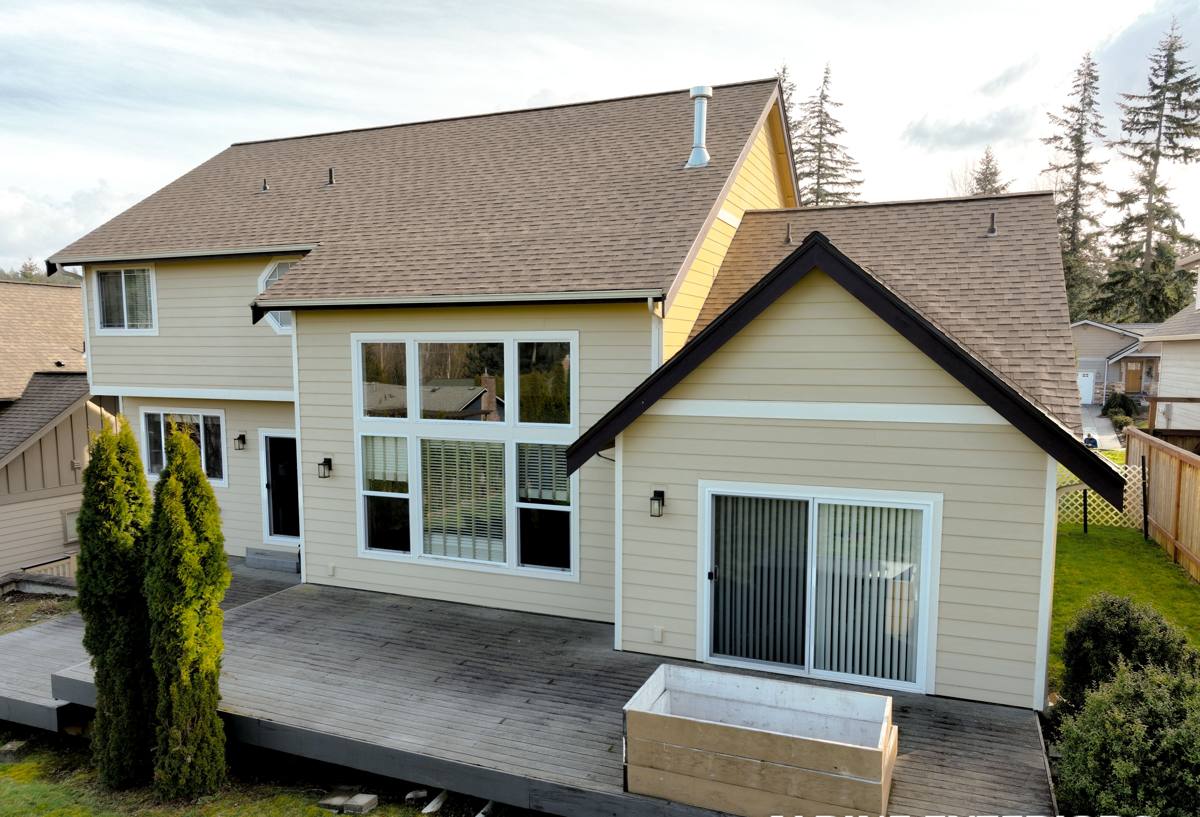
What Bellingham's Climate Actually Does to a Roof
Salt Air and Corrosion
Homes closer to the water take a slow, steady dose of airborne salt. It's not dramatic like a storm, but it's relentless — settling into fastener heads, cut edges, and any spot where a coating has been scratched or thinned. Over years, that's where corrosion starts on a roof that wasn't specified for a coastal environment. The fix isn't complicated, but it has to be built in from the start: the right base metal, the right coating system, and fasteners rated to match.
Driving Rain
Whatcom County doesn't just get rain — it gets rain pushed sideways by wind off the Strait and the Sound. That matters more for a roof than straight-down rainfall, because wind-driven water finds its way under panels, around penetrations, and up under flashing that would be fine in a calmer climate. Underlayment choice and flashing detail work carry more weight here than they would in a drier region.
Moss and Organic Growth
Bellingham's tree cover, humidity, and shade patterns add up to a long moss season. Moss doesn't just look bad on a roof — it holds moisture against the surface, works into seams, and on some materials can hold enough dampness to feed corrosion or coating breakdown over time. Metal roofing resists moss far better than asphalt shingles or wood shakes, but "resists" isn't "immune," and roof design (slope, shading, valley detailing) still matters.
Why Metal Roofing Fits This Area Well
We recommend metal roofing to Bellingham homeowners for a specific set of reasons, not because it's trendy:
- Steel and aluminum panels shed moss and standing water far more effectively than textured or granulated surfaces.
- Properly coated metal resists the slow corrosion that salt air causes in unprotected or poorly maintained materials.
- Standing seam systems have very few horizontal joints for wind-driven rain to exploit.
- A correctly installed metal roof typically outlasts two or more cycles of asphalt shingle replacement, which matters on a coastline where re-roofing access and weather windows are limited.
None of that is automatic, though. It comes from matching the panel system, coating, and fastening to the specific exposure a Bellingham home actually faces.
Choosing the Right Metal Roofing System
Not every metal roof is built the same way, and the differences matter more in a coastal, high-moisture climate than they would somewhere drier.
| System | Best fit | Trade-offs in this climate |
|---|---|---|
| Standing seam (concealed fastener) | Homes with direct water or wind exposure, longer-term ownership | Higher upfront cost; virtually no exposed fasteners for water or corrosion to work into |
| Exposed fastener panel | Outbuildings, budget-conscious projects, lower-exposure roof planes | Lower cost, but exposed fastener heads need periodic inspection and eventual re-sealing or replacement |
| Stone-coated steel | Homes wanting a shingle or shake appearance with metal's durability | More surface texture can hold moss debris longer than smooth panel; still resists rot far better than wood or asphalt |
For homes closer to the water or on more exposed slopes, we lean toward standing seam. For detached garages, shops, or lower-visibility roof planes, an exposed fastener panel is often a smart, honest trade-off between cost and long-term maintenance.
Coating and Base Metal Matter as Much as Panel Style
The coating system is where a lot of coastal roofing problems actually start or get prevented. We pay close attention to:
- Base metal: steel or aluminum, matched to the home's exposure and budget.
- Protective coating: a coating rated for coastal or high-moisture use, not a generic finish.
- Fastener material: fasteners that match the panel's metal to avoid galvanic corrosion where dissimilar metals meet.
- Cut-edge treatment: factory-cut edges and field cuts both need proper sealing, since bare cut edges are where corrosion typically starts first.
What a Correct Installation Involves
Most metal roof problems we get called out to inspect trace back to installation shortcuts, not the material itself. On a Bellingham home, the details that matter most are:
Underlayment
Given the amount of wind-driven rain in this area, we use a synthetic underlayment rated for high moisture exposure, with extra attention paid to eaves, valleys, and any low-slope sections where water sits longer.
Flashing and Penetrations
Chimneys, vents, skylights, and wall-to-roof transitions are the most common failure points on any roof, and even more so where rain is regularly pushed sideways. Flashing has to be formed and layered correctly, not just caulked over — caulk is a backup, not a flashing system.
Fastening and Panel Layout
Panels need to be fastened to the manufacturer's spacing and torque specs, with room for the metal to expand and contract with temperature swings. Over-driven or under-driven fasteners are one of the most common causes of early leaks on exposed-fastener systems.
Ventilation
A metal roof over a poorly ventilated attic can trap moisture underneath the deck, which causes rot and mold regardless of how good the roof surface is. We check attic ventilation as part of any metal roofing project — it protects the structure the roof is actually there to protect.
Moss Prevention and Ongoing Care
Metal roofing dramatically reduces moss compared to shingles or shakes, but it isn't a "walk away and forget it" surface, especially under Bellingham's tree cover. A few things keep it performing well long-term:
- Keep overhanging branches trimmed back so shaded, damp sections of roof get some sun and airflow.
- Clear needles, leaves, and debris from valleys and gutter lines before they compost in place.
- Have flashing and sealant points checked periodically rather than waiting for a visible leak.
- Address any moss that does establish promptly, using methods appropriate to the panel's coating so the finish isn't damaged in the process.
Our Process for Bellingham Metal Roofing Projects
- On-site assessment: we look at slope, exposure, existing ventilation, and any current trouble spots before recommending a system.
- System and material selection: panel style, gauge, and coating matched to that specific roof's exposure — not a one-size answer.
- Tear-off or overlay evaluation: we advise honestly on whether the existing roof deck and structure support the new system.
- Installation: underlayment, flashing, and panel work done to manufacturer spec, with attention to the wind and rain patterns specific to this area.
- Final walk-through: we go over the finished roof and basic care expectations with the homeowner before we consider the job done.
What Affects the Cost of a Metal Roof Here
| Factor | Why it matters in Bellingham |
|---|---|
| Panel system chosen | Standing seam costs more upfront than exposed fastener but reduces long-term maintenance on exposed roof planes |
| Roof complexity | Valleys, dormers, and multiple roof planes increase flashing work, which is where most leaks originate |
| Coating grade | Coastal-rated coatings cost more but directly address salt air exposure |
| Deck condition | Moisture-damaged decking from a prior roof needs repair before new metal goes on |
| Access and slope | Steeper or harder-to-access roofs take longer and require more safety setup |
We give homeowners a real range based on their specific roof, not a generic per-square-foot number pulled from a different climate.
Why Hire a Crew That Already Works in Bellingham
A crew that installs roofing across a lot of different regions may know metal roofing in general but not the specific failure patterns that show up on homes near Bellingham Bay and under the tree cover common in this part of Whatcom County. Knowing which roof planes tend to hold moss, which flashing details fail first under wind-driven rain, and which coating systems actually hold up to years of salt air isn't something you learn from a manual — it's something you learn from working on these roofs, in this climate, over and over. That local pattern recognition is a big part of what keeps a metal roof performing for decades instead of needing early repairs.
If you're weighing metal roofing for a home in the Bellingham area, we're happy to walk your roof, talk through the options honestly, and put together a free, no-pressure estimate using the form below.