 Ferndale Siding
 Board & Batten Siding Built for Blaine's Coastal Exposure
Blaine sits about as close to open salt water and the Canadian border as a Whatcom County home can get, and that location shapes what a siding system has to survive. Homes here take on salt-laden air off the water, wind-driven rain that hits walls sideways instead of straight down, and a moss season that can stretch from October well into spring. Board and batten siding — with its bold vertical lines and deep shadow reveals — is one of the most requested looks in this part of the county, but the look only holds up if the material and the installation underneath it are built for this exact exposure, not for a drier inland climate.
We're a Ferndale-based crew that works Blaine regularly, and this page is about that one combination: board and batten siding, installed correctly, on homes dealing with real coastal weather.
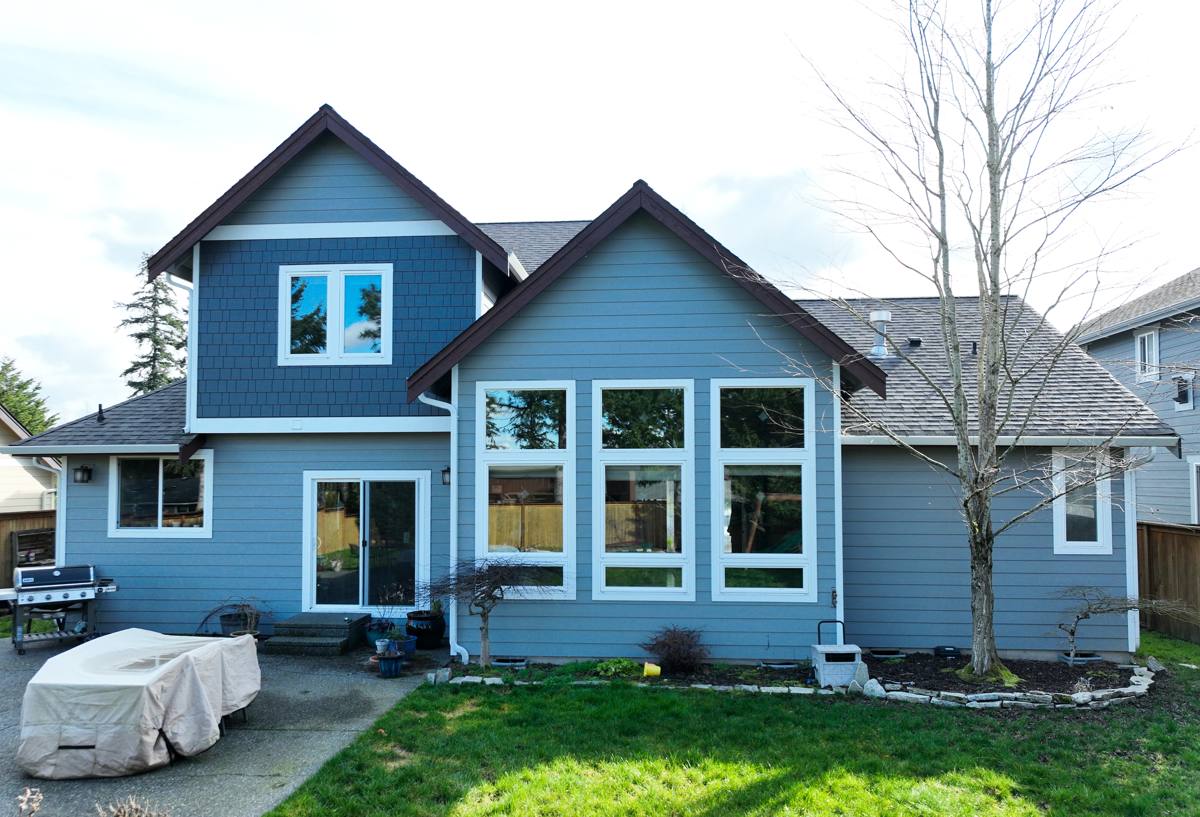
What Board & Batten Siding Actually Is
Board and batten is a vertical siding pattern, not a specific material. Wide flat panels or boards are installed vertically, and narrower strips — the "battens" — cover the seams between them. The result is a strong vertical shadow line that reads as more modern or more traditional-farmhouse depending on the trim details and color chosen around it.
Where it goes wrong is in the assumption that any material can be run vertically and hidden behind a batten. The batten covers a seam, but it doesn't stop water that gets behind the panel from finding its way in — and on a wind-exposed coastal wall, water gets pushed sideways and upward, not just straight down. Everything behind that batten — the panel material, the fasteners, the water-resistive barrier, the flashing at every horizontal break — has to be right, because none of it is visible again once the job is done.
Why This Detail Matters More in Blaine
- Wind off the water drives rain into wall assemblies at angles that inland siding jobs rarely see.
- Salt air accelerates corrosion on the wrong fastener types, which is why fastener spec isn't optional here.
- Shaded, moisture-holding sides of the house grow moss and algae faster and longer into the year than sites with more sun exposure.
- Board and batten's long vertical seams give water more linear feet of joint to test than a standard lap pattern — good installation is what keeps that from becoming a liability.
Why We Only Install This in James Hardie Fiber Cement
We don't install board and batten in vinyl, LP SmartSide, primed spruce, cedar, or other fiber cement brands like Cemplank or Allura. That's not a knock on every homeowner's existing siding — plenty of it is out there doing an adequate job. It's a standard we hold to for what we put on a home ourselves, especially in a climate like Blaine's.
Vinyl board and batten profiles expand and contract significantly with temperature swings, and that movement is harder to hide gracefully in a bold vertical pattern than in a subtle lap profile. Wood-based products — cedar, primed spruce, and engineered wood siding like LP SmartSide — perform well when maintenance stays current, but they depend on an intact factory coating and prompt attention to any nick, scratch, or end-cut exposure. In a marine climate with a long wet season, gaps in that maintenance schedule show up faster and cost more to fix than they would somewhere drier. Cemplank and Allura are legitimate fiber cement competitors to James Hardie, but we've standardized on one product system so our crews install it the same correct way every time, and so the warranty and color-match story stays simple for the homeowner for decades, not just for the first few years.
James Hardie fiber cement doesn't rot, doesn't attract termites, and won't degrade from UV and moisture the way some wood-based and polymer products can. It's non-combustible, which matters to insurers and to homeowners directly. And the HZ5 product line is engineered specifically for climates with sustained moisture exposure — which describes Whatcom County's coastal side well.
The James Hardie Board & Batten System
What most homeowners picture as "board and batten" is achieved with HardiePanel vertical siding as the field material, with Hardie or matched trim battens installed over the panel seams at a consistent spacing. The panel itself carries the factory ColorPlus finish — baked-on, not field-applied — so the color is consistent across every panel and batten on the wall, and it's backed by a finish warranty separate from the substrate warranty.
| Layer | What It Does |
|---|---|
| Water-resistive barrier | Continuous drainage plane behind the panel; every penetration and seam gets sealed or flashed back into it |
| Furring or rainscreen gap (where specified) | Lets any moisture that gets behind the panel drain and dry instead of sitting against the wall sheathing |
| HardiePanel vertical siding | The field material — non-combustible, engineered for moisture exposure, factory-finished |
| Flashing at horizontal breaks | Directs water out and away at every window head, band board, and roof-to-wall transition |
| Battens | Cover panel seams and create the vertical shadow line; fastened per manufacturer spec, not just nailed through for looks |
| Fasteners | Corrosion-resistant, correctly spaced and set — critical in salt-air exposure |
Our Process for a Blaine Board & Batten Job
- Site walk and exposure assessment — we look at which walls take direct wind-driven rain off the water, which sides stay shaded and hold moisture longest, and what that means for flashing detail and rainscreen use before we quote anything.
- Removal and sheathing check — old siding comes off and we inspect the sheathing underneath for any hidden rot or moisture damage before it gets covered again. Problems found now get fixed now, not sealed behind new siding.
- Water-resistive barrier and flashing — a continuous drainage plane goes on first, with flashing integrated at every window, door, and horizontal transition so water has a planned way out.
- Panel and batten installation — HardiePanel vertical siding is installed to Hardie's fastening and clearance specifications, with battens set at a consistent, level spacing over each seam.
- Trim, caulking, and final inspection — corners, trim boards, and penetrations get sealed correctly, and we walk the finished job looking specifically for anything that could become a moisture path later.
Cost Factors on a Board & Batten Project
Every home is different, so we won't put a number here that doesn't mean anything without seeing your walls — but these are the factors that actually move the price on a Blaine job:
| Factor | Why It Matters |
|---|---|
| Wall exposure | Walls facing prevailing wind and water need more careful flashing and sometimes a rainscreen gap, which adds labor |
| Sheathing condition | Hidden rot found during tear-off has to be repaired before new siding goes on |
| Batten spacing and trim detail | Tighter batten spacing and custom trim details take more material and more install time than a simple pattern |
| Existing siding type | Vinyl and wood removal go differently, and some homes need extra prep to get to bare sheathing |
| Story height and access | Second-story and hard-to-access walls add scaffolding or lift time |
What to Ask Before Hiring a Crew for This
Board and batten hides its installation quality behind battens and trim — a rushed job and a correct job can look nearly identical on day one and behave very differently five winters later. A few questions worth asking any contractor bidding this work:
- Are you installing to James Hardie's published fastening and clearance specifications, or just "close enough"?
- What's your flashing detail at window heads and horizontal transitions, specifically?
- Do you use a rainscreen or furring gap on wind-exposed walls, and how do you decide when it's needed?
- What fasteners do you use, and are they rated for a marine/coastal environment?
- Will you check the sheathing before covering it, and what happens if you find rot?
If a contractor can't answer those without hesitation, that's worth knowing before the tear-off starts, not after.
Why a Crew That Already Works Blaine Matters
We're based in Ferndale and work throughout Whatcom County, which means Blaine's wind patterns, wet-side exposure, and moss cycle aren't a surprise to us on the day of the walk-through — they're the baseline we plan around. That familiarity shows up in small decisions: which walls get extra flashing attention without being asked, why fastener corrosion resistance isn't a place to cut corners here, and how long a job realistically needs to schedule around this region's wet stretches. It also means we're not learning the local building department's expectations for the first time on your project.
Keeping Board & Batten Looking Right Over Time
James Hardie siding is low-maintenance, not zero-maintenance. A short annual routine keeps a board and batten job performing the way it was installed to:
- Rinse the exterior — especially shaded, moss-prone walls — once or twice a year to keep moss and algae from taking hold.
- Check caulking at trim joints, window edges, and batten ends annually and re-seal anything that's cracked or pulled away.
- Keep gutters and downspouts clear so water is directed off the roof and away from wall penetrations, not running down the siding face.
- Trim back vegetation that holds moisture against any wall.
- Have flashing and caulking spot-checked after any major windstorm, since that's when wind-driven rain finds any weak point fastest.
If you're weighing board and batten for a home in Blaine, we're glad to walk the property with you, look at wall exposure and existing siding condition, and put together a straightforward estimate — no pressure, no upsell. The form below is the easiest way to get that started.