 Ferndale Siding
 Windows Built for Blaine's Coastal Conditions
Blaine sits close enough to open saltwater that homes here take a different kind of weathering than houses even a few miles inland. Salt-laden air corrodes hardware, driving rain off the water finds every weak seal, and the long gray stretch of moss season keeps exterior surfaces damp for months at a time. Windows in this environment aren't just a comfort upgrade — they're one of the first places that coastal exposure shows up as a real problem, whether that's a foggy double-pane, a sill that won't stay dry, or a draft that shows up every time the wind comes off the water.
We work on homes throughout the Ferndale and Blaine area, and the window issues we see here are consistent: failed seals letting in moisture, hardware that's corroded past the point of smooth operation, and older aluminum or single-pane units that were never rated for this kind of exposure. Energy-efficient windows done right for Blaine aren't just about a lower heating bill — they're about a window that can actually hold up to the specific punishment this stretch of Whatcom County dishes out.
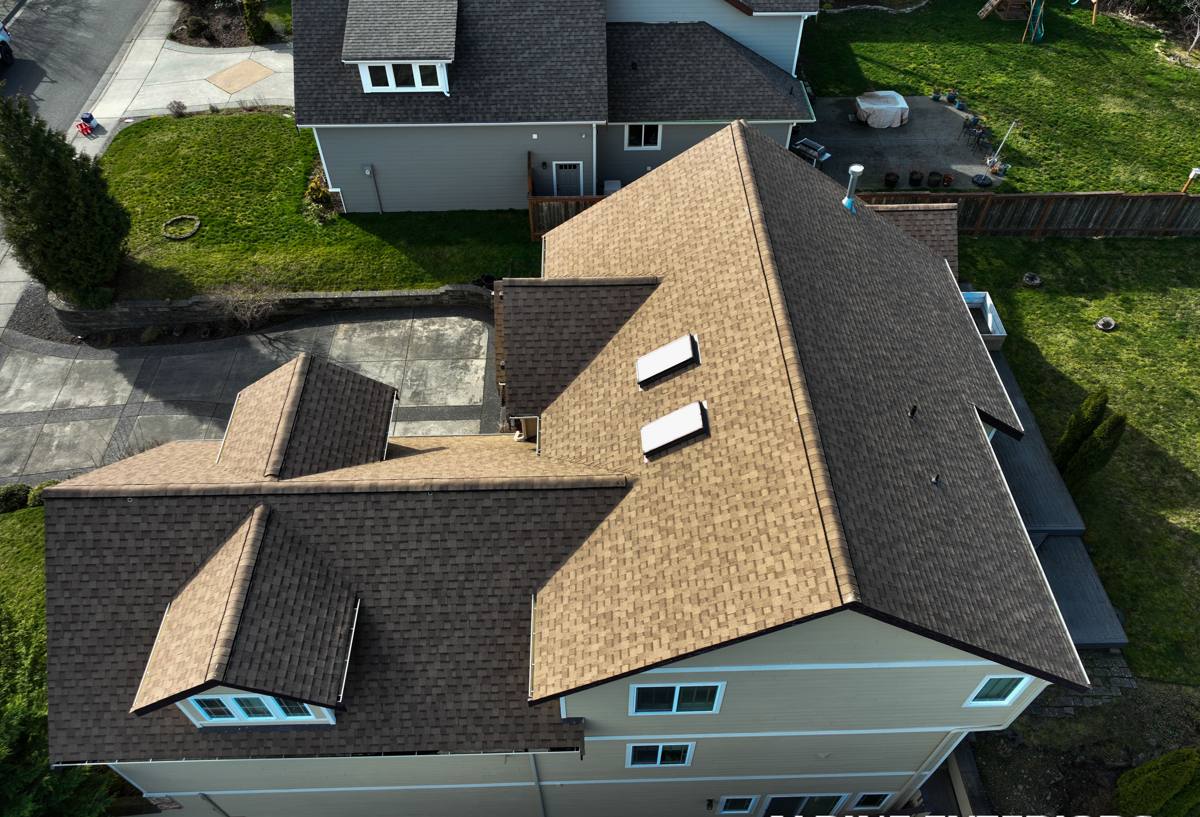
What Salt Air and Driving Rain Actually Do to a Window
It helps to understand the mechanics of why windows fail here faster than they would in a drier, inland climate.
Salt Air and Metal Components
Salt in the air is corrosive to exposed metal — hinges, cranks, locks, and screws. Once corrosion starts, moving parts bind up, weatherstripping compresses unevenly, and a window that used to seal tight starts to leak air around the sash. This is a slow process, but it's steady, and it's one reason we pay close attention to hardware grade and finish when we spec windows for homes near the water.
Driving Rain and Seal Failure
Wind-driven rain doesn't just fall on a window — it gets pushed sideways and upward into gaps that would stay dry in a calmer climate. Over years, that pressure finds any weak point in the seal, flashing, or sill pan. The result is usually not a dramatic leak but a slow one: a soft spot in the sill, a musty smell, or fogging between panes that signals the seal has already failed.
Moss Season and Sustained Moisture
Whatcom County's moss season means long stretches where exterior wood trim, sills, and the siding around window openings stay damp. Moisture that sits instead of drying out is what leads to rot around window frames — often before the glass itself shows any problem. A window can be in fine shape while the wood around it is failing underneath.
What "Energy-Efficient" Should Mean in This Climate
Energy efficiency ratings are written for the whole country, so it's worth translating what actually matters for a home in Blaine.
- Low U-factor: Measures how well the window resists heat loss. In a marine climate with mild but persistent cold and damp, a low U-factor keeps interior surfaces warmer, which also reduces condensation.
- Low-E coatings: A microscopically thin coating that reflects heat while still letting light through. It helps in both directions — keeping warmth in during winter and reducing solar gain on the rare hot summer day.
- Gas-filled sealed units: Argon or krypton gas between panes improves insulation over plain air. The seal that holds that gas in is the same seal that keeps moisture out — which is why seal quality matters twice as much here.
- Proper flashing and sill pan integration: No glass package matters if water gets behind the window. This is arguably the most important factor for coastal homes and the one most often done poorly on a rushed install.
- Corrosion-resistant hardware: Stainless or coated hardware holds up to salt air far longer than standard mill-finish parts.
A window with excellent lab-rated efficiency numbers can still underperform in Blaine if it's installed with poor flashing or standard hardware. The rating tells you about the product; it doesn't tell you about the installation, and in this climate the installation is where most failures actually start.
Choosing a Frame Material for Salt Air and Rain
Frame material affects how a window handles moisture, salt exposure, and long-term maintenance. There's no single right answer for every home — it depends on your home's exposure, style, and how much upkeep you want to take on.
| Frame Material | Coastal Performance | Maintenance | Notes |
|---|---|---|---|
| Vinyl | Good — won't corrode or rot | Low | Cost-effective, solid efficiency, wide color range; quality varies significantly by manufacturer |
| Fiberglass | Very good — dimensionally stable, resists warping | Low | Handles temperature swings and moisture well; higher upfront cost |
| Wood-clad | Fair — cladding protects the exterior, but any breach exposes wood to rot | Moderate to high | Best suited to homes where interior wood trim matters aesthetically |
| Aluminum | Poor to fair — prone to corrosion and condensation in salt air unless thermally broken | Moderate | We generally steer coastal clients away from standard aluminum for this reason — it's a maintenance and condensation risk in this specific environment, not a knock on the material everywhere |
For most homes in the Blaine area, we lean toward vinyl or fiberglass because they don't give salt air and moisture a foothold. Wood-clad can still be the right call for a home where the interior look matters more than minimizing upkeep — it just needs a homeowner who's willing to stay on top of caulking and cladding inspections.
Why Full-Frame Replacement Often Makes More Sense Here
Pocket replacement (installing a new window inside the old frame) is faster and cheaper, but it leaves the old sill and flashing in place. In a climate where sill rot from long-term moisture exposure is common, that old material can already be compromised in ways you can't see from inside. Full-frame replacement lets us inspect and, if needed, rebuild the opening — sill pan, flashing, and all — so the new window isn't sealed on top of a hidden problem.
Our Process for Blaine Window Projects
- On-site assessment: We check not just the glass and sash but the condition of the sill, surrounding trim, and flashing — this is where coastal homes most often have hidden damage.
- Honest scoping: We tell you whether pocket replacement is fine or whether full-frame work is warranted given what we find, and why.
- Product selection: We walk through frame material, glass package, and hardware options based on your home's exposure to wind and rain, not a one-size-fits-all recommendation.
- Removal and inspection: Once the old window is out, we check the opening for rot or moisture damage before anything new goes in.
- Correct flashing and sealing: Proper sill pan and flashing integration, sealed to shed water outward, not trap it.
- Install and finish: Window set, shimmed, insulated, and trimmed to match the rest of your home's exterior.
- Final check: We confirm operation, seal integrity, and clean up before we call it done.
Signs Your Current Windows Are Already Costing You
Homeowners often wait until a window is obviously broken, but coastal exposure tends to create quieter warning signs first.
- Fogging or a hazy band between panes — a sign the seal has failed and insulating gas has escaped
- Hardware that's stiff, corroded, or hard to lock — common with salt air exposure on older units
- Soft or discolored wood on the sill or surrounding trim, especially after moss season
- A noticeable draft near the frame during windy, wet weather
- Condensation forming on the inside of the glass regularly, which can point to a low-performing window or a ventilation issue worth discussing together
- Rooms near windows that feel noticeably colder than the rest of the house
What Affects Window Project Cost
We won't quote pricing without seeing the job, but these are the factors that typically move the number up or down.
| Factor | Why It Matters |
|---|---|
| Pocket vs. full-frame replacement | Full-frame costs more but addresses hidden sill or flashing damage — often necessary on older coastal homes |
| Frame material | Vinyl is typically the most budget-friendly; fiberglass and wood-clad cost more upfront |
| Number and size of openings | Larger openings and specialty shapes (bay, picture, custom) increase labor and material cost |
| Extent of existing damage | Rot repair around the opening adds cost but is far cheaper than dealing with structural damage later |
| Glass package | Upgraded low-E coatings and gas fills add modest cost for a meaningful efficiency gain |
| Access and site conditions | Second-story or hard-to-access windows take more time and equipment |
Why It Matters to Hire a Crew That Already Works in Blaine
A contractor who mostly works drier, inland jobs may not think twice about hardware grade, sill pan detailing, or how far to seal against wind-driven rain — because in their usual conditions, it doesn't matter as much. In Blaine, those details are the difference between a window that performs for decades and one that starts causing problems in a few years. We work throughout Ferndale and the surrounding Whatcom County coastline, so the decisions we make on material, sealing, and flashing come from what we've actually seen fail here — not a generic install checklist.
We're also straightforward about what a job actually needs. If pocket replacement is genuinely fine for your situation, we'll say so. If we find rot behind the trim that needs to be addressed before a new window goes in, we'll show you and explain why it matters rather than gloss over it.
Get a Free Estimate
If your windows are drafty, fogged, or just getting old, we're happy to take a look and give you a straightforward, no-pressure assessment of what your home actually needs. Fill out the form below to schedule a free estimate for your Blaine-area home.