 Ferndale Siding
 Why Board & Batten Fits So Many Cordata Homes
Board and batten has become one of the most requested siding profiles for homes in and around the Cordata area near Ferndale, and it's easy to see why. The vertical lines read as clean and modern on newer construction, but the same pattern also has deep roots in Pacific Northwest farmhouse architecture, so it sits comfortably next to older homes too. On a street where most houses wear traditional horizontal lap siding, board and batten stands out without looking out of place — it's a pattern that works whether the goal is a crisp contemporary exterior or a warm, timeless one.
That said, board and batten is not simply lap siding turned sideways. The way water moves down a vertical panel, the way seams are covered by battens instead of overlapped, and the way fasteners are placed all change how the assembly has to be built. Get those details right and board and batten is one of the most durable, low-maintenance profiles available. Get them wrong, and it fails faster than almost any other siding style — because every mistake is hidden behind a batten, out of sight until the damage has already spread.
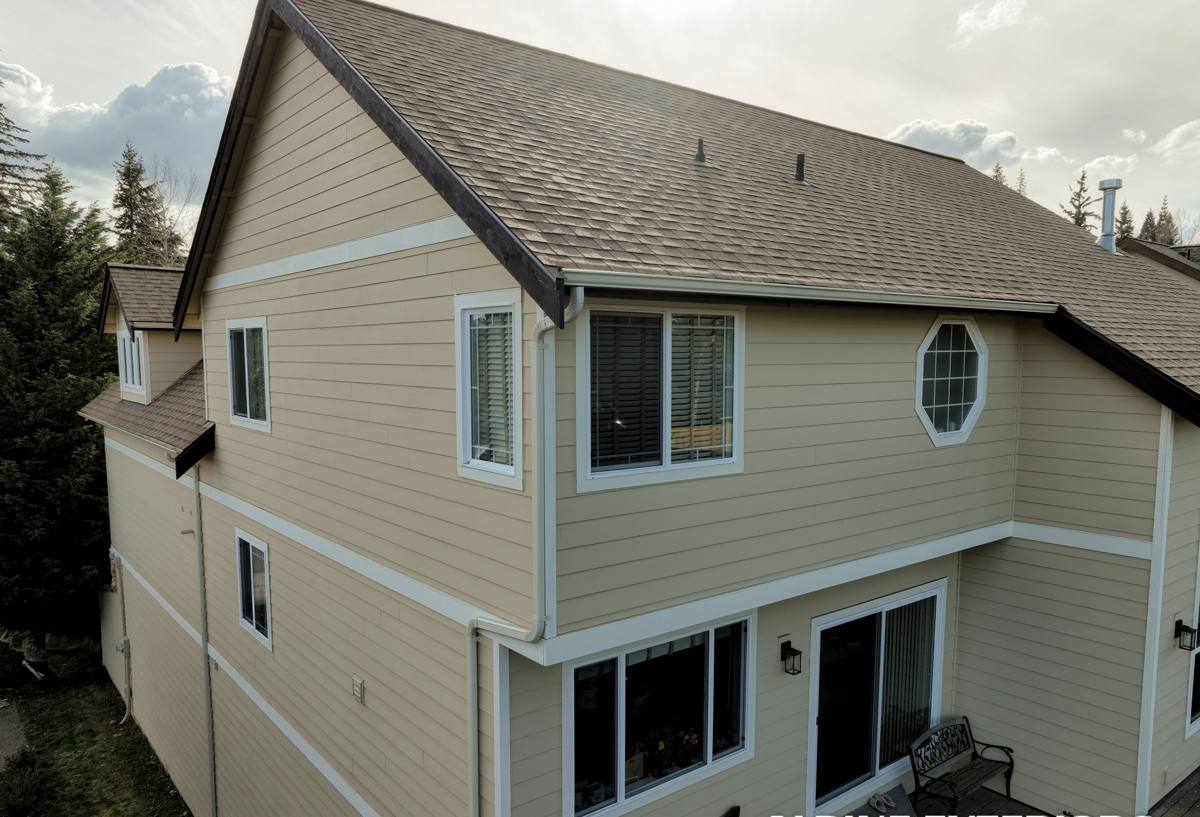
What Whatcom County Weather Does to Vertical Siding
Homes near Ferndale and Cordata deal with a specific combination of conditions that vertical siding has to be built for. Proximity to Bellingham Bay and the Strait of Georgia means salt-laden air is a constant, low-grade stressor on any exposed metal — fasteners, flashing, and trim hardware corrode faster here than they would inland. Add in wind-driven rain that comes off the water at an angle, and vertical seams take on water pressure that flat, horizontal overlaps are simply not designed to handle in the same way.
Then there's the moss. Whatcom County's wet season runs long, and mature tree cover throughout many Cordata-area lots keeps siding shaded and damp well after a storm has passed elsewhere. Moss and mildew don't just look bad — they hold moisture against the siding surface for extended periods, which accelerates rot in wood products and breaks down caulk and sealant faster than manufacturers' warranties usually account for. A board and batten system built for this climate has to manage all three problems at once: salt exposure, driving rain, and prolonged dampness.
Where Board & Batten Installations Go Wrong
Most board and batten failures we get called out to inspect trace back to a handful of avoidable mistakes, not to the siding profile itself. Because the boards and battens sit flush to the wall in a lot of budget installations, water that gets behind the surface has nowhere to go and nothing to dry it out.
- No rainscreen gap behind the panels, so any moisture that gets past the surface sits directly against the wall sheathing
- Battens face-nailed directly through the board seam instead of fastened to hit framing on both sides, leaving the seam to move and open a gap
- Caulk used as the primary water barrier instead of as a secondary seal over a properly lapped or flashed joint
- Cut ends left unsealed, which lets fiber cement, wood, or engineered panel edges wick water straight into the material
- Battens spaced too far apart or too close, which either overloads the field boards or traps debris and moss between them
Every one of these is invisible once the siding is up. That's the core challenge with board and batten: the pattern that makes it look so clean is the same pattern that hides a bad install for years, right up until boards start cupping, staining, or pulling away from the wall.
Material Matters as Much as the Pattern
The batten profile gets a lot of attention, but the material underneath it is what actually determines how the siding performs against salt air, rain, and moss over the next few decades. We've installed and inspected board and batten in most of the common materials, and it's why we standardized on one.
| Material | Moisture & Moss Resistance | Fastener Corrosion Risk | Factory Finish | Typical Maintenance |
|---|---|---|---|---|
| Primed Wood / Cedar | Absorbs moisture at cuts and joints; prone to rot without vigilant upkeep | Moderate — depends on fastener grade used | Primed only; needs field paint and recoating | Repaint every few years, ongoing caulk and rot checks |
| Vinyl Board & Batten Panels | Doesn't rot, but traps moisture and moss behind panels; can warp with heat and cold cycling | Low, but panels themselves loosen and flex over time | Molded-in color, fades and chalks with UV exposure | Low, but limited repair options if damaged or faded |
| James Hardie Fiber Cement | Engineered for wet climates; resists moisture-driven swelling and moss retention | Low when installed with corrosion-resistant fasteners per spec | ColorPlus factory finish, baked on and warranted | Occasional wash-down; no repainting cycle |
Primed spruce and cedar can look beautiful, but they ask a homeowner to stay on top of paint and caulk maintenance in a climate that's actively working against both. Vinyl board and batten sidesteps rot but is a poor match for this climate's moss problem, since trapped moisture behind rigid panels has nowhere to evaporate. James Hardie fiber cement is the one material in this comparison that's engineered specifically for the moisture load coastal Pacific Northwest homes see, which is why it's the only board and batten material we install.
Why We Don't Install Board & Batten in Vinyl or Untreated Wood
This isn't a knock on either material in every application — vinyl and cedar both have their place. But for vertical siding specifically, where every seam is a potential water path, we've made a professional decision not to install products that require either constant maintenance to stay water-tight or that trap moisture behind an impermeable surface. Hardie's fiber cement is non-combustible, holds paint and factory finish far longer, and is built to the HZ5 specification for the wet, temperate climate zone Whatcom County sits in.
How We Install Board & Batten Correctly
Drainage Plane and Rainscreen Gap
Every board and batten job we do includes a drainage plane behind the siding and a rainscreen gap that lets any moisture that does get past the surface drain out and air-dry instead of sitting against the sheathing. This single detail is the biggest difference between board and batten that lasts thirty years and board and batten that needs repair in five.
Fastening Pattern and Batten Spacing
Field boards and battens are fastened into solid framing, not just into sheathing, using corrosion-resistant fasteners rated for coastal exposure. Batten spacing follows the manufacturer's engineered layout rather than being eyeballed for looks, which keeps water shedding correctly across every seam.
Corners, Trim, and Penetrations
Outside corners, window and door trim, and every point where a pipe, vent, or fixture penetrates the wall get proper flashing before any caulk goes near them. Caulk is the last line of defense in our installations, never the first.
Sealing Cut Ends
Every field cut gets sealed before it goes on the wall. It's a small step that takes extra time on-site, but it's the difference between a cut edge that sheds water and one that slowly absorbs it for years.
Our Process for Cordata-Area Homes
- On-site assessment — we look at existing siding condition, sheathing moisture, tree cover, and sun exposure specific to your lot
- Moisture check — where existing siding is coming off, we check the wall assembly underneath for hidden rot or past water intrusion before anything new goes up
- Material and color selection — choosing the Hardie board and batten profile and ColorPlus finish that fits the home
- Installation with rainscreen detailing — drainage plane, correct fastening, flashed corners and penetrations
- Trim and finish work — corner boards, window and door trim, and any touch-up sealing
- Final walkthrough — reviewing the completed install with the homeowner before we consider the job done
Living With Board & Batten Through Whatcom County's Wet Season
A correctly installed Hardie board and batten system needs very little upkeep, but a few habits go a long way toward keeping it looking good through Cordata's long damp stretches.
- Rinse moss and algae off with a garden hose or soft wash — skip the pressure washer, which can drive water behind seams
- Keep gutters and downspouts clear so runoff isn't sheeting down the face of the siding
- Trim back branches and shrubs that keep sections of the wall shaded and damp for days after a storm
- Do a quick annual look at caulk lines around trim and penetrations, especially after the first winter
- Note any staining or dark streaking early — it's easier to address before it becomes a moisture problem
Why a Crew That Already Works in Cordata Matters
Board and batten installed on a home a few miles inland can get away with shortcuts that simply don't hold up this close to Bellingham Bay. A crew that regularly works the Cordata area near Ferndale already understands which lots hold moisture longest, which exposures take the brunt of driving rain, and how to schedule around the region's wet stretches so the job gets done in a proper weather window rather than rushed between storms. That local pattern recognition doesn't show up on a spec sheet, but it shows up in how the siding performs ten winters later.
If you're weighing board and batten for a home in or around Cordata, we're happy to walk the property, take a look at what's there now, and talk through what a correctly built system would involve — with no pressure to decide on the spot. Reach out for a free estimate using the form below.