 Ferndale Siding
 Board & Batten Siding Built for Point Roberts' Marine Climate
Point Roberts sits out on its own peninsula, surrounded by water on nearly every side, which means homes here take a harder hit from the weather than most of Whatcom County. Salt-laden air moves in off the water and settles into every exposed surface, driving rain comes in sideways during winter storms, and the shade and dampness that stick around for months at a time keep moss and algae going strong long after other parts of the county have dried out. Board and batten siding — with its bold vertical lines and deep shadow reveals — looks great on the coastal and farmhouse-style homes common out here, but it's also one of the less forgiving siding profiles if the material and the installation aren't right for this environment. This page covers what board and batten actually needs to hold up in Point Roberts, what a correct installation looks like, and why we install it in exactly one material.
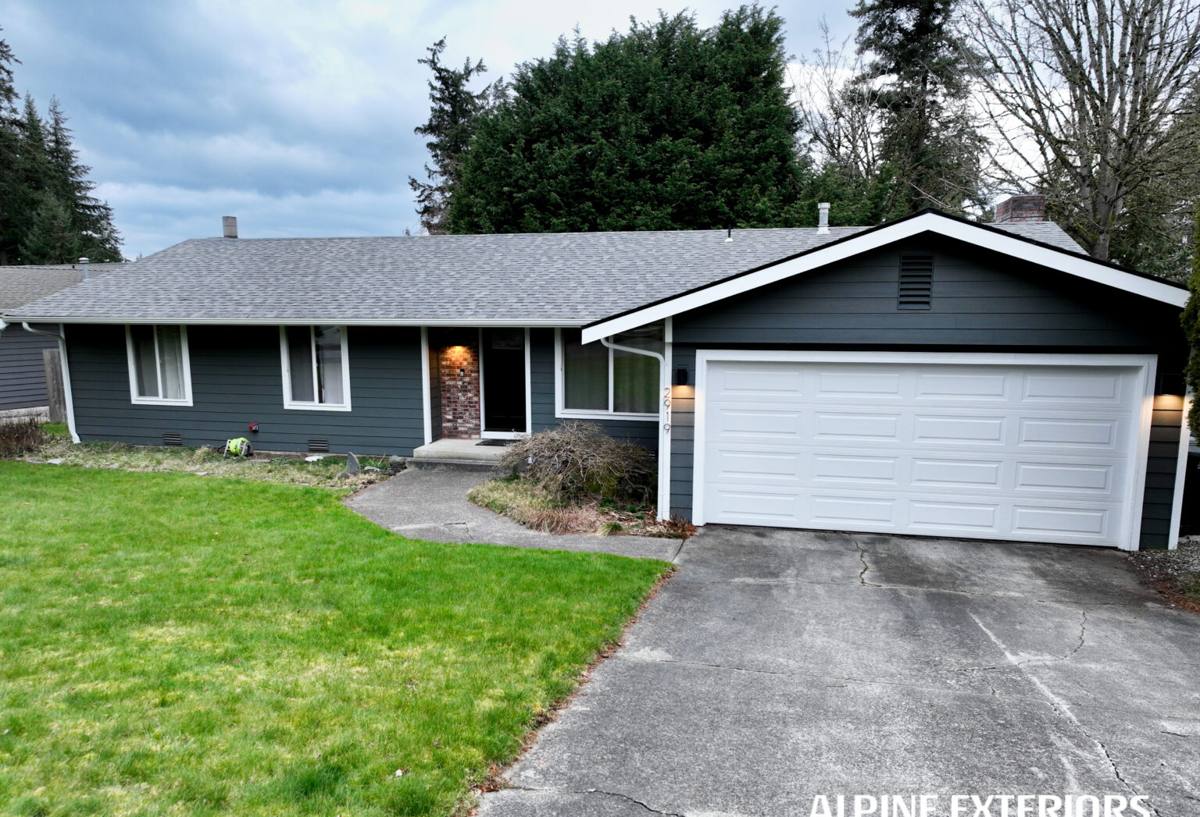
What Board and Batten Siding Actually Is
Board and batten is a vertical siding pattern: wide flat panels installed side by side, with narrow strips (the battens) covering the seams between them. It's one of the oldest siding styles in North America, originally used on barns and simple frame houses because it was a fast, practical way to cover a wall and shed water down instead of across. Today it's popular for a cleaner, more modern look — often paired with horizontal lap siding as an accent on gables, dormers, or entry features, or used as the primary siding on farmhouse-style builds.
The look is simple, but the physics behind it matter more than people expect. Every vertical seam and every batten fastener is a potential point of water entry. On a house in a mild, dry climate that's a minor design detail. On a house in Point Roberts, exposed to driving rain and constant marine humidity, it's the difference between siding that lasts decades and siding that fails from the inside out.
Why the Style Is a Bigger Deal in a Wet Climate
Horizontal lap siding naturally sheds water downward across overlapping courses. Board and batten relies more heavily on the quality of the panel material, the fasteners, the caulking or lack of it at the battens, and the drainage plane behind the whole assembly. Get any of those wrong and a board and batten wall in a place like Point Roberts will show problems — swelling, staining, soft spots, moss creeping in at the seams — years before a comparable lap-sided wall would.
Why We Install Fiber Cement — Not Wood, Not Vinyl — for Board and Batten Here
We get asked why we don't offer board and batten in cedar, primed spruce, or vinyl, since all three are common and often cheaper up front. The honest answer is that we've standardized on James Hardie fiber cement for every siding job we do, board and batten included, because it's the only option we're willing to stand behind in this climate.
- Wood board and batten (cedar or primed spruce) looks beautiful when new, but it's a moisture sponge. In a salt-air, high-rainfall environment like Point Roberts, wood battens and panels absorb water at every seam and end cut, and that cycle of swelling and drying is what causes cupping, splitting, and paint failure. It also feeds the moss and mildew that already thrive here, which means more frequent repainting and re-caulking than most homeowners want to sign up for.
- Vinyl board and batten is low-maintenance in the sense that it doesn't rot, but it's a thin, flexible material that was never designed to be the primary weather barrier in a coastal wind-and-rain environment. It can warp in temperature swings, crack in cold snaps, and its seams and panel joints are a weak point exactly where board and batten already concentrates water exposure.
- Fiber cement (James Hardie) is dense, dimensionally stable, and doesn't expand and contract with moisture the way wood does. It's also non-combustible, holds factory-applied color far longer than field-painted wood, and is engineered specifically for high-moisture, high-wind regions like ours.
We're not saying wood or vinyl board and batten can't be installed anywhere — plenty of it exists across the country. We're saying that for a home exposed to what Point Roberts sees every winter, we don't think either material gives an owner the long-term value they're paying for, so we don't install them.
Material Comparison for Board and Batten Siding
| Material | Moisture Behavior | Salt Air Resistance | Maintenance | Typical Lifespan |
|---|---|---|---|---|
| Cedar / primed spruce | Absorbs water, swells and shrinks with seasons | Poor without frequent sealing | Repaint/reseal every 3-5 years | 15-25 years with upkeep |
| Vinyl | Doesn't rot but traps moisture behind panels | Can chalk and become brittle over time | Occasional cleaning, panel replacement as needed | 20-30 years |
| James Hardie fiber cement | Dimensionally stable, resists warping and swelling | Engineered for coastal/marine exposure | Periodic rinse, repaint only when owner chooses a color change | 30-50+ years installed to spec |
What Correct Board and Batten Installation Involves
Board and batten fails or succeeds based on details most homeowners never see once the wall is closed up. On every board and batten job in Point Roberts, we treat these as non-negotiable:
Drainage Plane and Rainscreen
Behind the siding, we install a weather-resistive barrier with a proper drainage gap, so any water that does get past the exterior cladding has somewhere to go instead of sitting against the wall sheathing. In a climate where walls stay damp for extended stretches of the year, this gap is what keeps trapped moisture from turning into rot or mold you can't see until it's expensive.
Fastening and Panel Spacing
James Hardie specifies exact fastener types, spacing, and clearances for vertical panel and batten installation, along with minimum gaps at the ground, roofline, and trim. We follow those specifications precisely — not as a formality, but because it's the difference between a warranty that's actually valid and one that's voided by shortcuts nobody notices until there's a problem.
Seams, Corners, and Flashing
Every vertical seam, inside corner, and window or door intersection is a place water wants to get in. Correct flashing and properly sequenced house wrap at these transitions matter more on a board and batten wall than almost any other siding style, precisely because there are more vertical seams to manage across a given wall.
Factory-Finished Color
We install James Hardie's ColorPlus finish, which is baked on at the factory rather than field-applied. That means the color and the protective coating go on under controlled conditions, and it holds up to UV and salt exposure far better than a coat of paint applied on-site in variable weather.
Our Process for a Point Roberts Board and Batten Project
- On-site assessment. We look at your current siding condition, existing moisture damage if any, wall orientation relative to prevailing wind and rain, and any moss or algae buildup that points to trouble spots.
- Removal and inspection. Once old siding comes off, we check the sheathing underneath for soft spots or hidden rot before anything new goes up — this is often where problems from a prior installation surface.
- Weather barrier and drainage plane. Housewrap and a rainscreen gap go in before a single panel is installed.
- Panel and batten installation. Hardie panels and battens go up to manufacturer spec for fastening, spacing, and clearances.
- Trim, flashing, and finish detailing. Corners, window and door transitions, and roof intersections get flashed and sealed correctly the first time.
- Final walkthrough. We go over the finished job with you before we consider it done.
Maintaining Board and Batten Siding in a Coastal Climate
Fiber cement dramatically cuts down on maintenance compared to wood, but "low-maintenance" doesn't mean "no-maintenance" anywhere near the water. A short seasonal checklist keeps a Point Roberts installation performing the way it should:
- Rinse siding once or twice a year to clear salt residue, especially on walls facing prevailing wind and water
- Check battens and seams for any caulking that's cracked or pulled away, and have it addressed promptly
- Keep gutters and downspouts clear so runoff isn't sheeting down the wall face
- Trim back vegetation and clear debris that holds moisture against the siding, which is also what feeds moss growth
- Look at north-facing and shaded walls specifically for moss or algae, since these hold dampness longest through the wet months
- Have any impact damage (branches, debris, equipment) inspected rather than left, since a compromised panel can let moisture behind the drainage plane
Why Hiring a Crew That Already Works in Point Roberts Matters
Point Roberts is geographically cut off from the rest of Whatcom County by water and an international border, which means logistics for any construction project here are genuinely different than a job in Ferndale or Bellingham proper. Material deliveries, crew scheduling, and timing all take more planning when the job site sits on a peninsula reached by a different route than the rest of the county. A crew that already understands those logistics — and has already seen how the local exposure treats different siding materials over time — plans the job correctly from day one instead of learning those lessons on your house.
Beyond logistics, there's a real difference between a crew that installs board and batten occasionally and one that installs Hardie products as its full-time specialty. Panel and batten installation has enough moisture-management detail that experience shows up directly in how the wall performs ten and twenty years down the road, not just how it looks on installation day.
Is Board and Batten the Right Choice for Your Home?
Board and batten isn't the right fit for every home, and we'll tell you honestly if we think a different Hardie profile — lap siding, shingle-style panels, or a mix with board and batten as an accent — makes more sense for your house's exposure and architecture. Some homes handle a full board and batten treatment beautifully; others are better served with board and batten reserved for gables or entry accents while lap siding handles the bulk of the wind and rain exposure on the main walls.
If you're weighing board and batten for a home in Point Roberts, we're happy to walk the property with you, talk through what your specific exposure calls for, and give you a straight answer — not just a sales pitch. Reach out for a free, no-pressure estimate using the form below.