 Ferndale Siding
 Why Siding in Cordata Takes a Different Kind of Beating
Cordata sits in the same wet, gray-winter weather system as the rest of Whatcom County, but a few things stack the deck against siding here specifically: proximity to Bellingham Bay pulls salt-laden air inland on a regular basis, prevailing storms drive rain sideways into wall assemblies rather than straight down, and the tree cover common to this part of the county keeps north- and east-facing walls shaded and damp for long stretches of the year. That combination is exactly what siding manufacturers design against — and exactly what cheaper materials or rushed installations fail to hold up to.
When we get called out to look at siding damage in this neighborhood, it's rarely one single cause. It's usually driving rain finding a weak seam, salt air accelerating corrosion on fasteners or trim, and moss season keeping moisture in contact with the wall long after the rain has stopped. Repair work here has to account for all three, not just patch the visible crack.
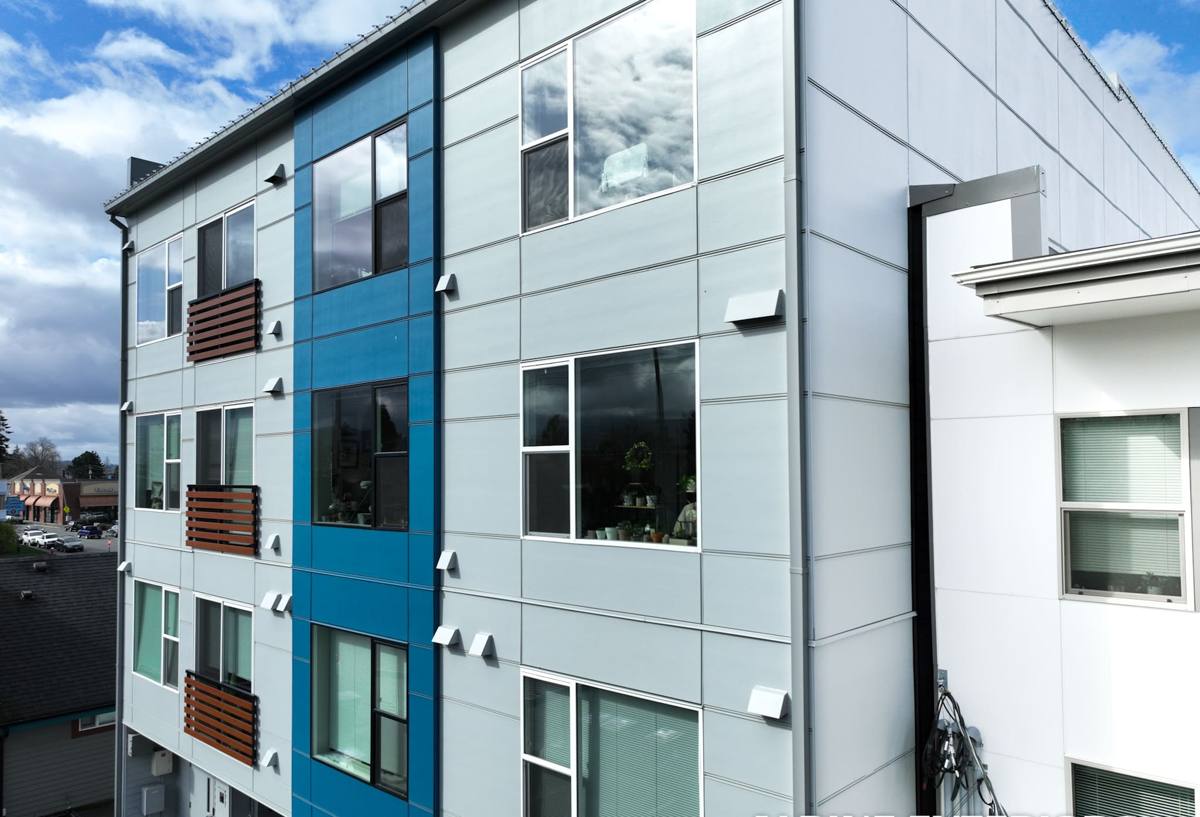
Signs a Repair Call Is Overdue
Most siding failures don't announce themselves with a hole in the wall. They show up as small, easy-to-dismiss details that quietly get worse through another wet season. Homeowners in Cordata should treat any of the following as a reason to get an inspection, not a "wait and see":
- Soft or spongy spots when you press on the siding, especially near the bottom courses or around windows
- Visible gaps, buckling, or panels that have pulled away from the wall at seams or corners
- Persistent moss, algae, or dark streaking that comes back within weeks of cleaning
- Peeling, bubbling, or chalky paint that keeps failing in the same spots year after year
- Rust streaks below nail heads or fasteners, a sign the metal itself is corroding from salt exposure
- Interior clues — a musty smell, a discolored patch on drywall, or a slightly warm/cold spot on an exterior wall
None of these guarantee major damage. But every one of them is moisture finding a way in, and moisture that sits against wall sheathing through a Whatcom County winter does real damage before it ever becomes visible from the street.
What's Actually Failing: Material Matters
Fiber Cement (James Hardie)
When we repair James Hardie siding, the damage is almost always mechanical — impact damage, a fastener that backed out, a section that was caulked wrong at installation and let water behind it. The material itself doesn't rot, swell, or feed moss the way organic materials do, so a correctly diagnosed Hardie repair tends to be a clean, contained fix rather than the first sign of a bigger problem.
Wood, Primed Spruce, and Cedar
Wood-based sidings are the most common repair calls we see in wet, shaded lots like the ones common around Cordata. Wood absorbs moisture, and once it does, rot spreads under the paint film where you can't see it until a section is already soft. A wood repair often reveals more compromised material once we open the wall than the visible symptom suggested.
Vinyl and LP SmartSide
Vinyl handles moisture fine on its own but is notorious for cracking in impact and warping when heat or sun exposure hits it unevenly — and matching an older, sun-faded panel is often impossible. LP SmartSide is an engineered wood product, which means its strand-based core is vulnerable at any point where the factory-sealed edge gets cut, drilled, or damaged; once moisture gets into that core, it swells and won't recover the way fiber cement does. We don't install either product, and when we're called to repair someone else's, we're upfront about what a patch can and can't fix.
What a Correct Siding Repair Involves
A repair that just replaces the damaged piece and moves on is a repair that's likely to fail again. Done right, the process looks like this:
- Diagnose the water path, not just the symptom. Damaged siding is usually a downstream effect. We trace where water is actually getting in — a failed seam, bad flashing, missing kick-out, poor caulk joint — before touching the siding itself.
- Check what's behind the siding. Housewrap, sheathing, and framing all need to be inspected once the damaged section is off. Repairing over compromised sheathing just hides the problem for another season.
- Match material and profile correctly. On Hardie siding this means matching plank width, texture, and — where possible — ColorPlus finish so the repair doesn't stand out as a patch.
- Re-flash and re-seal to spec. Manufacturer-specified clearances, fastener patterns, and joint treatment matter as much on a repair as they do on a full install — this is where a lot of "cheap fix" repairs cut corners.
- Address the moss and moisture conditions, not just the wall. If shade, gutter overflow, or sprinkler overspray caused the original failure, we'll flag it — a repair without addressing the cause is a repair you'll pay for again.
Repair or Replace? How We Actually Decide
Not every damaged section needs a full re-side, and we don't push replacement when a repair will hold. But there's a point where patching stops making financial sense. Here's the honest breakdown:
| Factor | Repair Usually Makes Sense | Replacement Is the Better Call |
|---|---|---|
| Extent of damage | Isolated to one or two sections/walls | Spread across multiple elevations |
| Underlying sheathing | Dry, solid when opened up | Soft, delaminated, or water-stained |
| Siding material | Fiber cement, sound overall condition | Wood/LP with rot at multiple points |
| Repair history | First or second repair in this area | Same wall repaired repeatedly |
| Age of original siding | Well within expected service life | Near or past manufacturer lifespan |
We'll always tell you where your home falls on that table and why — including when the honest answer is "this is a repair, don't let anyone talk you into a full tear-off you don't need yet."
Our Repair Process for Cordata Homes
The process is the same whether it's one panel or a full elevation:
- Inspection and diagnosis — we look at the damage, the water path behind it, and the condition of surrounding siding, not just the spot you called about
- Written scope and estimate — what's being repaired, what material is being used, and what we expect to find once we open the wall
- Repair to manufacturer spec — correct clearances, fasteners, flashing, and sealants, matched to what's already on the house wherever possible
- Cleanup and a final walkthrough — we point out anything else worth watching, including moss or drainage conditions likely to cause repeat problems
Why Local Experience in This Area Actually Matters
A siding repair crew that mostly works drier inland climates will diagnose Cordata damage differently than one that works Whatcom County's coastal-influenced weather every week. We know which wall orientations take the worst of the driving rain, which lots hold moss longest into summer, and which older installation shortcuts show up as failures years later in this specific climate. That's not a sales pitch — it changes what we look for and how we prioritize repairs when we're on your roofline or up a ladder at your house.
It also means we're not guessing on material availability or lead times for James Hardie products in this region — we install Hardie as our standard, so matching an existing repair to your home's current siding is part of our regular work, not a special order.
Keeping a Repair From Becoming a Repeat Call
Once a repair is done, a little seasonal attention goes a long way in this climate:
- Keep gutters clear so overflow doesn't run down the wall behind the siding
- Trim back vegetation and tree cover that keeps a wall shaded and damp through moss season
- Rinse moss and algae off before it has a chance to hold moisture against the surface
- Re-check caulking at trim, window, and door joints every couple of years — it's the first thing to fail
- Have any new soft spots or paint failure looked at early, before a small issue becomes a wall-opening repair
Fiber cement siding holds up to this maintenance rhythm far better than wood or engineered wood products, which is a large part of why we standardized on James Hardie for every installation and repair we do.
Get an Honest Look at Your Siding
If you're seeing soft spots, gaps, recurring moss, or paint that won't stop failing on a home in Cordata, it's worth getting an honest opinion before it turns into a bigger repair. We'll walk the affected areas, tell you plainly what we find, and give you a straightforward estimate — no pressure, no upsell. The request form below is the easiest way to get that scheduled.