 Ferndale Siding
 Deck Replacement in Custer: What the Local Conditions Demand
Custer sits close enough to the water that salt-laden air is a real factor in how fast a deck ages, and far enough into Whatcom County's rain patterns that moisture management can't be an afterthought. Add in a moss season that stretches longer here than in drier parts of the state, and you've got three forces working against an outdoor structure at the same time: corrosion, rot, and slick, moss-covered surfaces. A deck built without those three things in mind will show problems within a few years — soft boards, rusted fasteners, and a walking surface that turns dangerous the first cold, damp morning of fall.
A proper deck replacement in this area isn't about picking pretty boards and screwing them down. It's about choosing materials and details that hold up specifically to what Custer throws at a structure year-round: driving rain that gets pushed sideways by wind off the water, humidity that never really lets wood dry out between storms, and moss spores that will colonize any shaded, damp surface if given the chance.
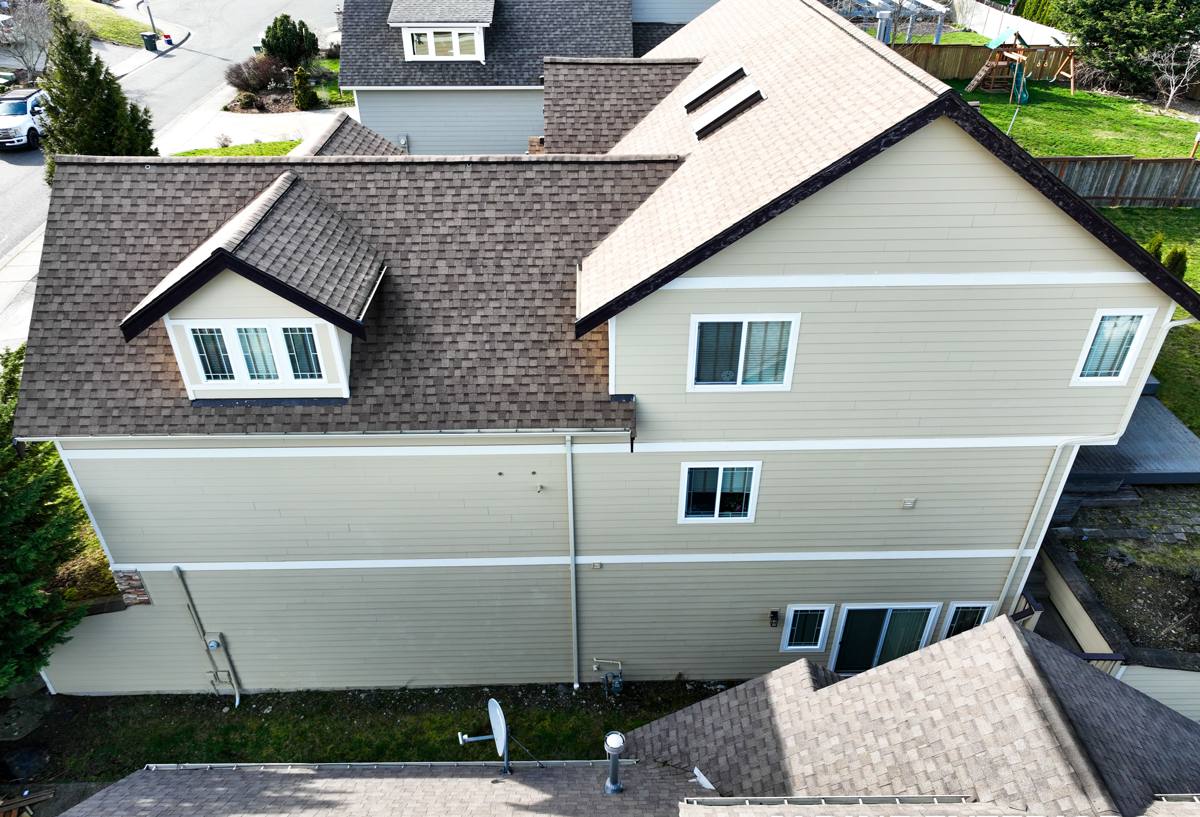
Signs Your Custer Deck Needs Replacing, Not Just Repair
Not every tired-looking deck needs to come out. But there's a point where patching individual boards is just delaying a bigger job — and spending money that won't show up in the final result. Here's how we tell the difference on a site visit.
Repair candidates
A handful of cupped or splintering boards, a loose railing baluster, surface graying on wood that's otherwise structurally sound — these are normal wear and usually fixable without touching the frame.
Replacement candidates
Soft or spongy spots when you walk the deck, especially near the ledger board where it attaches to the house, are the biggest red flag. So are rusted or corroded fasteners (common here given the salt air), footings that have shifted or heaved, and any sign of rot in the joists or beams underneath. If the substructure is compromised, resurfacing the top only hides the problem — it doesn't solve it.
Age as a factor
Most standard wood-frame decks in this climate are due for a hard look at 15–20 years, sooner if the deck was built low to the ground or shaded by trees, both of which slow drying time and accelerate rot.
What a Correct Deck Replacement Involves
A full replacement means more than swapping decking boards. Done right, it includes:
- Removing the old deck down to the ledger and posts, and inspecting the house framing behind the ledger for water damage
- Installing new or upgraded footings sized correctly for the soil conditions on the lot
- Framing with pressure-treated joists and beams rated for ground contact where applicable
- Flashing the ledger board properly where it meets the house — this is the single most common failure point on decks in wet climates
- Choosing fasteners and hardware rated for coastal/corrosive exposure, not standard interior-grade hardware
- Decking material selection based on how the deck is used, its sun/shade exposure, and the owner's tolerance for maintenance
- Railing, stairs, and code-required guard heights and baluster spacing
Skipping any one of these steps is how a deck that looks great on day one starts failing by year three. The ledger flashing detail in particular gets rushed on a lot of jobs because it's hidden once the decking goes down — but it's the point where the deck meets the house, and a bad seal there sends water into the wall framing, not just the deck.
Material Options for Custer's Climate
There's no single "best" decking material — there's a best material for how a given deck will be used and how much upkeep the owner wants to do. Here's how the common options actually perform under salt air, rain, and moss pressure.
| Material | Moisture & moss resistance | Maintenance | Typical lifespan |
|---|---|---|---|
| Pressure-treated wood | Good if sealed regularly; moss and algae will still grow on shaded, damp surfaces without upkeep | Annual cleaning and re-sealing recommended | 15–20 years with maintenance |
| Cedar | Naturally rot-resistant but softer surface; needs sealing to hold up to constant damp | Sealing every 1–2 years, more frequent cleaning | 15–20 years with upkeep |
| Composite decking | Strong moisture and moss resistance; won't absorb water or splinter | Occasional washing, no sealing or staining | 25+ years, manufacturer-warrantied |
Composite has become the more common choice for decks that see a lot of shade or sit close to the water, simply because it doesn't give moss and mildew the organic surface they need to take hold. Wood — cedar especially — still has a place for owners who want a natural look and are willing to keep up with sealing on a schedule. We'll walk through the real trade-offs for your specific deck, including sun exposure and how it's actually going to be used, rather than pushing one product across the board.
Ledger, Footings, and Drainage — the Details That Matter Most
Three things determine whether a Custer deck lasts 10 years or 25, and none of them are visible once the job is finished.
Ledger attachment and flashing
This is where the deck ties into the house, and it's the number one point of failure we see on older decks in this region. Proper flashing — installed correctly, in the right order relative to the house's siding or water-resistive barrier — keeps water from tracking behind the ledger and into the wall framing. Get this wrong and you're not just looking at a deck repair down the road, you're looking at a wall repair.
Footing depth and sizing
Footings need to be sized for the load and set below frost depth per Whatcom County requirements. On sites with poor drainage or soft soil, undersized or shallow footings shift over time, which is what causes a deck to develop a noticeable slope or bounce.
Drainage under and around the deck
Water needs somewhere to go. Decks built low to grade, or on sites where water pools underneath, stay damp far longer after storms — which is exactly the environment moss and rot need. Grading, gapping between boards, and in some cases under-deck drainage systems all factor into keeping a deck dry enough to actually last through Whatcom County winters.
Our Process, From Estimate to Final Walkthrough
- On-site assessment: We look at the existing deck (if there is one), the ledger connection, the framing underneath, and site drainage before quoting anything.
- Honest scope and material discussion: We tell you what actually needs replacing versus what's salvageable, and walk through material options with real trade-offs — not just a sales pitch for the highest-margin product.
- Permitting: We handle the permit process with Whatcom County where required, so the finished deck is built to code and won't cause problems at resale.
- Demo and framing: Old structure comes out, ledger and framing get inspected and repaired or replaced as needed, footings go in.
- Decking, railing, and finish work: Installed to manufacturer specs for whatever material you've chosen, with fasteners rated for this climate.
- Final walkthrough: We go over the finished deck with you, including basic care and what to watch for going forward.
Permitting and Whatcom County Considerations
Most deck replacements that involve new footings, structural changes, or work above a certain height trigger a permit requirement in Whatcom County. Skipping this step is a common shortcut on cheaper bids, but it creates real problems — unpermitted structural work can complicate a home sale later, and it means nobody outside the crew that built it has verified the footings, framing, or guard rails meet code. We pull the permits and schedule the inspections as part of the job, not as an extra.
Why a Crew That Already Works Custer Matters
Deck-building advice that works in a dry inland climate doesn't automatically hold up here. A crew that hasn't worked this specific stretch of Whatcom County might not think twice about standard interior-grade fasteners, or might not flag how much shade and dampness a given lot actually gets before recommending a material. Working this area regularly means we've already seen what fails here — corroded hardware, ledger rot from bad flashing, decks that turned into moss-covered skating rinks by their second winter — and we build to avoid those specific problems from the start, rather than learning it on your project.
It also means straightforward logistics: we know reasonable timelines around local weather windows, we're not routing a crew in from far outside the area, and follow-up is easy if a question comes up after the job is done.
Keeping a New Deck Looking Good Through the Wet Season
Even the right materials and construction benefit from basic seasonal care. A simple routine goes a long way toward protecting the investment:
- Sweep leaves and debris off the deck regularly in fall — trapped organic matter holds moisture and feeds moss growth
- Rinse or wash the surface a few times a year, more often in shaded areas prone to moss
- Check and re-seal wood decking on the manufacturer's recommended schedule; composite generally just needs periodic washing
- Keep gutters and downspouts near the deck clear so runoff isn't dumping extra water onto or under the structure
- Inspect railings and stair connections once a year for looseness or corrosion
- Trim back overhanging branches to cut down on shade and debris buildup, both of which extend how long the deck stays damp after rain
If you're weighing a deck replacement in Custer and want a straight answer about whether repair or replacement makes sense for your situation, we're happy to take a look. The estimate is free, there's no pressure, and you'll get a clear picture of what the job actually involves before you decide anything — just fill out the form below.