 Ferndale Siding
 Why Roofs in Custer Take a Different Kind of Beating
Custer sits close enough to open water that homes here deal with a mix of weather that inland Whatcom County properties simply don't see as often: salt-tinged air, wind-driven rain that comes in sideways instead of straight down, and a moss season that can run for most of the year in shaded or north-facing sections of a roof. None of these things destroy a roof overnight. They wear it down slowly, at the seams, the fasteners, and the low-slope transitions, until a small weak point turns into an active leak. A roof repair out here has to account for all three, not just patch the spot where water showed up inside the house.
We work on roofs throughout the Ferndale area, and Custer's roofs consistently show a specific pattern of wear tied to this coastal exposure. Understanding that pattern is most of what separates a repair that actually holds from one that fails again in a year or two.
Driving Rain and Wind-Driven Water Intrusion
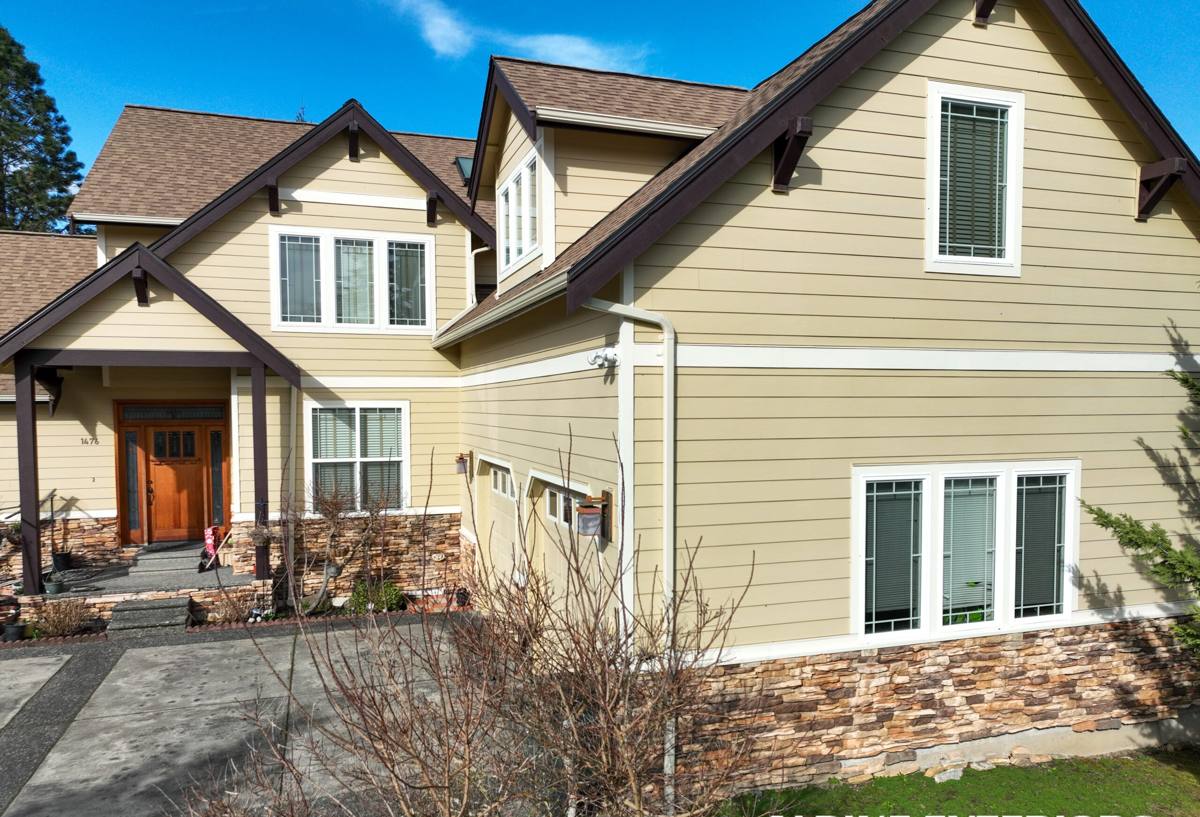
Straight-down rain is the easy case for a roof — gravity does most of the work of shedding it. Wind-driven rain is different. It gets pushed sideways and even slightly upward under shingle edges, around vent boots, and into any gap in flashing that wouldn't matter in calmer weather. Custer gets its share of this kind of weather, and it's usually the reason a leak shows up during one storm and never again until the next bad one — the water is only finding its way in under specific wind conditions.
Flashing and Transition Points
Chimneys, skylights, dormers, and roof-to-wall intersections are where most wind-driven leaks actually originate, even when the water stain inside shows up somewhere else on the ceiling. Flashing at these points needs to be lapped correctly and sealed with materials rated for constant wet-dry cycling, not just caulked over. A repair that only addresses the visible shingle damage and skips the flashing underneath it is a repair that's going to need a return visit.
Underlayment as the Real Backup Plan
Even a well-installed roof surface isn't the only thing standing between your attic and the weather. The underlayment beneath the shingles or panels is the backup layer, and in older Custer homes it's often original to the roof and past its useful life. When we open up an area for repair, we check the underlayment condition in that section, because replacing shingles over failed underlayment just delays the same leak.
The Long Moss Season and What It Does to a Roof
Whatcom County's wet, mild climate is close to ideal for moss growth, and Custer's tree cover and coastal humidity extend the growing window even further. Moss shows up first on north-facing slopes and anywhere shade keeps a roof from drying out between rain events.
Why Moss Isn't Just Cosmetic
Moss holds moisture directly against the roofing material long after the rest of the roof has dried. On asphalt shingles, that constant dampness accelerates granule loss and softens the mat underneath. On wood or composite products, it can trap moisture against a surface that's meant to dry out between rains. Left alone, moss also lifts shingle edges as it grows, creating small gaps that wind-driven rain can exploit. A roof repair in a moss-affected area almost always needs to include removal of the moss and its root structure, not just a treatment sprayed on top.
Salt Air's Slow Effect on Roofing Materials
Custer's proximity to open water means the air carries more salt than you'd find further inland, even on a clear day. Salt exposure doesn't damage a roof the way rain or moss does — it works on the metal components instead.
Fasteners, Flashing, and Metal Components
Nails, flashing, vent stacks, and any exposed metal fastener are the parts of a roof most affected by salt air over time. Standard fasteners can corrode faster in a coastal-influenced environment than the same materials would inland, which is why we pay close attention to fastener and flashing condition — not just shingle condition — when we're diagnosing a repair near Custer. Using corrosion-resistant fasteners and flashing on any repair work here isn't an upsell; it's just matching the material to the environment it has to survive in.
Common Roof Repair Needs We See Around Custer
Most of the repair calls we get in this area fall into a handful of categories, almost all traceable back to the climate factors above. Here's what tends to show up:
- Missing, cracked, or curling shingles after a windstorm
- Moss buildup along ridges and in shaded valleys
- Soft or stained ceiling spots that trace back to flashing, not the roof field itself
- Deteriorated sealant or flashing around vents, chimneys, and skylights
- Granule loss and thinning on older asphalt shingle roofs
- Gutter and edge damage that lets water back up under the roof edge
- Localized damage from a fallen branch or debris impact
Some of these are quick, contained repairs. Others are a symptom of a roof that's nearing the end of its service life, where a repair buys time but replacement is the more honest long-term answer. Part of our job on the initial visit is telling you honestly which category your roof falls into.
What a Correct Roof Repair Actually Involves
A roof repair that's done right goes past the visible damage. It starts with removing enough surrounding material to see the actual extent of the problem, not just the spot that's failing on the surface.
Matching the Existing System
Repairs need to tie into the existing roofing system correctly — same or compatible shingle profile, proper shingle lap and nailing pattern, flashing that integrates with what's already there rather than just being caulked over the top. A patch that doesn't match the surrounding system's installation method is a weak point waiting to happen, especially once wind-driven rain or moss gets involved again.
Beyond the Surface Patch
If we find soft decking, failed underlayment, or corroded fasteners while we're in there, we address that too, and we'll tell you before we do it. A repair that only replaces what's visible from the ground and ignores what's underneath isn't a repair — it's a temporary cover-up.
Our Roof Repair Process
- Inspection. We look at the specific area of concern and the roof as a whole, including flashing, ventilation, and any moss or debris buildup that could be contributing.
- Diagnosis and written estimate. We explain what we found, what's causing it, and what it will take to fix it correctly — with a clear scope and price before any work starts.
- Repair. We remove damaged material back to sound decking, address the underlayment and flashing as needed, and install matching materials with fasteners suited to a coastal environment.
- Cleanup and walkthrough. We clear debris, including any moss or old material removed from the roof, and walk you through what was done before we consider the job finished.
Repair or Replacement? How We Decide
Not every roof problem calls for a full replacement, and not every leak can be permanently solved with a patch. Here's generally how the decision breaks down:
| Situation | Repair Usually Makes Sense | Replacement Likely Needed |
|---|---|---|
| Age of roof | Roof is well within its expected service life | Roof is near or past the end of its typical lifespan |
| Extent of damage | Isolated to one section or one cause (storm, debris, moss) | Widespread granule loss, curling, or soft decking in multiple areas |
| Underlayment condition | Intact in the affected area | Deteriorated across large sections of the roof |
| Leak history | First occurrence or a known, fixable cause | Recurring leaks from different spots over time |
| Cost outlook | Repair cost is modest relative to remaining roof life | Repeated repairs are starting to add up to a meaningful fraction of replacement cost |
Repair costs vary widely depending on the cause and extent of the damage — a small flashing repair is a different job than reworking a moss-damaged valley. We give you an honest, itemized estimate up front so you can weigh repair against replacement with real numbers, not guesswork.
Why a Crew That Already Works Custer Matters
A roofing crew that mainly works inland doesn't always think about salt-resistant fasteners as a default, because it isn't a factor where they usually build. Working around Ferndale and out toward Custer regularly means we already account for the coastal exposure, the extended moss season, and the wind-driven rain patterns that are normal here — it's built into how we diagnose and repair a roof from the first visit, not something we have to figure out on the fly.
That local familiarity also means we're not guessing at what "normal" looks like for a roof in this specific area. We know the difference between moss that's cosmetic and moss that's already done damage, and between a flashing detail that's holding up fine and one that's a few storms away from failing.
If you've got a leak, storm damage, or a roof that's showing its age, we're happy to take a look and give you a straightforward, no-pressure estimate — just fill out the form below and we'll get in touch.