 Ferndale Siding
 Decks Built for the Nooksack Area's Real Weather
A deck in the Nooksack area of Whatcom County lives a harder life than the same deck would in a drier climate. Homes here sit within reach of marine air off Bellingham Bay and the Strait of Georgia, catch long stretches of driving rain off the water, and spend a good chunk of the year under low light and heavy dew that feeds moss and algae growth on any horizontal surface. A deck isn't just outdoor furniture out here — it's a structure that has to shed water fast, resist slow saturation, and stand up to salt-laden air without corroding from the inside out.
We build and repair decks for homeowners in and around Ferndale, including the Nooksack area, and we design every deck around those three pressures: salt air, driving rain, and a moss season that can run from October through May. That's a different set of decisions than a deck builder working inland or in a drier part of the state would make, and it shows up in the materials, the fasteners, and the framing details we default to.
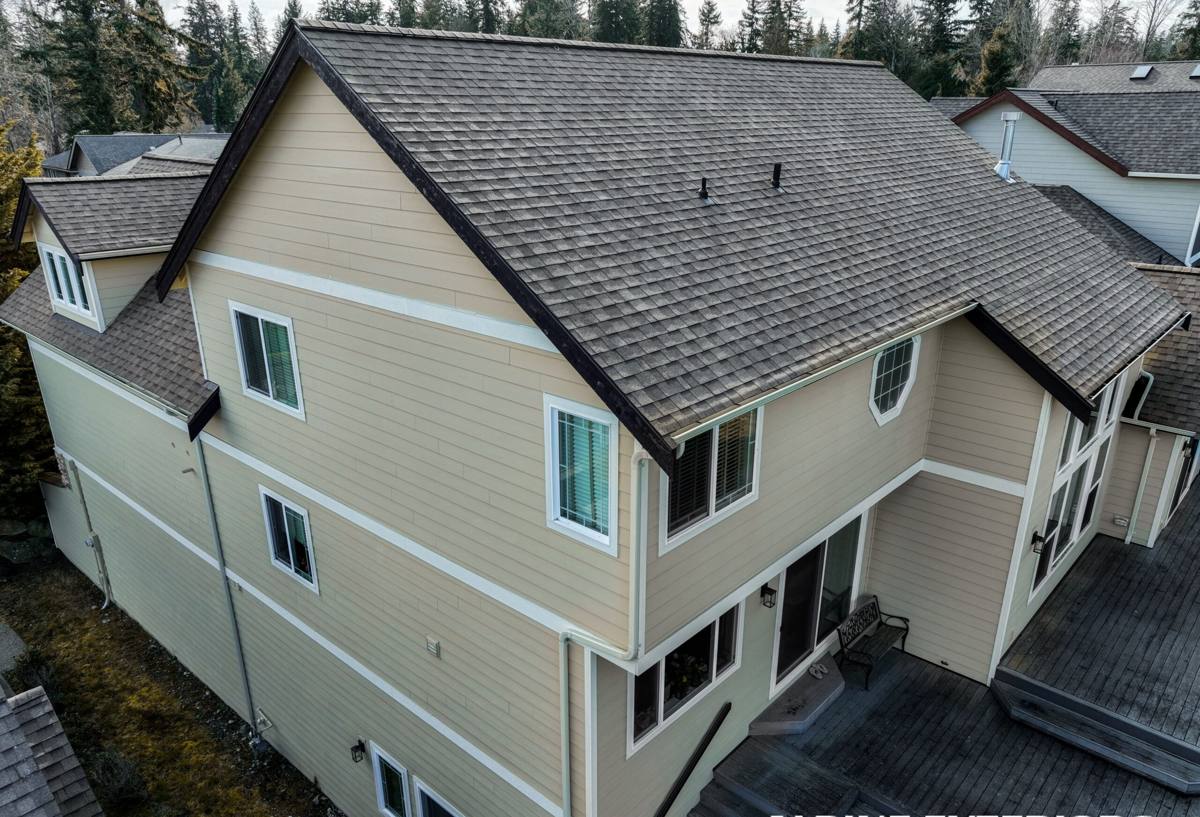
What a Deck in This Climate Actually Needs
Before we talk about decking boards or railing styles, it helps to understand what's actually working against a deck here year-round.
Salt Air and Corrosion
Proximity to the Sound and the Strait means airborne salt settles on exposed metal — fasteners, joist hangers, railing brackets — and accelerates corrosion compared to a deck built further inland. Standard hot-dip galvanized hardware can hold up fine for years, but in coastal-influenced air it corrodes noticeably faster than the same hardware would 30 miles east. This matters most where hardware is hidden inside the structure, because a corroding joist hanger you can't see is a problem that grows quietly for years before it shows up as a soft spot or a wobble.
Driving Rain and Water Intrusion
Rain here doesn't just fall straight down — wind-driven rain off the water pushes moisture sideways, into ledger connections, under railing posts, and into any gap where end grain is exposed. A deck that's fine in a light, vertical rain can still take on water at the ledger board or around post bases if flashing and sealing weren't done correctly at those specific points.
Moss, Algae, and Surface Wear
Extended damp periods with limited direct sun let moss and algae establish on decking surfaces, especially in shaded corners or under overhangs. Beyond being a slip hazard, moss holds moisture against the board surface far longer than open air would, which speeds up surface degradation on wood and can dull the finish on composite products over time if it's left unaddressed.
Choosing the Right Decking Material
There's no single "best" decking material for every home — the right choice depends on budget, how much upkeep you want to do, and how exposed the deck is to sun, shade, and moisture. Here's how the common options actually compare for a Nooksack-area install.
| Material | Upfront Cost | Maintenance | Moss/Moisture Behavior | Typical Lifespan |
|---|---|---|---|---|
| Pressure-treated fir/hem-fir | Lowest | Annual cleaning, periodic staining/sealing | Absorbs moisture; needs consistent sealing to resist rot and moss | 10-15 years with upkeep |
| Cedar | Moderate | Regular oiling/staining to hold color and resist moisture | Naturally rot-resistant but still needs sealing in this climate | 15-20 years with upkeep |
| Capped composite | Higher | Occasional washing, no staining or sealing | Doesn't absorb water or rot; moss can still grow on the surface film and needs washing off | 25-30+ years |
| PVC decking | Highest | Occasional washing only | Fully water-resistant board; surface moss/algae still needs periodic cleaning | 30+ years |
We're honest with clients that composite and PVC cost more up front but remove the annual staining cycle entirely, which matters a lot in a climate where a missed maintenance year lets moss and moisture get a head start. Wood costs less initially but only performs as advertised if the maintenance schedule actually happens — and in this climate, skipping a season of sealing shows up fast as graying, softening, or moss colonization.
Where Decks Actually Fail: Framing and Substructure
Most deck failures we get called out to fix aren't decking-board problems — they're framing problems that took years to become visible. The substructure is where a deck's real lifespan gets decided, and it's the part homeowners never see once the boards go down.
Ledger Attachment
The ledger board — where the deck attaches to the house — is the single most common failure point in wet climates. It has to be properly flashed so water sheds away from the house wall instead of running behind the ledger and rotting the rim joist. We flash every ledger connection as standard practice, not as an upgrade.
Joist Hangers and Fasteners
Given the salt air here, we use corrosion-resistant hardware rated for the fastener and lumber combination in use — mixing incompatible metals (for example, certain fastener coatings with certain treated-lumber chemicals) accelerates corrosion instead of preventing it. This is a detail that's invisible once the deck is built but determines whether the frame is solid in year three or year fifteen.
Post Bases and Footings
Wood posts set directly in or near standing water rot from the base up. We keep post bases elevated off grade with proper post base hardware, and we size and set footings to local frost and soil conditions rather than guessing at depth.
Ventilation Underneath
A deck built low to the ground with poor airflow underneath traps moisture against the framing. Where grading and height allow, we build in enough clearance and, where needed, incorporate ventilation so the frame can actually dry out between rain events instead of staying damp all winter.
How We Build a Deck, Start to Finish
- On-site assessment. We look at grade, drainage, sun/shade exposure, and how the deck will tie into the house, since these determine material and framing choices as much as style preferences do.
- Design and material selection. We walk through decking options honestly, including the maintenance trade-offs above, so you're choosing based on real cost-over-time, not just the sticker price.
- Permitting. Most new deck construction and many substantial rebuilds require a permit in Whatcom County jurisdictions. We handle that process rather than leaving it to the homeowner.
- Framing and structural work. Ledger flashing, corrosion-resistant hardware, proper footings, and correct joist spacing for the decking material chosen — this is where the deck's real durability gets built.
- Decking, railing, and finish work. Boards, railing system, stairs, and any fascia or skirting go on last, with attention to drainage gaps and end-grain sealing at cuts.
- Final walkthrough. We go over care and maintenance specific to the material you chose, so you know what upkeep actually looks like before the first wet season hits.
Railings, Stairs, and Hardware Details That Matter Here
Railings and stair stringers take direct weather exposure and see constant hand contact, so both function and durability matter. Wood railings need the same sealing discipline as wood decking, and any metal railing components should be corrosion-resistant given the salt air. Stair stringers are especially vulnerable to rot at the base where they meet grade, so we detail those connections with the same care as post bases — kept clear of standing water and off bare soil.
Fastener choice isn't a place to cut corners on a coastal-influenced deck. We use hardware and fasteners matched to the decking and framing material specified by the manufacturer or code, since mismatched metals can cause galvanic corrosion that eats hardware from the inside long before the visible boards show any wear.
Permitting and Local Considerations
Deck permitting requirements vary by height, size, and attachment to the home, and Whatcom County and local jurisdictions have their own rules on setbacks, footing depth, and guardrail height for elevated decks. Rather than having homeowners navigate that separately, we handle permit submission and inspection scheduling as part of the build so the project stays on track and the finished deck is fully compliant.
Snow load isn't a major factor most winters in the Ferndale and Nooksack area compared to higher elevations, but framing still needs to account for the region's wet-weight loading — saturated wood and standing water add real weight to a structure over a wet winter, which is another reason proper drainage and framing sizing matter more here than in a drier climate.
Keeping a Deck Healthy Through Moss Season
Whatever material you choose, a little seasonal attention goes a long way toward avoiding costly repairs down the road. Here's what we recommend to clients regardless of decking type:
- Sweep debris and standing leaves off the deck regularly through fall — trapped organic matter holds moisture and feeds moss growth.
- Wash the surface at least once a year, more often in shaded areas, to remove moss and algae before it establishes a foothold.
- Check and clear drainage gaps between boards so water isn't pooling instead of running off.
- Inspect railing posts and stair stringers annually for soft spots at ground contact points.
- For wood decking, keep to a sealing or staining schedule rather than waiting until graying is obvious — by then, moisture is already getting into the wood.
- Trim back overhanging vegetation that keeps sections of the deck shaded and damp longer than the rest.
Why Local Experience on This Project Type Matters
A deck built to a generic spec sheet can look right on day one and still fail early in a climate like this. The framing details that actually determine whether a deck lasts 15 years or 30 — ledger flashing, hardware selection, footing depth, drainage and ventilation — are exactly the details that don't show up in a walkthrough and only become obvious once something's already gone wrong underneath the boards. Building decks regularly for homes in the Ferndale and Nooksack area means those decisions are standard practice for us, not an afterthought, because we've seen firsthand what driving rain, salt air, and a long moss season do to a deck that wasn't built with them in mind.
If you're planning a new deck or need an honest look at whether an existing one is sound, we're happy to come out, walk the site, and give you a straight assessment — no pressure, no upsell. Reach out using the form below for a free estimate.