 Ferndale Siding
 Decks in Point Roberts Take a Different Kind of Beating
Point Roberts sits out on its own point of land in Whatcom County, surrounded on three sides by water. That location is exactly what makes it a great place to have a deck — and exactly why decks there wear out faster than they do a few miles inland. Salt-laden air moves through constantly, wind-driven rain gets pushed sideways into ledger boards and railing joints, and the long, wet Pacific Northwest fall-through-spring stretch gives moss and algae months to take hold on any surface that doesn't dry out quickly. A deck built for a generic climate chart doesn't hold up the same way out here.
We work on decks across Ferndale and the surrounding Whatcom County waterfront communities, and Point Roberts jobs get treated as their own category — not a smaller version of a Ferndale repair. The fasteners, the flashing details, and the inspection priorities are different because the exposure is different.
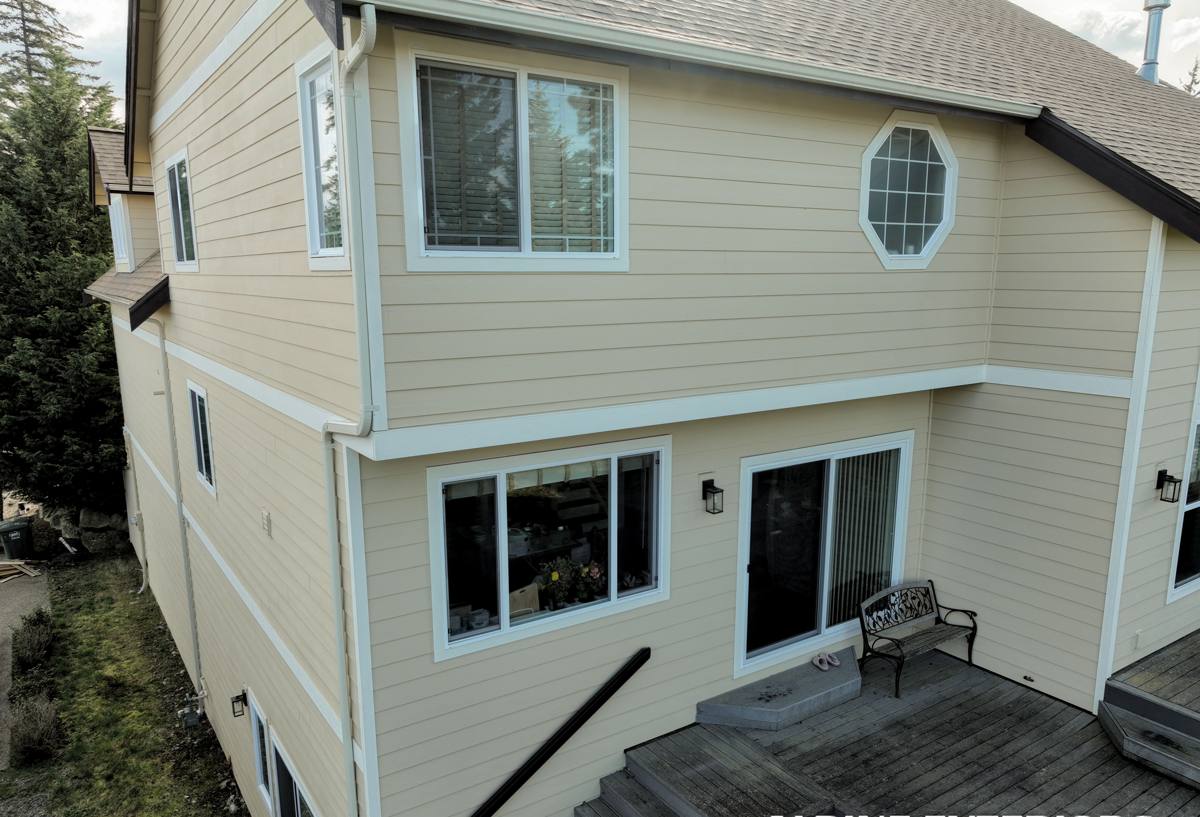
What Salt Air, Rain, and Moss Actually Do to a Deck
Salt Air and Metal Fasteners
Airborne salt accelerates corrosion on anything metal — nails, screws, joist hangers, bolts, and post bases. Standard galvanized hardware that would last decades in a drier inland setting can start rusting and losing holding strength years earlier near saltwater. The failure is often invisible until you're standing on the deck and a board flexes more than it should, or a railing post has a little more give than it used to.
Driving Rain and Ledger Rot
The ledger board — where the deck attaches to the house — is the single most important structural connection on most decks, and it's also the most common place we find hidden rot. Wind-driven rain gets forced up and behind poorly flashed ledger boards, and once water gets between the ledger and the house wall, it can sit there for months without any visible sign from outside.
Moss, Algae, and Trapped Moisture
A long moss season doesn't just make a deck look dirty — it changes how the deck dries. Moss and algae hold moisture against the wood surface long after a normal dry spell would have evaporated it. On horizontal surfaces like deck boards and stair treads, that constant dampness accelerates wood decay and turns boards slippery, which is a real safety issue on stairs and ramps.
Signs a Point Roberts Deck Needs Repair
- Boards that feel spongy, soft, or springy underfoot, especially near the house or at board ends
- Rust streaking below screw heads, joist hangers, or metal connectors
- Gaps or dark staining where the deck meets the house siding or ledger board
- Railing posts or balusters that wiggle more than a firm push should allow
- Persistent green or black growth on stair treads or shaded sections that never fully dries
- Stair stringers or support posts showing cracking, splitting, or visible decay at ground contact points
- Fasteners backing out or heads that have sheared off from corrosion
Any one of these on its own might be minor. Several at once, especially anywhere near the ledger or the main support posts, usually means it's time for a real inspection rather than a patch job.
What an Honest Repair Actually Involves
A lot of deck "repair" work in coastal areas is really just replacing what's visible and leaving the hidden problem in place. We start every job the same way: pull back enough decking or trim to see the framing, hardware, and ledger connection underneath before deciding what actually needs to happen.
Structural Inspection First
Before we touch decking boards, we check the ledger flashing, the condition of the joists and beams, post bases, and the hardware holding it all together. This is where a repair either solves the real problem or just delays it.
Fastener and Hardware Upgrades
Where corrosion is the root issue, we replace failing hardware with fasteners and connectors rated for coastal exposure rather than putting the same grade of hardware back in and expecting a different result.
Proper Ledger Flashing
If the ledger board shows signs of past water intrusion, correcting the flashing detail — not just resealing the surface — is the difference between a repair that lasts and one you'll be calling us about again in a couple of years.
Board Replacement and Surface Work
Individual boards, stair treads, or railing sections that are structurally sound but worn, cupped, or moss-stained get replaced or refinished as a separate line item from structural repair, so you're not paying to fix framing that's actually fine.
Material Choices for a Salt-Air, High-Moisture Climate
What we recommend for a repair depends on what's already there, your budget, and how much upkeep you want going forward. There's no single "best" material — there are trade-offs.
| Material | How It Handles Salt Air & Rain | Moss Resistance | Maintenance |
|---|---|---|---|
| Pressure-treated lumber | Good if fasteners and flashing are upgraded to match | Needs regular cleaning; grows moss like any bare wood | Periodic sealing/staining |
| Cedar | Naturally decay-resistant but softer surface wears faster in driving rain | Still needs cleaning; darkens and can host moss without care | Higher — regular treatment to hold appearance and resistance |
| Capped composite decking | Excellent — doesn't absorb moisture the way wood does | Better; smooth cap sheds moss more easily than open wood grain | Low — occasional washing |
| Stainless or coated coastal-grade fasteners | Best available corrosion resistance for this environment | Not applicable | None beyond visual checks |
We're upfront about why we lean toward coastal-rated hardware and, where budget allows, capped composite for high-exposure sections: it's a maintenance and longevity call, not a knock on wood decking done right. A well-built, well-flashed wood deck with the correct fasteners can absolutely hold up here — it just asks more of the homeowner in upkeep than composite does.
Our Repair Process
- On-site inspection — we look at the ledger, framing, hardware, and surface separately, not just the parts you can see from the yard.
- Written scope — you get a clear breakdown of what's structural versus cosmetic, and why, before any work starts.
- Repair or replace, in that order — we fix what can be fixed correctly and only recommend full section replacement where repair genuinely won't hold.
- Hardware and flashing correction — this is the step most often skipped elsewhere, and the one that determines how long the repair actually lasts.
- Final walk-through — we check the whole deck, not just the repaired section, so nothing gets missed.
Why a Crew That Already Works Point Roberts Matters
Point Roberts is a unique spot logistically — it's part of Whatcom County, but reaching it means routing through the border. A contractor who doesn't already account for that in scheduling can turn a simple repair into a drawn-out back-and-forth of missed appointments and delayed material deliveries. We plan Point Roberts jobs around that reality from the start: materials, tools, and crew time are organized so the trip is productive, not wasted.
There's also a practical knowledge piece. A crew that's repaired multiple decks in this specific exposure knows where the ledger flashing tends to fail first, which hardware grades actually hold up, and which shaded corners of a deck will keep growing moss no matter what you do to the rest of it. That's the kind of thing you only learn by doing the work here repeatedly, not by reading a general climate chart.
What It Typically Costs — and Why It Varies
Deck repair pricing depends heavily on what's found once we open things up, but the main cost drivers are consistent from job to job.
| Factor | Why It Moves the Price |
|---|---|
| Ledger board condition | Hidden rot behind the ledger means more demolition and flashing correction, not just a surface fix |
| Extent of hardware corrosion | Full hardware replacement across a deck costs more than spot repairs to a few connectors |
| Decking material chosen for replacement sections | Composite costs more upfront than wood but reduces future maintenance calls |
| Structural vs. cosmetic scope | Framing and post repairs are more involved than replacing worn surface boards |
| Deck size and accessibility | Larger decks and difficult site access add labor time |
We won't quote a number over the phone for a repair with unknown hidden damage — that's how homeowners end up with surprise costs mid-project. We give you a real number after we've actually looked underneath.
Simple Maintenance That Extends the Repair
- Sweep and rinse the deck surface regularly during the wet season to keep moss from establishing
- Keep gutters and downspouts clear so runoff isn't dumping extra water directly onto the deck or ledger area
- Check railing posts and stair treads for movement a couple of times a year
- Trim back vegetation that's shading sections of the deck and keeping them from drying out
- Reseal or refinish wood decking on the schedule the product actually calls for, not just when it looks bad
If you own a deck in Point Roberts and something feels off — soft spots, rust stains, stubborn moss, or a railing that's a little too loose — it's worth having someone look at it before the next wet season makes the problem bigger. We offer a free, no-pressure estimate; use the form below to get one scheduled.