 Ferndale Siding
 Why Decks Near Lynden Wear Out Faster Than the Manufacturer's Warranty Suggests
Lynden sits inland from Ferndale but still gets the same weather pattern that defines exterior work across Whatcom County: long stretches of driving rain off the Pacific, salt-laden air pushing in from the Strait of Georgia and Bellingham Bay, and a moss season that can run eight months or more in a shaded yard. None of that is dramatic on its own. What it does is compound. A deck built with standard hardware, no real drainage plan, and butt-jointed decking will look fine for two or three years and then fail all at once — soft joists, a spongy ledger connection, fasteners bleeding rust through the boards.
Replacement, done correctly, is not just swapping old boards for new ones. It's rebuilding the parts of the deck you can't see so the parts you can see actually last through another twenty Whatcom County winters.
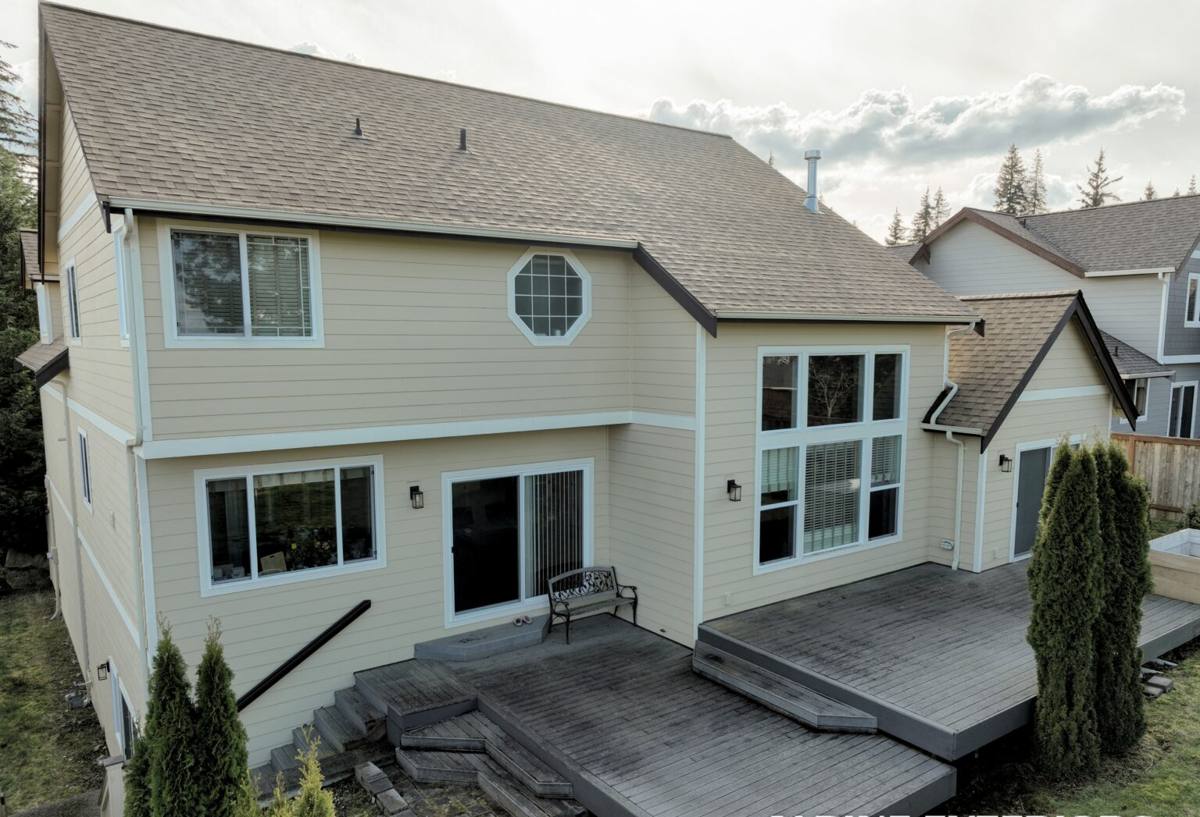
Signs a Lynden Deck Needs Replacement, Not a Repair
Homeowners often call us thinking they need a few boards swapped, and sometimes that's true. But certain signs mean the deck's structure has already been compromised by years of moisture exposure, and patching individual boards just delays a bigger problem.
- Soft or spongy spots when you walk across the deck, especially near the house or at board ends
- Persistent black or green staining that comes back within weeks of cleaning
- Rust streaking below fastener heads or around joist hangers
- Gaps opening between decking boards that weren't there a couple years ago
- A ledger board (where the deck attaches to the house) that feels loose or shows water staining on the siding above it
- Railing posts that wiggle at the base — often a sign the post-to-frame connection has rotted
- Visible daylight or soft wood where support posts meet footings
Any one of these on its own might be repairable. Two or three together, especially on a deck more than 12-15 years old, usually means the structure is past the point where board-by-board repair makes sense.
What a Correct Deck Replacement Actually Involves
A deck is a system — ledger, framing, footings, decking, railing, flashing — and each part has to work with the others to shed water instead of trapping it. Whatcom County's rain volume makes moisture management the single most important part of the job, more than the decking material you eventually choose.
Ledger and Flashing
The ledger board bolts the deck to your house, and it's the single most common point of hidden rot on older decks in this region. A correct replacement means removing the old ledger, inspecting and repairing any rot in the house rim joist behind it, and installing proper flashing that directs water out and away rather than letting it wick behind the siding.
Framing and Fasteners
Joists, beams, and posts should be rated for exterior/ground-contact use where applicable, with corrosion-resistant hardware throughout. Standard interior-grade screws and untreated hangers rust out fast in salt-influenced coastal air — that's a known trade-off, not a knock on any one brand, and it's why we spec hardware rated for the exposure this region actually gets.
Footings
Footings need to sit below frost depth and bear on undisturbed, well-draining soil. Whatcom County's clay-heavy soils in places hold water longer than sandy soil, which matters for footing performance and for how quickly ground moisture works its way up into posts.
Decking Surface
Whatever material you choose, board spacing and airflow underneath the deck matter as much as the board itself. Tight spacing traps moisture and speeds up moss growth; proper gapping lets the deck actually dry out between rain events, which in this climate might mean a few dry days in a normal week.
Decking Material Options for This Climate
There's no single "right" material — it's a trade-off between upfront cost, maintenance commitment, and how the material behaves in sustained moisture and moss exposure. Here's how the common options stack up for a Lynden or Ferndale property.
| Material | Moisture Behavior | Maintenance | Typical Lifespan |
|---|---|---|---|
| Pressure-treated wood | Resists rot when properly sealed, but end grain and fastener holes are vulnerable if the seal isn't maintained | Annual cleaning and resealing recommended in this climate | 10-20 years, shorter if maintenance lapses |
| Cedar | Naturally rot-resistant but softer; moss and mildew still take hold without upkeep | Periodic cleaning and oil/stain | 15-20 years with upkeep |
| Capped composite | Strong moisture resistance; the cap resists staining and moss adhesion better than wood grain | Occasional washing, no sealing or staining | 25-30+ years, per manufacturer warranty |
| Uncapped composite | More moisture-permeable than capped composite; can hold surface moisture and stain over time | More frequent cleaning than capped composite | 15-25 years, product-dependent |
We'll walk through these trade-offs against your budget and how much upkeep you actually want to commit to — there's no wrong answer, just different maintenance schedules.
Where Most Deck Failures Actually Start
In our experience working decks around Ferndale and Lynden, failure almost never starts at the visible decking surface first. It starts underneath, at connections that trap water instead of shedding it.
The Ledger-to-House Connection
This is the number one failure point. Without proper flashing, water runs down the siding, behind the ledger, and sits against the house's rim joist — invisible until the deck starts to feel loose or the siding above shows staining.
Joist Hangers and Fastener Corrosion
Salt-influenced air accelerates corrosion on any hardware that isn't rated for it. Corroded hangers lose holding strength gradually, which is part of why a deck can feel fine right up until it doesn't.
Post Bases and Footing Contact
Posts set directly in or near standing water, or without a proper base connector lifting the wood off the concrete, rot from the bottom up — often the last thing a homeowner notices because it's hidden by railing and skirting.
Our Deck Replacement Process
- On-site assessment — we inspect the ledger, framing, footings, and decking to determine what's actually driving the failure, not just what's visible from the top.
- Scope and material discussion — we walk through decking material options, layout, and any structural repairs needed, with a written scope before work starts.
- Demolition and disposal — old decking, framing, and hardware removed, with an inspection of the house connection point once it's exposed.
- Structural rebuild — ledger flashing, framing, and footings brought up to a standard that accounts for this region's rain volume and moss exposure, not just code minimums.
- Decking and railing installation — proper board spacing, fastening, and railing attachment for the material chosen.
- Final walkthrough — we go over basic maintenance for the specific material installed so you know what upkeep actually looks like going forward.
Cost Factors for a Lynden Deck Replacement
Every deck is different, so we don't publish flat pricing, but the main cost drivers are consistent across projects in this area.
| Factor | Why It Affects Cost |
|---|---|
| Deck size and height | Larger square footage and multi-level decks require more material and labor, and taller decks add framing complexity |
| Decking material | Pressure-treated wood is the lowest upfront cost; capped composite carries a higher material cost but less ongoing maintenance spend |
| Structural condition | Rot found in the ledger, rim joist, or footings during demo adds repair scope that a surface-level quote can't predict |
| Railing and stairs | Custom railing, cable railing, or multiple stair runs add labor and material beyond the deck surface itself |
| Site access | Tight side-yard access or a deck built over a slope can add time for material handling and equipment |
A firm number only comes after we've actually seen the deck and, in many cases, opened up a section to check the framing condition — that's part of why we start with an on-site look rather than a phone estimate.
Why Hire a Crew That Already Works in Lynden and Ferndale
A crew that works this specific part of Whatcom County regularly already knows the things that generic online guides don't cover: how local soil drains near a given site, what county permitting on a deck rebuild typically requires, and which flashing and fastener specs actually hold up against this area's rain and salt exposure rather than a fair-weather climate zone's version of "exterior-rated." That local pattern recognition shortens the assessment phase and avoids surprises mid-project — we're not learning this region's climate on your job.
We also stand behind our own work locally, which matters if a warranty issue or a settling footing needs a follow-up visit a few years down the road. A contractor based two counties away has less incentive to make that trip.
Keeping a New Deck Looking Good Through Whatcom County Winters
Whatever material you choose, a few habits extend the life of a deck replacement in this climate:
- Sweep debris and standing leaves off the surface regularly — trapped organic matter is what feeds moss and mildew
- Rinse or wash the deck a couple times a year, more often in shaded areas that stay damp longer
- Check railing posts and stair connections annually for looseness
- Keep gutters and downspouts near the deck clear so runoff isn't dumping directly onto the structure
- Reseal or restain wood decking on the schedule the product actually calls for, not just when it starts to look gray
If you're weighing a deck replacement in Lynden or anywhere around Ferndale, we're happy to take a look and give you a straight assessment of what your current deck needs and what it would take to rebuild it right. The estimate is free, there's no pressure, and you'll get a clear answer either way — just fill out the form below.