 Ferndale Siding
 Why Sudden Valley Decks Wear Out Faster Than You'd Expect
Sudden Valley sits close to Lake Whatcom, tucked into tree cover on sloped lots that don't get much direct sun or wind exposure through a big chunk of the year. That combination is rough on decks in a way that's easy to underestimate. Moisture from the lake and surrounding forest lingers in the wood longer than it would on an open, breezy lot. Add Whatcom County's long stretch of damp, overcast months, and you get a slow, steady cycle of wetting and drying that most deck materials aren't built to handle for 20-plus years without help.
We see the same failure pattern on a lot of Sudden Valley decks: framing that's still structurally sound getting undermined by decking boards that have cupped, splintered, or gone soft at the fastener points, plus ledger and post-base areas where trapped moisture has done quiet damage for years before anyone noticed. A deck replacement out here isn't just about swapping old boards for new ones — it's about correcting the moisture path that wore the old deck out in the first place.
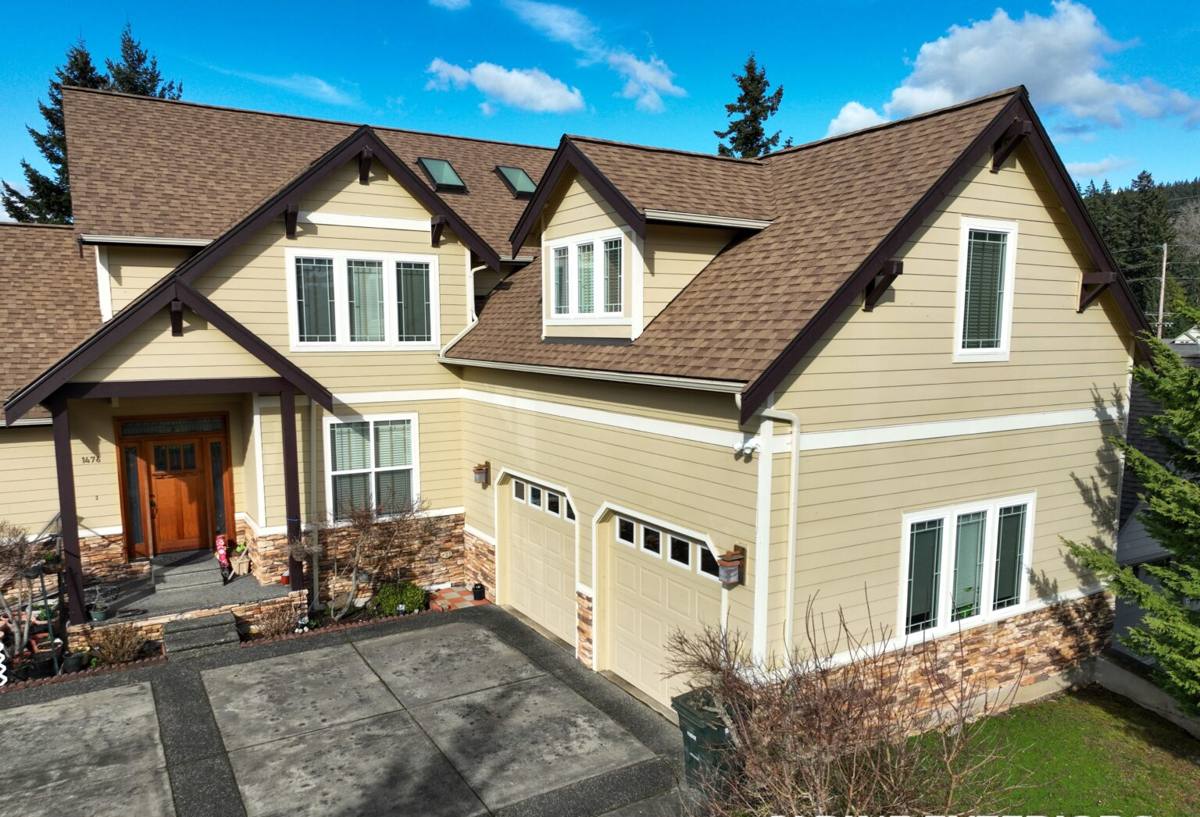
What the Regional Climate Actually Does to a Deck
Ferndale and the surrounding Whatcom County area deal with a mix of driving rain off the Strait of Georgia, salt-tinged marine air, and a moss season that can run from fall through spring. On a shaded, lake-adjacent lot like Sudden Valley, all three show up in the deck itself:
- Driving rain gets pushed sideways under railings and against ledger boards, finding gaps that a flat-roof rain never would.
- Salt air accelerates corrosion on exposed fasteners, hidden clips, and any hardware that isn't rated for coastal exposure.
- Moss and algae take hold on shaded decking and stair treads, turning them slick and holding moisture against the wood surface long after a storm has passed.
- Low sun angle and tree canopy mean parts of a Sudden Valley deck may stay damp for days after a rain event, especially on the north or lake-facing side of a house.
None of this means a deck can't last — it means it has to be built and maintained with these specific conditions in mind, not generic drier-climate assumptions.
Signs Your Sudden Valley Deck Needs Replacing, Not Patching
Repairs make sense when the damage is isolated. Replacement makes sense when the problems are systemic. Here's how we tell the difference on a typical inspection:
| Sign | Usually a Repair | Usually Full Replacement |
|---|---|---|
| Soft or spongy decking boards | A few isolated boards | Spread across multiple sections |
| Ledger board condition | Surface staining only | Soft wood, rust streaks, or gaps at the house connection |
| Post and beam condition | Minor surface checking | Visible rot, insect damage, or movement under load |
| Fastener condition | A few rusted screws or nails | Widespread corrosion, especially near the lake side |
| Railings | Loose but structurally intact | Wobble at the base or visible wood decay in posts |
| Moss and staining | Surface only, cleans off | Ingrained, returns quickly after cleaning |
If your deck is showing two or more of the "replacement" signs, patching individual boards is usually a short-term fix that costs money now and again in a year or two.
What a Correct Deck Replacement Involves
Starting Below the Surface
The visible decking is the easy part. The work that actually determines how long a new deck lasts happens underneath: footings, posts, beams, joists, and — critically for houses in this area — the ledger board connection to the house. A ledger that isn't flashed correctly is one of the most common reasons decks fail early on lake-adjacent, high-moisture lots, so we treat that connection as a priority, not an afterthought.
Framing and Fasteners Built for the Conditions
Given the salt air and near-constant moisture cycling in Sudden Valley, we spec fasteners and structural hardware rated for coastal or wet-climate exposure rather than standard interior-grade hardware. It costs a bit more upfront and saves you from the corrosion-driven failures that show up in decks built with generic materials.
Decking Material Choice
There's no single "best" decking material — there's a best fit for your lot, your budget, and how much upkeep you want to do. We walk homeowners through the honest trade-offs:
| Material | Moss/Moisture Behavior | Maintenance | Notes for Shaded Lots |
|---|---|---|---|
| Pressure-treated wood | Prone to moss in shade; needs sealing | Annual cleaning, periodic sealing | Lowest upfront cost, highest upkeep here |
| Cedar | Naturally moisture-resistant, still needs care | Regular cleaning and refinishing | Good look, but shaded areas still need attention |
| Composite decking | Resists moisture absorption; can still grow surface algae | Occasional washing, no sealing | Strong fit for shaded, damp lots like much of Sudden Valley |
| PVC decking | Doesn't absorb moisture at all | Lowest maintenance | Best moss resistance, higher material cost |
We install and stand behind whatever material fits your situation — our job is to lay out the real maintenance burden of each option honestly, not steer you toward whatever's easiest for us to install.
Drainage and Ventilation
On sloped Sudden Valley lots, water management under the deck matters as much as the decking on top. We grade and flash so water sheds away from the house and framing instead of pooling underneath, and we leave enough airflow beneath the structure so the framing can actually dry out between rain events instead of staying damp all winter.
Our Deck Replacement Process
- On-site assessment. We inspect framing, footings, the ledger connection, and hardware condition — not just what's visible from the top.
- Honest scope conversation. We tell you what's salvageable versus what needs to come out, and why, before any demo starts.
- Material selection. We go over decking and railing options against your budget and how much maintenance you want long-term.
- Demo and structural rebuild. Old decking, and any compromised framing or connections, come out. Footings, posts, and beams get corrected or rebuilt to current standards.
- Flashing and drainage detailing. Ledger flashing, water diversion, and ventilation get built in before decking goes down — this step is what separates a deck that lasts from one that doesn't.
- Decking, railing, and stair installation. Finish work is installed to spec, with fastener choices matched to the coastal, high-moisture conditions of the area.
- Final walkthrough. We go over the finished deck with you and cover any material-specific care it needs going forward.
Why a Crew That Already Works Sudden Valley Matters
Sudden Valley has its own quirks — sloped access, tree-shaded lots, lake-proximity moisture, and in some cases community guidelines on exterior work. A crew that's already worked in the neighborhood knows how to plan around narrow driveways and grade changes, understands which materials actually hold up under the tree canopy here versus in open Ferndale lots, and isn't learning the area's moss and drainage patterns on your project. That familiarity shows up in fewer surprises during demo and a build that's suited to your specific lot from the start, not adapted after the fact.
What to Check Before Hiring Anyone for a Deck Replacement
- Washington state contractor license and current liability insurance, verifiable on request
- A written scope that specifies framing and hardware, not just decking material
- Explicit plan for ledger flashing and under-deck drainage — not just "we'll seal it"
- Fastener and hardware specs suited to marine/coastal exposure, not generic interior-grade
- Local references or completed work in Whatcom County, ideally near the lake
- A clear permit plan — most deck rebuilds in this area require one, and skipping it is a red flag
Maintaining Your New Deck Through the Moss Season
Even a well-built deck needs some seasonal attention in this climate. A yearly rinse and light scrub before the wet season sets in, keeping gutters and nearby drainage clear so runoff isn't dumping onto the deck, and trimming back overhanging branches where possible all go a long way toward keeping moss from taking hold. If you chose a wood decking material, plan on periodic sealing; composite and PVC decking need far less, which is part of why we bring it up during material selection rather than after the fact.
Get a Straight Answer About Your Deck
If your deck is showing soft spots, persistent moss, or hardware that's clearly corroding, it's worth having someone look at it before another wet season goes by. We offer free, no-pressure estimates for Sudden Valley homeowners — come take a look, tell you honestly whether you're looking at a repair or a full replacement, and give you a straightforward plan either way. Use the form below to get started.