 Ferndale Siding
 Roofing in Everson Isn't the Same Job as Roofing Somewhere Dry
Everson sits in the Nooksack River lowlands east of Ferndale, and that location shapes what a roof has to survive here. Marine air pushes inland off Bellingham Bay and the Puget Sound corridor, bringing salt-laden moisture that settles on shingles and metal alike. Add the driving, sideways rain that comes with fall and winter storms off the Pacific, plus a long stretch of overcast, humid months that never quite dry the roof deck out, and you have conditions that are hard on any roofing material — especially one installed without attention to detail.
Asphalt shingles can absolutely handle this climate. They're the most common roofing material in Whatcom County for good reason: proven performance, reasonable cost, and a wide range of products built for wet-region durability. But "asphalt shingles" isn't a single decision — it's a system of underlayment, ventilation, flashing, and shingle selection that either works together or fails together. A roof that looks fine from the ground can still be losing the fight against moss, trapped moisture, and wind-driven rain underneath the surface.
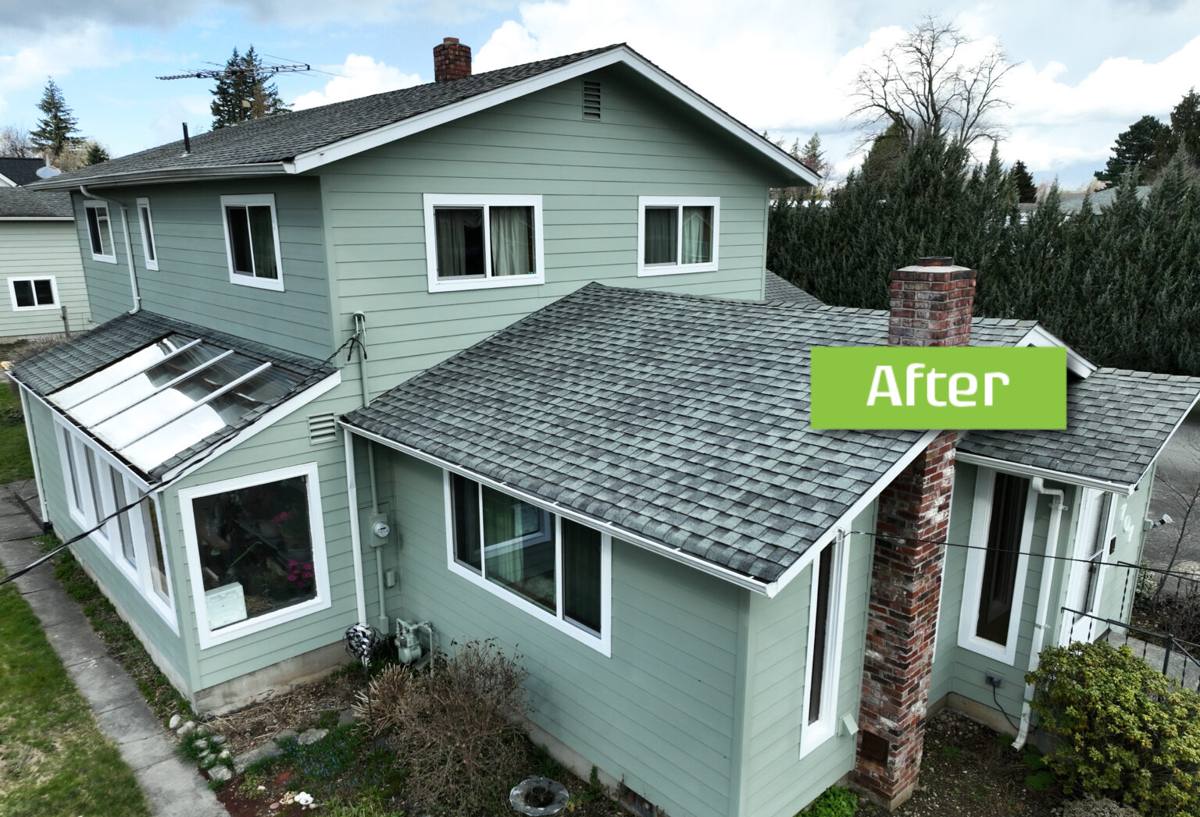
Signs an Everson Roof Needs Attention
Most asphalt shingle roofs don't fail all at once — they show warning signs for months or years before a leak shows up inside the house. In our experience working on homes throughout Ferndale and Everson, these are the signs worth acting on:
- Granules collecting in gutters or at the base of downspouts, which signals the shingles' protective surface is wearing thin
- Shingle edges curling or cupping, especially on south- and west-facing slopes that get the most sun and heat cycling
- Dark streaking or thick moss growth, particularly on north-facing slopes and anywhere shaded by trees
- Soft spots or sagging when walked on, which can point to a compromised deck underneath
- Daylight visible through the attic roof boards, or damp insulation after a heavy rain
- Missing or lifted shingles after a windstorm, which exposes the underlayment to direct weather
Any one of these on its own might not mean a full replacement. But moss combined with granule loss combined with an aging roof usually does — and the earlier that's caught, the less damage spreads to the decking and framing underneath.
What a Correct Asphalt Shingle Installation Actually Involves
Underlayment and Ice/Water Protection
In a climate that gets sustained, driving rain, the underlayment layer under the shingles matters as much as the shingles themselves. We use synthetic underlayment for its tear resistance and water shedding, with self-adhering ice-and-water barrier at eaves, valleys, and any roof-to-wall transitions — the spots where wind-driven rain is most likely to find a way in. Skipping or skimping on this layer is one of the most common shortcuts we see on roofs that fail early.
Ventilation
A hot, poorly ventilated attic in summer and a damp, poorly ventilated one in winter both shorten shingle life and encourage moss and mildew. Correct installation balances intake ventilation at the eaves with exhaust at the ridge, sized to the attic's actual square footage — not just whatever vent happened to be there before.
Flashing
Flashing around chimneys, skylights, plumbing vents, and roof-to-wall intersections is where most leaks actually originate, not in the open field of shingles. We replace flashing as part of a re-roof rather than reusing old, rusted, or improperly lapped pieces, because flashing that's already failing will fail again under new shingles.
Nailing and Fastening
Manufacturer nailing patterns exist for a reason, and in a windy river valley like Everson's, under-nailed or misplaced fasteners are a direct cause of blow-offs. We follow the shingle manufacturer's specified nail count and placement, which also keeps the manufacturer's wind warranty valid.
Choosing the Right Shingle for This Climate
Not every asphalt shingle product is built the same way, and in a region with heavy moss pressure and constant moisture, that difference shows up faster than it would in a drier climate.
| Shingle Type | Typical Lifespan | How It Handles Moss & Moisture | Best Fit |
|---|---|---|---|
| 3-tab shingles | 15-20 years | Flat profile sheds water fine but offers less algae resistance without added treatment | Budget-conscious re-roofs, secondary structures |
| Architectural (dimensional) shingles | 25-30+ years | Thicker, layered profile with better wind resistance and usually algae-resistant granules | Most primary homes in this climate |
| Algae-resistant (AR) shingles | Same as base product | Copper- or zinc-infused granules actively resist the dark streaking common on shaded, north-facing slopes | Roofs with heavy tree cover or persistent moss history |
| Impact-rated (Class 4) shingles | Varies by manufacturer | Reinforced mat resists granule loss from wind-driven debris and hail | Homes wanting the longest practical service life, sometimes with insurance discounts |
For most Everson homes, we recommend architectural shingles with algae-resistant granules as the baseline — the upgrade cost over 3-tab is modest relative to the additional years of service and reduced moss maintenance.
Moss: The Recurring Problem Most Roofs Never Actually Solve
Moss on a roof isn't just cosmetic. As it spreads, it holds moisture against the shingle surface, lifts shingle edges as it grows, and accelerates granule loss underneath the growth. Pressure washing moss off removes granules along with it and can shorten a roof's remaining life rather than extend it.
The better approach is prevention built into the installation: algae-resistant shingles, zinc or copper strips at the ridge on shaded roofs, and keeping overhanging branches trimmed back so the roof gets more sun and airflow. None of these eliminate moss risk entirely in a climate this wet, but together they slow it down significantly compared to a roof with no moss strategy at all.
Our Process, Start to Finish
- Roof inspection and estimate — we walk the roof (weather permitting) or inspect from ladder and attic access, check for deck soft spots, and give you a written, itemized estimate with no pressure to decide on the spot.
- Material selection — we go over shingle options, colors, and any upgrades like algae resistance based on your roof's sun/shade exposure and budget.
- Scheduling around the weather — Whatcom County's wet season limits install windows, so we plan tear-off and dry-in around forecasted breaks in the weather rather than rushing a roof that needs to stay dry during the work.
- Tear-off and deck inspection — old roofing comes off down to the deck, and any rotted or soft sheathing is identified and replaced before anything new goes down.
- Underlayment, flashing, and shingle installation — installed to manufacturer specification, not shortcuts.
- Cleanup and final walkthrough — magnetic sweep for nails, debris hauled off, and a walkthrough so you can see the finished work before we consider the job done.
What Drives the Cost of a Shingle Roof in Everson
| Factor | Why It Matters Here |
|---|---|
| Roof size and pitch | Steeper roofs take longer and require more safety setup, affecting labor cost |
| Deck condition | Rotted sheathing found during tear-off adds material and labor that couldn't be quoted sight-unseen |
| Shingle tier | 3-tab, standard architectural, and algae-resistant or impact-rated products carry different material costs |
| Number of penetrations | Chimneys, skylights, and multiple vents each need individual flashing work |
| Tear-off layers | Removing an existing roof over a prior layer takes more time and disposal cost than a single-layer tear-off |
| Access and staging | Tree cover, driveway access, and roof height affect how equipment and materials get to the roof |
We don't quote a job until we've actually looked at the roof — anything estimated purely over the phone is a guess, and guesses turn into change orders later.
Why a Local Crew Matters for This Kind of Work
A roofing crew based in Whatcom County and already working in Ferndale and Everson knows how this specific climate treats a roof over time — which slopes tend to moss out first, how much ventilation a typical attic here actually needs, and how to schedule tear-offs around a wet forecast instead of gambling on an exposed deck overnight. That local pattern recognition doesn't replace a proper inspection, but it does mean fewer surprises and a roof that's built for the weather it will actually face, not generic weather.
Being local also matters after the job is done. If a question comes up during the manufacturer's warranty period, or a storm causes damage down the road, you're calling a crew that's still working in your area and stands behind its own installation.
Maintaining Your Roof Once It's Installed
- Clear gutters and downspouts at least twice a year so water isn't backing up under the eaves
- Trim back branches that overhang the roof to reduce shade, debris, and moss pressure
- Have the attic checked periodically for proper airflow and any signs of moisture
- Look at the roof after major windstorms for lifted or missing shingles
- Avoid pressure washing shingles — it strips granules and shortens the roof's life
- Address small leaks or flashing issues promptly rather than waiting for them to spread
A well-installed asphalt shingle roof in this climate should give you decades of reliable service, but it still benefits from occasional attention rather than being ignored until something goes wrong.
If your Everson home's roof is showing its age, or you just want an honest read on how many years it has left, we're happy to take a look. Fill out the form below for a free, no-pressure estimate.