 Ferndale Siding
 Siding Installation for Everson Homes
Everson sits inland along the Nooksack River in the farm country east of Ferndale, and while it doesn't face the same direct salt-air exposure as homes closer to Bellingham Bay, it gets the same driving rain and the same long, sluggish moss season that shapes exterior work across Whatcom County. Add in the humidity that settles over low-lying river-valley ground and doesn't burn off as fast as it would on higher terrain, and you've got a climate that's genuinely hard on siding that isn't installed correctly the first time. We install James Hardie fiber cement siding — exclusively — and this page is about what that looks like for a home specifically in Everson.
This isn't a general overview of siding options. It's about one service, one material, and one area: what Everson's climate does to a home's exterior over the years, what a correct James Hardie installation actually requires, and why it matters that the crew doing the work already knows this part of the county.
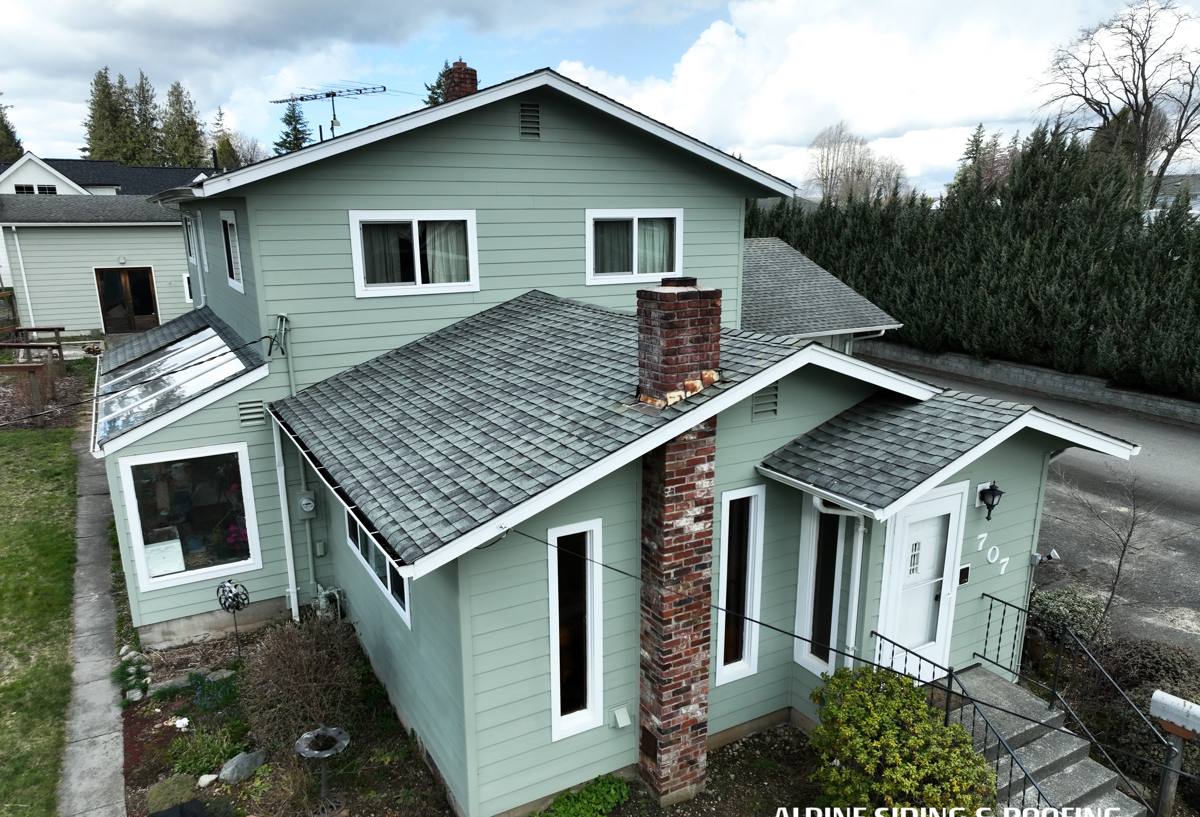
What Everson's Climate Does to Siding Over Time
Driving Rain, Not Just Rainfall
Whatcom County doesn't get gentle, straight-down rain most of the year — storms move through with wind behind them, and that pushes water sideways into walls, seams, and trim instead of letting it run cleanly off. Siding that's lapped correctly and flashed at every penetration sheds that kind of rain without issue. Siding that's caulked together and hoping for the best doesn't, and on an Everson property that gets this pattern for months at a stretch, the difference shows up as staining and soft trim well before it shows up as anything more serious.
A Moss and Algae Season That Runs Long
Mild temperatures, sustained dampness, and plenty of shaded wall area on a typical home add up to a moss and algae season that stretches across much of the year here. It tends to start on north-facing walls and anywhere tree cover keeps a surface from drying out between storms. Left alone, that growth holds moisture directly against the siding, which is exactly the condition that eventually leads to rot underneath — not a cosmetic problem so much as an early warning sign.
River-Valley Humidity
Because Everson sits in the Nooksack River valley on relatively flat, low-lying ground, moisture tends to linger in the air and in the soil longer than it would on a well-drained hillside lot. That affects more than curb appeal — it affects how much clearance siding needs at grade, how a wall assembly is supposed to dry out after a wet stretch, and how much margin for error a given installation detail actually has. A wall system that works fine on a breezy, well-drained site can behave differently on a low, damp one.
Seasonal Temperature Swings
Everson sees colder winter mornings and sharper frost than milder spots right on the water, which means any moisture that's already worked its way into a wall assembly gets a freeze-thaw cycle added on top of it. Water that's soaked into a porous or poorly sealed material and then freezes expands, and that's how a small, ignorable moisture problem turns into a cracked or failed section of siding a year or two later.
Why We Install Only James Hardie Fiber Cement
We don't offer a menu of siding brands for an Everson job. We install James Hardie fiber cement, full stop, and that's a decision we made after years of seeing which materials actually hold up under sustained Whatcom County moisture and which ones turn into a maintenance project within a decade. For a property dealing with driving rain, a long moss season, and river-valley humidity, here's what makes the difference:
- Non-combustible core: Fiber cement won't feed a fire the way wood-based siding products can, which matters for both household safety and insurance underwriting.
- Factory-applied ColorPlus finish: The color is baked on in a controlled factory process rather than brushed on in the field, so it resists fading, chalking, and moisture intrusion far longer than site-applied paint would.
- Climate-engineered HZ formulations: Hardie builds different product formulations for different climate zones, including versions engineered for regions with sustained moisture exposure — a real match for river-valley conditions like Everson's.
- Dimensional stability: Fiber cement doesn't swell, cup, or warp the way engineered wood siding can after repeated wet-season moisture cycles, which matters more here given how long that wet season actually runs.
- A warranty that means something: Hardie backs its products with a strong, transferable warranty when the installation follows spec — real protection, not a marketing line.
We don't install LP SmartSide, vinyl siding, Cemplank, Allura, primed spruce, or cedar. Those products all have a place in the broader market, and plenty of homeowners are satisfied with them elsewhere. But we'd rather install one system we trust completely than offer a cheaper alternative that quietly shifts maintenance risk back onto an Everson homeowner a few wet seasons down the road.
Choosing the Right Hardie Product for an Everson Home
| Product Line | Best Use | Why It Fits This Area |
|---|---|---|
| HardiePlank lap siding | Most standard single-family homes | Traditional lap profile sheds wind-driven rain cleanly when overlapped and flashed to spec |
| HardiePanel vertical siding | Accent walls, gables, farmhouse and modern styles | Clean vertical lines that suit the rural and semi-rural building styles common around Everson |
| HardieShingle siding | Craftsman-style homes and accent sections | Textured look without the moisture absorption and upkeep real wood shingle demands |
| HardieTrim boards | Corners, window and door casing, fascia | Factory-finished trim holds up to the same moisture and freeze-thaw cycling as the field siding |
Every home is different, and color and profile come down to the owner's preference. But the product family and installation approach we spec for an Everson home aren't arbitrary — they're chosen for what that specific property is actually exposed to.
What Correct Siding Installation Actually Involves
The material only gets a home halfway there. The rest is installation detail, and on a river-valley property this is where jobs succeed or quietly fail:
Moisture Barrier and Flashing First
A weather-resistive barrier goes on before a single piece of siding, and every window, door, and penetration gets flashed so water is directed out and down — never trapped behind the wall. This is the layer doing the real work of keeping a home dry; siding is the visible layer on top of it, not a substitute for it.
Fastening and Lap Detail
Every course needs to be fastened into solid framing at the correct spacing, with the right nail type and depth — not just tacked into sheathing. Laps need enough overlap to shed wind-driven rain, and joints need to be staggered and properly sealed rather than lined up in a way that concentrates water in one spot.
Grade Clearance
On low-lying ground like much of Everson sits on, siding that's installed too close to grade can wick up moisture from wet soil, even when the rest of the installation is done right. Proper clearance is a small detail that makes a real difference over years of exposure.
Tear-Off vs. Installing Over Existing Siding
We tear off old siding rather than installing over it in most cases, because that's the only way to actually see the sheathing and framing underneath. On a home that's had moisture problems for a while, what's hiding behind the old siding often matters more than what goes on top of it — and Hardie is only as good as the wall assembly it's fastened to.
Our Installation Process, Start to Finish
- In-person walkthrough: We look at the home's current siding, trim, and any visible moisture or moss issues before quoting anything.
- Tear-off and inspection: Old siding comes off and we check the sheathing and framing underneath for rot or hidden damage before moving forward.
- Repairs where needed: Any compromised sheathing or framing gets repaired or replaced — we won't fasten new siding to a damaged substrate.
- Weather barrier and flashing: A proper moisture barrier goes on, with flashing detailed at every window, door, and penetration.
- Hardie installation: Siding, trim, and any accent panels go on to spec — correct fastening, correct overlap, correct clearance at grade.
- Final walkthrough: We go over the finished work with you before calling the job done.
Signs Your Everson Home's Siding May Already Be Failing
- Soft spots or visible give when you press on the siding, especially near the bottom courses
- Persistent moss, algae, or dark staining on north-facing or shaded walls that comes back after cleaning
- Cracking, bubbling, or peeling paint on wood or engineered wood siding
- Gaps or separation at seams, corners, or around window and door trim
- Siding sitting close to grade or in contact with soil, mulch, or plantings
- A noticeable rise in heating costs that isn't explained by anything else
- Warping, cupping, or swelling — especially along panel edges
Cost Factors for Siding Installation in Everson
| Factor | What It Affects | Why It Matters Here |
|---|---|---|
| Tear-off vs. cover-over | Labor scope and access to the substrate | Tear-off reveals hidden moisture damage that's common under older siding on low-lying, humid ground |
| Substrate condition | Repair costs before new siding goes on | Long-term trapped moisture can rot sheathing and framing, which has to be fixed first |
| Home size and complexity | Material quantity and labor time | More corners, gables, and trim detail mean more flashing and cutting work |
| Product selection | Material cost per square foot | Lap siding, panel siding, and shingle-style Hardie carry different material and labor costs |
| Site access | Staging and equipment logistics | Rural and semi-rural Everson properties can have longer driveways or different staging needs than in-town lots |
We won't quote a real number off a generic price sheet. Costs depend on the specific home, its current condition, and what we find once old siding comes off — which is why every estimate starts with an in-person walkthrough.
Why Hiring a Crew That Already Works in Everson Matters
A crew that's worked this part of Whatcom County knows how river-valley humidity, driving rain, and a long moss season actually behave on real homes over a full year — not just how a product performs on a spec sheet. That experience shows up in small decisions on install day: which wall orientations stay wet longest, where extra flashing attention is worth the time, and how much grade clearance a specific lot actually needs given how the ground drains. Everson's setting is different from the coastal parts of Ferndale's service area, and a crew that treats that difference seriously — instead of applying the same approach to every job regardless of terrain — is the crew that saves you a callback down the road.
If your Everson home needs new siding, a second opinion on a failing wall, or you're just trying to understand what correct installation actually looks like before you commit to anything, we're glad to talk it through. Reach out using the form below for a free, no-pressure estimate.