 Ferndale Siding
 Window Replacement Built for Everson's Climate
Everson sits inland along the Nooksack River valley, a little different from the coastline stretch Ferndale Siding Company also works. That river-valley setting brings its own weather pattern: heavy fog that settles in low ground, long stretches of steady rain, and a wet season that can run from October well into spring. Windows here don't just need to look good — they need to keep water out through months of sustained moisture, hold their seal through temperature swings, and resist the mold and mildew that thrive wherever damp air lingers against a wall.
Old or poorly installed windows are one of the most common ways water finds its way into a home in this part of Whatcom County. A window that's failing doesn't always announce itself with a leak on day one — it usually shows up first as fogging between panes, a draft you can feel on a windy evening, or a soft spot in the trim that wasn't there last year. By the time water is visibly coming through, there's a good chance it's already done damage to the framing behind the wall.
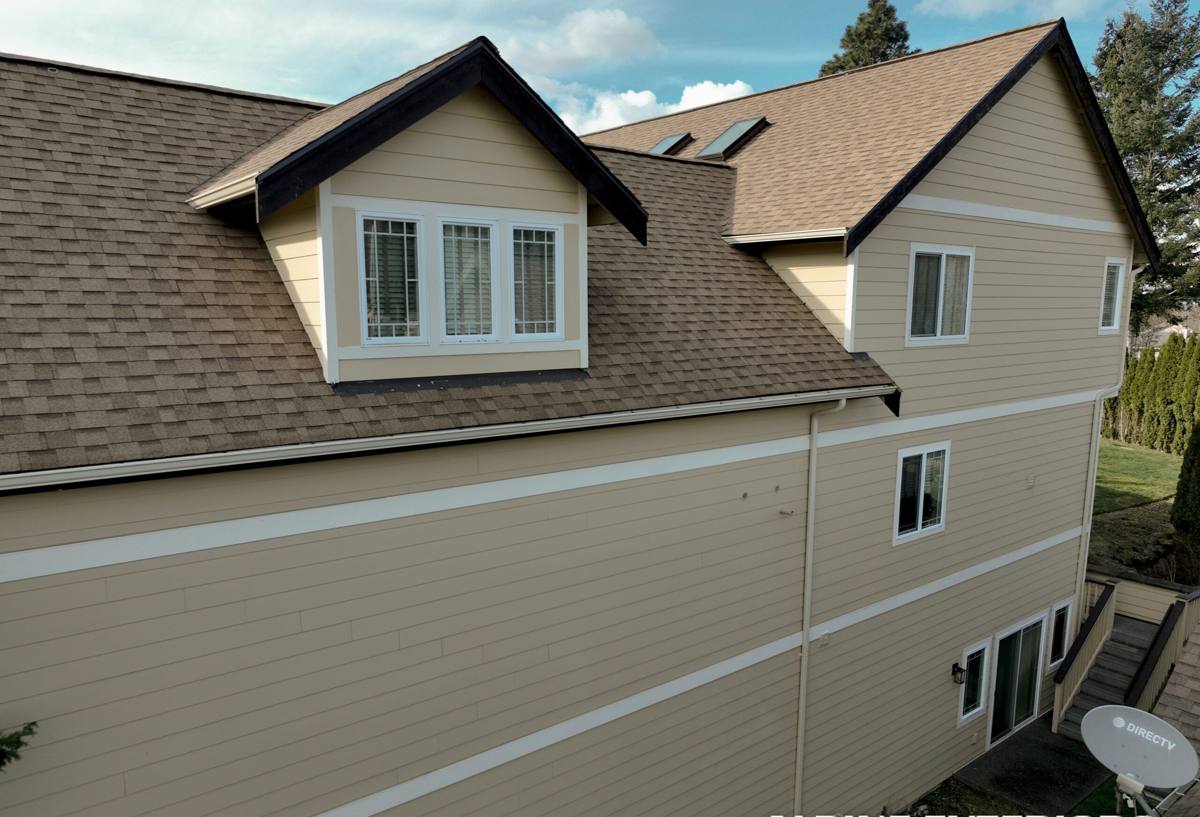
Signs an Everson Home Needs Window Replacement
Most homeowners don't think about their windows until something goes wrong. Here's what we look for, and what you can check yourself before calling anyone out.
- Condensation or fogging trapped between the panes of a double-pane window — the seal has failed and can't be repaired, only replaced
- Windows that are difficult to open, close, or lock, especially after the wood or vinyl has swelled from moisture
- Visible gaps around the frame, or you can feel outside air moving through when it's windy
- Soft, discolored, or bubbling trim and sill wood — a sign water has already gotten behind the window
- Noticeably higher heating bills in winter with no other explanation
- Single-pane glass, which is common in older Everson homes and offers very little insulation value by today's standards
- Moss or dark staining building up on the sill or the siding just below the window — a sign water is draining somewhere it shouldn't
What a Correct Window Installation Actually Involves
Swapping in a new window is not just a matter of pulling the old sash and dropping in a new unit. Most of the long-term performance of a window comes down to what happens at the rough opening before the window is ever set in place.
Flashing and the Water Path
Every window opening needs a flashing system that directs any water that gets past the exterior finish back out and away from the framing — never behind the sheathing where it can sit unseen. This means proper sill pan flashing, correctly lapped house wrap or building paper, and head flashing that sheds water down and away rather than trapping it against the frame. In a climate that sees as much sustained rain as ours, a shortcut here is the single biggest reason a window fails early.
Sealing and Insulation
The gap between the window frame and the rough opening has to be sealed and insulated correctly — not overfilled with expanding foam (which can bow the frame and cause the window to bind) and not left with insulation gaps that create cold spots and condensation risk. Low-expansion foam or backer rod with sealant, applied properly, keeps the window performing the way it's rated to.
Level, Plumb, and Square
A window that isn't set level, plumb, and square will bind, won't lock properly, and will wear out its hardware and weatherstripping years before it should. This is a basic step, but it's also one that gets rushed on jobs where the crew is moving fast to hit a number of installs per day.
Choosing Windows for Whatcom County Weather
Frame material matters as much as glass package when a house sits through a Pacific Northwest wet season year after year. Here's how the common options compare for a home in the Everson area.
| Frame Material | Moisture Resistance | Maintenance | Typical Lifespan |
|---|---|---|---|
| Vinyl | Very good — won't rot, low water absorption | Low — occasional cleaning | 20–30 years |
| Fiberglass | Excellent — dimensionally stable, minimal expansion/contraction | Low | 30–40 years |
| Wood (unclad) | Poor without diligent upkeep — prone to swelling and rot in this climate | High — repainting, sealing, inspection | Varies widely with maintenance |
| Wood-clad (aluminum or vinyl exterior) | Good — exterior shell protects the wood core | Moderate | 25–35 years |
We generally steer Everson customers away from unclad wood on exterior-facing windows unless they're committed to a real maintenance schedule. It's not that wood windows are a bad product — it's that our climate is unforgiving of missed maintenance, and a wood sill that goes even one season without attention can start absorbing water it never fully lets go of. Vinyl and fiberglass carry that risk far better with far less upkeep, which is why they're what we recommend for most homes in this area.
Glass Packages
Double-pane, low-E glass with argon fill is the standard we install for a reason — it cuts heat loss significantly compared to older single-pane glass and helps reduce interior condensation on cold mornings, which is a common complaint in homes with older windows. Triple-pane is available and adds further performance, but for most Everson homes the added cost doesn't pay back as quickly as it does in colder climates further inland.
Our Window Replacement Process
- On-site assessment. We look at every window being considered, check the condition of the framing and sill, and note anything unusual about that opening before quoting anything.
- Honest recommendation. We'll tell you which windows genuinely need replacing now and which ones can reasonably wait, along with what's driving the recommendation.
- Product selection. We walk through frame material, glass package, and grid or color options that fit the home and the budget.
- Removal and inspection. Old windows come out carefully, and we inspect the rough opening for hidden water damage or rot before anything new goes in.
- Correct installation. Sill pan flashing, proper sealing, and a level, plumb, square set — every time, not just when it's convenient.
- Final check and cleanup. We test operation and locking on every window, seal and trim the exterior, and clean up the site before we leave.
What Affects the Cost of a Window Replacement
Every home is different, but a few factors consistently drive the price of a job up or down. Knowing them ahead of time makes for a more useful conversation when you're getting quotes.
| Factor | Why It Matters |
|---|---|
| Number of windows | Per-window pricing typically drops as the total count on a job goes up |
| Frame material | Vinyl is generally the most affordable; fiberglass and wood-clad cost more upfront but can offer longer service life |
| Opening condition | Rot or water damage found behind an old window means repair work before the new one can go in, which adds cost |
| Window size and type | Large picture windows, bays, and custom shapes cost more than standard double-hung or slider sizes |
| Access | Second-story or hard-to-reach windows take longer and can add labor cost |
We give straightforward, itemized estimates rather than a single vague number, so you can see exactly what's driving the cost of your specific job.
Why a Crew That Already Works Everson Matters
A contractor who's worked homes in the Everson and greater Ferndale area has already seen how the local building stock behaves — the era-specific framing quirks, the way certain older homes were originally sealed, and the moisture patterns that come with an inland river-valley setting versus a coastal one. That's not something a crew coming from outside the county picks up on the first job. It shows up in small decisions: how much extra care goes into flashing a north-facing window that never fully dries out between rains, or recognizing early rot in a sill before it becomes a bigger repair.
It also matters for accountability. A local crew is easy to reach if a question comes up after the install, and has a reputation in the community worth protecting — that's a different incentive than a traveling install team that's already moved on to the next region by the time problems would show up.
Caring for New Windows Once They're In
New windows are close to maintenance-free compared to what they replaced, but a little attention keeps them performing at their best for the long haul.
- Clean tracks and weep holes a couple times a year so water can drain properly instead of pooling
- Check exterior caulking annually, especially after a hard winter, and touch up any spots that have cracked or pulled away
- Keep gutters and downspouts clear so runoff isn't sheeting directly down across window heads
- Wipe down sills after heavy fog or extended rain if you notice condensation building up
- Test locks and operation each season — a sticking window is worth a look before it becomes a bigger issue
If your Everson home has windows that are fogging, drafty, hard to operate, or just old enough that you're wondering, we're happy to come take a look. There's no pressure and no obligation — just a straight assessment of what your windows actually need. Use the form below to request a free estimate.