 Ferndale Siding
 Board & Batten Siding for Fairhaven Homes
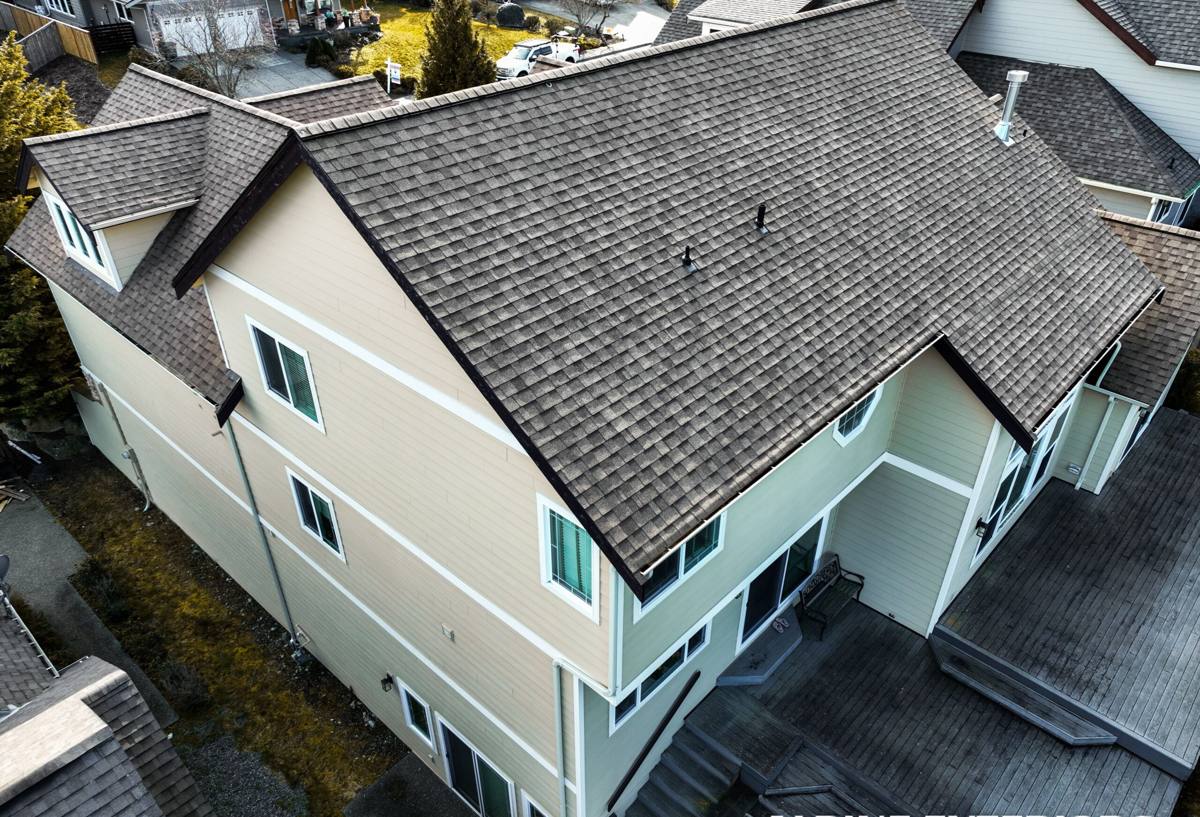
Fairhaven's mix of older character homes and newer construction sits close enough to the water that siding decisions can't be made the same way they would be twenty miles inland. Between salt-laden air off the bay, driving rain that comes in sideways during winter storms, and a moss season that seems to stretch longer every year, the exterior cladding on a Fairhaven home works harder than most homeowners realize. Board and batten siding — with its clean vertical lines and the alternating wide-board, narrow-batten rhythm — is one of the most requested looks in this part of Whatcom County, and when it's built with the right material and the right detailing, it's also one of the most durable options available.
This page focuses specifically on what board and batten siding needs to do in Fairhaven's climate, what a correct installation actually involves, and why we install it exclusively in James Hardie fiber cement rather than the wood, engineered wood, or vinyl alternatives some contractors still offer.
What Fairhaven's Climate Does to Vertical Siding
Board and batten's design — vertical boards with battens covering the seams — is more exposed to certain kinds of weather stress than horizontal lap siding. The vertical seams run parallel to the direction water travels when it's driven by wind, which means the quality of the batten placement and caulking matters more here than on a typical lap job.
Salt Air
Proximity to Bellingham Bay means airborne salt settles on every exterior surface in Fairhaven, not just the homes closest to the water. Salt is corrosive to exposed fasteners and hardware, and it accelerates the breakdown of finishes that aren't formulated to resist it. Paint-grade wood siding in this environment tends to show fastener bleed and finish failure years before it would inland.
Driving Rain
Storms coming off the Strait of Georgia and Puget Sound don't just fall straight down — wind pushes rain horizontally into vertical seams, batten edges, and any gap where flashing or caulking is doing less than it should. A board and batten installation with under-detailed seams becomes a network of tiny funnels straight into the wall assembly.
Moss and Sustained Dampness
Whatcom County's moss season isn't a few weeks — shaded, north-facing walls in Fairhaven can stay damp for months at a stretch. Moss and algae hold moisture against the siding surface, and any material that swells, delaminates, or absorbs water when constantly wet is going to show it here faster than in a drier climate.
Why Material Choice Matters More With This Profile
Board and batten's vertical seams and narrow batten strips mean more linear feet of joint per square foot of wall than most horizontal siding profiles. Every one of those joints is a potential water entry point, and every batten is a strip of material that has to hold its shape and its paint line for decades in wet, salty conditions.
| Material | Behavior in Fairhaven's Climate | Long-Term Concern |
|---|---|---|
| Cedar / primed spruce board and batten | Attractive initially, but wood absorbs moisture at end grain and along battens | Cupping, splitting, repainting cycles, rot at moisture-trapped seams |
| Vinyl board and batten | Low maintenance but panels expand/contract with temperature swings | Seams open over time, doesn't stop wind-driven rain as well, can crack in cold snaps |
| LP SmartSide / engineered wood | Wood-based core is vulnerable if the factory seal is breached at a cut edge | Edge swelling if caulking isn't maintained exactly on schedule |
| James Hardie fiber cement | Non-combustible, dimensionally stable, engineered for Pacific Northwest moisture | Requires correct installation to specification — the trade-off is skill, not the material |
We install James Hardie exclusively because fiber cement doesn't swell, rot, or delaminate the way wood-based products can, and it holds a factory-applied ColorPlus finish that's formulated to resist fading and doesn't rely on field-applied paint standing up to salt air on its own. The trade-off with Hardie isn't the material — it's that the installation has to be done correctly, because fiber cement doesn't forgive sloppy flashing or gapped seams any more than the next product does. It just gives a well-built assembly a much longer service life once that work is done right.
What a Correct Board & Batten Installation Involves
The finished look of board and batten is simple, but the assembly behind it is not. In a climate like Fairhaven's, the details that are invisible once the job is done are the ones that determine whether the siding lasts 10 years or 40.
Weather-Resistive Barrier and Rainscreen
A correctly built wall starts with a continuous weather-resistive barrier behind the siding, and in a climate this wet, we install with a rainscreen gap — a small air space between the barrier and the siding — so that any moisture that does get past the cladding can drain and dry instead of sitting against the sheathing.
Flashing at Every Penetration
Windows, doors, hose bibs, light fixtures, and vents all need proper flashing integrated with the weather barrier before a single board goes up. This is the step that gets rushed on lower-bid jobs, and it's the step that causes the water intrusion problems that show up years later as rot or stains.
Batten and Board Spacing to Hardie Specification
James Hardie publishes specific fastening patterns, gap tolerances, and clearances for board and batten applications, including minimum clearance from grade, roof lines, and other siding-to-trim transitions. Installing outside those specifications can void the manufacturer's warranty even though the material itself is correct.
Sealed and Backer-Supported Seams
Every vertical joint needs a consistent, code-compliant sealant joint or a proper board-behind-batten overlap — not just a bead of caulk over a butt joint. This is one of the most common shortcuts we see when we're asked to look at problem siding on Fairhaven homes.
- Continuous weather-resistive barrier with rainscreen gap behind the siding
- Full flashing integration at windows, doors, and all penetrations
- Board and batten spacing and fastening per James Hardie's published specifications
- Minimum clearance maintained from grade, decks, and roof lines
- Sealed or overlapped seams at every vertical joint, not just caulked butt joints
- Factory-finished ColorPlus boards to avoid field-painted end grain and cut edges
- Final inspection of trim, corners, and transitions before the crew leaves the site
Our Process for a Fairhaven Board & Batten Project
We approach every board and batten job in Fairhaven the same structured way, because the steps that get skipped are the ones that cause problems five or ten years down the road.
1. On-Site Assessment
We look at the existing wall assembly, current siding condition, moisture history (moss staining, soft spots, past repairs), sun and shade exposure on each elevation, and proximity to water and prevailing wind direction. Fairhaven homes on north- or west-facing exposures often need different attention than a sheltered south wall.
2. Detailed Estimate and Material Plan
We walk through the board width, batten spacing, trim details, and ColorPlus color selection, along with a clear, written scope of what's being removed, what's being repaired underneath if needed, and what's going back up.
3. Tear-Off and Substrate Check
Once old siding comes off, we inspect the sheathing and framing for hidden moisture damage before anything new goes up. This is often the point where long-term problems from a previous installation become visible, and it's better to find them before the wall is closed back up than after.
4. Weather Barrier, Flashing, and Rainscreen Installation
This is the stage that determines the siding's real lifespan, and it happens entirely before the first visible board is installed.
5. Board & Batten Installation to Specification
Boards and battens go up following James Hardie's fastening and spacing requirements, with attention to consistent reveals and tight, properly sealed corners and trim transitions.
6. Final Walkthrough
We review the completed job with the homeowner, covering care basics and what to watch for seasonally, particularly around moss growth on shaded elevations.
Why Hiring a Crew That Already Works in Fairhaven Matters
Board and batten siding done wrong in a marine climate doesn't fail the same way it would in a dry inland region — problems tend to show up as trapped moisture behind the wall rather than obvious surface damage, which means they can go unnoticed until repair costs are much higher than they would have been. A crew that regularly works in Fairhaven and the surrounding Ferndale area already understands which elevations catch the worst of the wind-driven rain, how aggressive moss growth gets on shaded walls near mature tree cover, and how salt exposure changes fastener and hardware choices. That local pattern recognition doesn't replace following manufacturer specifications — it adds judgment on top of them, which is exactly what a climate like this demands.
It also matters for warranty support. James Hardie's warranty coverage depends on installation meeting their specifications, and a contractor with an established local track record installing Hardie products is in a better position to stand behind that work over time than someone doing a one-off job in the area.
Maintenance Expectations for Fairhaven Homeowners
Even the right material and a correct installation still benefit from basic seasonal attention in this climate.
- Rinse siding periodically to remove salt residue, especially on elevations facing the water
- Keep gutters clear so overflow doesn't run down the wall face and feed moss growth
- Trim back vegetation and tree cover that keeps shaded walls damp longer than necessary
- Inspect caulked joints and trim transitions annually, particularly after the first winter storm season
- Address any soft spots, staining, or moss buildup early rather than waiting for a full season to pass
James Hardie's ColorPlus finish reduces the repainting burden significantly compared to field-painted wood siding, but it isn't a substitute for basic upkeep — it just means that upkeep is lighter and less frequent.
Get a Straightforward Estimate for Your Fairhaven Home
If you're considering board and batten siding for a home in Fairhaven or elsewhere around Ferndale, we're happy to walk your property, look at your current siding and wall condition, and give you a straightforward, no-pressure estimate for a James Hardie installation built for this exact climate. Use the form below to request a free estimate.