 Ferndale Siding
 Fairhaven's Roofs Work Harder Than Most
Fairhaven sits close enough to the water that its homes deal with a different set of stresses than roofs a few miles inland. Salt-laden air off Bellingham Bay, near-constant driving rain through the fall and winter, and a moss season that can run eight months or longer all add up over the life of a roof. A roofing system that performs fine in a dry inland neighborhood can fail early here if it wasn't chosen and installed with those conditions in mind.
Metal roofing has become a popular answer for Fairhaven homeowners for good reason. Done correctly, it sheds the region's heavy rain fast, resists moss better than most other materials, and holds up to salt exposure far longer than asphalt shingles typically do in this environment. Done poorly, it can trap moisture, corrode at the fasteners, or fail at the seams within a few years. The material isn't the whole story — the installation is.
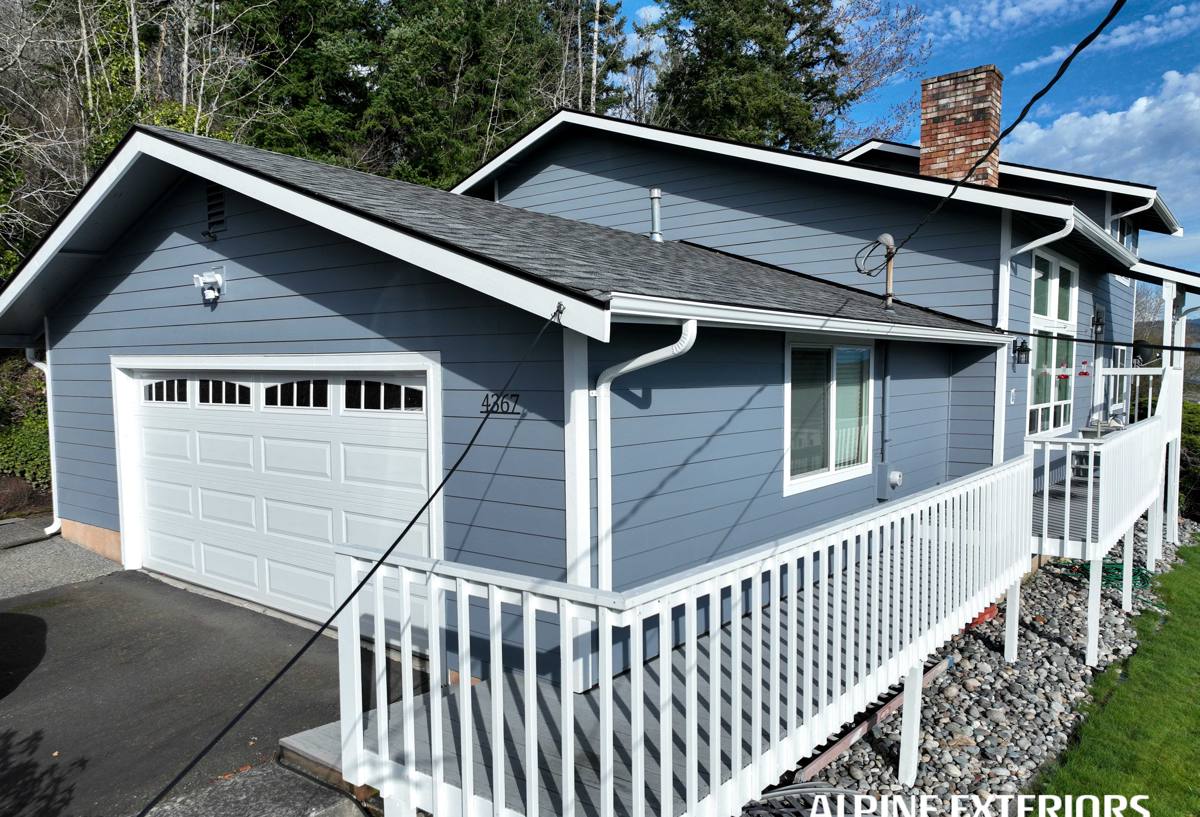
What Salt Air and Moss Actually Do to a Roof
It helps to understand the specific ways this climate wears on a roof, because it explains why certain products and details matter more here than they would elsewhere in Washington.
Salt Exposure
Airborne salt from the bay accelerates corrosion on any exposed metal fastener, flashing, or panel edge that isn't properly coated or protected. Bare or poorly finished steel can start showing rust streaks within a few years in a coastal setting. This is why fastener choice and coating quality matter more here than in a lot of inland Whatcom County neighborhoods.
Driving Rain
Fairhaven's rain doesn't always fall straight down — wind off the water pushes it sideways, which means it can find its way under poorly lapped panels, undersized flashing, or fasteners that aren't sealed correctly. A roof here needs details built for wind-driven rain, not just volume.
Moss and Organic Growth
Between the moisture and the tree cover common in this part of Whatcom County, moss and algae growth is close to constant for much of the year. Moss holds water against a roof surface, and on the wrong material that moisture retention shortens the roof's life significantly. Metal gives moss far less to grip onto than shingles or wood, which is one of the biggest reasons homeowners here switch.
Why Metal Performs Well in This Environment
Metal roofing isn't the right fit for every home or every budget, but for Fairhaven's climate specifically, it solves several problems at once:
- Steep, smooth panel surfaces shed rain quickly and give moss spores little to establish on
- Properly coated steel and aluminum resist salt-driven corrosion far longer than untreated materials
- Metal roofs typically outlast asphalt shingle roofs by decades when installed and maintained correctly
- Standing seam and concealed-fastener systems reduce the number of penetration points where wind-driven rain can get in
- Lighter-weight panel systems put less long-term stress on older roof framing common in established Fairhaven homes
The trade-off is upfront cost — metal roofing costs more than asphalt shingles to install. We tell every homeowner that plainly, because the honest case for metal here is about total cost over the life of the roof, not the cheapest number on installation day.
Choosing the Right Metal System for a Coastal Home
Not every metal roofing product handles salt air and constant moisture the same way, and this is where a lot of the long-term performance difference gets decided.
Standing Seam vs. Exposed-Fastener Panels
Standing seam panels use concealed clips instead of exposed screws through the panel face. In a driving-rain environment like Fairhaven, that matters — every exposed fastener is a potential leak point and a spot where the coating can wear through over time, exposing bare metal to salt air. Exposed-fastener panel systems cost less upfront and can be a reasonable option on secondary structures, but for a primary home roof this close to the water, we generally steer homeowners toward standing seam.
Steel vs. Aluminum
Both hold up well when properly coated, but they behave differently in a marine environment. Steel is strong and cost-effective, and with a quality factory finish it resists corrosion well. Aluminum doesn't rust and handles salt exposure slightly better by nature, which is worth weighing for homes directly exposed to bay winds, though it typically costs more and dents somewhat more easily. We'll walk through which makes sense for your specific home and exposure rather than defaulting to one.
Coatings and Fasteners
The finish on the metal and the fasteners used to install it matter as much as the panel material itself. We use fastener hardware and sealants rated for coastal, high-moisture conditions rather than standard-grade hardware — it costs a little more per unit but it's the difference between fasteners that hold up for the life of the roof and ones that start staining or loosening within a few years.
Cost Factors for Metal Roofing in Fairhaven
Every roof is different, and we won't put a firm number on your project without seeing it, but these are the main factors that move the price on a metal roofing job in this area:
| Factor | Why It Affects Cost |
|---|---|
| Panel system type | Standing seam runs higher than exposed-fastener panels due to material and labor |
| Roof pitch and complexity | Steep pitches, multiple valleys, and dormers add labor time and material waste |
| Existing roof tear-off | Removing old shingles or a failing roof deck adds cost versus a straightforward re-roof |
| Underlayment upgrade | Marine-grade synthetic or self-adhered underlayment at eaves and valleys costs more but matters here |
| Flashing and penetrations | Chimneys, skylights, and vents each need custom flashing work in a wind-driven rain climate |
| Metal finish/coating grade | Higher-grade coatings resist salt corrosion longer but cost more per square |
What a Correct Installation Actually Involves
A metal roof is only as good as the details underneath it. On every project we install a full underlayment system rated for the moisture load this area sees, with extra attention at the eaves, valleys, and any wall or roof transitions where wind-driven rain tends to find gaps. Flashing gets custom-fit and sealed at every penetration — chimneys, vents, skylights — rather than relying on generic trim pieces. Panels are fastened and lapped to spec so the whole system moves together with temperature changes instead of working loose over time.
We also pay close attention to ventilation. A well-ventilated attic keeps moisture from condensing under the metal panels, which matters even more in a climate where the roof rarely gets a long dry stretch to fully air out.
Our Process, Start to Finish
- On-site assessment — we look at your existing roof, deck condition, ventilation, and exposure to wind and salt air before recommending a system
- Straightforward estimate — a written scope and price, no pressure, no vague allowances
- Material selection — we walk through panel type, finish, and color options based on your home and budget
- Tear-off and deck inspection — old roofing comes off and we check the deck underneath for rot or damage before anything new goes on
- Underlayment and flashing — the part that actually keeps water out, installed to spec at every transition
- Panel installation — fastened and sealed to manufacturer standards for coastal conditions
- Final walkthrough — we go over the finished roof with you before we consider the job done
Living With a Metal Roof in a Coastal Climate
One of the appeals of metal roofing here is how little ongoing maintenance it needs compared to shingles, but "low maintenance" doesn't mean "no maintenance." A rinse-off to clear debris and organic buildup once or twice a year, and keeping nearby tree branches trimmed back, go a long way toward keeping moss from ever getting a foothold. Gutters should stay clear too — a clogged gutter backs water up under the roof edge regardless of what material is on top.
If you notice a scratch through the coating, panel movement, or a fastener that looks loose, it's worth having it looked at before the next wet season rather than after. Small issues on a metal roof are usually quick fixes; ignored ones can lead to corrosion that's harder to address later.
Signs Your Current Roof May Need Attention
- Moss or dark streaking building up on shingles despite regular cleaning
- Granules collecting in gutters or downspouts
- Curling, cracked, or missing shingles after storm season
- Rust staining around existing metal flashing or vents
- Soft spots or sagging visible from the ground
- Daylight visible through the attic roof deck
- Rising energy bills that may point to ventilation or insulation issues at the roofline
Why Local Experience in Fairhaven Matters
A crew that regularly works this stretch of Whatcom County already knows which details make or break a roof here — how far wind-driven rain travels up a wall, how fast moss establishes under tree cover, and which fastener and coating combinations actually hold up to salt air rather than just looking fine on installation day. That's knowledge you build by working these conditions repeatedly, not by reading a spec sheet. We'd rather spend a little more time getting the underlayment and flashing right than take a shortcut that shows up as a callback two winters from now.
If you're weighing options for a Fairhaven roof — whether it's a full replacement or you're planning ahead for one — we're happy to take a look and give you a straightforward assessment. Reach out for a free, no-pressure estimate using the form below.