 Ferndale Siding
 Siding Built for the Lummi Nation Waterfront Climate
Homes in and around Lummi Nation sit close to Bellingham Bay and the open marine air that comes with it. That proximity to saltwater is the single biggest factor in how fast siding wears out here. Salt-laden air settles on exterior walls year-round, driving rain off the water pushes moisture sideways into every seam and lap joint, and the shaded, damp stretches of the year keep north-facing walls and tree-lined lots wet long after a storm has passed. Add in a moss season that can run from fall through spring in Whatcom County, and you have a set of conditions that punishes any siding material with a weak spot in its moisture defense.
This isn't a generic Pacific Northwest climate story. Salt exposure specifically accelerates corrosion on fasteners and trim, degrades paint film faster than inland exposure does, and works into wood-based products through end grain and cut edges in a way that plain rain doesn't. Any siding decision for a Lummi Nation home has to start with that reality, not with a catalog of colors.
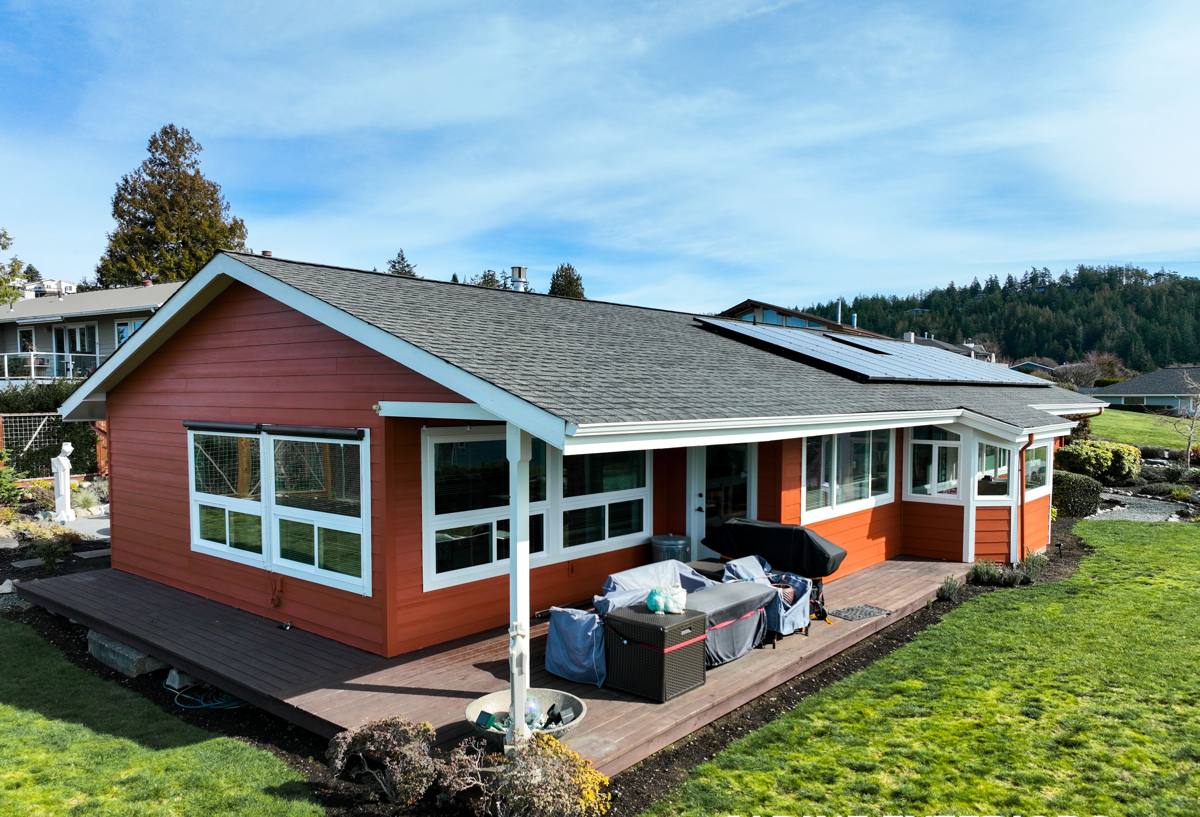
Why Fiber Cement Holds Up Where Other Materials Struggle
Fiber cement is cement, sand, and cellulose fiber pressed into a dense, stable board. It doesn't have wood grain to swell and split, it doesn't have a foam core that traps moisture against a substrate, and it isn't a thin vinyl skin that can warp or crack when temperatures swing after a cold snap off the water. Those are exactly the failure points that show up first on salt-air properties.
We install James Hardie fiber cement exclusively — not primed wood siding, not vinyl, not competing fiber cement brands. That's a deliberate standard, not a sales preference. Primed spruce and cedar siding need their cut ends sealed and their paint film maintained on a strict schedule, or moisture gets in at the first nail hole or lap joint and rot follows quietly, often behind the board where you can't see it until it's advanced. Vinyl handles rain fine but moves with heat and cold, which opens gaps at trim and butt joints exactly where wind-driven rain wants to get behind it. On a lot exposed to bay wind, that gap is where water finds a way in.
Hardie's fiber cement is factory-engineered for exactly this kind of exposure, with product lines built specifically for wetter, more corrosive climates. That's the difference between siding that shrugs off a Whatcom County winter and siding that needs constant attention to survive one.
What Salt Air Does to the Wrong Fasteners and Trim
It's not just the field of siding that matters — it's every fastener, flashing, and trim piece holding it together. Standard fasteners can corrode faster near saltwater, staining the face of the siding and weakening the hold over time. Correct installation on a Lummi Nation home means corrosion-resistant fasteners and flashing rated for the exposure, not whatever is standard inland. This is one of the most common corners cut by crews unfamiliar with waterfront jobs, and it's one of the first things we check on every install.
What a Correct Fiber Cement Job Actually Involves
Fiber cement is only as good as the installation behind it. The board can be excellent and still fail early if the details underneath it are wrong. A correct job includes:
- A drainage plane and weather-resistive barrier installed and lapped correctly, so any moisture that gets past the siding has somewhere to go besides your wall sheathing
- Proper flashing at every window, door, and roof-to-wall transition — the spots where driving rain off the bay finds its way in first
- Correct fastener placement and spacing per the manufacturer's installation instructions, using fasteners rated for coastal exposure
- Manufacturer-specified gaps at butt joints, trim, and any point where siding meets a dissimilar material, so the board can handle seasonal movement without trapping water
- Factory-applied ColorPlus finish kept intact during handling and cutting, so the finish that's supposed to resist salt air and UV isn't compromised before the house is even finished
Skipping any one of these doesn't show up on day one. It shows up in three to five years as staining, soft spots at trim, or paint failure at the joints — right where the marine climate is hardest on a house.
James Hardie Product Lines for This Climate
Hardie makes climate-engineered versions of its siding for exactly the kind of weather Lummi Nation homes face. We select the product line based on your home's actual exposure — how close it sits to the water, how much tree cover and shade it gets, and which walls take the worst of the driving rain.
| Product Line | Best Fit For | Why It Matters Here |
|---|---|---|
| HardiePlank HZ5 | Homes with direct bay exposure or minimal wind protection | Engineered for wetter, harsher climates with better moisture and freeze-thaw performance |
| HardiePanel / Board & Batten | Accent walls, gables, shop or accessory buildings | Same climate engineering in a vertical, low-maintenance profile |
| ColorPlus Technology | Any home where repainting is something you'd rather not deal with | Factory-baked finish resists fading and salt-air wear better than field-applied paint |
| HardieTrim | Corners, window and door surrounds, fascia | Keeps trim from being the weak point once the field siding is upgraded |
How Our Process Works
We start with a walk-around of the home, paying particular attention to which sides take the most weather — usually the walls facing the water or open to prevailing wind. From there we check the current condition of the wall assembly, not just the siding surface, since moisture damage on coastal homes often starts underneath.
- On-site assessment of exposure, existing siding condition, and any moisture or rot already present
- Product and color recommendation matched to your home's specific exposure, not a one-size answer
- Written estimate with a clear scope — what's being removed, what's being repaired underneath, and what's being installed
- Installation following James Hardie's published fastening, flashing, and clearance specifications
- Final walkthrough so you know what to watch for and what to expect from the finish over time
We don't sell a siding package and move on. If we find rot or damaged sheathing once the old siding comes off, we tell you before we cover it back up, not after.
Maintaining Fiber Cement in a Salt-Air, Moss-Prone Environment
Fiber cement is low-maintenance compared to wood, but "low" isn't "none," especially this close to the water. A little attention twice a year keeps the siding performing the way it's supposed to for decades.
- Rinse salt residue and grime off the siding once or twice a year, especially on walls facing the water
- Keep gutters and downspouts clear so water isn't sheeting down the wall during heavy rain
- Trim back vegetation and tree cover that keeps a wall shaded and damp — that's where moss gets a foothold fastest
- Check caulking at trim and joints annually and have it renewed if it's cracked or pulling away
- Watch for moss or algae staining on north-facing or shaded walls and address it early rather than letting it hold moisture against the surface
Cost Factors for a Lummi Nation Project
Every home is different, but the same variables drive cost on most projects in this area. Broad ranges only — your estimate will reflect your home's actual scope.
| Factor | Why It Affects Cost |
|---|---|
| Wall exposure and access | Water-facing walls, height, and difficult access add labor time |
| Existing wall condition | Rot or damaged sheathing found underneath old siding needs repair before new siding goes on |
| Product line selected | HZ5 and specialty trim cost more than standard lines but perform better in this climate |
| Trim and detail work | Homes with more corners, windows, and architectural detail take more time to flash and finish correctly |
| Color and finish | ColorPlus factory finishes vary in price by color but eliminate the need for field painting |
Why Local Experience in Lummi Nation Matters
A crew that's worked this stretch of Whatcom County knows which walls on a given lot layout tend to take the worst weather, how tree cover affects drying time after a storm, and which fastener and flashing choices actually hold up against salt air rather than just looking right on installation day. That's knowledge you don't get from a general installation manual — it comes from doing the work here, on homes with the same exposure yours has.
It also means a crew that won't cut corners on the details that don't show up until years later, because they've seen what happens when those details get skipped on a house just like yours.
If you're planning a siding project for your Lummi Nation home, we're happy to take a look and put together a straightforward estimate — no pressure, no obligation. Just an honest read on what your home needs and what it would take to do the job right.