 Ferndale Siding
 James Hardie Siding for Semiahmoo Homes
Semiahmoo is a waterfront community in Whatcom County, and it takes a different kind of weather beating than a typical inland lot does. Salt-laden air, wind-driven rain, and a moss season that barely lets up all work on a home's exterior at the same time, and siding is usually the first system to show the wear. Our crew works this stretch of the county regularly, and this page is specifically about James Hardie fiber cement siding — the one product we install, and what it takes to get it right on a Semiahmoo home.
This isn't a general overview of every siding brand on the market. It's a straight look at what this particular climate demands, what correct Hardie installation actually involves, and why the experience of a crew that already works Semiahmoo properties matters more here than it does on a sheltered inland street.
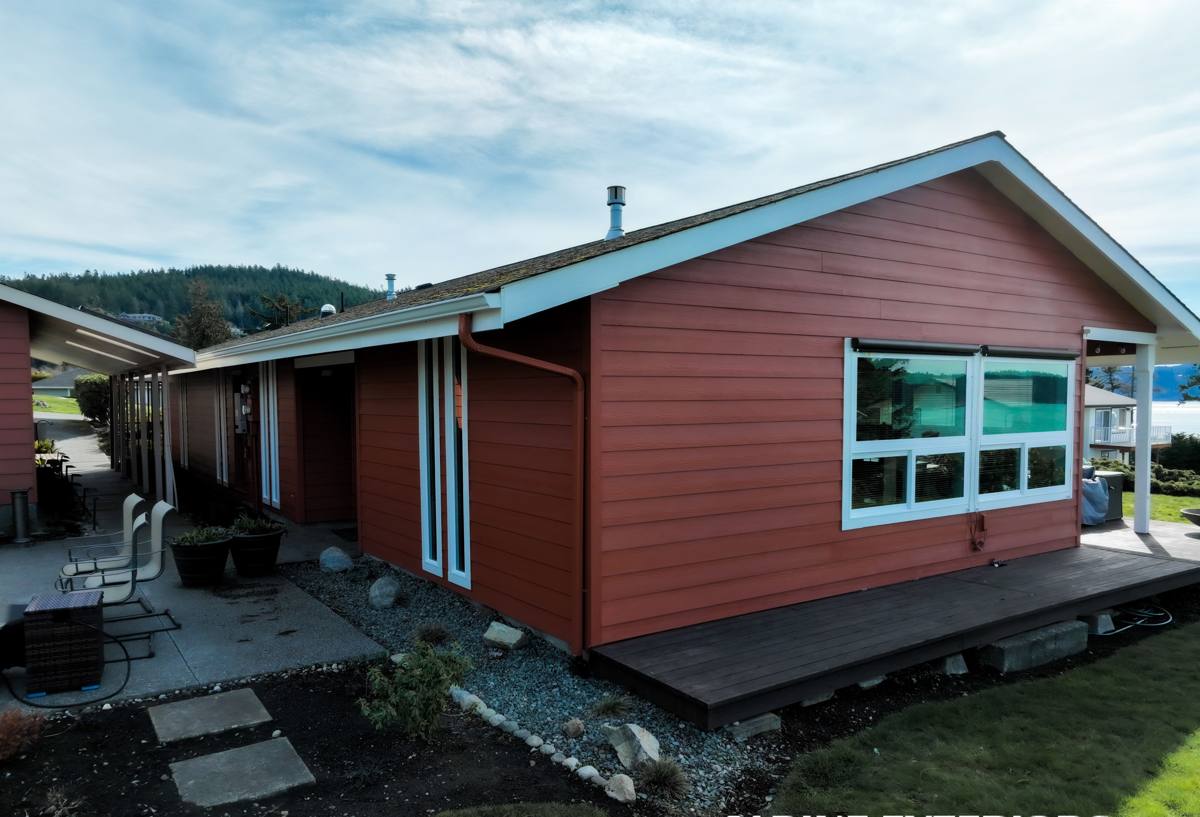
What Semiahmoo's Climate Does to Exterior Siding
Salt Air
Waterfront exposure means salt in the air more days than not, and salt is hard on more than just metal. It breaks down lower-grade paints and finishes faster than a drier site would, and it accelerates corrosion in fasteners, flashing, and trim hardware. Siding that isn't dimensionally stable, or that relies on a site-applied paint job for its color and protection, tends to show that wear years before a comparable product further inland would.
Driving Rain
Open water exposure means less of a windbreak, and rain that would fall straight down a few miles inland often arrives sideways here instead. That matters for siding because wind-driven rain gets pushed into laps, joints, and trim intersections with more force than a calmer site ever sees. Installation details that hold up fine in a sheltered neighborhood can fail on a waterfront property specifically because the water is finding a way in from the side, not from above.
A Long Moss and Mildew Season
Mild temperatures and near-constant humidity add up to a moss and mildew season that runs most of the year across this part of Whatcom County, and shaded, north-facing walls usually show it first. On siding, sustained organic growth isn't just a look homeowners don't want — it holds moisture directly against the wall assembly, which is exactly the condition that leads to hidden rot behind the siding if it isn't dealt with.
Repeated Wet-Dry Cycling
Between storms, walls dry out and then get soaked again, over and over, for most of the year. Materials that swell when wet and shrink when they dry — porous wood-based products in particular — take real cumulative damage from that cycle even if no single storm looks severe. Fiber cement doesn't move the same way, which is a big part of why it holds up in a climate like this one.
Why James Hardie Is the Only Siding We Install
We used to install a wider range of siding products. We stopped, and that decision came directly from what we kept finding on service calls and tear-offs on exposed, waterfront properties like the ones around Semiahmoo — not from a supplier deal or a marketing push.
- Non-combustible core: Fiber cement doesn't feed a fire the way wood-based siding products can, which matters for household safety and often for insurance underwriting as well.
- Factory-applied ColorPlus finish: The color is baked on under controlled factory conditions rather than brushed on in the field, and it holds up far longer against fading, chalking, and moisture intrusion than site-applied paint does — a real advantage in salt air.
- Climate-engineered HZ formulations: Hardie builds different product formulations for different climate zones, including versions engineered for regions with sustained moisture exposure, which describes waterfront Whatcom County well.
- Dimensional stability: Fiber cement doesn't swell, cup, or warp the way engineered wood products can after repeated wetting and drying over a long wet season.
- Strong transferable warranty: Hardie backs its products with one of the more substantial warranty structures in the industry, provided installation follows their published spec.
We don't install LP SmartSide, vinyl siding, Cemplank, Allura, primed spruce, or cedar. Each of those has a legitimate place in the broader market, and there are homeowners elsewhere who are satisfied with them. But on an exposed waterfront property, we made a professional call: we'd rather stand fully behind one system we trust than offer a cheaper option that quietly shifts long-term maintenance risk back onto the homeowner a few years down the road.
Matching the Right Hardie Product to a Semiahmoo Home
Hardie makes several distinct product lines, and picking the right one for a specific home and setting is part of getting the job right — not just a color and profile decision.
| Product Line | Best Use | Why It Fits This Setting |
|---|---|---|
| HardiePlank lap siding | Most standard single-family homes | Traditional lap profile sheds wind-driven rain effectively when overlap and flashing are done correctly |
| HardiePanel vertical siding | Accent walls, gables, modern and farmhouse styles | Clean lines with fewer horizontal laps for water to find on exposed elevations |
| HardieShingle siding | Craftsman-style homes, accent sections | Textured look without the moisture absorption and repainting cycle of real wood shingle |
| HardieTrim boards | Corners, window and door casing, fascia | Factory-finished trim resists the same salt-air and moisture exposure as the field siding |
Beyond the product line, the HZ formulation matters too. Hardie engineers its HZ5 line for regions with heavy moisture exposure and freeze-thaw cycling, which fits waterfront Whatcom County better than a formulation built for a hot, dry climate. Specifying the wrong HZ line for the region is a quiet mistake that doesn't show up until years later.
What Correct Installation Involves in This Climate
Hardie siding only performs the way it's engineered to when it goes on to Hardie's published specifications. On an exposed, salt-air property, the margin for skipped steps is smaller than it is on a sheltered inland lot.
Fastening and Clearance
Fastener type, spacing, and depth all matter more in salt air, where corrosion-resistant hardware isn't optional. Correct clearance from grade and from roof lines keeps siding from sitting in standing moisture or splash-back, which is a bigger risk on a waterfront lot with heavier and more frequent rain events.
Joints, Caulking, and Trim
Joints need to be properly lapped or factory-mitered rather than simply butted together and caulked over. Caulk is a maintenance item, not a substitute for correct joint detailing — on a property that sees this much wind-driven rain, a joint that relies on caulk alone is a future callback waiting to happen.
Drainage Behind the Panel
Where the assembly calls for it, a drainage plane or rain-screen gap behind the siding gives any moisture that does get past the outer layer a way to drain and dry out instead of sitting against the sheathing. On a home that takes this much sustained moisture, that detail is part of what separates siding that lasts thirty-plus years from siding that develops hidden rot within a decade.
Sealant and Flashing at Penetrations
Every point where siding meets a window, door, vent, or hose bib is a place water can get behind the wall if it's flashed or sealed incorrectly. On an exposed site, we treat these transitions as the highest-priority detail on the job, not an afterthought handled at the end of the day.
Comparing Siding Materials for a Semiahmoo Property
| Material | Moisture Behavior | Upkeep in Salt Air | Typical Longevity Here |
|---|---|---|---|
| James Hardie fiber cement | Dimensionally stable, resists swelling and cupping | Low; factory finish resists fading and chalking | 30+ years with correct installation |
| Vinyl siding | Can warp or distort under heat and wind load over time | Low upfront, but seams and fasteners are exposure points | Variable; often shorter on high-wind waterfront lots |
| LP SmartSide / engineered wood | Wood-based core is moisture-sensitive at cut edges and joints | Moderate; edge sealing and caulk maintenance matter | Depends heavily on installation quality and upkeep |
| Cedar / primed wood | Absorbs and releases moisture readily | High; regular refinishing needed in wet, salty air | Shorter without consistent, ongoing maintenance |
How Our Process Works
A Semiahmoo project starts the same way every job does for us, but with the site's exposure factored in from the first visit.
- An on-site walk of the existing siding, looking specifically for how it's handled moisture and salt exposure over time — not just its surface condition
- An honest read on whether the home needs a full re-side, a partial section replacement, or targeted repair
- A written scope specifying product line, HZ formulation, fastening plan, and flashing details before any work begins
- Tear-off and substrate inspection, since hidden sheathing or framing damage is common under older siding on an exposed lot
- Installation to Hardie's spec, with fastening, clearance, joint, and drainage detail treated as standard practice, not upgrades
- A final walk-through before we consider the job finished
Why a Local Crew Matters on a Property Like This
A contractor who works Semiahmoo and the surrounding waterfront communities regularly already knows how salt air, wind-driven rain, and a long moss season behave on real homes here — not just how a product performs on a spec sheet. That experience shows up in small, specific decisions on install day: which wall orientations stay wet longest, where extra flashing attention is worth the added time, and which fastener grade actually holds up instead of just meeting minimum code. Those are exactly the details that determine whether an exterior lasts one wet season or several decades on an exposed property.
It also means fewer surprises during the estimate. A crew that hasn't worked waterfront lots before can underestimate what a Semiahmoo home actually needs, either by quoting a standard inland scope or by treating salt-air corrosion resistance as optional. We don't quote it that way, because we've seen what happens when it's skipped.
A Checklist Before You Hire for Siding Work on Semiahmoo
- Ask what siding product they install and why, and whether it's backed by a written manufacturer warranty
- Confirm current Washington contractor licensing and active liability insurance
- Ask specifically how they detail fastening, joints, and flashing for wind-driven rain and salt exposure
- Ask which Hardie HZ formulation they'd spec for your home, if fiber cement is on the table
- Get a clear, written scope of work before signing anything
If you're considering new siding for a Semiahmoo home, we're glad to walk the exterior with you and give an honest read on what it actually needs — no pressure, no generic price sheet. Reach out below to schedule a free estimate.