 Ferndale Siding
 Decks Built for the Way Kendall Actually Weathers
Kendall sits back from the open coast, tucked into the tree-covered foothills of Whatcom County along the Mt. Baker corridor. That setting brings real advantages: privacy, mature trees, quieter lots. But it also means outdoor structures see a different kind of weather than a deck built on an open lot closer to town. Less direct sun, more standing shade, and rain that lingers under a canopy instead of running off and drying out. Add in the moss season that stretches across most of the wet months here, and a deck that isn't built with this specific microclimate in mind will show it within a few seasons.
We build custom decks throughout Ferndale and the surrounding Whatcom County communities, and the projects we take on in the Kendall area get planned differently from the start. Material choices, drainage details, and fastener selection are all picked with shaded, damp lots in mind, not a generic spec sheet.
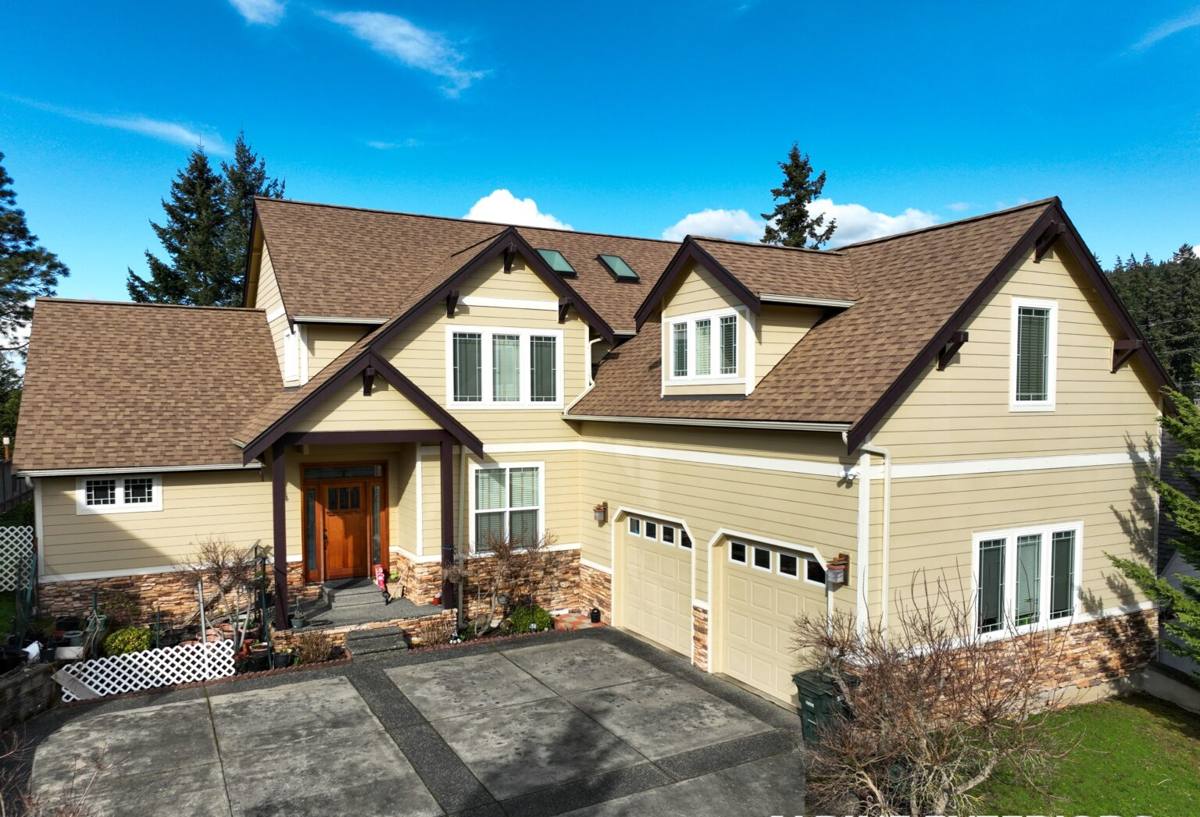
What Kendall's Microclimate Does to an Outdoor Deck
Shade and Moss
Tree cover is one of the best things about living in Kendall, but it's also the reason moss and algae take hold on decking faster here than on open, sun-exposed lots elsewhere in the county. Shade keeps board surfaces damp long after a storm has passed, and damp wood or textured composite is exactly what moss spores need to establish. Once moss gets a foothold, it holds moisture against the board surface, which accelerates rot in wood decking and can make composite boards slick and discolored underfoot.
Driving Rain and Standing Water
Whatcom County gets a long, wet season, and on foothill lots that rain often comes with more volume and less immediate drying time than it gets on a breezy coastal lot. Framing that doesn't shed water properly, ledger boards without real flashing, or decking installed without consistent gapping will trap water instead of letting it move through. Trapped water is the single biggest cause of premature deck failure we see, and it's rarely visible until the damage is already done.
Salt Air and Metal Hardware
Kendall isn't right on the water, but salt-laden air still moves through this part of Whatcom County and reaches further inland than most homeowners expect, especially during winter storms. Combined with the extra dampness from tree cover, it's tough on metal fasteners, brackets, and railing hardware if the wrong grade gets used. It's a smaller factor here than on a waterfront deck, but it's still one more reason not to cut corners on hardware.
Choosing the Right Decking Material for a Shaded Kendall Lot
There's no single best decking material. The right choice depends on how much sun and airflow your specific lot actually gets, how much upkeep you want to take on, and your budget. Here's how the common options actually perform on the kind of shaded, damp lots typical around Kendall:
| Material | How it handles shade & moisture | Maintenance | Typical lifespan here |
|---|---|---|---|
| Pressure-treated lumber | Prone to holding moisture and growing moss in deep shade; needs good airflow underneath | Annual cleaning, periodic sealing | 15-20 years with upkeep |
| Cedar | Naturally rot-resistant but still needs sun and airflow to dry out fully between rains | Cleaning and re-staining every 1-2 years | 20-25 years with consistent care |
| Capped composite | Resists moisture absorption well; still needs cleaning where moss can gain a grip in constant shade | Occasional washing, no staining or sealing | 25-30+ years, manufacturer-dependent |
| PVC decking | Doesn't absorb moisture at all; performs consistently even in deep shade | Occasional washing | 25-30+ years, manufacturer-dependent |
For lots with heavy, near-constant shade, common on wooded Kendall properties, we generally steer homeowners toward capped composite or PVC decking. It's not that wood fails in the shade; it's that wood needs cycles of wetting and drying to stay healthy, and a deeply shaded lot doesn't give it that. Composite and PVC also cost more upfront than pressure-treated lumber, but that gap narrows once you account for the re-staining, sealing, and board replacement wood decking needs over the same span. If you love the look and feel of real wood and your lot gets a reasonable amount of sun and airflow, cedar is still a solid choice. We'll walk your specific site with you and give you an honest read on which category fits before you spend money on materials.
Layout Choices That Work With Kendall's Weather
A deck's shape and coverage matter as much as the material it's built from. On lots that get heavy rain and limited sun, a few layout decisions make a real difference in how much use the deck actually gets and how well it holds up over time:
- Partial roof or pergola coverage over at least part of the deck keeps furniture and high-traffic areas usable during Kendall's long stretches of wet weather, and keeps that section of decking drier overall.
- Multi-level designs can work with a sloped or uneven lot instead of requiring extensive grading, which also helps manage where water naturally wants to go.
- Gap spacing and board orientation should be planned around how water will actually drain off the specific footprint, not just applied as a standard default.
Getting these calls right at the design stage costs nothing extra in most cases. Getting them wrong means water pooling in the wrong spot for the next twenty years.
Framing, Footings, and Drainage: Getting the Structure Right
The decking boards are what you see, but the framing underneath determines whether the deck is still solid in fifteen years. On the wetter, shadier lots we work on around Kendall, a few details matter more than they would on a dry, open site:
- Footing depth and bearing: Footings need to be sized and set to the depth required for this area's frost and soil conditions. Skipping this is how decks heave or settle over time.
- Ledger flashing: Where the deck attaches to the house, proper flashing keeps water from working its way behind the siding and into the wall structure. This is one of the most common shortcuts we see on older or DIY decks, and one of the most expensive to fix after the fact.
- Joist protection: Joist tape or an equivalent moisture barrier over the top of each joist keeps water from soaking into end grain and fastener holes, which is where rot typically starts first.
- Airflow underneath: Proper height off grade and clear ventilation paths let air move under the deck, which matters even more on shaded lots where the ground itself stays damp longer.
None of this is visible once the deck is finished, which is exactly why it's worth asking a contractor how they handle it before work starts, not after.
Railings, Fasteners, and Hardware That Hold Up
Hardware is a small line item on a deck estimate but a big factor in how the deck looks in five years. On damp, shaded lots, standard hardware corrodes faster and can leave rust streaks bleeding down the face of the decking. We spec stainless steel or coated, corrosion-resistant fasteners for structural connections and use hidden fastener systems on composite and PVC decking where the product allows it, both for a cleaner look and because face-screwed boards create more entry points for moisture over time.
Railings get the same consideration. Metal railing systems and post hardware need a coating rated for wet, coastal-influenced conditions, and wood railings need the same airflow and finish attention as the decking itself.
Our Process for a Kendall Deck Project
Every deck we build starts with a site visit, not a phone quote. Sun exposure, tree cover, grade, and how water currently moves across the lot all factor into the design before we talk materials.
- Site assessment: We walk the property, check drainage patterns, and note how much shade the deck footprint actually gets through the season.
- Design and material selection: Based on that assessment, we recommend materials and a layout suited to the site, not a one-size-fits-all package.
- Permitting: We handle the Whatcom County permitting process for the scope of work involved, so you're not tracking down paperwork yourself.
- Construction: Footings, framing, decking, and railings are built in sequence, with inspections at the appropriate stages.
- Final walkthrough: We go over the finished deck with you, including basic care guidance specific to your site's sun and shade conditions.
Maintenance Checklist to Keep a Kendall Deck Looking New
Even the right materials and structure benefit from some seasonal attention, especially on a shaded lot. A short list of habits goes a long way:
- Sweep leaves and debris off the deck surface regularly through fall; trapped debris holds moisture and feeds moss growth.
- Rinse or lightly scrub the surface once or twice a year to remove early moss and algae before it gets established.
- Check that gaps between boards stay clear of debris so water can drain through rather than pooling.
- Inspect railing posts and stair connections annually for any looseness or hardware corrosion.
- For wood decking, plan on re-staining or sealing on the schedule recommended for the specific product; shaded lots often need it slightly more often than sunny ones.
- Trim back overhanging branches where practical to improve airflow and sun exposure on the deck surface.
Why Hire a Crew That Already Works in Kendall
A deck built to a generic spec sheet can look fine on installation day and still struggle within a couple of years if it wasn't designed for the site's actual sun, shade, and drainage conditions. Working regularly in and around Kendall means we've seen how shaded, tree-covered lots in this part of Whatcom County actually perform over time: which materials hold up, where moss becomes a problem first, and which framing details matter most when a lot doesn't get much direct sun. We also already know the local permitting process, which keeps a project moving instead of stalling on paperwork neither of us anticipated.
That local pattern recognition is the difference between a deck that's designed for your specific property and one that's just installed on it. If you're planning a new deck or replacing one that's showing its age, we're happy to come take a look and give you a straightforward, no-pressure estimate based on what your property actually needs. Fill out the form below to get started.