 Ferndale Siding
 Fiber Cement Siding for Lummi Island Homes
Lummi Island sits just off the Whatcom County mainland, reachable only by a short ferry crossing from near Ferndale, and that separation shapes more than the commute. Homes here sit in full, unbroken marine exposure — open water on multiple sides, few windbreaks compared to inland Ferndale, and a setting that puts siding, trim, and roofing through a harder version of the same weather the rest of the county deals with. We work on the island regularly, and we've built our approach around what that exposure actually does to an exterior over time, not around what a product data sheet says it should do in ideal conditions.
We install James Hardie fiber cement siding exclusively. On a property like a Lummi Island home, where salt air, driving rain, and a long moss season are constants rather than occasional events, the case for fiber cement over the alternatives is one of the clearest we make anywhere in our service area.
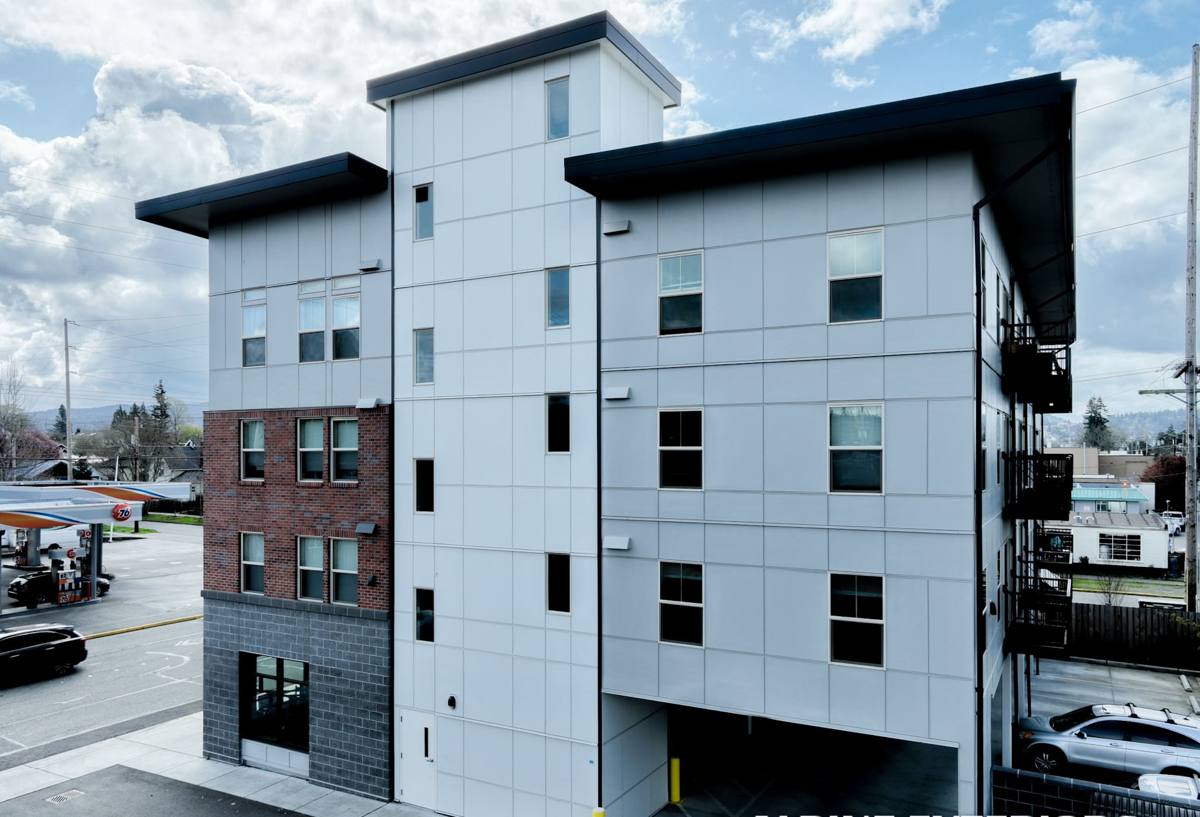
What Island Exposure Does to a Home's Exterior
Salt Air With Nowhere to Go
A home surrounded by water on multiple sides picks up salt-laden moisture more consistently than a home a few miles inland, and there's no landmass nearby to soften that exposure. Salt air accelerates corrosion in fasteners and flashing, and it wears down lower-grade paints and finishes faster than a drier setting would. Over a few years, that shows up as rusting nail heads, chalky trim, and a finish that's faded well ahead of when it should be.
Driving Rain Off Open Water
Wind moving across open water arrives with less resistance than wind that's had to cross land first, and that's what turns ordinary rain into wind-driven rain that gets pushed sideways into lap joints, seams, and trim details instead of simply running down the wall. A siding system that performs fine on a sheltered inland lot can still let water in on an island property, because the water isn't falling straight down — it's being driven into every gap that flashing and lapping aren't sealing correctly.
A Moss Season That Runs Long
Tree cover, near-constant humidity, and the general dampness of island living add up to a moss and mildew season that starts earlier and ends later here than it does on drier, more open sites elsewhere in Ferndale. It's most visible on north-facing and shaded walls first. Left alone, it's not just a cosmetic problem — sustained moss growth holds moisture against the wall assembly, which is the exact condition that leads to rot behind the siding over time.
Working Around Ferry Access
Ferry access also changes how a siding project actually runs, separate from the climate itself. Material deliveries, crew scheduling, and dumpster or debris pickup all have to work around ferry timing instead of a straightforward truck route, and a contractor who hasn't planned for that can turn a routine job into a slow one. A crew that's done island work before builds the ferry schedule into the plan from day one rather than discovering the problem mid-project.
Why James Hardie Is What We Install on Lummi Island Homes
We used to install a wider range of siding products. We narrowed to one system after seeing, repeatedly, which materials held up under sustained coastal exposure and which ones quietly didn't. For an island property specifically, the gap between fiber cement and the alternatives is wider than it is on a typical inland lot.
- Non-combustible core: Fiber cement doesn't feed a fire the way wood-based or wood-derived siding products can, which matters for both household safety and insurance underwriting.
- Factory-applied ColorPlus finish: The color is baked on in a controlled factory process rather than brushed on in the field, so it resists salt exposure and UV fading far longer than site-applied paint does.
- Climate-engineered HZ5 formulation: Hardie's HZ5 product line is built for regions with heavy, sustained moisture exposure and freeze-thaw cycling, which matches an open-water island property closer than Hardie's drier-climate formulations.
- Dimensional stability: Fiber cement doesn't swell, cup, or warp the way engineered wood siding can after repeated wet-season moisture cycles, and that matters more on a site where the wet season runs longer than average.
- Strong transferable warranty: Hardie backs its products with a substantial warranty structure when installation follows spec, which gives an island homeowner real protection instead of just a marketing claim.
We don't install LP SmartSide, vinyl siding, Cemplank, Allura, primed spruce, or cedar. Each of those products has a place in the broader market, and plenty of homes carry them without incident in calmer settings. But on an island with this much sustained salt, wind, and moisture exposure, we made a professional call: one system we trust completely is worth more than a cheaper option that quietly shifts maintenance risk onto the homeowner a few years down the line.
What Correct Installation Looks Like on an Island Property
Choosing fiber cement only gets a Lummi Island home halfway there. The rest is installation detail: fastening patterns rated for higher wind exposure, correct clearances from grade and roofline, joints that are lapped and sealed rather than simply butted together, and a house wrap and flashing system that does the actual water-shedding work instead of leaning on caulk to cover gaps. On a site that takes more direct wind and more driving rain than most, a shortcut in any one of those steps tends to show up fast — sometimes within a single wet season rather than several.
Repair vs. Full Replacement
Not every siding issue on a Lummi Island home calls for a full tear-off. A storm-damaged section, isolated trim failure around a window, or an impact-damaged panel can often be repaired and matched into existing Hardie siding without touching the rest of the wall. But when water has clearly been tracking behind the wall for a while, or the home still carries an older, non-Hardie product near the end of its service life, patching it usually just delays a larger job while hidden rot keeps spreading underneath. We'll tell you honestly which situation you're in rather than defaulting to whichever answer is more profitable for us.
Cost Factors for Lummi Island Siding Projects
| Factor | What It Affects | Why It Matters Here |
|---|---|---|
| Ferry access and scheduling | Delivery and crew logistics | Material staging and haul-off have to work around ferry timing, which affects project pace |
| Distance from open water | Salt and wind exposure level | Waterfront and near-waterfront lots see faster material wear and higher wind loads than sheltered island lots |
| Tear-off vs. overlay | Labor scope and substrate access | Tear-off reveals hidden moisture and rot damage that's common under older siding on exposed sites |
| Substrate condition | Repair costs before new siding goes on | Long-term trapped moisture can rot sheathing and framing, adding cost before the visible work even starts |
| Site access and terrain | Labor time and equipment needs | Wooded, sloped, or narrow-access island lots can limit staging and add labor time |
Exact costs depend on the specific property, its exposure, and its access, which is why we walk the home in person before giving a real number instead of quoting off a generic price sheet.
Signs Your Lummi Island Home's Siding Needs Attention
- Moss or dark staining that returns quickly after cleaning, especially on shaded or north-facing walls
- Soft or spongy siding low on the wall or around window and door trim
- Rusting fasteners, corroding flashing, or chalky, faded paint on older siding
- Cracked, chipped, lifted, or missing siding sections after a windstorm
- Visible gaps at seams, corners, trim joints, or window flashing
- Rising energy bills that may point to a wall assembly that's no longer sealing properly
- Visible warping, swelling, or delamination on wood-based or engineered wood siding
Why Hiring a Crew That Already Works Lummi Island Matters
A contractor who works this island regularly understands how salt air, driving rain, and a long moss season behave on real Lummi Island homes across a full year, not just how a product performs on a spec sheet. That experience translates into practical decisions on install day: which elevations stay wet longest, where extra flashing attention actually pays off, and how to plan material deliveries and crew days around ferry access so the project doesn't stall halfway through. It also means fewer surprises for the homeowner — a crew that's done this before knows what an island job actually takes, in both timeline and technique, and prices and schedules accordingly instead of guessing.
What to Expect When You Call Us
- A walk-through of the home to assess current siding condition, trim, and any signs of moisture behind the wall
- An honest read on whether you're looking at a repair, a partial replacement, or a full re-side
- A clear explanation of why we recommend James Hardie for a property with this level of exposure
- A written estimate that accounts for ferry logistics and site access up front, with no pressure to sign on the spot
If your Lummi Island home needs new siding, a repair, or just an honest second opinion on what's happening behind an aging wall, we're glad to take a look. Reach out using the form below to schedule a free, no-pressure estimate.