 Ferndale Siding
 Why New-Construction Windows on Lummi Island Aren't a Standard Job
Building a new home or a major addition on Lummi Island puts your windows in one of the toughest exposure zones in Whatcom County. You've got salt air coming off the water, wind-driven rain that hits certain elevations hard for months at a time, and a long moss and mildew season that keeps everything damp longer than it stays damp in town. New-construction window work is different from a replacement job — the windows go in before the siding, before the trim, and often before the home has weathered a single storm. Get the flashing and integration wrong at this stage and you won't see the problem for a year or two, by which time it's hidden behind finished walls.
We're a Ferndale-based crew, and Lummi Island is part of our regular service area. We don't treat it as a special trip — we plan for the ferry, the material staging, and the exposure conditions as part of the estimate, not as surprises that show up on install day.
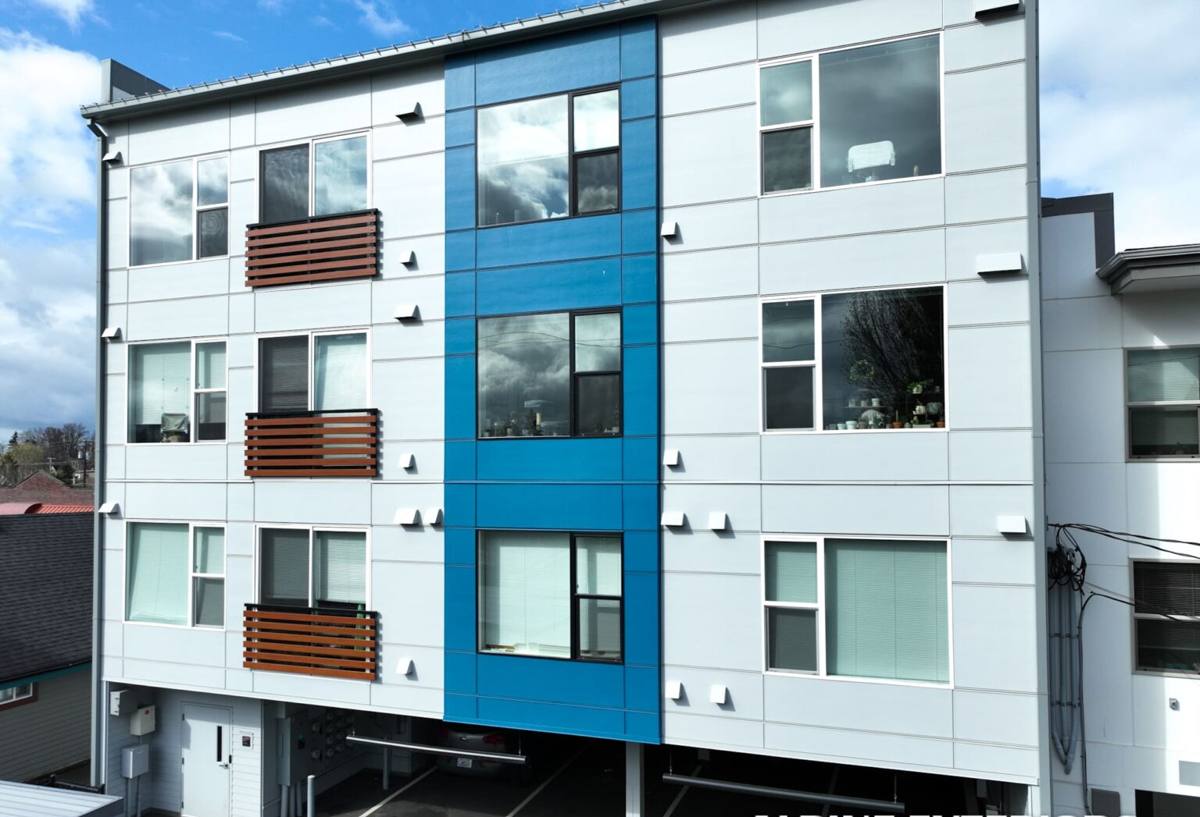
What the Marine Climate Actually Does to a Window Assembly
Salt air, driving rain, and moss season each stress a window installation in a different way, and a correct new-construction install has to account for all three at once.
Salt Air
Airborne salt accelerates corrosion on anything metal — screws, hinges, cranks, and especially lower-grade aluminum or unclad components. It also breaks down cheap sealants and gaskets faster than they'd wear inland. This is a materials decision, not just a maintenance one: what goes into the wall now determines how much corrosion you're dealing with in ten years.
Driving Rain
Wind off the water pushes rain sideways, especially against west- and south-facing walls and anything without much roof overhang. A window that would perform fine on a sheltered inland lot can leak on an exposed island elevation if the flashing details, sill pan, and water-resistive barrier (WRB) integration aren't built for wind-driven water rather than just gravity drainage.
Moss Season
Whatcom County's long wet season keeps window sills, trim, and the base of the opening damp for extended stretches. Moss and mildew don't damage the glass, but they hold moisture against wood trim and sealant joints, which shortens the life of anything that isn't detailed to shed water and dry out between rains.
What Correct New-Construction Window Installation Involves
New-construction (also called "flush fin" or "nail fin") windows are set into the rough opening before exterior finishes go on, which means the installer controls the water management, not just the window itself. On a Lummi Island exposure, we don't skip steps that might be optional in a more sheltered location.
- Sill pan flashing under every opening, sloped to drain outward, before the window ever goes in
- Correct WRB (housewrap) shingle-lap sequencing so water is directed out and over the layers below, never trapped behind them
- Flashing tape or flexible flashing at the jambs and head, lapped in the right order over the nailing fin
- Head flashing with a drip cap detail on exposed elevations, not just a strip of tape
- Backer rod and a quality exterior sealant at the trim-to-siding joint, sized for the gap rather than smeared over it
- Shim and fastening per the manufacturer's instructions so the frame isn't racked or bowed, which is what causes long-term seal failure and hardware wear
None of this is exotic. It's the same building science used anywhere in the Pacific Northwest — but on an exposed island lot, there's less margin for a shortcut to go unnoticed.
Material and Glazing Choices That Hold Up Near Salt Water
We'll spec windows to your budget and the home's design, but for Lummi Island builds we steer clients toward products and configurations that are known to hold up in marine exposure rather than just perform well in a showroom.
| Frame Material | How It Handles Salt Air & Moisture | Trade-Offs |
|---|---|---|
| Vinyl | No corrosion risk; sealed frame sheds salt and rain well | Lower cost; limited color/trim options on some lines |
| Fiberglass | Excellent dimensional stability and corrosion resistance; holds paint well | Higher upfront cost |
| Aluminum-clad wood | Good exterior weather resistance if hardware and joints are marine-rated | Interior wood needs upkeep; hardware quality matters more here than elsewhere |
| Bare wood, unclad | Most exposed to moss, mildew, and moisture cycling in this climate | Requires the most frequent maintenance on exposed elevations |
On exposed elevations we also talk through hardware finish (look for corrosion-resistant coatings on cranks, hinges, and locks) and gasket quality, since these are the components salt air wears out first — often long before the glass unit itself has an issue.
Glazing for This Climate
Standard dual-pane, low-E glazing with an argon fill is the baseline we recommend for Whatcom County's climate, and it's worth confirming your U-factor and solar heat gain coefficient (SHGC) numbers are appropriate for a marine-influenced site rather than just picking whatever's in stock. On walls that take the worst of the driving rain, we'll also discuss upgraded weatherstripping and sash designs with fewer moving parts, since simpler operating hardware generally means fewer failure points in salt air.
Working Around the Ferry: Logistics That Affect Your Build Timeline
Anyone who's managed a Lummi Island construction project knows the ferry schedule shapes everything. Material deliveries, crew arrival, and any mid-install corrections all have to work around sailing times, not the other way around. We factor this into scheduling up front:
- Windows and flashing materials are staged and confirmed complete before the crew and materials cross, so we're not making a return trip for a missing part
- Install days are planned in full-day blocks rather than split trips, since a half-finished opening left exposed overnight is a real risk in this climate
- We coordinate with your GC's schedule so window install lines up with when the opening is actually ready — not before the rough opening is square and dry, not so late that the framing has already weathered
This is one of the biggest practical differences between a crew that occasionally takes an island job and one that works Lummi Island regularly. The ferry isn't an inconvenience we're discovering on your project — it's baked into how we bid and schedule the work.
Our Process for a Lummi Island New-Construction Window Install
- Plan review and rough opening check. We review the window schedule against the plans and, once framing is up, verify openings are square, plumb, and correctly sized before we order.
- Material selection. We walk through frame material, glazing package, and hardware finish with your climate exposure and budget in mind, not a one-size answer for every elevation.
- Flashing and WRB sequencing. Sill pans, jamb and head flashing, and housewrap integration are installed in the correct shingle-lap order before the window is set.
- Window installation. Windows are shimmed, squared, and fastened to spec, with fasteners and hardware chosen to resist salt-air corrosion.
- Sealing and trim. Backer rod and sealant at trim joints, with attention to any elevation taking direct wind-driven rain.
- Final water-management check. We confirm drainage paths are clear and nothing is trapping water against the frame before the siding crew closes it in.
Coordinating with Your Builder or General Contractor
Most new-construction window jobs on Lummi Island happen inside a larger build, and the window install has to hit its window (so to speak) in the framing-to-siding sequence. We work directly with your GC or builder to confirm rough opening sizes before ordering, agree on the flashing and WRB details so there's no ambiguity between trades, and schedule our install to match the framing and siding timeline rather than forcing your GC to work around us. On a remote job site, miscommunication between trades is the single biggest cause of delays and rework — we'd rather have that conversation up front than fix a flashing detail after the siding is already on.
What Affects Cost on a Lummi Island Build
| Factor | Why It Matters Here |
|---|---|
| Frame material | Vinyl is the most budget-friendly; fiberglass and clad-wood cost more but hold up better in salt air |
| Number and size of openings | Larger openings and more elevations exposed to weather need more flashing detail and labor |
| Exposure per elevation | Walls taking direct wind-driven rain may warrant upgraded flashing or glazing over a sheltered elevation |
| Ferry and logistics | Staging and scheduling around sailings affects crew time, factored into the bid rather than added as surprise fees |
| Coordination with other trades | Tight scheduling with framing and siding crews keeps the job efficient; delays on either side can add cost |
We give straightforward, written estimates broken down by these factors so you know what you're paying for and why — not a flat number with no explanation behind it.
Maintaining New-Construction Windows in This Climate
A correctly installed window still needs some upkeep in a salt-air, high-moss environment. A short annual routine goes a long way:
- Rinse salt residue off frames and glass a few times a year, especially on the most exposed elevation
- Clear moss and debris from sills and tracks before it holds moisture against the frame
- Check and re-lubricate hardware (cranks, hinges, locks) annually if the manufacturer recommends it
- Inspect exterior sealant joints yearly and re-caulk any cracked or separated sections before they let water in
- Confirm weep holes and drainage paths stay clear of dirt, moss, and paint overspray
Why a Ferndale Crew That Already Works Lummi Island Matters
Anyone can quote a window install off a set of plans. What's harder to fake is knowing how a specific elevation on a specific island lot behaves in a January storm, how to stage a job around a ferry schedule without blowing a GC's timeline, and which hardware finishes hold up here versus which ones corrode in three years. We've built that knowledge doing exterior work across Whatcom County, including on Lummi Island specifically, and we bring it to every new-construction window job we bid here — not generic installation practices borrowed from a drier, more sheltered market.
If you're planning a new build or major addition on Lummi Island, we're happy to walk the plans with you and put together a straightforward, no-pressure estimate. Use the form below to get started.