 Ferndale Siding
 Storm Damage on Lummi Island Is Its Own Problem
A storm that just knocks a few branches down in town can do real damage to a roof out on Lummi Island. The island sits out in open water, with less tree cover and terrain to break up wind than a lot of mainland Ferndale neighborhoods enjoy. When a system rolls through Whatcom County off the water, island roofs take the brunt of it first: wind gets under shingle edges, rain gets driven sideways instead of falling straight down, and salt-laden air settles into every metal fastener and flashing seam on the house. We're a Ferndale-based crew, and Lummi Island storm damage calls are a regular part of our work — not an occasional trip out.
What makes island roofs different isn't one dramatic factor, it's the combination: constant salt air, a moss season that runs longer here than in drier parts of the state, and direct exposure to wind and rain coming off the water with nothing to slow it down. A repair that would hold up fine in a sheltered inland yard can fail within a season out here if it doesn't account for those conditions.
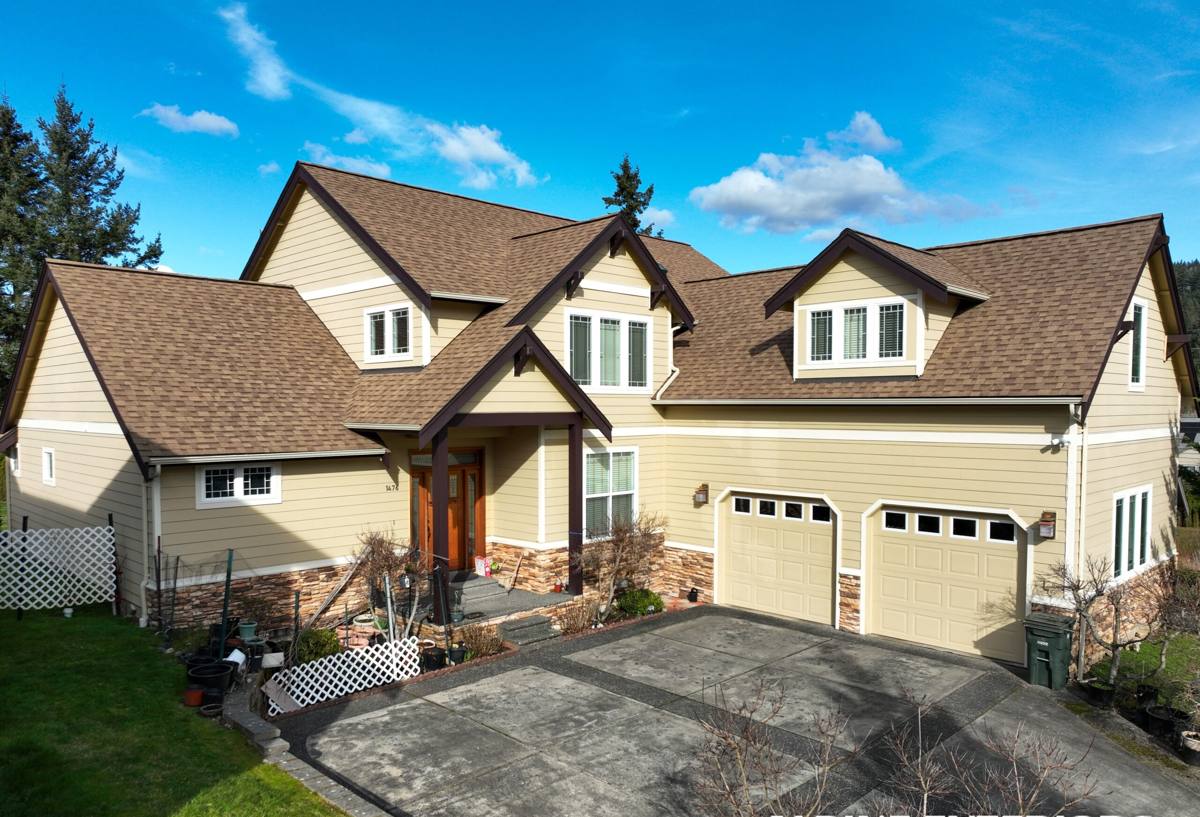
What a Storm Actually Does to an Island Roof
Wind-Driven Rain and Lifted Shingles
Straight-down rain sheds off a roof the way it's designed to. Wind-driven rain doesn't. It gets pushed sideways and upward under shingle tabs, ridge caps, and flashing edges that were never meant to see water from that angle. Once a storm lifts or cracks a shingle, that spot becomes an entry point for every rain event afterward, even light ones, long after the original storm has passed.
Salt Air and Fastener Corrosion
Salt in the air speeds up corrosion on exposed nails, flashing, and metal roof edges. A fastener that's rusted and weakened doesn't hold shingles down the way it should, which means the next windstorm has an easier time lifting material that a fresh, corrosion-resistant fastener would have held in place. This is a slow problem — it doesn't look dramatic until a storm finds the weak point.
Moss, Debris, and Trapped Moisture
Whatcom County's moss season runs long, and island homes with shade or north-facing slopes see it worse than most. Moss holds moisture against the roofing material well after a storm has cleared, and it can work its way under shingle edges and lift them mechanically over time. A roof that goes into storm season already carrying moss and trapped debris is starting from a weaker position.
Why Ferry Access Changes How Storm Repair Works
Getting a crew, tools, and materials onto Lummi Island isn't the same as pulling up to a driveway in Ferndale proper. Ferry schedules, sailing capacity, and timing all factor into when a repair crew can actually get on-island and how long they can reasonably stay before needing to catch a return sailing. A contractor who doesn't do this regularly has to figure that logistics puzzle out from scratch, often after damage has already gotten worse from a delay.
We plan around it instead of learning it on the fly. That means staging common repair materials before we book a sailing, scheduling crew time to make full use of a trip once we're on the island, and having a tarp-and-stabilize plan ready for cases where a full repair can't happen the same day. On an island, a fast, correct temporary fix that buys time until the permanent repair can be scheduled is sometimes the smarter first move — and knowing when to make that call comes from experience with the island itself, not just with roofs in general.
What a Correct Storm Damage Repair Actually Involves
A storm repair done right isn't just patching the spot where water is currently getting in. That leak point is often just where the damage happened to show up first — the actual damage can extend well beyond it.
- Full-roof inspection, not just the area around the visible leak, since wind damage often lifts more material than what's actively leaking
- Checking the decking underneath for rot or soft spots where water has been getting through longer than the homeowner realized
- Replacing damaged underlayment, not just the shingles on top of it, since a torn underlayment defeats the point of new shingles above it
- Matching flashing repairs at valleys, chimneys, and roof-wall intersections — these are the most common places wind-driven rain finds a way in
- Using corrosion-resistant fasteners suited to a salt-air environment rather than standard hardware
- Confirming attic ventilation is intact, since trapped moisture after a storm causes problems that show up weeks later, not immediately
- Clearing moss and debris from the repair area and surrounding roof so it isn't holding moisture against new work
Skip any one of these steps and the repair looks fine for a while — until the next storm or the next wet season finds the part that wasn't actually addressed.
Temporary Fix vs. Proper Repair
After a storm, there's often a choice between a fast stabilizing measure and the full repair. Both have a place, but it matters that a homeowner knows which one they're getting.
| Factor | Temporary Stabilization | Proper Repair |
|---|---|---|
| Purpose | Stop active water intrusion right away | Restore the roof section to a durable, weathertight condition |
| Typical materials | Tarps, temporary flashing, sealant | Matched shingles, new underlayment, corrosion-resistant fasteners, proper flashing |
| Expected lifespan | Days to a few weeks | Matches the remaining service life of the surrounding roof |
| When it's the right call | Storm just hit, ferry timing or materials aren't lined up yet, or damage is being documented for insurance | Once damage is fully assessed and materials/scheduling allow a complete fix |
| Risk if left in place too long | Continued moisture intrusion, decking rot, mold | Low, when installed correctly |
Repair or Replace? What Actually Drives That Decision
Not every storm-damaged roof needs full replacement, and not every roof can be reasonably patched forever either. The honest answer depends on a few things we look at together with the homeowner:
- How much of the roof's total remaining service life is left — storm damage on a roof already near the end of its life often tips the decision toward replacement
- How widespread the wind and water damage turned out to be once we're actually up there, versus how it looked from the ground
- Condition of the decking underneath — rotted decking changes the scope and cost of the job regardless of what the shingles look like
- Whether matching shingles or materials are still reasonably available, since patching an older roof with mismatched material is a cosmetic and sometimes functional compromise
- What the insurance adjuster's scope covers versus what the actual repair requires — these don't always match on the first pass
We'll give a straight answer on which side of that line a given roof falls on, and why, rather than defaulting to the bigger job.
Materials and Methods That Hold Up in Salt Air and Long Moss Seasons
Because Lummi Island homes deal with salt air and extended moss exposure more than most of Whatcom County, we make specific choices on storm repairs out there:
Corrosion-resistant fasteners and flashing are worth the extra step in a salt-air environment — standard hardware simply corrodes faster here, and a repair is only as good as the fasteners holding it down. We also pay close attention to underlayment quality at eaves, valleys, and any area prone to wind-driven rain, since that's the layer that protects the decking if the shingles above ever take a hit again. On roofs with heavy moss history, we'll talk through moss-management options as part of the repair conversation — not as an upsell, but because a roof that goes into the next wet season already holding moss is more likely to need another storm repair sooner than it should.
We don't push premium products as a default on every job. The right call depends on the roof's age, slope, sun exposure, and what the homeowner actually needs it to do for the next several years — that's a conversation, not a script.
Working With Your Insurance Claim
Most Lummi Island storm repairs we handle involve an insurance claim, and the process goes more smoothly when the documentation is thorough from the start. We photograph the damage before any repair work begins, note what's storm-related versus pre-existing wear, and provide a written scope that an adjuster can review against their own assessment. When our scope and the adjuster's estimate don't match — which happens — we'll explain exactly where and why, in plain terms, so the homeowner isn't stuck interpreting insurance language on their own.
We don't inflate scopes to pad a claim, and we won't tell a homeowner they need a full replacement when a targeted repair is the honest answer. Our estimate reflects what the roof actually needs.
Why a Crew That Already Works Lummi Island Matters
Storm response on an island isn't the same job as storm response in a mainland Ferndale neighborhood, and it shows in small but real ways: knowing how to plan a repair trip around ferry sailings, having materials staged ahead of time instead of discovering a supply gap mid-job, and recognizing which storm damage patterns are common out there versus unusual. A crew that treats every island call as a first-time logistics puzzle costs the homeowner time — time that matters when water is actively getting into a house.
We're not a big regional outfit dispatching whoever's available. We're based in Ferndale, we know Whatcom County's weather patterns, and Lummi Island storm calls are a normal part of how we work, not a special case.
If a recent storm left damage on your Lummi Island roof, or you just want an honest look before the next one hits, we're glad to come out for a free, no-pressure estimate — use the form below to get started.