 Ferndale Siding
 Marietta's Waterfront Exposure Is Different From the Rest of Ferndale
Marietta sits low and close to the water on the edge of Ferndale, and that location changes what a house needs from its siding. Homes just a few miles inland deal mostly with rain. Homes in Marietta deal with rain plus a steady dose of salt-laden air coming off the bay, wind that carries moisture sideways into wall assemblies, and a shaded, damp microclimate that keeps north- and west-facing walls wet longer than homes on higher, more open ground. We've replaced siding on enough Marietta homes to know the failure patterns are consistent: soft trim at the bottom courses, moss creeping up from the foundation line, and paint that gives out years before it should on cheaper materials.
None of that is a reason to panic about your house. It's a reason to be deliberate about what you put on it. This page covers what fiber cement siding needs to do in Marietta specifically, what a correct installation looks like in this environment, and why we've standardized on one product line rather than offering a menu of options.
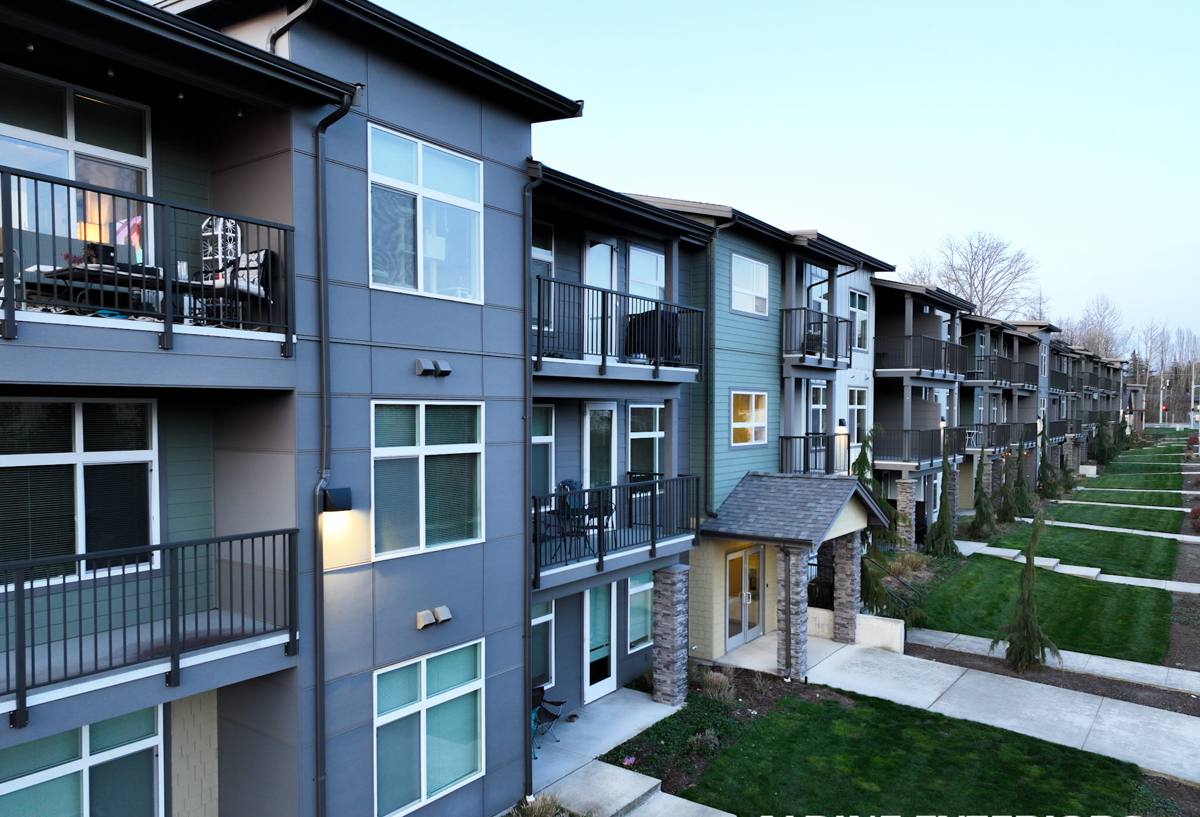
What Salt Air, Rain, and Moss Season Actually Do to Siding
Three environmental factors do most of the damage to exterior siding in Marietta, and they compound each other:
- Salt air: Airborne salt is hygroscopic — it pulls moisture out of the air and holds it against whatever surface it lands on. On wood-based or wood-adjacent siding products, that means the surface stays damp longer than a simple rain event would explain, which accelerates rot at seams, fastener holes, and cut edges.
- Driving rain: Whatcom County storms don't just fall straight down; wind off the water pushes rain sideways into lap joints, butt seams, and anywhere caulk has started to fail. Siding that isn't detailed correctly at those joints lets water behind the cladding, where it does the real damage.
- Moss season: Western Washington's long wet stretch, roughly October through May, keeps shaded and low-airflow wall sections damp enough for moss and algae to take hold. Moss holds moisture against the surface even longer, and it tends to establish first on materials with any texture or porosity for it to grip.
Individually, each of these is manageable. Together, over years, they're what separates a siding job that still looks good at year fifteen from one that's showing rot, cupping, or peeling paint by year eight.
Why We Only Install James Hardie Fiber Cement
We made a decision a while back to stop installing everything under the sun and instead install one product system correctly: James Hardie fiber cement. That's not a marketing position, it's a practical one, built on what actually holds up in a climate like this one.
The HZ5 Climate-Engineered Line
James Hardie engineers its siding by climate zone, and the HZ5 line is built for the Pacific Northwest's wet, temperate conditions. Fiber cement itself is a mix of cement, sand, and cellulose fiber — it doesn't rot, it doesn't feed moss the way organic material does, and it isn't attractive to insects. That matters directly in Marietta, where the constant moisture load is exactly the condition that punishes wood and wood-composite siding products over time.
ColorPlus Factory Finish
Most paint failure on siding starts at cut edges and fastener heads where field-applied paint is thinnest and least consistent. Hardie's ColorPlus finish is baked on in a factory under controlled conditions, with a far more durable bond than a painter can achieve on site, and it comes backed by its own finish warranty. In a salt-air environment where paint is already working harder than it would inland, that factory-grade finish is the difference between repainting in seven years and not thinking about it for a couple of decades.
What We Don't Install, and Why
We don't install vinyl, LP SmartSide, primed spruce, cedar, or off-brand fiber cement alternatives like Cemplank or Allura. Vinyl expands and contracts more than fiber cement and can warp or crack in cold snaps; it also isn't rated to hold up structurally against wind-driven debris the way a cement-based product is. Wood and wood-composite products, even with good primer, are organic material sitting in a climate that's actively trying to rot organic material. Generic fiber cement brands may look similar on a spec sheet, but we don't have the same confidence in their climate-specific engineering, finish warranty, or long-term manufacturer support that we have with Hardie. We'd rather install one product we trust completely than several we have reservations about.
What a Correct Fiber Cement Job Involves
The siding board is only part of the system. Most siding failures we see when we tear off old material in this area trace back to what was — or wasn't — done behind the boards, not the boards themselves.
Moisture Management Behind the Siding
A correct installation starts with a weather-resistive barrier and a drainage plane that lets any moisture that does get behind the siding drain and dry out rather than sitting against the sheathing. In a marine climate like Marietta's, we treat this layer as non-negotiable, not an upsell. Rainscreen furring, which creates a small air gap behind the siding, is worth discussing on north- and west-facing walls that stay shaded and damp longer than the rest of the house.
Fasteners, Clearances, and Flashing
James Hardie publishes specific installation requirements around fastener type and placement, clearance from grade, roof lines, and decks, and how siding meets windows, doors, and trim. Skipping these details is how a good product still fails early. Two of the most common corner-cutting mistakes we see on redo jobs:
- Siding installed with less than the required clearance above grade, decks, or roofing, which lets splash-back and standing moisture sit against the bottom courses.
- Missing or under-sized flashing at windows, doors, and horizontal trim, which is where driving rain off the water finds its way behind the cladding first.
Caulking and Joint Treatment
Butt joints and penetrations need to be treated correctly and with the right sealant, not just caulked and painted over. In a high-wind-driven-rain environment, joint failure is usually where water intrusion starts.
Our Process for a Marietta Project
| Step | What Happens | Why It Matters Here |
|---|---|---|
| Site walk and assessment | We inspect existing siding, sheathing condition, and problem areas — especially shaded, low-airflow walls | Marietta homes often show moisture issues concentrated on specific elevations, not evenly across the house |
| Moisture barrier and drainage plane | Weather-resistive barrier installed correctly, rainscreen discussed where it makes sense | This layer, not the siding face, is what actually stops most water intrusion long-term |
| Flashing and trim details | Windows, doors, and horizontal trim flashed to shed water outward | These are the entry points driving rain off the bay actually finds |
| Hardie panel and lap installation | Installed to manufacturer clearance and fastening specs | Keeps the warranty valid and keeps bottom courses out of standing moisture |
| Final inspection and walkthrough | We review the completed work with you before calling the job done | You should understand what's on your house and how it was installed |
Cost Factors for Fiber Cement Siding in Marietta
Every house is different, so we won't quote a number without seeing the property, but these are the factors that actually move the price on a Marietta project:
| Factor | Why It Affects Cost |
|---|---|
| Tear-off and sheathing condition | Rot or damaged sheathing found once old siding comes off adds repair scope |
| Home size and wall complexity | More corners, dormers, and trim details mean more labor and material cuts |
| Panel vs. lap siding, and trim package | Different Hardie profiles and trim combinations carry different material costs |
| Rainscreen inclusion | Adding a drainage gap on exposed walls is extra labor but reduces long-term moisture risk |
| Access and site conditions | Waterfront lots, tight setbacks, or steep grades can affect staging and labor time |
Why a Crew That Already Works Marietta Matters
Siding installation isn't identical everywhere in Whatcom County. A crew that mostly works drier, inland neighborhoods can install a technically correct job on paper and still under-detail it for a site with Marietta's salt air and wind-driven rain, because they're not used to treating those conditions as the default. We adjust drainage planning, flashing attention, and clearance decisions based on what we've actually seen fail on homes in this specific area — not a generic install checklist. That local pattern recognition is worth more than it sounds like on a spec sheet.
Maintenance Checklist for Marietta Homeowners
Correctly installed Hardie siding is low-maintenance, not zero-maintenance. A short annual routine keeps it performing the way it's designed to:
- Rinse siding once or twice a year to clear salt residue and organic buildup, especially on shaded elevations
- Check for moss or algae starting at the base of walls or under overhangs and address it early with a gentle wash
- Inspect caulking at trim, windows, and joints annually and re-caulk any cracked or shrinking sealant
- Keep gutters clear so overflow doesn't run down the siding face or pool near the bottom courses
- Trim back vegetation and maintain clearance between siding and grade, mulch beds, or decking
- Watch for any soft spots at trim boards or corner posts, which usually signal a flashing issue worth catching early
If you're weighing a siding replacement in Marietta and want a straight answer about what your home actually needs, we're happy to take a look. Reach out for a free, no-pressure estimate using the form below.